


More news on this day
Martha’s Vineyard Airport is experiencing a fresh wave of disruption at the height of the summer season, with publicly available flight data and industry reports indicating 12 cancellations and 12 delays tied to suspended regional shuttle services along the U.S. East Coast.
Get the latest news straight to your inbox!
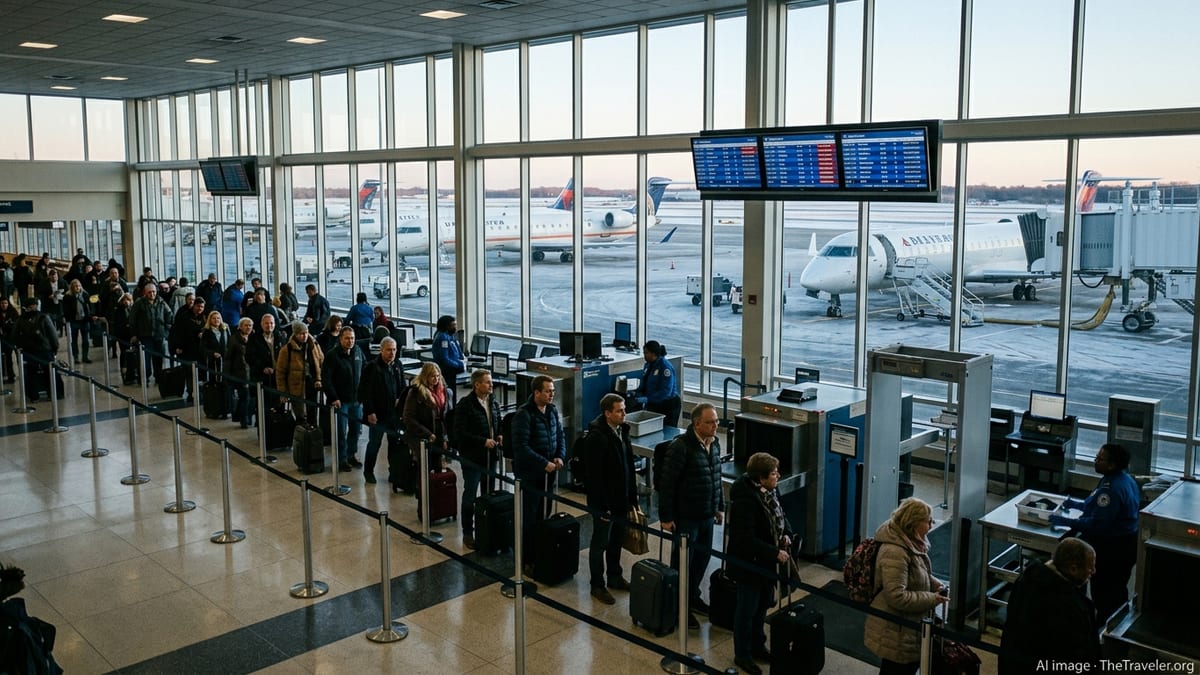
Regional Shuttle Networks Under Strain
The latest disruption centers on short-haul shuttle routes that normally connect Martha’s Vineyard to major East Coast gateways such as New York, Boston, and Philadelphia. These high-frequency services, typically operated by regional affiliates and niche carriers, form the backbone of the island’s air access in peak season, moving visitors, seasonal workers, and local residents on tight schedules.
According to published coverage tracking Sunday operations, multiple regional carriers reduced or temporarily suspended selected rotations into Martha’s Vineyard, triggering a cluster of 12 outright cancellations alongside 12 delayed departures and arrivals. The pattern reflects a broader vulnerability in the regional segment, where a small number of aircraft and crews serve numerous short hops between secondary airports and larger hubs.
The disruption is particularly impactful for an airport of Martha’s Vineyard’s size, where terminal facilities and gate capacity are limited and schedules are built around compressed summer demand. Even a modest pullback by shuttle operators can lead to visible gaps on departure boards and long queues as passengers seek alternatives.
Tradewind, JetBlue, Cape Air and Republic Among Affected Operators
Reports indicate that Tradewind Aviation accounts for a significant share of the cancelled services, with up to ten of its flights scrubbed from the Martha’s Vineyard schedule as carriers reassess day-of operations on select regional sectors. These include links to White Plains, Teterboro, and other business and leisure markets that rely heavily on small aircraft and high-frequency rotations.
Additional cancellations and delays have been recorded among services marketed by larger network airlines but flown by regional partners such as Republic, as well as by carriers with strong island profiles like JetBlue and Cape Air. These operators typically connect Martha’s Vineyard with Boston, New York City–area airports, and Philadelphia, offering essential feeder traffic to national and international networks.
Publicly available timetables and tracking sites show a patchwork of operations in which some flights remain scheduled or delayed, while adjacent services on the same route are cancelled. This mixed pattern suggests that carriers are tailoring decisions based on aircraft availability, crew positioning, and expected demand on each leg rather than enacting a blanket suspension across their island networks.
Operational Pressures During Peak Summer Travel
The timing of the disruptions falls during one of the busiest holiday stretches of the summer, when Martha’s Vineyard’s population swells and air travel volumes spike. The airport’s small terminal and limited gate infrastructure mean that schedule irregularities can quickly translate into crowded waiting areas, longer processing times at check-in and security, and increased pressure on baggage handling.
Industry analysis of regional aviation trends points to several underlying pressures that can contribute to a cluster of cancellations and delays: crew constraints, tight aircraft utilization, and the ripple effects of weather or congestion at major East Coast hubs. When carriers face network-wide strains, short regional segments to leisure destinations are often among the first to be consolidated or cut.
In this case, there were no immediate indications from public aviation status dashboards of a full-scale ground stop at Martha’s Vineyard, suggesting that the primary driver is carrier-specific operational decision-making rather than a formal air traffic control restriction on the airport. However, any upstream delays at hub airports can still cascade into later departures from the island if aircraft or crews arrive late or out of sequence.
Impact on Passengers and Island Connectivity
The suspension of a dozen flights and the delay of an equal number of services carry outsized consequences for travelers bound to or from Martha’s Vineyard. With limited daily frequencies on many East Coast routes, a single cancellation can mean extended waits, missed connections, or the need to reroute entirely through alternative airports such as Boston, Providence, or Hyannis.
Passengers scheduled on the affected shuttle routes have faced same-day rebookings, overnight stays, or shifts to ferry and bus combinations in order to reach mainland destinations. For visitors on short weekend trips, lost travel time can significantly reduce the value of their stay, while island residents with medical appointments, work commitments, or family events on the mainland may see critical plans disrupted.
The broader regional transport ecosystem also comes under pressure when air links falter. Ground transportation providers, including taxis and local bus services, often need to adjust quickly to changing arrival patterns, while accommodation providers may experience last-minute cancellations or unexpected additional nights as travelers wait for replacement flights.
What Travelers Should Expect in the Days Ahead
With summer demand remaining high and regional carriers continuing to adjust their East Coast shuttle schedules day by day, travelers using Martha’s Vineyard Airport are likely to face ongoing uncertainty around specific flight times and frequencies. Airline booking tools and airport information boards may continue to show a mix of on-time departures, prolonged delays, and late-breaking cancellations.
Public information from industry observers suggests that carriers will keep monitoring load factors, crew availability, and operational resilience across their networks, potentially restoring some suspended services as conditions stabilize or consolidating others if pressures persist. Shorter regional segments to secondary airports are expected to remain particularly sensitive to any renewed disruption at major hubs.
For now, the tally of 12 cancellations and 12 delays at Martha’s Vineyard illustrates how quickly a localized adjustment by a small group of regional operators can reshape access to a popular island destination. As peak season continues, travelers are likely to keep a close watch on schedule changes, building in extra time and flexibility to navigate an increasingly fragile network of East Coast shuttle flights.