


More news on this day
American Airlines is preparing a sweeping redesign of its domestic cabins, with publicly available planning documents and industry coverage indicating the carrier aims to increase premium seating from roughly 25 percent to about 40 percent of available seats across much of its narrowbody fleet as part of a broader push toward higher-yield customers.
Get the latest news straight to your inbox!
Strategic Pivot Toward Premium Revenue
The move to significantly expand premium seating on narrowbody aircraft fits into a wider strategy at American Airlines to lean more heavily on higher-spending travelers. Executive presentations and investor materials show the company targeting faster growth in premium seats than in the main cabin, reflecting a belief that demand for extra space and upgraded service will remain robust even as domestic capacity grows.
American has already been growing premium capacity on its long haul fleet, with new Flagship Suite products and more lie flat seats coming to aircraft such as the Boeing 787-9 and Airbus A321XLR. The next phase extends that premium focus deeper into the workhorse jets that operate most domestic and short haul international routes, shifting the balance of seats so that a larger share of the cabin is devoted to first class, extra legroom, and other higher-priced options.
Industry reports indicate that the airline views this premium rebalancing as central to closing a persistent profitability gap with rivals. By capturing more revenue from passengers willing to pay for comfort and flexibility, American is seeking to rely less on deep discounting in standard economy and more on differentiated products that can be priced dynamically.
The shift also aligns American more closely with broader trends among major U.S. carriers, which have been steadily adding business class, premium economy, and extra legroom seats as they chase travelers who are increasingly mixing leisure and work trips and are more willing to pay for comfort on longer domestic flights.
What Expanding Premium Seats Looks Like on Board
On narrowbody aircraft, moving from roughly one quarter to about 40 percent premium seating is expected to involve both expanding the traditional domestic first class cabin and carving out more of the cabin for extra legroom economy. On some aircraft types, that may mean adding rows of first class at the front of the aircraft; on others, it may primarily show up as a denser block of extra legroom seats toward the front of the main cabin and near exit rows.
Reconfiguration work is likely to touch the Boeing 737 and Airbus A320 families that make up the bulk of American’s domestic flying. Earlier cabin projects focused on maximizing overall seat count and standardizing layouts, but current planning points toward a different emphasis as the airline looks to tilt more space toward seats that command higher fares.
Travelers can expect to see more consistency in premium offerings across routes as configurations are updated. Reports suggest that American is aiming to create a clearer hierarchy of products from domestic first through extra legroom economy, backed by upgraded soft products such as enhanced snacks and beverages on longer flights.
At the same time, the changes will not necessarily mean dramatic reductions in total seat counts. Cabin planners typically seek to offset some of the space lost to larger premium seats by tightening layouts elsewhere, adjusting galley and lavatory footprints, or making more efficient use of underutilized cabin areas.
Competitive Pressure From Delta and United
Competitive dynamics appear to be a major driver behind American’s decision. Delta Air Lines and United Airlines have each invested heavily in premium products, from lie flat business class on long haul routes to expanded premium economy and extra legroom sections on domestic jets. United in particular has highlighted substantial growth in premium seats per North American departure as a pillar of its fleet strategy.
American, by contrast, spent much of the past decade focusing on standardizing cabins and increasing overall capacity, sometimes at the expense of premium differentiation. That left the carrier exposed on high value routes where corporate travelers and affluent leisure passengers compare product details such as seat pitch, cabin privacy, and in flight amenities.
With more premium seats, American is aiming to better match the offerings of its largest rivals on key domestic and transcontinental markets, as well as select flights to Hawaii, Latin America, and other medium haul destinations. A broader premium footprint helps the airline court corporate contracts and high status frequent flyers who may otherwise prefer competitors with a larger share of upgraded seating.
Analysts following the industry note that the premium shift also dovetails with evolving revenue management tools. More premium seats give airlines greater flexibility to segment demand, offer targeted paid upgrades, and manage complementary upgrades for elite members in ways that support overall yields.
Implications for Economy Travelers
For travelers in the standard main cabin, the expansion of premium seating is likely to be felt in two main ways. First, there will be a clearer distinction between standard economy and extra legroom seats, with more rows designated as a higher priced product and often blocked for frequent flyer elites until close to departure. Second, as more space is allocated to premium, the remaining economy section on some aircraft could see tighter configurations or a modest reduction in seat pitch.
As American adds premium capacity, the number of complimentary or low cost upgrade opportunities may increase in some markets, particularly where demand for first class is more variable. However, with a greater share of seats classified as premium, there is also potential for more of the cabin to be held for paid upgrades rather than automatic complimentary moves.
The airline has already been experimenting with new patterns for upgrades and paid seat selection on domestic and Hawaii routes, and further adjustments are expected as the reconfigured cabins roll out. Travelers who are accustomed to relying on last minute complimentary upgrades may find that securing a specific premium seat requires booking earlier or paying a supplement.
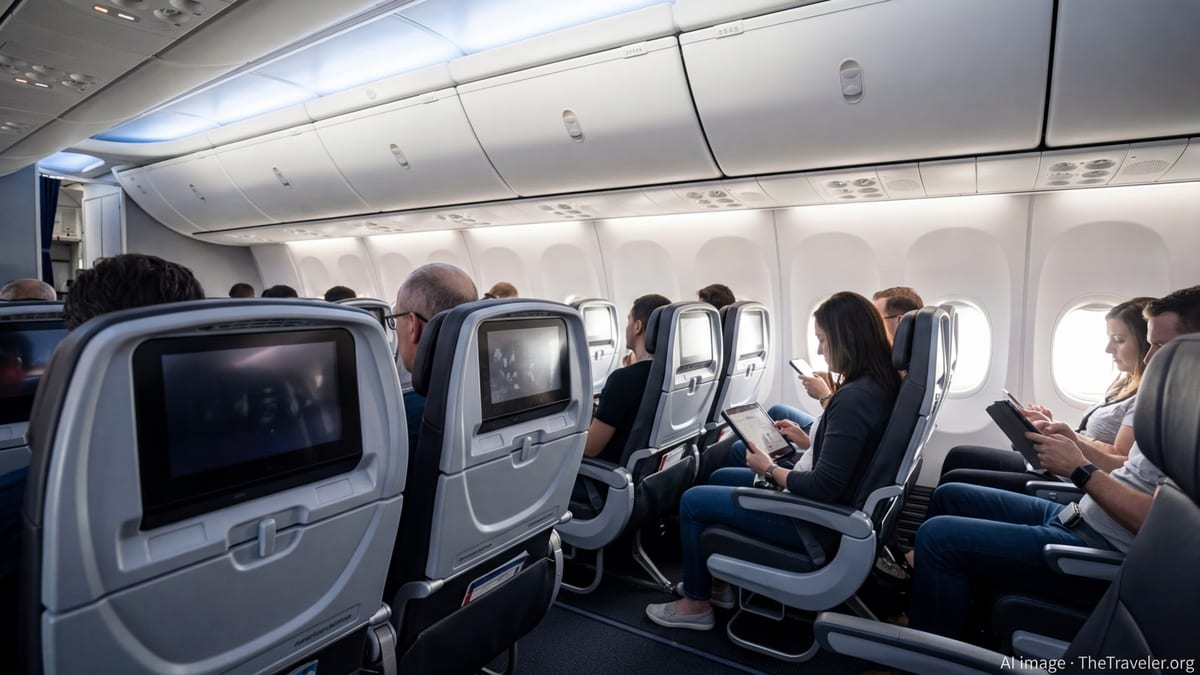
At the same time, the push toward premium is unfolding as American invests in cabin hardware such as seatback entertainment screens and enhanced connectivity on narrowbody aircraft. For travelers remaining in standard economy, those technology upgrades could partially offset concerns about tighter seating by improving onboard comfort and distraction options.
Rollout Timeline and Market Focus
American’s narrowbody premium expansion will not happen overnight. Based on fleet planning information and financial disclosures, the airline is expected to phase in the new layouts over several years as aircraft rotate through scheduled maintenance and refurbishment lines. New deliveries, such as additional Airbus A321 variants, are likely to arrive with the updated premium heavy configurations already installed.
Key hubs are set to be early beneficiaries. Published planning materials emphasize growth and product upgrades at Dallas Fort Worth, Charlotte, Miami, Philadelphia, Phoenix, Chicago, New York, and Washington, all of which are major connecting points and home to significant corporate travel demand. Routes linking these hubs, as well as transcontinental and select leisure markets with strong willingness to pay for premium, are probable candidates for the first reconfigured narrowbodies.
By the end of the decade, American aims to have a domestic fleet that looks very different from the cabins that defined the last cycle. With premium seats accounting for up to 40 percent of capacity on many narrowbody aircraft, the airline is betting that travelers will continue to pay for extra comfort even as more seats compete for their attention.
How quickly that bet pays off will depend on the pace of economic growth, corporate travel recovery, and competitive responses. For now, the message from American’s planning documents and fleet strategy is clear: the future of its narrowbody operation is more premium than ever.