


LeConte Lodge, perched high on Mount Le Conte in Great Smoky Mountains National Park, is one of the most coveted and least understood mountain stays in the eastern United States. Many people imagine a cozy mountaintop hotel with standard amenities, easy parking and flexible policies. In reality, staying at this rustic lodge complex is closer to a supported backcountry trip than a conventional hotel night. Knowing the differences before you send in that reservation request can make the difference between a frustrated, uncomfortable stay and a genuinely unforgettable one.
Get the latest updates straight to your inbox!
You Cannot Drive There: The Hike Is Part of the Booking Decision
One of the biggest surprises for first-time guests is that there are no roads to LeConte Lodge. The entire complex sits on the upper slopes of Mount Le Conte at roughly 6,360 feet in Great Smoky Mountains National Park, and every overnight guest must hike in on one of five steep mountain trails. Popular approaches include the Alum Cave Trail, a roughly 11 mile round-trip route that is the shortest but also one of the steepest, and Trillium Gap, a longer, gentler option that the pack llamas use to supply the lodge. Boulevard, Rainbow Falls and Bullhead round out the network, each with its own character, distance and difficulty.
This matters at the booking stage because your stay is inseparable from your hike. If your group includes young children, older adults or anyone with knee or balance issues, simply “having a reservation” does not mean the experience will work for them. For example, Alum Cave’s narrow ledges and stair sections can feel exposed in wet or icy weather, while Rainbow Falls’ rocky footing can punish ankles on the descent. Before committing to dates, look honestly at your party’s hiking experience, choose a trail that matches the slowest person, and factor in realistic times. For many guests, especially in summer, it takes 4 to 6 hours to reach the lodge at a moderate pace with breaks.
Weather on Mount Le Conte is another factor most people underestimate. Even in July, when Gatlinburg may be hot and humid in the 80s or 90s Fahrenheit, the mountaintop can be 15 to 20 degrees cooler, with clouds and afternoon storms rolling through quickly. A reservation in October could mean bluebird days with crisp air and spectacular foliage, or it could bring sleet and rime ice on the upper trail sections. Booking “by the calendar” because it is a school break or holiday is not enough; you must be prepared to hike in rain, fog or cold and still be safe and reasonably comfortable.
Because there is no vehicle access, every piece of gear you want that is not supplied by the lodge must be carried on your back. That includes layers, raingear, headlamps and personal comfort items. Guests used to leaving suitcases in hotel rooms are often surprised at how much they do not actually need once they realize that every extra pair of shoes or electronics cable is more weight on a steep climb.
The Lodge Complex Is Rustic: No Electricity, No Showers, Limited Comforts
On paper, LeConte Lodge is described as a collection of cabins and lodges with family-style meals. In practice, it is closer to a high mountain hut with a few comforts than to a traditional inn. There is no electricity in the guest cabins. Lighting comes from kerosene lanterns, and heat in cool weather is provided by propane heaters. There are no power outlets for charging phones or cameras, and cell service, if you find it at all, is usually patchy and unreliable on the summit ridge.
Another reality that surprises many guests: there are no showers. Each cabin is equipped with a wash basin and a bucket, and there is a hot water spigot near the dining hall where guests can fill up for sponge baths. Restrooms are in a separate privy building with flush toilets, a big improvement over old pit toilets but still a step away from en suite facilities. If you are picturing returning from a long sweaty hike to a hot shower and hair dryer, this is not that kind of stay.
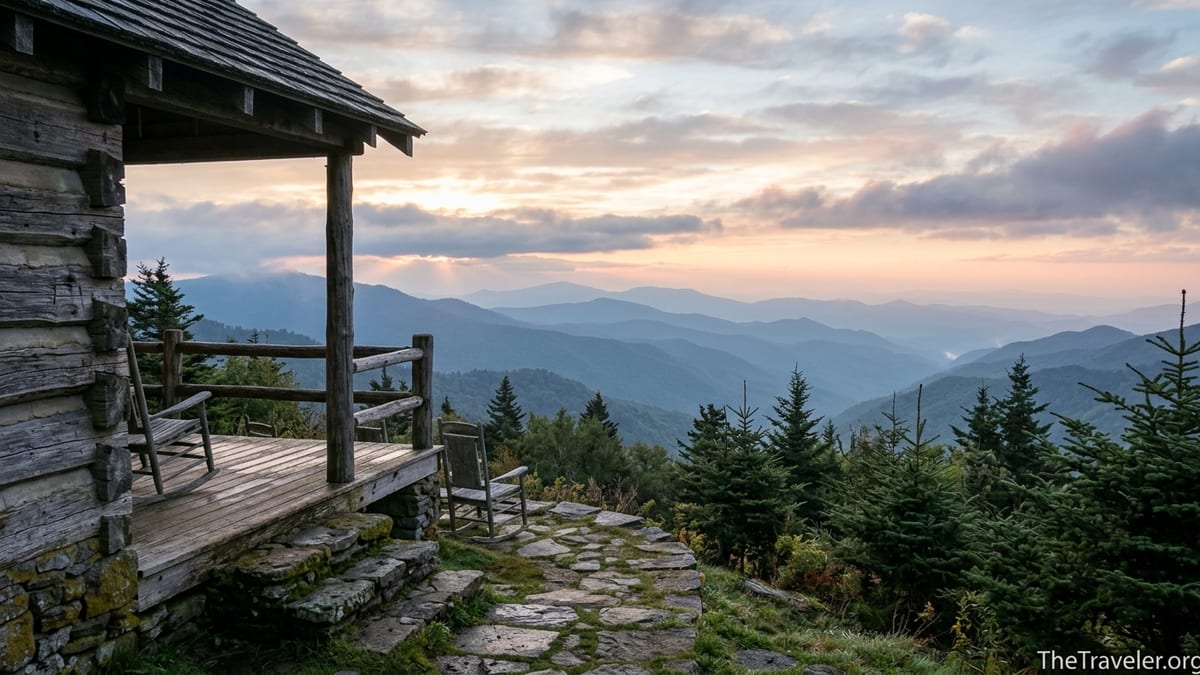
The cabins themselves are simple, rough-hewn structures equipped with double bunk beds, linens, blankets and pillows, basic furniture and covered porches with rocking chairs. Nights are often chilly, even in summer, and while the provided bedding is generally adequate, you will be happier if you pack warm sleepwear and socks. Guests visiting in shoulder seasons like April or November sometimes add a lightweight sleeping bag liner or extra base layer to stay cozy when a cold front rolls through.
The lodge’s remoteness also affects water and food logistics. Potable water is available from spigots around the complex, but guests should arrive with at least one full bottle and a plan to top up. The lack of refrigeration and power means menu options are hearty but basic, not gourmet. Understanding this before booking helps you align your expectations with the actual rustic character of the complex.
Reservations Are Not Instant: The Lottery System and Long Lead Times
Unlike most lodgings around Gatlinburg, you do not simply click a date and enter a credit card to secure a night at LeConte Lodge. The lodge operates on an annual reservation request system that functions much like a lottery. For the 2025 season, for example, written requests via an online form, email, fax or mail were accepted during a limited submission window in late September, well over a year in advance of many travel dates. Only after that window closed did the reservations office begin assigning cabins and dates from the pool of requests.
Because demand far exceeds supply, it is common for regular hikers to submit multiple date options and still come up empty. Some guests report trying for several years before landing a night that fits their schedule. Once the initial lottery-style allocation is complete, remaining dates, if any, can sometimes be booked later by phone, but expecting to secure a peak October weekend or a school holiday on short notice is unrealistic. When you think of “booking the LeConte Lodge complex,” assume you are planning at least a year out, often more.
Another element that surprises many people is how firm the payment and cancellation policies are. LeConte Lodge sells its stays as an all-inclusive package that covers lodging and meals, with rates updated annually and Tennessee sales tax added on top. Deposits are due soon after confirmation, and balances are typically due well ahead of arrival. The lodge’s policy states that cancellations, even for weather, illness or family emergencies, can result in forfeiting your payment unless your spot is rebooked, often with a processing fee deducted. Insurance is recommended, but many guests skip it, only to realize later that trail closures or personal situations will not automatically earn them a refund.
Finally, staying at the lodge complex does not grant you special status for other park reservations. The surrounding national park uses separate systems for backcountry shelters and front-country campgrounds, and those must be booked independently. If you plan a longer itinerary that includes a night at the LeConte backcountry shelter in addition to a night in the lodge, you will juggle two different reservation processes and need to coordinate your dates carefully.
Parking and Trailhead Logistics Can Make or Break Your Trip
Many guests are caught off guard by how complicated parking can be for the most popular approach trails. Great Smoky Mountains National Park has implemented a parking tag system that applies to most vehicles, and the lots at Alum Cave and Trillium Gap fill very early on busy weekends and holidays. A reservation at LeConte Lodge does not guarantee a trailhead parking space. The lodge’s own materials emphasize that refunds are not issued for guests who fail to secure parking or miss a pre-arranged shuttle as a result.
Practically, this means that on a busy October Saturday, you may need to be in the lot at or before sunrise to find a legal space within walking distance of the trailhead. Some guests hire local shuttle services from Gatlinburg or Newfound Gap, arranging to be dropped at one trail and picked up at another to create a loop. That can be an excellent strategy, but it adds cost and requires precise timing, because cell coverage is unreliable for confirming last-minute changes from the summit.
The hike itself is also affected by seasonal closures and trail conditions. The road to the Alum Cave trailhead, for instance, can close temporarily due to ice, snow, downed trees or rock work. In winter shoulder seasons at the start and end of the lodge’s operating year, this is not uncommon. If you have booked a spring or late fall stay, you need a backup route in mind, such as Trillium Gap or Rainbow Falls, and must allow additional hiking time if you are forced to use a longer path.
Guests who underestimate these logistics sometimes start late, hike slower than expected, and arrive cold, wet and exhausted just before the dinner bell. Planning your trailhead arrival and route with the same care as your reservation request turns the journey into an enjoyable alpine hike instead of a stressful race against daylight.
Meals, Dietary Limits and What Food Is (and Is Not) Available
Your nightly rate at LeConte Lodge includes a hot family-style dinner and breakfast. Typical meals are filling and simple: think roast meats, vegetables, breads, cobblers, eggs, pancakes and bacon. There is often coffee, hot chocolate, lemonade or water offered with meals, and guests can pre-arrange for wine with dinner using a separate order form. Portions are generally generous, which is welcome after a big hike.
However, visitors used to modern hotel buffets with extensive options may be surprised at how limited the menu can be. The lack of refrigeration and the fact that much of the food arrives via llamas or packers on Trillium Gap means the kitchen operates with a fixed daily menu and a short list of standard variations. The lodge can often accommodate common dietary needs like vegetarian meals or simple gluten-avoidant plates if notified in advance, but guests with multiple restrictions or severe allergies need to speak with the reservations office long before arrival to confirm what is realistic. Treating the mountaintop kitchen like a customizable restaurant is a common misunderstanding.
Day hikers who do not have overnight reservations are still welcome to visit the lodge complex during operating hours. The office typically sells sack lunches, baked goods such as cookies or brownies, hot cocoa, lemonade and a small selection of snacks. Prices are higher than valley convenience stores but reasonable considering the logistics; for instance, sack lunches have in recent years been priced somewhere in the teens per person and include items like bagels with cream cheese, sausage, trail mix and sweets. It is wise to bring your own trail food and treat the lodge offerings as a supplement or reward, not your primary food plan.
Alcohol policies may also trip up unprepared guests. You cannot purchase spirits or beer on site, and you should verify current rules about carrying your own alcoholic beverages into the park and consuming them at the lodge. The pre-ordered wine with dinner, delivered in coordination with your reservation number, is usually the simplest option for those who want a glass with the evening meal.
What the “Complex” Includes: Cabins, Shelter, Views and Community
When people refer to the LeConte Lodge complex, they are often talking about more than just their individual cabin. The compact cluster of seven one-room cabins and three multi-room lodges, the dining hall, the office, privy building and surrounding porches form a tiny mountaintop village. Just beyond, the Mount Le Conte backcountry shelter sits in the trees, providing a separate, very basic overnight option managed by the park’s backcountry reservation system. Day-use picnic areas, scenic overlooks and short spur trails connect all of these elements.
Each type of lodging delivers a different experience. A party of two might be assigned a one-room cabin with an upper and lower double bunk and perhaps a single bed, while a larger group or family reunion could end up in a multi-room lodge with several bedrooms clustered around a common room. Parties staying in the shelter sleep shoulder-to-shoulder on wooden platforms, cook their own food, and use bear cables for food storage rather than the lodge’s office. All share the same thin air, misty spruce-fir forest and potential for dramatic sunsets and sunrises from vantage points like Cliff Tops and Myrtle Point.
What many people do not realize before booking is how social the atmosphere can be. With roughly 60 overnight guests, everyone eating at the same time in the dining hall and lingering on the porches afterward, you will likely share stories, trail conditions and future plans with strangers. Those imagining a secluded, private getaway may feel surprised by the camp-like camaraderie. Conversely, solo hikers or small groups often find that the communal tables and shared experience turn the lodge into the friendliest place they visit on their entire Smokies trip.
The complex also functions as a waystation for day hikers. Throughout the afternoon, people who have climbed up for the day wander in to refill water bottles, buy merchandise such as “I Hiked It” T-shirts, or simply rest on the benches before returning downhill. As an overnight guest, you will see this ebb and flow, then watch the summit grow quiet as day visitors depart and only lodge and shelter guests remain to watch the stars and lanterns appear.
The Takeaway
LeConte Lodge is not a standard mountain hotel you squeeze into an already busy Gatlinburg vacation. It is a remote, weather-exposed, reservation-only mountain camp that happens to offer real beds, hot meals and an extraordinary setting on one of the Smokies’ signature peaks. Most of the surprises and disappointments guests experience can be traced back to one thing: expecting conventional convenience in a place that still relies on llamas and human backs for most supplies and has no road access or electricity.
Before you send in that reservation request, ask yourself a few hard questions. Are you and everyone in your party truly ready for a several-hour uphill hike carrying what you need? Are you comfortable going without a shower, power outlets and reliable cell service for a night or two? Can you live with strict cancellation policies if weather, parking or trail closures complicate your plans? If the answer to all of these is yes, then booking the LeConte Lodge complex can be one of the most rewarding decisions you make for a Smokies trip.
Approached with clear eyes and realistic expectations, the experience delivers what few other places in the eastern United States can: a night in a simple cabin above the clouds, a warm meal shared with fellow hikers and the chance to watch first light spill across the ridges from a high, quiet perch. For many repeat guests, that combination is precisely why they work so hard, sometimes year after year, to secure a coveted spot at the lodge.
FAQ
Q1. How far in advance do I need to book LeConte Lodge?
Most guests submit reservation requests more than a year in advance during the lodge’s fall lottery-style request window, especially for popular weekend and October dates.
Q2. What is the easiest trail to reach the LeConte Lodge complex?
“Easiest” is relative, but Trillium Gap is often considered more gradual, while Alum Cave is shorter and steeper. All routes require several hours of sustained uphill hiking.
Q3. Are there any private bathrooms or showers in the cabins?
No. Restrooms are in a separate privy building with flush toilets, and there are no showers. Cabins have wash basins and buckets for sponge baths using hot water from a nearby spigot.
Q4. Can I charge my phone or camera at LeConte Lodge?
No. There is no electricity in the guest cabins, and there are no public charging stations. Bring devices fully charged and carry spare batteries or a small power bank if needed.
Q5. Are children allowed to stay at LeConte Lodge?
Yes, families with children regularly stay at the lodge, but parents should be confident their kids can handle the full hike and be comfortable with rustic conditions and early quiet hours.
Q6. What happens if the weather is bad on my reservation date?
The lodge operates in a wide range of weather, and guests are expected to hike in rain, fog or cold if trails remain open. Cancellations for weather generally follow the standard refund policy.
Q7. Can day hikers use the lodge facilities without a reservation?
Yes. Day hikers can usually buy sack lunches, snacks, drinks and souvenirs, refill water and enjoy the porches and views, but overnight cabins, meals and restrooms are for registered guests.
Q8. Is alcohol available at the lodge?
The lodge typically offers wine with dinner by advance order connected to your reservation. There is no bar or on-site sale of beer or spirits, and guests should follow park rules on alcohol.
Q9. Do I need special gear to stay at LeConte Lodge?
You do not need technical climbing equipment, but sturdy hiking footwear, layered clothing, rain gear, a headlamp and a small pack for personal items are strongly recommended.
Q10. Is staying at the backcountry shelter the same as staying in the lodge?
No. The shelter is a basic park facility with wooden sleeping platforms and no meals or bedding. The lodge provides beds, linens and family-style meals as part of an inclusive rate.