


More news on this day
American Airlines has restored flight operations across the United States after a nationwide ground stop triggered by a technical outage, with the carrier now working to clear backlogs and stabilize its schedule following widespread delays.
Get the latest news straight to your inbox!
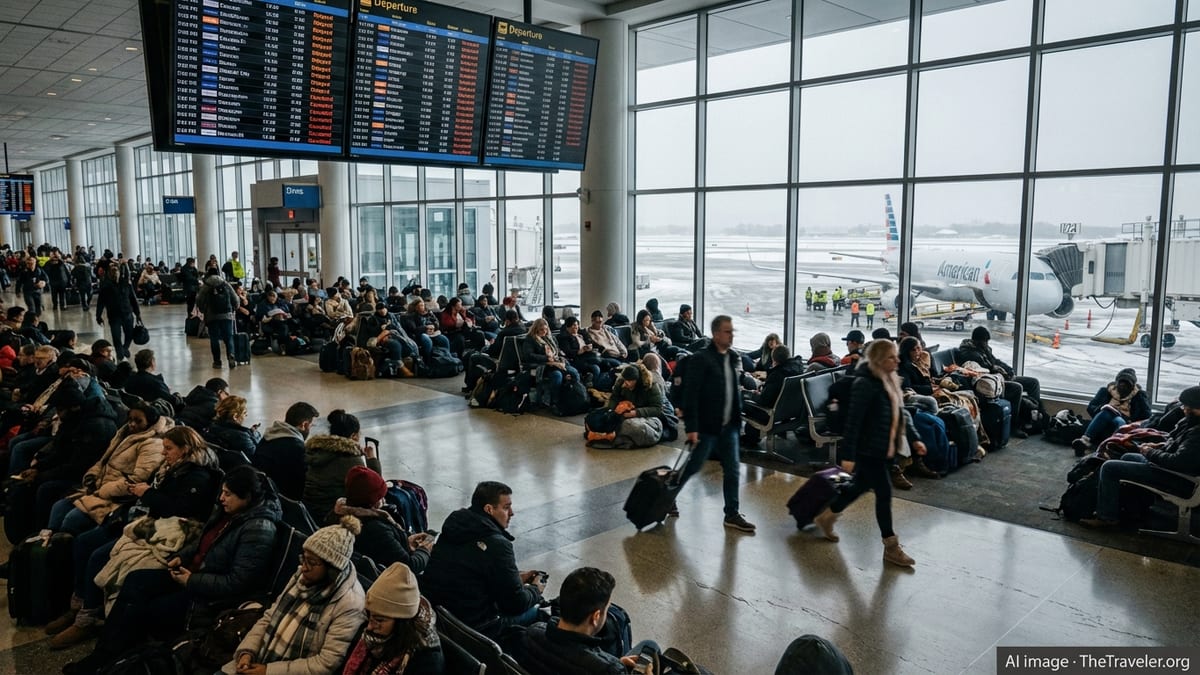
Nationwide ground stop briefly halts American Airlines operations
Flight operations at American Airlines were brought to a standstill on Tuesday after a systems outage prompted a temporary nationwide ground stop, according to flight-tracking data and multiple airport reports. The halt affected departures across the carrier’s domestic network while flights already in the air were allowed to continue to their destinations.
Reports from major hubs such as Dallas Fort Worth, Charlotte and Philadelphia described departure boards populated with delays and holds as American’s systems went offline. Airport monitors and gate information screens for the airline were reported as blank or frozen at several locations, underscoring the breadth of the disruption.
The Federal Aviation Administration’s advisory system indicated a pause on American-operated departures while the airline addressed the issue. Publicly available information shows that the ground stop was lifted after the carrier began bringing its systems back online, clearing the way for flights to resume.
Initial indications described the incident as a technical or server-related outage rather than a weather or air traffic control event, placing it among a series of recent airline and aviation technology disruptions that have briefly halted operations at scale.
Glitch behind the breakdown: what went wrong
Early reports from passengers, airport staff and aviation observers pointed to a failure involving American’s core operational and customer-facing systems, including check in, boarding, bag tagging and flight planning tools. Travelers at multiple airports described an abrupt stop to boarding processes and an inability for staff to access reservations or dispatch information.
Public discussion on aviation and technology forums characterized the event as a server or network outage affecting the airline’s central systems in Dallas, with knock-on effects across the country. While detailed technical diagnostics have not yet been made public, the pattern of failures suggests a disruption in the systems that coordinate aircraft dispatch, crew assignments and passenger processing.
Visible impacts included inoperable kiosks, offline gate displays and difficulty in updating departure times. In practical terms, that meant aircraft ready to depart could not receive the final digital clearances or documentation typically required for pushback, forcing them to remain at gates even when weather and airport conditions were otherwise normal.
The glitch follows a broader industry trend in which highly centralized, interconnected IT platforms can create single points of failure. When these systems experience outages, even for a relatively short period, the operational impact can be swift and widespread.
Flights resume, but delays and knock on effects persist
Once American Airlines restored its systems sufficiently to handle core functions, the nationwide ground stop was lifted and departures gradually resumed. Flight-tracking services showed a steady uptick in American departures in the hours after the outage, confirming that the immediate halt to operations had ended.
Despite the resumption of flights, residual disruption has remained a challenge for the carrier and its customers. Delayed aircraft and displaced crew members created imbalances across the network, leading to rolling delays on later departures as schedules were reassembled. Some passengers reported missed connections and extended waits as the airline worked through the backlog.
Operational updates from airports indicated that boarding processes restarted in phases, with priority given to flights that could help reposition aircraft and crews to key hubs. In some locations, customers were advised to expect continued delays even after systems came back online, reflecting the complexity of re-synchronizing an airline’s network after a nationwide pause.
Industry experience from previous large scale outages suggests that it can take the remainder of the day, and sometimes longer, for schedules to fully normalize. Travelers with later departures are often affected by crew duty time limits and aircraft availability long after the original technical issue has been resolved.
Impact on travelers and key U.S. airports
The systems failure and resulting ground stop had an immediate and visible effect on passengers at major American Airlines hubs and focus cities. At Dallas Fort Worth, where the carrier operates one of its largest complexes, travelers reported extended lines, crowded gate areas and uncertainty about departure times as departure boards stopped updating.
Similar scenes were described at other major airports, including Charlotte, Philadelphia and Phoenix, where American maintains substantial operations. In some cases, passengers already on board aircraft were held at gates or on taxiways while the airline awaited authorization to resume departures.
Travelers with connections through American’s network faced particular challenges. Missed onward flights, rebooked itineraries and unplanned overnight stays were among the reported outcomes for those whose schedules depended on tight connection windows. Customer service channels, both at airports and online, experienced heightened demand as people sought rebooking options and updated information.
While many flights ultimately departed with delays rather than cancellations, the episode underscored how even a short interruption in core systems can ripple across the travel day. For some customers, the impact may extend into subsequent days as they rejoin itineraries or adjust travel plans affected by the disruption.
Renewed scrutiny of airline IT resilience
The latest American Airlines outage is adding to an ongoing debate over the resilience of airline technology infrastructure in an era of increasing digital dependence. Recent years have seen several high profile disruptions tied to software failures, vendor outages and system updates affecting airlines and aviation stakeholders worldwide.
Analysts note that large carriers rely on a complex web of reservation platforms, crew scheduling tools, operational control systems and third party technology services. A failure in any one of these layers can cascade quickly, particularly when backup or failover mechanisms are limited or difficult to activate while flights are operating at full schedule.
Industry observers point to previous nationwide ground stops and global IT incidents as reminders that aviation systems remain vulnerable to technical glitches. The American event is likely to prompt fresh questions from regulators, airport operators and passengers about redundancy, testing and contingency planning for critical airline systems.
For travelers, the outage reinforces longstanding advice to monitor flight status closely, allow extra time for connections when possible and remain prepared for sudden schedule changes that can arise not only from weather or air traffic control, but increasingly from technology related failures.