


More news on this day
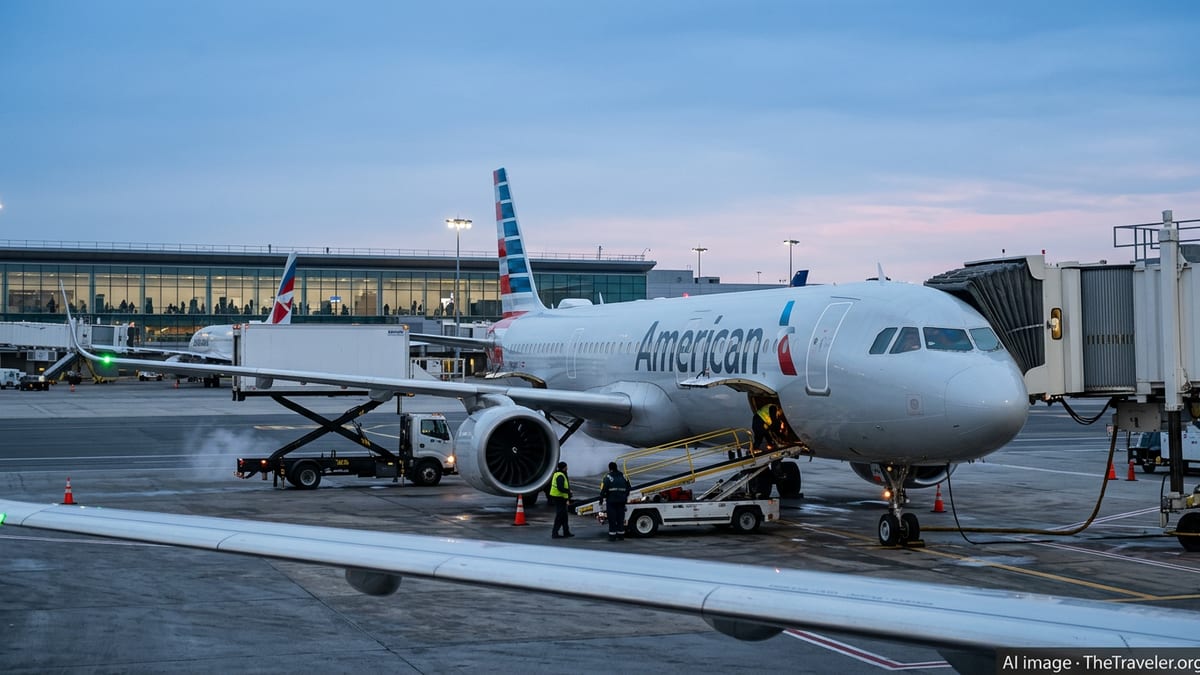
American Airlines is leaning on surprisingly resilient travel demand and stronger revenues to soften the blow of soaring jet fuel prices in 2026, as the carrier navigates a volatile energy market during a broader phase of global aviation recovery.
Get the latest news straight to your inbox!
Solid Revenue Performance Offsets Fuel Hit
Recent financial disclosures show American Airlines entering 2026 with stronger top-line momentum even as fuel costs surge to multi‑year highs. Publicly available information on the company’s first-quarter 2026 results indicates revenue of nearly 14 billion dollars, up by double digits compared with a year earlier, supported by both leisure and corporate travel. Analysts note that the airline posted one of its narrowest quarterly losses since the pandemic era, suggesting that underlying demand remains robust despite higher fares.
American has also reported that the first quarter delivered some of the highest weekly revenue intake figures in its history, underscoring how consumers are continuing to prioritize air travel for both business and personal trips. This steady appetite for seats is helping the carrier absorb the sharp run‑up in fuel prices tied to geopolitical tensions and supply disruptions in global oil markets.
Guidance for the second quarter of 2026 points to continued revenue growth, particularly in the domestic market and in corporate volumes, which had lagged leisure recovery earlier in the cycle. The airline’s updated outlook signals that it expects to partially recapture elevated fuel expenses through a mix of fare adjustments and strong load factors, although margins remain under pressure.
Independent earnings analyses highlight that American has also continued to chip away at its sizable debt load, pushing total debt below 35 billion dollars for the first time in more than a decade. That deleveraging effort gives the carrier slightly more room to maneuver as operating costs climb and provides investors with some reassurance that the balance sheet is steadily improving alongside demand.
Fuel Shock Reshapes Cost Calculus
Across the airline industry, the 2026 spike in energy prices has quickly become the dominant story. Jet fuel benchmarks tracked by industry groups have more than doubled at points this year compared with recent averages, driven by the conflict involving Iran and disruptions around the Strait of Hormuz. Market commentary from aviation energy analysts indicates that jet fuel crack spreads over crude widened sharply in the first quarter of 2026, magnifying the cost hit for carriers.
American Airlines has been especially exposed to these moves because fuel is one of its largest line items, representing roughly a quarter or more of operating expenses in typical years. Sector research cited in aviation trade publications suggests that higher jet fuel prices could add more than 4 billion dollars to the company’s 2026 fuel bill if current pricing persists, a shift that has already prompted American to narrow its full‑year profit forecast and acknowledge the risk of a breakeven or modestly loss‑making outcome.
Energy market outlooks compiled by consultancies and rating agencies earlier in the year had assumed jet fuel prices below 2.50 dollars per gallon on average in 2026. Those assumptions are now being revisited as spot prices and forward curves move higher. Some forecasters have trimmed margin expectations for U.S. carriers by around one percentage point in response, underscoring how quickly the cost landscape has changed.
At the same time, American’s management framework emphasizes that a large share of the fuel inflation may be recoverable if demand holds up. Internal planning targets referenced in analyst reports suggest that the airline aims to recapture an increasing share of the fuel shock over the course of the year, through a combination of pricing, network optimization and ancillary revenue initiatives.
Resilient Demand Underpins Pricing Power
The resilience of passenger demand has been the critical offset to the fuel spike. Data from the International Air Transport Association for early 2026 indicate that global passenger traffic continued to grow year on year, with both international and domestic segments contributing. Airport traffic forecasts from organizations such as Airports Council International point to sustained long‑term growth in air travel, even against a backdrop of higher ticket prices.
Within the United States, industry commentary shows that demand for peak‑season travel and long‑haul international routes remains particularly strong. Travel and finance publications report that fares on many transatlantic and premium leisure routes have risen noticeably, yet planes are still departing with high load factors. For American, this environment supports efforts to raise yields and adjust capacity away from weaker markets while still keeping overall volumes elevated.
Independent research notes that American’s revenue recovery is increasingly broad‑based, with its large loyalty program and co‑branded credit card partnerships helping to bolster revenue per passenger. These ancillary and non‑ticket income streams provide another cushion against operating cost volatility, allowing the carrier to maintain a focus on profitable flying rather than deep discounting.
Consumer behavior surveys conducted by travel industry groups suggest that, while some households are becoming more price‑sensitive, many travelers are willing to absorb moderate fare increases or adjust trip timing rather than canceling air travel altogether. That willingness to pay is central to American’s strategy of managing fuel exposure through pricing and revenue management instead of resorting to sweeping capacity cuts.
U.S. Carriers Fare Better Than Weaker Rivals
The 2026 fuel shock has created a sharp divide between relatively well‑capitalized network airlines and more fragile low‑cost or regional carriers. International coverage of the crisis notes that at least one U.S. ultra‑low‑cost airline ceased operations this spring after fuel costs compounded earlier financial strains. In contrast, the largest U.S. carriers, including American, have so far avoided drastic schedule reductions, instead trimming select frequencies and rebalancing their networks.
Analysts point out that scale, diversified route networks and access to capital markets give airlines such as American more flexibility to weather prolonged periods of cost pressure. Hedging positions, fleet renewal programs that introduce more fuel‑efficient aircraft, and the ability to pivot capacity toward higher‑yield markets all help mitigate the impact of higher fuel prices.
Global comparisons show that some European and Asian airlines, which rely more heavily on imported Middle Eastern oil and face additional regulatory costs, may be under greater strain. Reports from international media outlets describe route cancellations, aggressive surcharges and heightened financial risk for several carriers outside the United States. By contrast, American and its major U.S. peers are generally viewed as better positioned to navigate the current shock, although not immune to earnings downgrades.
Credit assessments from rating agencies characterize rising jet fuel prices as a growing risk factor for U.S. airline credit quality but also emphasize that steady demand, modest capacity growth and balance sheet repair have improved the sector’s resilience compared with earlier periods of energy volatility. American’s ongoing debt reduction is frequently cited as a key element of that improved profile.
Recovery Momentum Meets Long‑Term Transition
The current squeeze is unfolding against a broader backdrop of post‑pandemic recovery and long‑term structural change in aviation. Forecasts from global aviation bodies anticipate that passenger volumes will continue to trend higher through 2026 and beyond, even as airlines confront higher energy costs, tighter environmental regulation and evolving business travel patterns.
At the same time, the fuel shock has renewed attention on sustainable aviation fuel and new aircraft technologies designed to reduce fuel burn. Industry analyses suggest that, while sustainable fuels still account for only a small fraction of global jet consumption, rising fossil fuel prices and regulatory pressure in regions such as Europe are accelerating investment and policy support. Large carriers like American are watching these developments closely as they weigh future fleet and fuel strategies.
For travelers, the combination of resilient demand and elevated fuel costs is likely to mean persistently higher fares and more dynamic pricing, particularly during peak seasons and on popular international routes. Travel advisories from consumer finance outlets advise passengers to expect fewer last‑minute deals and more volatility in ticket prices as airlines adjust capacity and revenue management models in real time.
For American Airlines, the challenge in 2026 is to sustain demand and revenue gains while managing the near‑term earnings drag from energy markets and positioning for a future in which fuel efficiency and decarbonization become even more central to competitive strategy. The latest guidance suggests that, for now, resilient travel appetite is providing a meaningful buffer against the fuel shock, even as the industry braces for continued volatility.