


More news on this day
A sudden cancellation on American Airlines’ busy Seoul Incheon to Dallas Fort Worth route has left passengers scrambling for options and drawn fresh attention to the mounting operational pressures facing international airlines in 2026.
Get the latest news straight to your inbox!
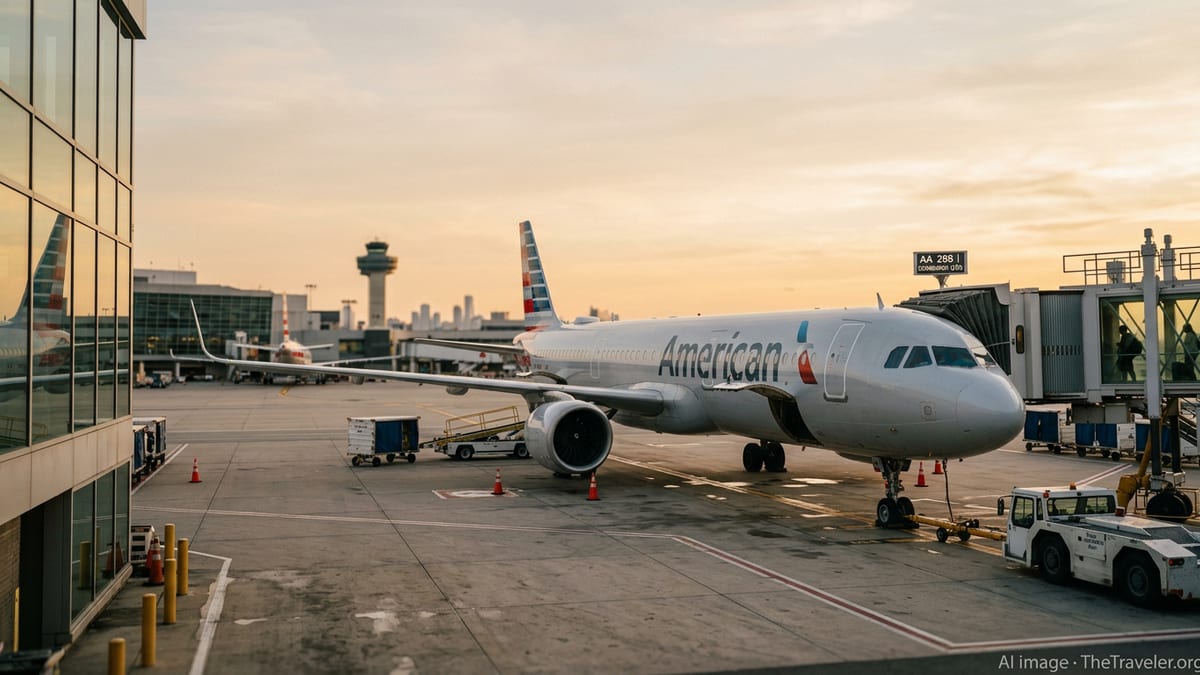
Disrupted Departure From Seoul Highlights Fragile Long-Haul Networks
The latest disruption originated in Seoul, where travelers bound for Dallas Fort Worth reported an abrupt cancellation of an American Airlines service just as boarding was getting underway. Social media posts and online travel forums describe a fully boarded flight at Incheon International Airport being halted when the aircraft was declared out of service, with passengers subsequently directed back into the terminal to await rebooking options.
Publicly available flight data shows that American’s Seoul Incheon–Dallas Fort Worth operation is typically structured as a single daily long-haul connection, marketed as AA280/AA281, linking one of Asia’s largest transit hubs with the carrier’s primary Texas gateway. When that single rotation fails, there is limited same-day backup capacity, which amplifies the impact on travelers, particularly those relying on onward domestic or Latin American connections from Dallas.
Reports indicate that alternative options for affected customers included re-accommodation on the following day’s American service or rerouting via partner and competitor carriers in the wider transpacific network. For passengers on tight schedules or with complex itineraries, this has translated into extended layovers, missed meetings, and the need to rearrange hotel and ground transport plans at short notice.
The disruption adds to a pattern of sporadic reliability challenges on ultra-long-haul services, where aircraft utilization is tightly planned and spare capacity is limited. Industry observers note that any last-minute technical issue on these routes can quickly cascade into multi-day itinerary changes for travelers.
Dallas Fort Worth Hub Feels the Ripple Effects
The cancellation in Seoul has also been felt several thousand miles away at Dallas Fort Worth, where American Airlines uses its largest hub to funnel transpacific arrivals onto dozens of domestic and regional departures. When an incoming flight from Incheon is removed from the schedule, connecting itineraries across the United States, Mexico, and parts of Central America can be thrown off balance.
Flight-tracking and schedule tools show that American’s DFW–ICN rotation is woven into a dense web of banked departures out of Dallas, designed to maximize same-day onward connections. Removing even one transpacific arrival from that bank can mean rebooking passengers onto later flights, spreading the disruption across the rest of the day’s operations. In some cases, travelers arriving a day later than planned may face overnight stays and repositioning flights to reach their final destinations.
Travel forums and customer reports from this year’s winter and spring travel periods describe Dallas Fort Worth as a focal point whenever American makes sudden long-haul schedule adjustments. Episodes of severe weather and staffing constraints in previous months have already tested the resilience of the hub, and fresh transpacific disruptions are reviving debate among frequent fliers about whether to build in longer connection windows when traveling through DFW.
For business travelers in particular, the knock-on effects are significant. Missed morning arrivals can translate into lost working days, while delayed returns from Asia complicate project timelines and corporate travel budgets. Leisure travelers, meanwhile, face the emotional and financial stress of cutting short long-planned vacations or extending hotel stays unexpectedly.
South Korea’s Aviation Market Under Renewed Strain
The disruption on American’s Seoul–Dallas route comes at a sensitive moment for South Korea’s aviation market. Incheon International Airport has rebounded strongly from the pandemic era, with carriers rebuilding transpacific and regional capacity as demand for both business and leisure travel surges. However, that recovery has brought its own pressures, from congested peak-time operations to tight maintenance and staffing windows for long-haul fleets.
Published timetables show that travelers between Seoul and the Dallas–Fort Worth region currently rely primarily on a mix of American’s nonstop services and competing itineraries via other Asian and North American hubs. While this provides choice on most days, the overall number of direct seats on the city-pair remains comparatively constrained when measured against other major transpacific markets such as Seoul–Los Angeles or Seoul–San Francisco.
Any extended reduction or irregularity in American’s Incheon operation would therefore place additional strain on alternative routings, particularly those offered by other global carriers linking Seoul to the central and southern United States. Even short-lived cancellations can generate temporary spikes in fares and load factors on competing services as displaced passengers search for last-minute seats.
South Korean travel agents and online booking platforms are reporting heightened interest in flexible tickets and multi-carrier itineraries for long-haul trips, reflecting a broader regional trend toward hedging against sudden schedule changes. The latest cancellation is likely to reinforce that behavior, especially among travelers who depend on time-sensitive transpacific connections.
Global Airlines Face Mounting Operational and Capacity Pressures
The Seoul–Dallas disruption also fits within a wider pattern of pressure on global airlines in 2026. Industry data and financial results across major carriers point to a stubborn mismatch between strong demand for international travel and the capacity, staffing, and aircraft availability needed to serve it reliably.
American Airlines, like many of its peers, has been re-optimizing its long-haul network, retiring older aircraft, and concentrating resources on high-yield routes linking major hubs. Published route maps and recent announcements highlight sustained investment in transatlantic and Latin American growth from Dallas Fort Worth and other U.S. hubs, even as transpacific capacity continues to recover more slowly and remains vulnerable to single-aircraft disruptions.
Observers note that airlines are also grappling with global supply chain constraints affecting aircraft parts, extended turnaround times for heavy maintenance, and intense competition for skilled technicians and flight crews. In this environment, an aircraft going out of service for technical reasons can be much harder to replace quickly, especially on long-distance routes that require specific aircraft types and crew qualifications.
These structural challenges help explain why a single cancelled Seoul–Dallas rotation can reverberate across multiple continents. For travelers, the episode underlines the value of monitoring flight status closely, building additional buffer time into tight connections, and understanding their rights to rebooking and care when long-haul services are disrupted.
Travelers Reassess Strategies on the Seoul–U.S. Corridor
In the aftermath of the latest cancellation, travelers using the Seoul–United States corridor appear increasingly focused on resilience as much as on price and flight time. Online discussions suggest a growing preference for itineraries that allow for multiple same-day alternatives in case of disruption, even if that means connecting through busier but more diversified hubs.
For passengers committed to American Airlines and its oneworld partners, Dallas Fort Worth remains a powerful gateway, offering extensive onward connectivity once flights arrive as scheduled. However, the experience of being stranded after a long-haul cancellation is prompting some customers to diversify their strategies, including combining carriers or breaking up journeys with overnight stops to reduce the risk of missed connections.
Industry analysts expect that airlines serving Seoul will face continued scrutiny over their handling of disruptions, particularly on high-profile routes linking Asia to major U.S. hubs. Clear communication, proactive rebooking, and transparent compensation policies are emerging as key differentiators in an increasingly competitive market.
As international travel volumes continue to grow, the Seoul–Dallas Fort Worth route will remain a barometer of how well large network carriers such as American can balance ambitious global schedules with the operational resilience demanded by long-haul passengers in 2026.