


More news on this day
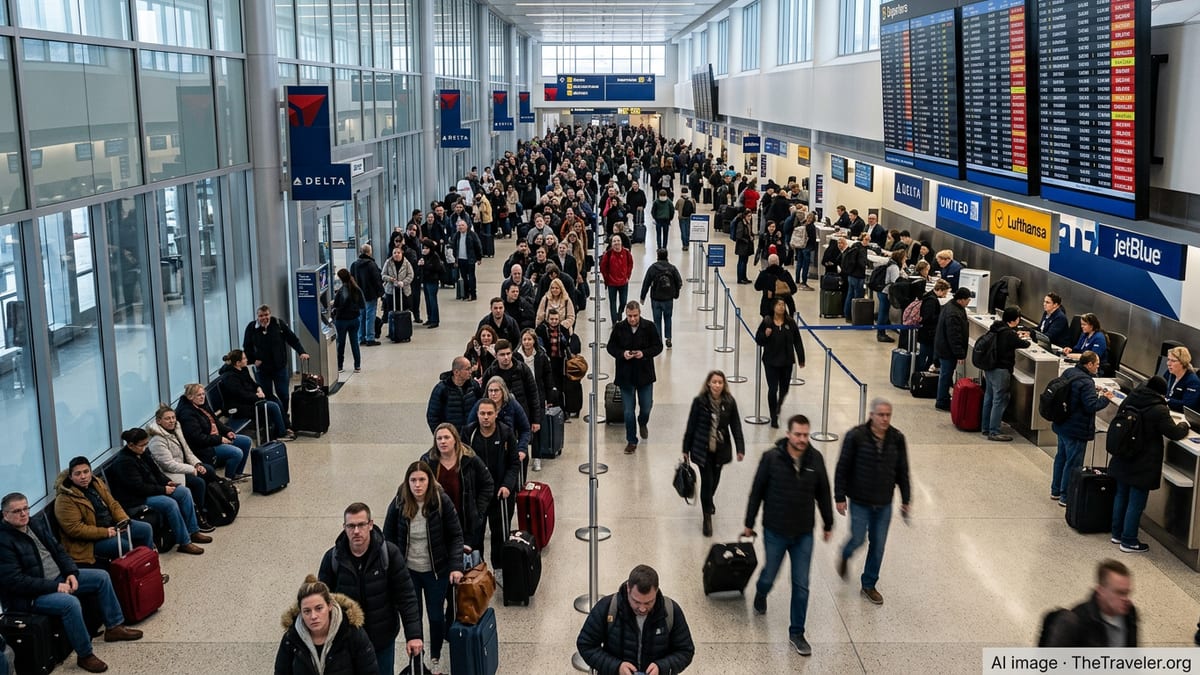
Travelers moving through John Wayne Airport in Orange County on June 14 faced a difficult start to the peak summer weekend as American Airlines and Delta Air Lines suspended three departures and reported a series of delays affecting major domestic routes to cities including San Jose, Salt Lake City, Chicago, Seattle and San Francisco.
Get the latest news straight to your inbox!
Targeted Suspensions Hit Busy West Coast and Mountain Routes
Publicly available flight status boards for John Wayne Airport on Sunday showed American Airlines and Delta temporarily suspending three flights that typically connect Orange County to key West Coast and Mountain West gateways. The affected services included departures normally routed to San Jose and San Francisco in Northern California, as well as a Delta-operated link that feeds into the Salt Lake City hub, a critical connection point for itineraries across the western United States.
The suspensions appeared within a broader pattern of schedule adjustments across both carriers, with some flights removed from sale or zeroed out in booking systems rather than posted as day-of cancellations. Aviation tracking tools indicated that the suspended services were not operating their usual Sunday patterns, leaving some regular travelers to discover the gap only when attempting to check in or rebook.
These routes rank among the most heavily used from Orange County for both business and leisure trips. Connections via San Jose and San Francisco support the Bay Area technology corridor, while Salt Lake City serves as a gateway to mountain destinations and onward connections to the Midwest and East Coast.
Although a number of alternative flights on other airlines continued to operate, the loss of these three departures reduced overall capacity on some of the airport’s most popular corridors at the height of the June travel rush.
Ripple Effects Reach Chicago, Seattle, San Francisco and Beyond
Beyond the outright suspensions, American Airlines and Delta passengers at John Wayne Airport encountered a wave of delays that extended the disruption far beyond Southern California. Tracking data for flights touching Orange County on June 14 showed late departures and arrivals on services that link SNA with Chicago, Seattle and San Francisco, as well as several secondary markets across the country.
The knock-on effects were most visible on hub routes, where a late pushback from Orange County threatened to break tight connections further down the line. For passengers bound for the Midwest through Chicago, or the Pacific Northwest through Seattle, even modest initial delays at SNA translated into missed onward flights and extended layovers at intermediate hubs.
Bay Area routes were also under pressure. While some services between John Wayne and San Francisco or San Jose operated close to schedule, others showed delayed departure times or extended taxi-out periods, reducing the margin for travelers relying on same-day connections or time-sensitive meetings.
The pattern at John Wayne mirrored a broader picture across the national network, where both airlines have been operating with thinner buffers and high load factors. Under those conditions, a small cluster of local disruptions can quickly propagate into longer delays across multiple time zones.
Operational Strain and a Tight Summer Schedule
Industry data for 2026 show that both American and Delta entered the summer with limited slack in their schedules after several years of demand recovery. Analyses of federal on-time performance statistics indicate that American has carried a higher proportion of delays than Delta so far this year, while Delta has generally held a stronger punctuality record despite its own operational challenges.
On days like June 14, the combination of full flights, busy hubs and tight turnaround times can leave airlines with little room to absorb even minor issues. A late-arriving inbound aircraft, a brief ground hold at a hub or a crew scheduling complication can all contribute to a chain of delays affecting multiple departures from a station such as John Wayne Airport.
In this environment, suspending a small number of flights can become an operational tactic, allowing carriers to consolidate passengers and aircraft and reduce the risk of wider systemic disruption. While that approach may stabilize the network on paper, it also concentrates inconvenience on the specific travelers booked on the suspended services.
Publicly accessible planning documents and travel advisories from the airlines have emphasized the need for passengers to monitor their reservations closely during periods of irregular operations and to build additional time into connections when possible.
Impact on Travelers and Limited Rebooking Options
For those at John Wayne Airport on Sunday, the suspensions and delays translated into longer waits in terminals, missed events and last-minute itinerary changes. With three flights removed from the schedule and multiple others running late, some passengers faced a scarcity of same-day alternatives that would get them to their destinations at or near their original arrival times.
West Coast travelers attempting to reach the Bay Area found themselves competing for open seats on remaining departures, including services operated by other carriers from Orange County or nearby airports in Los Angeles and Long Beach. Those headed to or through Salt Lake City, Chicago or Seattle often needed to accept longer routings or overnight stays when available connections did not line up with the disrupted schedules.
Public guidance from consumer advocates consistently recommends that passengers in such situations check their flight status repeatedly in the hours before departure, explore options from nearby airports and consider contacting the airline through multiple channels, including apps and digital tools, rather than relying solely on airport counters. In a constrained network, seats on later flights and alternative routings can disappear quickly as carriers re-accommodate affected travelers.
Travel insurance and credit card protections may offer partial relief in some cases, but coverage depends on the specific cause of the disruption and the policy terms. Travelers are generally advised to keep documentation of delays, boarding passes and any out-of-pocket expenses incurred during extended disruptions.
What John Wayne Passengers Should Watch in the Coming Days
With the peak summer period still ramping up, the operational issues experienced at John Wayne Airport on June 14 may foreshadow further pressure on schedules at busy regional airports across the country. The combination of high demand, limited spare aircraft and complex crew logistics leaves carriers little margin for error, especially on short-haul routes that support multiple daily frequencies.
Travelers using SNA in the coming days and weeks may wish to pay particular attention to early morning and late evening departures, when aircraft utilization is highest and disruptions earlier in the day can cascade into the remaining schedule. Routes that rely heavily on hub connections, such as those to Chicago, Seattle and Salt Lake City, may be especially vulnerable to wider system delays.
Experts who monitor airline operations suggest that passengers build flexibility into their plans where possible, including considering slightly longer connection times and avoiding tight same-day turnarounds for critical events. Selecting mid-day departures, when available, can sometimes reduce exposure to the worst ripple effects of morning or evening disruptions.
While Sunday’s suspensions and delays affected only a small portion of John Wayne’s overall traffic, the experience highlighted how quickly operational strain at two major carriers can disrupt travel plans across a wide network of domestic routes, from the Bay Area to the Mountain West and the Midwest.