


More news on this day
More than 100 flight delays and at least 10 cancellations at Fort Lauderdale–Hollywood International Airport are disrupting travel for passengers across the United States and beyond, affecting services to New York, Newark, Bogotá, Toronto and other major destinations.
Get the latest news straight to your inbox!
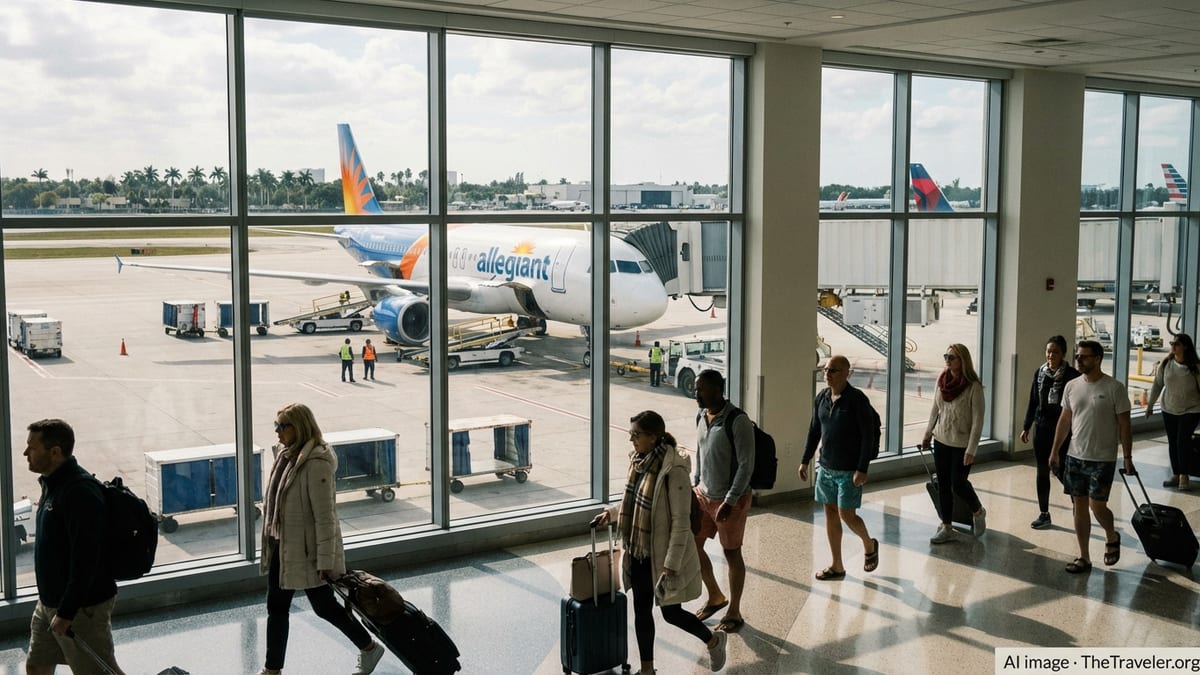
Broad Disruptions Across Major Carriers
Publicly available tracking data for June 14 shows Fort Lauderdale–Hollywood International Airport experiencing a wave of operational disruption, with around 114 departures and arrivals delayed and at least 10 flights cancelled across several major airlines. The impact spans both domestic and international routes, with connections to New York area airports, Newark, Bogotá and Toronto among those affected.
JetBlue, Delta Air Lines, Southwest Airlines and American Airlines are among the carriers most visible on Fort Lauderdale’s departure boards, which list frequent services to New York LaGuardia, John F. Kennedy International, Newark Liberty International and Toronto Pearson International. These routes rank among the airport’s busiest, meaning even a limited number of cancellations can quickly cascade into missed connections and overcrowded terminals as schedules bunch up over the course of the day.
Data from route and schedule databases highlights Fort Lauderdale’s heavy reliance on links to the New York metropolitan region and to key hubs in Canada and Latin America. That pattern of traffic increases the likelihood that disruption in South Florida ripples outward, creating knock‑on delays for passengers well beyond Broward County.
Key Routes Affected to New York and Newark
Flight‑status services tracking Fort Lauderdale departures show multiple interruptions on the high‑frequency corridor between South Florida and New York. Reports from Trip.com indicate that Delta Air Lines flight DL2321 from Fort Lauderdale to New York LaGuardia was cancelled, while separate data lists Delta flight DL1422 from Fort Lauderdale to New York JFK as cancelled on the same day. These cancellations are in addition to a broader field of delayed departures on New York‑bound services.
Additional tracking information points to further strain on the route network. Airportia data shows that flights connecting Fort Lauderdale with New York, including services by other carriers, have registered late departures or cancellations in recent days, suggesting that operations on the corridor have been under pressure over more than a single rotation.
Newark, one of Fort Lauderdale’s busiest destinations, has also seen disruption according to airport schedule summaries and real‑time monitoring tools. With Newark handling substantial connecting traffic for both domestic and international itineraries, delays on Fort Lauderdale–Newark flights can lead to missed onward flights, particularly for travelers routing to the U.S. Midwest, Canada or transatlantic destinations.
International Links to Bogotá and Toronto Disrupted
The operational challenges at Fort Lauderdale are not confined to U.S. domestic routes. Fort Lauderdale’s role as a gateway to Latin America and the Caribbean means that delays and cancellations also affect international passengers. Published airport route data lists Bogotá and Toronto among the key overseas destinations served from Fort Lauderdale, and Saturday’s disruption has touched these markets as well.
Departures information shows delayed services bound for major Latin American capitals, including Bogotá, as aircraft and crews fall behind schedule. Even modest delays on these flights can lead to tighter arrival windows and missed ground connections, especially for passengers continuing to smaller cities in Colombia or neighboring countries.
Toronto, one of Fort Lauderdale’s top international destinations, has similarly been affected by the day’s irregular operations. With several Canadian carriers and partner airlines using Fort Lauderdale as a winter and shoulder‑season gateway, any interruption on the Toronto route can leave travelers facing long rebooking queues or overnight stays when available seats become scarce.
Operational and Weather Factors Behind the Disruptions
Real‑time tracking platforms and federal aviation statistics point to a combination of factors that commonly trigger days of widespread delay similar to those seen at Fort Lauderdale. The U.S. Department of Transportation’s consumer reports attribute many delays nationwide to air carrier issues such as maintenance and crew availability, along with air‑traffic constraints and adverse weather conditions along busy corridors.
On high‑density routes from Fort Lauderdale to the New York area and Newark, even routine thunderstorms or low clouds can slow arrival and departure rates at constrained airports, causing schedules to back up. When aircraft arrive late in South Florida, they often depart late for their next leg, multiplying the number of delayed flights over several hours.
Historical performance data for JetBlue, Delta and Southwest compiled by federal transportation agencies show that these carriers generally complete the vast majority of their schedules, but that a small share of flights are cancelled over the course of a typical month. When multiple cancellations occur on a single day from one airport, as seen with Fort Lauderdale’s count of at least 10, the localized impact can feel significant for travelers in the terminals.
What Travelers Are Experiencing and Practical Next Steps
Passengers transiting Fort Lauderdale today are facing a mix of extended waits at departure gates, last‑minute gate changes and lineups at airline service counters as they seek alternative connections to New York, Newark, Bogotá, Toronto and other onward destinations. The clustering of delays creates pressure on terminal facilities, with seating and charging points in particularly high demand during peak departure banks.
Publicly available guidance from airlines and regulators suggests that affected travelers should monitor their flight status frequently using airline apps and airport information screens, as departure times can shift multiple times during disruptions. For those with tight connections in New York or Newark, same‑day rebooking onto earlier or later flights from Fort Lauderdale may help preserve onward itineraries.
Consumer information from the U.S. Department of Transportation notes that in the United States, carriers are generally not required to compensate passengers for delays caused by weather or air‑traffic constraints, but many airlines provide meal vouchers, hotel accommodations or rebooking assistance in cases where disruptions result from factors within the airline’s control. Travelers are encouraged to review the specific policies of JetBlue, Delta, Southwest, American and any partner carriers when deciding how to respond to extended delays or cancellations.
With Fort Lauderdale serving as a major node for both domestic U.S. travel and international flights to Canada and Latin America, the day’s 114 delays and 10 cancellations illustrate how quickly conditions at a single airport can reverberate through a much wider network, reshaping travel plans for passengers well beyond South Florida.