


More news on this day
Torrential monsoon rains and overlapping storm systems across Asia have unleashed one of the region’s most disruptive travel days this year, with publicly available aviation data indicating more than 3,800 flight cancellations and delays across key hubs from Tokyo and Seoul to New Delhi, Bangkok and Manila, triggering knock-on disruption across global airline networks.
Get the latest news straight to your inbox!
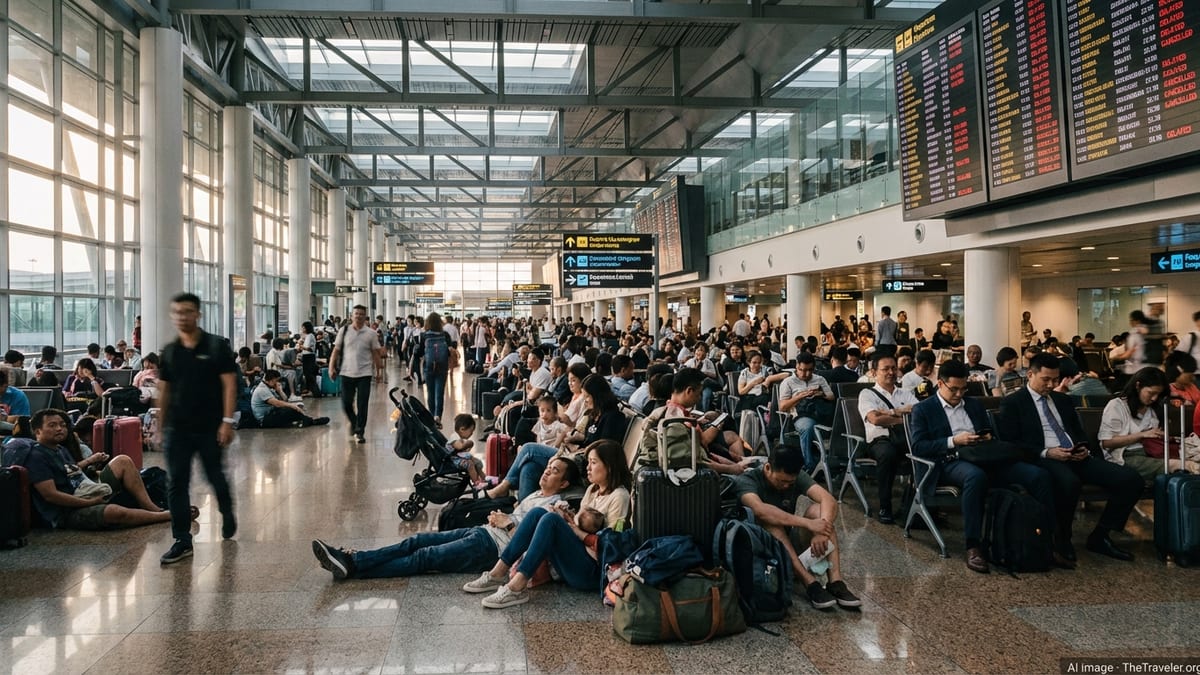
Monsoon Rains and Typhoons Converge Over Key Asian Hubs
Weather monitors and regional media report that the annual southwest monsoon has now pushed across large parts of South and Southeast Asia, bringing intense downpours, localized flooding and reduced visibility at several large gateway airports. At the same time, early-season tropical systems in the western Pacific, including Typhoon Jangmi over Japan and lingering moisture from Typhoon Domeng in the Philippines, have added further instability to an already volatile pattern.
Published coverage from Japan and the Philippines indicates that hundreds of domestic and regional services were cancelled or heavily delayed as strong winds and persistent rain swept across coastal areas and major population centers. Flight-status dashboards in Japan showed widespread disruption, with cancellations concentrated on routes linking Osaka, Tokyo and regional airports in Shikoku and Kyushu as operators waited for conditions to improve.
Across South Asia, meteorological agencies have warned that intense, short-lived downpours are likely even in areas expecting a relatively weak monsoon season. Reports from India highlight heavy rainfall in cities such as Hyderabad and New Delhi, where storm cells have periodically forced temporary suspensions of takeoffs and landings, diversions to alternate airports and extended ground-holding for arriving flights.
In Southeast Asia, seasonal thunderstorms and monsoon squalls have affected busy transfer hubs in Bangkok, Kuala Lumpur, Manila and Jakarta. Aviation tracking platforms and airport-operational updates show banks of delays building during afternoon and evening peak periods as storms pass over key approach and departure paths, forcing wider separation between aircraft and prompting crews to wait out unsafe conditions.
More Than 3,800 Flights Affected Across the Region
Aggregated figures from flight-tracking dashboards, airport status pages and regional media suggest that more than 3,800 flights across Asia and adjoining Middle Eastern corridors have been cancelled or delayed within a 24-hour window during the current monsoon surge. On their own, individual days of disruption in recent weeks have already seen tallies above 3,000 affected flights, and the latest wave of weather-related turbulence has pushed the cumulative impact still higher.
Data collated from recent peaks indicate that on the most heavily affected days, over 300 flights were cancelled outright while several thousand more operated behind schedule. Large hubs in China, India, Japan and the Gulf have consistently featured in rankings of flight disruption, reflecting their role as transfer points for both regional and long-haul traffic linking Asia with Europe, North America and Africa.
Industry-focused outlets report that carriers including major full-service airlines and low-cost operators have been forced to trim schedules, reroute services and extend turnaround times as crews and ground handlers work through longer backlogs. On some routes, aircraft rotations have slipped by several hours, leaving passengers facing missed connections and overnight stays even when their originating flight eventually departed.
The disruption has not been confined to Asia alone. As delayed aircraft and crew failed to reach onward destinations on time, long-haul services to and from North America and Europe also felt the impact. Publicly available timetables and tracking feeds show cases where late inbound aircraft from Asia forced secondary delays on transpacific and trans-Eurasian connections, spreading the effects of the monsoon gridlock across multiple continents.
Airports Struggle With Capacity Limits in Extreme Weather
The current bout of travel chaos has again exposed how little slack exists in some of Asia’s busiest airports when heavy weather hits during peak travel windows. Analysts note that many large hubs already operate close to their declared capacity for much of the day, leaving limited room to absorb the cascading effects of ground stops, go-arounds and diversions once thunderstorms or monsoon squalls move overhead.
Operational summaries from regional aviation coverage describe long queues of aircraft waiting to depart or land as controllers reduce movement rates for safety reasons, particularly when visibility drops or crosswinds exceed limits for smaller types. Even relatively short suspensions can create a significant backlog when dozens of flights are scheduled to push back or arrive within the same narrow time band.
In several cities, heavy rain has also disrupted landside access and airport infrastructure. Reports from Indonesia describe how earlier structural issues at terminals have compounded congestion when passengers and staff are funneled through reduced gate areas or temporary boarding arrangements. In India and parts of Southeast Asia, surface flooding on roads leading to airports has slowed the arrival of both passengers and crew, adding an additional layer of complexity to recovery efforts.
Observers point out that while most airports in the region are accustomed to monsoon conditions, shifting climate patterns and more intense downpours are raising questions about the resilience of existing drainage, runway surfaces and terminal facilities. Aviation planners are increasingly focused on how to maintain safety margins while also preventing routine monsoon events from translating into region-wide travel breakdowns.
Ripple Effects for Airlines, Crews and Passengers
For airlines, the latest wave of monsoon-related disruption has reinforced how quickly weather can erode schedule reliability at the height of the summer travel period. Industry commentary notes that tightly wound aircraft rotations, high seat loads and persistent staffing pressures leave little buffer when aircraft are held on the ground or diverted, and that even a handful of heavily delayed flights in the morning can disrupt dozens more by evening.
Publicly available information from flight-status feeds shows aircraft spending extended periods in holding patterns near congested hubs, burning extra fuel and pushing crew duty hours toward regulatory limits. Once those limits are reached, flights may face further delays or cancellations while replacement crews are located, particularly on long-haul and overnight sectors where specialized certifications are needed.
Passengers have felt the consequences in crowded terminals, long rebooking queues and stretched hotel capacity near major hubs. Travel advisories from consumer groups and aviation portals are again urging travelers to monitor airline apps and airport boards closely in the 24 hours before departure, keep boarding passes and receipts in case compensation is available, and allow extra time for connections, particularly when changing airlines or terminals.
Some travelers have also encountered challenges securing prompt refunds or alternative itineraries when cancellations are officially categorized as weather-related, which often limits mandatory compensation in many jurisdictions. Analysts note that while safety considerations remain paramount during severe weather, the combination of rising disruption frequency and complex ticketing arrangements is intensifying scrutiny of how airlines communicate options to affected customers.
What Travelers Can Expect As Monsoon Season Deepens
With the southwest monsoon still advancing across the subcontinent and seasonal weather patterns expected to persist in East and Southeast Asia over the coming weeks, aviation observers see little prospect of a quick end to weather-driven disruptions. Forecasts and recent experience suggest that even if headline storms such as Typhoon Jangmi weaken or move away, the broader monsoon environment can sustain repeated bursts of heavy rain, low cloud and strong winds at short notice.
Travel publications and meteorological briefings are advising passengers with upcoming itineraries to build more resilience into their plans wherever possible. Recommendations include scheduling key long-haul departures earlier in the day, when afternoon storm risks may be lower, and avoiding very tight self-connecting itineraries that rely on separate tickets and airlines, which can be harder to rebook if one leg fails.
Frequent travelers in the region are also encouraged to track both weather forecasts and airport-level performance in the days before departure. Patterns observed so far this season indicate that certain hubs tend to experience repeated pressure during specific weather setups, allowing flexible travelers to consider alternative routings through less congested airports when booking.
While aviation data shows that most flights in Asia still operate broadly on time even during the monsoon period, the latest spike in cancellations and delays illustrates how rapidly conditions can change. For now, both airlines and passengers face an extended period of heightened uncertainty, as the region’s vital air corridors contend with another turbulent monsoon season.