


More news on this day
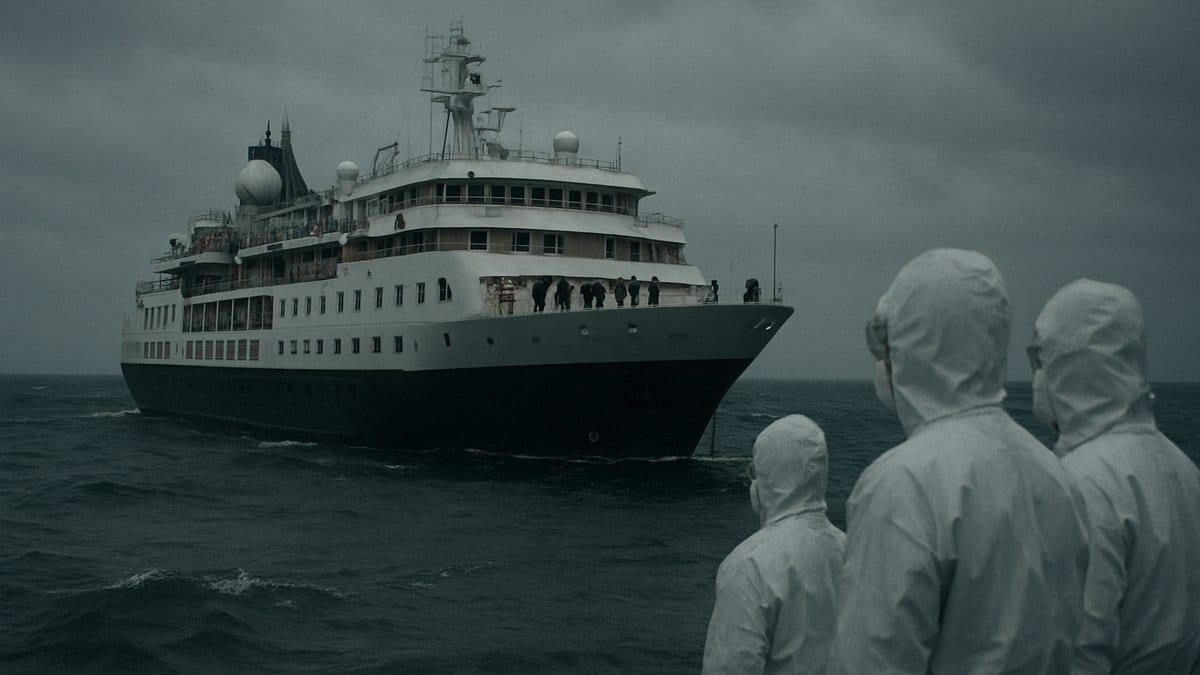
As the expedition cruise ship MV Hondius remains stranded off the coast of West Africa following a deadly suspected hantavirus outbreak, an American passenger’s account of life on board is providing a rare glimpse into the mood, routines and rising anxiety among the roughly 150 people still at sea.
Get the latest news straight to your inbox!
From Expedition Voyage to Prolonged Isolation
Publicly available information shows that the Dutch-flagged MV Hondius departed Ushuaia, Argentina, in early April on a long expedition itinerary marketed as an adventure through Antarctica and some of the world’s most remote Atlantic islands. The voyage was scheduled to conclude in the Cape Verde archipelago in early May, with a passenger list dominated by travelers from Europe and North America, including several Americans.
That plan unraveled in mid-April, when a Dutch passenger died after developing acute respiratory symptoms, followed by additional serious illnesses and two more deaths linked to the suspected hantavirus outbreak. Reports indicate that by this week, health agencies were tracking at least seven confirmed or suspected cases tied to the ship, and dozens of other passengers and crew were being monitored for symptoms.
Cruise-travel coverage and social media posts describe an abrupt shift on board from a rhythm of landings, lectures and wildlife viewing to a static existence at anchor off Cape Verde, as port authorities instructed the ship to remain at sea. For the American passenger now documenting the experience, what began as a once-in-a-lifetime adventure has turned into an open-ended quarantine far from home.
According to published coverage, the change was gradual rather than instantaneous: shore excursions were curtailed, group gatherings scaled back and then canceled, and eventually most of the ship’s life compressed into individual cabins and a handful of controlled public spaces.
Cabin Life, Restricted Movement and New Routines
Accounts from the American traveler and fellow passengers describe a vessel where daily life is now structured around health protocols and containment measures rather than exploration. Cabin doors that once opened out onto a busy social corridor now typically remain shut, with passengers encouraged to stay inside for long stretches to limit contact.
Reports indicate that meals are increasingly staggered or delivered to cabins, particularly for those considered close contacts of confirmed or suspected cases. Passengers describe learning to live within a few square meters, turning beds into workspaces, window ledges into gym equipment and narrow balconies into much-needed exposure to fresh air.
Published descriptions suggest that simple routines have taken on outsized importance. Some passengers adopt strict daily schedules that include stretching, digital journaling and virtual meetups via messaging apps, in an attempt to manage stress and preserve a sense of normalcy. Others reportedly line up, at prescribed distances, for brief moments on open decks when allowed, treating every glance of the Cape Verde coastline as both reassurance and reminder of their confinement.
For the American passenger, this controlled environment appears to be both a shelter and a source of unease. On the one hand, the measures are framed as necessary to slow any possible human-to-human transmission of the virus. On the other, the lack of freedom of movement, the constant checks and the hum of shipboard ventilation systems emphasize just how abruptly the voyage has changed.
Anxiety, Grief and the Psychological Toll at Sea
Reports from international and regional outlets highlight a growing psychological strain on those still aboard. News of three passenger deaths, medical evacuations to shore and the possibility of additional infections has weighed heavily on a relatively small community where nearly everyone has shared dining rooms, lecture halls and zodiac boats.
The American passenger’s account, echoed in other testimonies cited by travel and general news media, focuses on the emotional collision between the ship’s earlier camaraderie and the current atmosphere of uncertainty. Travelers who only days earlier were trading camera lenses on windswept decks are now connected mainly through muffled conversations in corridors, cabin-to-cabin messaging and glimpses across the dining room.
Publicly available posts describe feelings that range from fear and anger to numbness and guilt. Some passengers reportedly worry about having boarded at all, now that authorities in multiple countries are tracing contacts and warning about a virus that, while rare, carries a high reported fatality rate. Others are preoccupied with the thought of relatives watching news updates from afar, with limited information about who is sick and who is safe.
Mental health specialists who study previous shipboard outbreaks have noted in past incidents that uncertainty around timelines, limited privacy and repeated exposure to distressing news can heighten anxiety. The emerging portrait from Hondius suggests a similar pattern, with the American passenger’s narrative underscoring how quickly a tightly knit travel community can splinter into isolated units when infection is suspected.
Health Checks, Evacuations and an Unclear Timeline
According to published reports, health teams on board and on shore have adopted layered controls to contain the outbreak. Temperature checks, symptom questionnaires and targeted testing are reportedly now part of the ship’s routine, with passengers asked to monitor even mild changes in health. Cabin intercoms and written notices convey updates on schedules and protocols, though not always at the pace some passengers would like.
Several of the most serious cases have already left the ship. Media coverage indicates that one gravely ill British passenger was flown to a hospital in South Africa in late April, while additional evacuations have taken place to European facilities as symptoms escalated. The Hondius itself remains outside Cape Verde as discussions continue over next steps and potential disembarkation scenarios.
For the American passenger describing life on board, the prospect of leaving the ship now appears to involve a multi-stage process of testing, controlled transfers and facility-based isolation before any journey home. Publicly available information suggests that national authorities in several countries, including the United States, are closely watching health developments among those who have already disembarked at earlier ports or traveled onward.
In the meantime, the ship operates in a kind of holding pattern. Engines occasionally power slow repositioning maneuvers, but for passengers, the main movement is internal: from cabin to corridor to brief outdoor access, always with masks, distance and an acute awareness of who might have shared which spaces and when.
Questions for Cruising and Remote Travel
Beyond the immediate medical emergency, the American passenger’s account is feeding into a wider debate about the safety and ethics of highly remote expedition cruising. The Hondius was marketed as a small-ship adventure promising access to isolated islands, rare wildlife and off-the-grid experiences. The same remoteness that once drew travelers now complicates evacuations, testing logistics and international coordination.
Analyses in international coverage point to a series of difficult questions. These include how to balance the aspirations of high-end adventure tourism with the risk of transporting rare pathogens across continents, and how quickly ships operating in distant waters can realistically respond when an illness with a long incubation period emerges on board.
For now, the most immediate perspective comes from those living the reality at sea. The American traveler on Hondius, like fellow passengers whose stories are surfacing in news and social media, presents a picture of a community caught between past and future itineraries, watching the coastline from a distance and waiting for word on when, and how, they will finally be allowed to step ashore.