


More news on this day
Hundreds of travelers were left stranded at Nairobi’s Jomo Kenyatta International Airport in early May 2026 after a sudden pilots’ strike disrupted flights at one of Africa’s busiest hubs, compounding what has already been a volatile year for air travel in Kenya.
Get the latest news straight to your inbox!
Flights Canceled as Crews Walk Off Duty
Reports from Nairobi indicate that pilots serving routes in and out of Jomo Kenyatta International Airport (JKIA) initiated an unannounced work stoppage during a busy weekday morning, forcing airlines to ground aircraft and cancel departures with little warning to passengers. Early disruptions focused on regional and domestic services, but knock-on delays quickly spread across long haul schedules as aircraft and crews fell out of position.
Publicly available flight-tracking data and local media coverage showed clusters of cancellations from mid-morning, with some airlines suspending check-in for affected routes while they assessed crew availability. Travelers who had already cleared security were asked to return to departure halls as boarding gates closed and information screens populated with delay notices.
Published coverage links the action to ongoing tensions between pilots and aviation employers over working conditions, fatigue management and staffing. Previous statements by the Kenya Airline Pilots Association had highlighted concerns about rosters and compliance with rest requirements, and the latest disruption appears to reflect a further escalation of that long running dispute.
While some carriers were able to continue limited operations using standby crew and rerouted aircraft, the cumulative impact on the airport was significant, with reduced movements on the runway and long queues developing at service desks as passengers sought rebooking options.
Chaotic Scenes in Terminals Already Under Strain
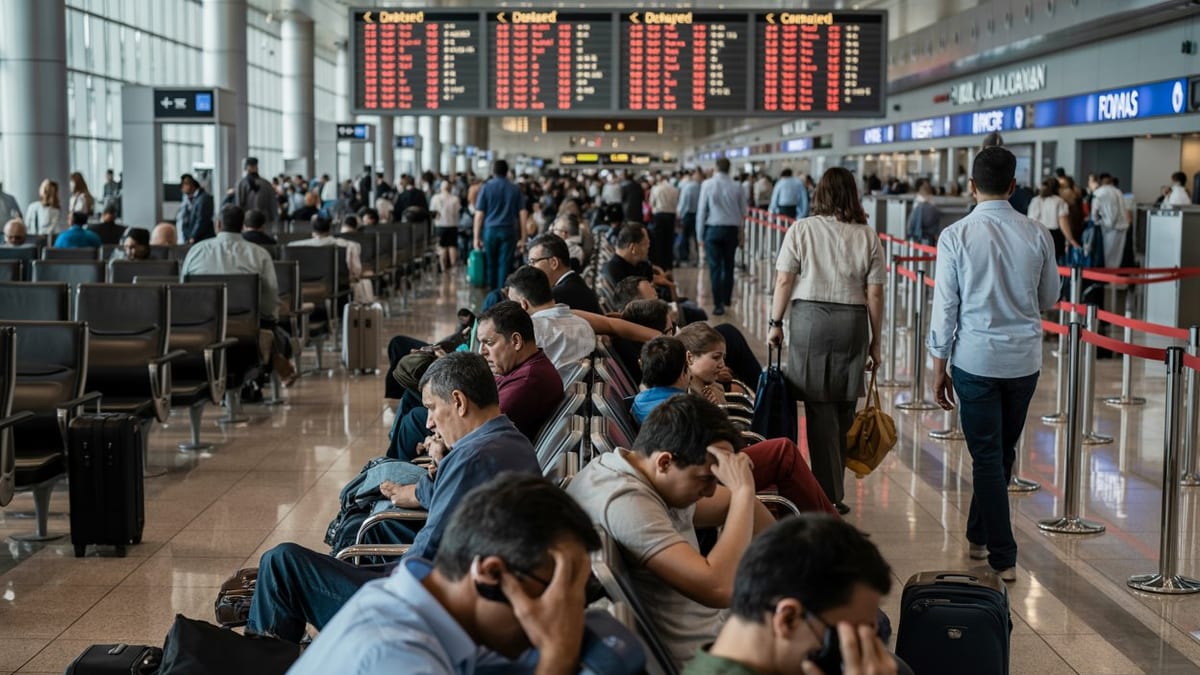
Images shared by travelers and carried by Kenyan news outlets showed crowded check-in zones, stretching security lines and departure halls filled with passengers sitting on baggage trolleys and terminal floors. Families returning from holidays, business travelers with tight connections and students heading back to campuses were among those left waiting for hours for updates.
JKIA has faced criticism in recent months over congestion and limited amenities, and the strike intensified that pressure. Travelers described on social platforms how available seating quickly ran out and food outlets struggled to keep up with demand as delayed passengers remained airside well beyond their scheduled departure times.
The disruption also came hard on the heels of other operational challenges at JKIA this year, including industrial actions by other aviation workers and a recent terminal fire incident that temporarily closed part of the international facility. The latest stoppage added a labor dispute to an already complex mix of infrastructure stress, weather-related interruptions and maintenance issues that have tested the resilience of Kenya’s primary aviation gateway.
For transit passengers using Nairobi as a hub for connections around Africa, Europe and the Middle East, the impact was particularly acute. With crew and aircraft out of place and onward flights fully booked, many travelers faced the prospect of extended layovers or rerouting through alternative regional hubs such as Addis Ababa or Kigali.
Labor Tensions Build Through 2026
The pilots’ action is the latest chapter in a broader pattern of labor unrest across Kenya’s aviation sector in 2026. Earlier in the year, air traffic control staff and airport workers had staged strikes and go slows that disrupted operations at JKIA and other facilities, prompting widespread delays and calls for improved conditions and adherence to collective bargaining agreements.
Publicly available union statements and court records show that disputes over pay, staffing levels and safety-related regulations have been simmering for months. Pilots in particular have warned that persistent scheduling pressures and inadequate rest risks undermining safety margins, arguing that any short term cost savings achieved by aggressive rostering are outweighed by the long term risks to passengers and crews.
Industry observers note that the sector is still navigating the financial aftershocks of the pandemic era, with some airlines carrying heavy debt loads while facing rising fuel and maintenance costs. That financial strain has made negotiations over salary adjustments and benefits especially contentious, even as carriers seek to rebuild capacity and expand routes from Nairobi to capture growing demand.
The timing of the latest stoppage, at the start of a busy travel period and shortly before major regional aviation events scheduled in Kenya, highlights the leverage that skilled flight crews hold in a market where pilot recruitment and training pipelines remain tight.
Impact on Travelers and Regional Connectivity
For travelers, the immediate consequences of the JKIA pilot strike were missed connections, last minute hotel stays and disrupted plans. Passengers reported being rebooked onto flights departing many hours or even days later, while others sought refunds and alternative itineraries on competing carriers that were not directly affected by the work stoppage.
Tourism operators and business groups expressed concern in public commentary that repeated disruptions could erode confidence in Nairobi as a reliable hub. JKIA serves as a critical gateway for safari tourism in Kenya and neighboring countries, as well as a connection point for multinational companies with regional headquarters in the capital.
Regional connectivity also faces knock-on impacts when aircraft and crews are stranded. Canceled flights from Nairobi can leave smaller airports across East and Central Africa without inbound or outbound services for extended periods, limiting cargo capacity and complicating travel for medical, educational and diplomatic purposes.
Travel industry analysts warn that if labor disputes in the aviation sector are not addressed through more durable agreements, travelers will increasingly factor potential disruption into their planning, potentially shifting bookings to rival hubs that are perceived as more stable.
What Passengers Should Know Moving Forward
With negotiations between pilots and employers still unfolding, travel advisers recommend that passengers booked through JKIA in the coming days and weeks monitor their flight status frequently and remain prepared for schedule changes at short notice. Flexible tickets, comprehensive travel insurance and contingency plans for overnight stays in Nairobi may help mitigate stress in the event of further disruptions.
Publicly available information from airlines operating at JKIA suggests that carriers are working to clear backlogs by adding extra sections where crew and aircraft availability permit, and by upgauging aircraft on high demand routes. However, a full return to normal patterns may take several days as complex international rotations are reset.
For travelers planning new trips through Nairobi, experts advise allowing longer connection windows than usual, especially for itineraries that mix different airlines or involve separate tickets. Those with time-sensitive commitments may wish to explore alternative routings through other African or Middle Eastern hubs until the labor environment at JKIA stabilizes.
Despite the immediate disruption, aviation analysts note that Kenya’s strategic location and established route network mean that JKIA is likely to remain a key regional hub. The scale and visibility of the latest strike, however, underline the importance of resolving pilot and wider aviation workforce grievances in a way that supports both operational reliability and long term safety goals.