


More news on this day
A dramatic overnight rescue on the BP Highway in central Nepal saved 89 passengers after sudden flooding in the Roshi River stranded five microbuses midstream, drawing widespread praise for the rapid response by Sashastra police and other security forces.
Get the latest news straight to your inbox!
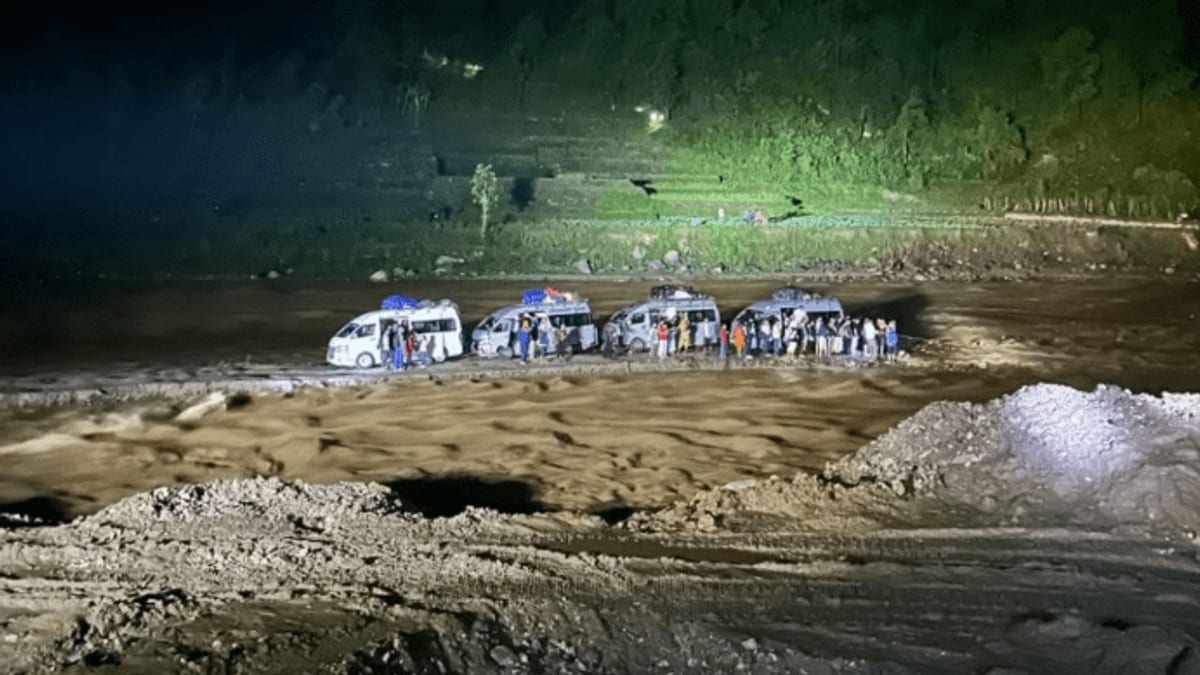
Overnight Drama on the BP Highway
Published coverage indicates that the emergency unfolded on the evening of May 4, 2026, when heavy rain triggered a rapid rise in the Roshi River in Kavrepalanchok district. Five microbuses traveling along the BP Highway were caught on a temporary riverside diversion between Laskot and Ghumaune, an area where the main road has been under long term repair. As water levels surged, the vehicles were left stranded on a narrow strip of land surrounded by fast moving floodwater.
Reports describe how the situation quickly became critical as darkness fell. The microbuses, headed toward Kathmandu from various Tarai and hill districts, were unable to move forward or retreat to higher ground. With 89 passengers trapped and the river still rising, local security forces mobilized for an overnight operation in challenging conditions.
According to publicly available information, a coordinated team from the Nepali Army, Nepal Police and the Armed Police Force, often referred to collectively as Sashastra police or armed security forces, reached the scene and began evacuating passengers. Working through the night, personnel used ropes, lighting and improvised access routes to lead people to safety one group at a time.
By around 1 a.m., all 89 passengers had reportedly been brought off the exposed river island and moved to secure locations away from the flood zone. The microbuses were later recovered once water levels receded enough to permit vehicle retrieval.
Sashastra Police and Security Forces Lauded
The Roshi River rescue has prompted renewed public attention to the role of Sashastra police and other uniformed services in disaster response along Nepal’s vulnerable highways. While Sashastra Seema Bal is formally an Indian paramilitary force, regional reporting frequently uses the broader term “sashastra” to denote armed security personnel, and coverage of the Roshi incident emphasizes the contribution of the Armed Police Force alongside the Nepali Army and civil police.
Accounts from Nepali news outlets highlight the speed with which the mixed security contingent assembled at the remote river crossing and the level of coordination achieved under pressure. Observers note that the teams were able to operate in swift current and low visibility without loss of life, a result that is drawing praise on local social media and in editorials focusing on disaster preparedness.
Commentary in the aftermath casts the overnight operation as an example of how military and police units in the Himalayan region are increasingly central to frontline climate and weather related emergencies. From landslides on mountain roads to flash floods along river corridors, armed security forces are often among the first to deploy specialized equipment and trained personnel in difficult terrain.
The Roshi River episode is already being cited as a reference point for future training and coordination, with disaster management bodies pointing to the incident as evidence that multi agency drills and shared communication systems can significantly improve outcomes when minutes matter.
A Dangerous Stretch with a Troubled History
The rescue has also renewed scrutiny of the BP Highway segment that crosses the Roshi River. Publicly available reports state that for more than two years the river has posed persistent hazards to vehicles after earlier flooding damaged portions of the main carriageway. In response, authorities established a temporary diversion across the riverbed, creating an improvised channel for traffic when water levels are low.
That stopgap measure has long been viewed as vulnerable during intense rain, and coverage of the latest incident notes that the diversion has become notorious among drivers. When rain falls upstream, the Roshi can swell quickly, turning the gravel track into a series of isolated bars and channels that are difficult to navigate safely in the dark.
After this week’s close call, disaster risk agencies are again urging that a permanent engineering solution be prioritized for the approximately 18 kilometer stretch where the river routinely threatens the highway. Travel disruption following the flood was significant, with vehicles reported stopped at multiple control points on either side of the affected zone while the rescue was underway and the crossing remained closed.
Local traffic officers have repeatedly advised drivers to heed weather warnings and avoid attempting the diversion when conditions deteriorate. Reports following the rescue indicate that some drivers who ignored earlier advisories have been taken into custody for investigation, underscoring an effort to enforce stricter safety compliance along the route.
Policy Response and Calls for Safer Travel
The Roshi River incident has echoed in Nepal’s broader disaster management debate. According to coverage of a recent advisory from the National Disaster Risk Reduction and Management Authority, officials are pressing district administrations to halt vehicle movement when floods or landslides render roads unsafe, and to apply legal measures against transport operators who disregard such orders.
The rescue of 89 passengers is being used as a case study of risk that might have been avoided had earlier warnings been fully observed. Public discussion in national media points to a combination of factors behind such near misses, including economic pressure on drivers to maintain schedules, the limited availability of alternate routes and the speed at which local rivers can rise when storms cross the middle hills.
Disaster specialists quoted in open sources frequently argue that better real time communication between weather services, road departments and front line police posts could reduce the number of vehicles entering known danger zones. Proposals include automated text alerts to registered transport operators, clearer on road signage at diversion points and formal training for drivers on how to interpret river level bulletins.
The Roshi River case appears to be energizing these conversations, particularly as Nepal approaches the main monsoon months when flash floods and landslides become more common on trunk roads linking the capital with eastern and southern districts.
Regional Pattern of River and Highway Emergencies
Beyond the immediate drama, the Roshi rescue sits within a wider regional pattern of river related transport emergencies across South Asia. Recent seasons have seen vehicles stranded on submerged crossings, boats capsized in swollen rivers and stretches of highway washed away by sudden downpours, from the Himalayan foothills to the coastal plains.
Analysts drawing on publicly available data note that climate variability, heavier rainfall events and infrastructure built close to unstable riverbanks are converging to increase the frequency of such incidents. In many cases, it is military, paramilitary and police units including Sashastra formations that are called upon to stabilize situations once civilians are already at risk.
For travel focused observers, the Roshi River operation is a stark reminder that scenic routes through mountain river valleys can conceal rapidly changing hazards, especially where roads rely on temporary diversions or unprotected embankments. Travel advisories for the region are expected to place greater emphasis on checking weather forecasts, monitoring local traffic notices and allowing extra time for detours or closures during the rainy season.
As reconstruction plans and new safety protocols are debated, the overnight rescue of 89 passengers from a flooded river channel stands out as an example of what coordinated action can achieve. At the same time, it reinforces the message that long term resilience, stronger infrastructure and consistent enforcement of safety rules are essential if such dramatic operations are to become less necessary along the highways that knit the Himalayan region together.