


More news on this day
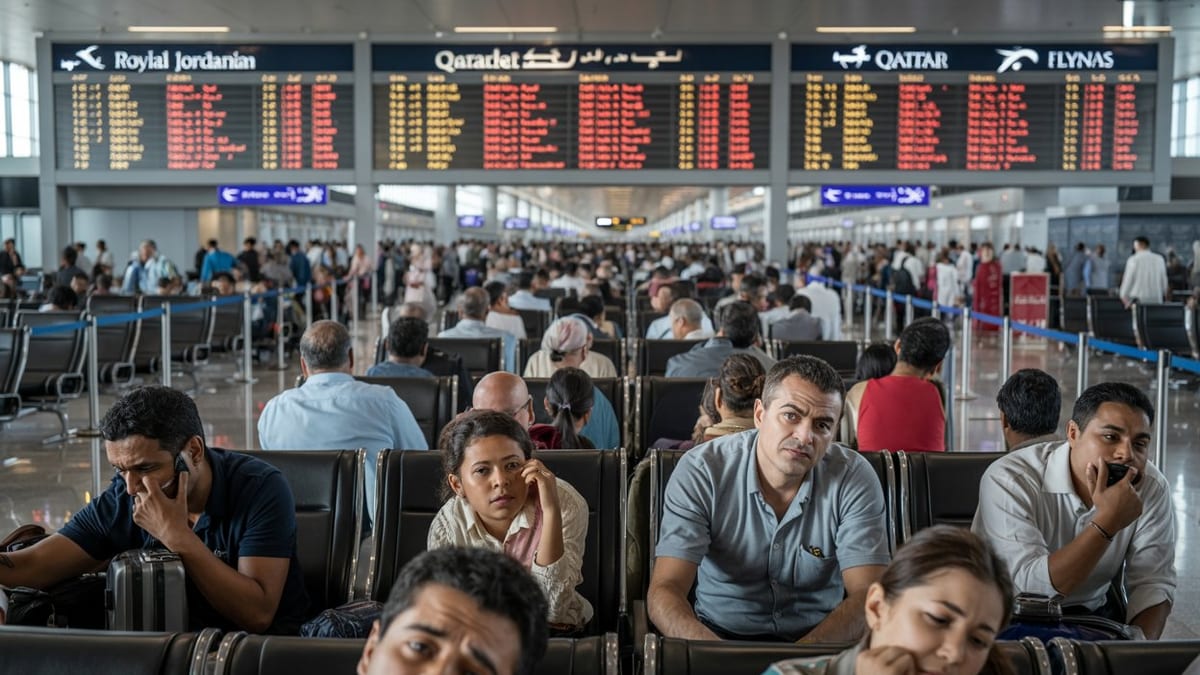
Ronald Reagan Washington National Airport faced severe disruption this week as mass flight cancellations by American Airlines and Southwest Airlines cascaded across the schedule, creating hours-long delays, missed connections and mounting frustration for travelers moving through the Washington DC region.
Get the latest news straight to your inbox!
Reagan National Becomes Flashpoint for Systemwide Disruption
Published operational data and flight-tracking dashboards for late May show Reagan National once again emerging as one of the most fragile points in the U.S. aviation network, with American Airlines and Southwest Airlines among the carriers experiencing concentrated cancellations and knock-on delays. The disruptions follow a spring of elevated irregular operations at the airport and come just as summer travel demand begins to build.
Reagan National’s tightly constrained runway capacity and federal slot controls leave airlines with little flexibility when schedules begin to unravel. When a large carrier trims rotations or cancels clusters of departures, there is limited room to re-time flights or add extra sections, which in turn accelerates queues at security checkpoints, gate podiums and customer service desks as passengers seek alternatives.
Recent coverage focused on Reagan National indicates that even a modest number of cancellations or extended delays can quickly spill beyond the immediate Washington area, affecting downline airports from Boston and New York to Chicago, Atlanta and major hubs in the Midwest and Southeast. As a result, a disruption that begins with schedule cuts at Washington National can ripple outward into a much broader national story of missed meetings, scrapped holidays and rebooked itineraries.
American Airlines, which holds a dominant share of slots at Reagan National, and Southwest, which has expanded point to point service from the airport, sit at the center of these latest problems. Tracking sites and airport status boards show both carriers scrubbing departures and arriving flights, squeezing capacity on remaining services and limiting options for same day rebooking.
Storm Aftershocks and Structural Strain on Airline Schedules
Reports on winter and spring operations across the United States suggest that the disruptions now playing out at Reagan National are part of a longer running pattern of fragile schedules and elevated cancellation rates. A powerful winter storm in late January brought one of the highest nationwide flight cancellation totals since the pandemic era, with data showing nearly all flights at Reagan National canceled on at least one day of the event as American and Southwest each scrubbed significant portions of their networks.
Industry coverage indicates that while severe weather is often the trigger for such meltdowns, the depth of the cancellations reflects underlying stress in staffing, aircraft availability and air traffic control capacity. When carriers operate near the edge of their resources, a major storm or regional airspace restriction can quickly overwhelm reserves, leaving little margin to recover once skies clear.
In this environment, Reagan National is particularly exposed. The airport’s role as a key origin and destination gateway for lawmakers, federal workers and business travelers means schedules are densely packed with high frequency shuttles and short haul routes. When American or Southwest scale back flights there, the impact is magnified across political, corporate and leisure itineraries.
Published analyses of Department of Transportation statistics show that U.S. cancellation rates have remained elevated into 2026 compared with historical norms, underscoring how easily localized operational problems can snowball into nationwide disruptions. For travelers, that statistical trend is now being felt in very tangible ways in the terminals of Washington National.
Travelers Face Long Lines, Limited Rebooking Options
As American and Southwest cancel rotations at Reagan National, passengers are encountering long lines at ticket counters and service desks, along with crowded gate areas where available seats on remaining departures are scarce. Publicly available information from airline and airport channels shows that many travelers are being pushed to later same day flights or even next day departures as aircraft and crews are repositioned.
Because Reagan National operates under strict slot controls, the usual tools airlines might use to recover from mass cancellations are constrained. There is less opportunity to add extra sections at peak times or to retime a bank of departures to smooth out delays. That reality leaves travelers heavily reliant on whatever limited inventory remains in the schedule, particularly on high demand routes to New York, Boston, Chicago and Florida.
According to travel industry guidance based on recent disruption patterns, passengers affected by Reagan National cancellations are most likely to secure timely alternatives by using airline mobile apps and websites rather than standing in line. Self service digital tools can often access rebooking options across a carrier’s network more quickly than agents who are simultaneously managing long queues at airport counters.
Even so, same day solutions are not guaranteed. With American and Southwest each canceling multiple flights, remaining departures can quickly sell out, pushing travelers into overnight stays in the Washington area or forcing them to route through secondary airports such as Baltimore or Washington Dulles to continue their journeys.
Knock On Effects Across the U.S. Network
The repercussions of heavy cancellations at Reagan National are not confined to the Washington metropolitan area. Flight tracking boards for recent disruption days show a chain reaction of delays and missed connections across American’s and Southwest’s broader networks, particularly on short haul and regional routes that depend on tight turns and high aircraft utilization.
When an American or Southwest flight is canceled at Reagan National, the aircraft and crew that would have operated that segment are typically scheduled to continue to another city pair later in the day. Disruptions at the starting point therefore remove capacity from subsequent legs, forcing schedule adjustments that can affect passengers who never pass through Washington but rely on timely feed from the airport.
Coverage of prior operational events at Reagan National and other East Coast airports illustrates how this dynamic can lead to unexpected bottlenecks at distant hubs and spoke cities. Travelers arriving in places such as Philadelphia, Charlotte or Nashville may find themselves delayed because a previous leg into or out of Washington never departed, even if weather at their own airport is clear.
These network effects are particularly visible for business travelers shuttling between major political and financial centers. Missed morning departures from Washington can cascade into missed afternoon meetings in New York, Boston or Chicago, as reduced frequencies limit opportunities to catch up later in the day.
What the Latest Wave Reveals About Airline Resilience
The latest cancellations by American and Southwest at Reagan National highlight broader questions about airline resilience as the industry balances strong demand with finite resources. While weather, air traffic control constraints and infrastructure limits all play a role, recent patterns at Washington National demonstrate how quickly the system can seize up when multiple stressors converge on a slot constrained airport.
Publicly available customer service commitments filed with federal transportation regulators indicate that major U.S. airlines typically offer meal vouchers or hotel accommodations only when disruptions fall within their control, such as maintenance or crew issues. When cancellations stem from weather or airspace restrictions, passengers often receive more limited assistance, increasing the stakes of individual travel planning decisions.
Travel analysts routinely recommend that passengers using Reagan National build extra time into connections, favor earlier departures when possible, and monitor carrier apps in real time for the earliest signs of trouble. The current wave of cancellations involving American and Southwest suggests that such precautions are particularly important at politically sensitive, tightly scheduled airports where even a short operational wobble can unleash widespread travel chaos.
As summer schedules ramp up and demand in and out of Washington continues to climb, the events at Reagan National serve as a warning that airlines and regulators may need to revisit how capacity, contingency planning and customer protections intersect at one of the nation’s most strategically important but operationally constrained airports.