


More news on this day
Severe thunderstorms and flood alerts around Houston’s George Bush Intercontinental Airport have unleashed a fresh wave of flight cancellations by United Airlines and American Airlines, snarling Texas travel at the start of the busy summer season.
Get the latest news straight to your inbox!
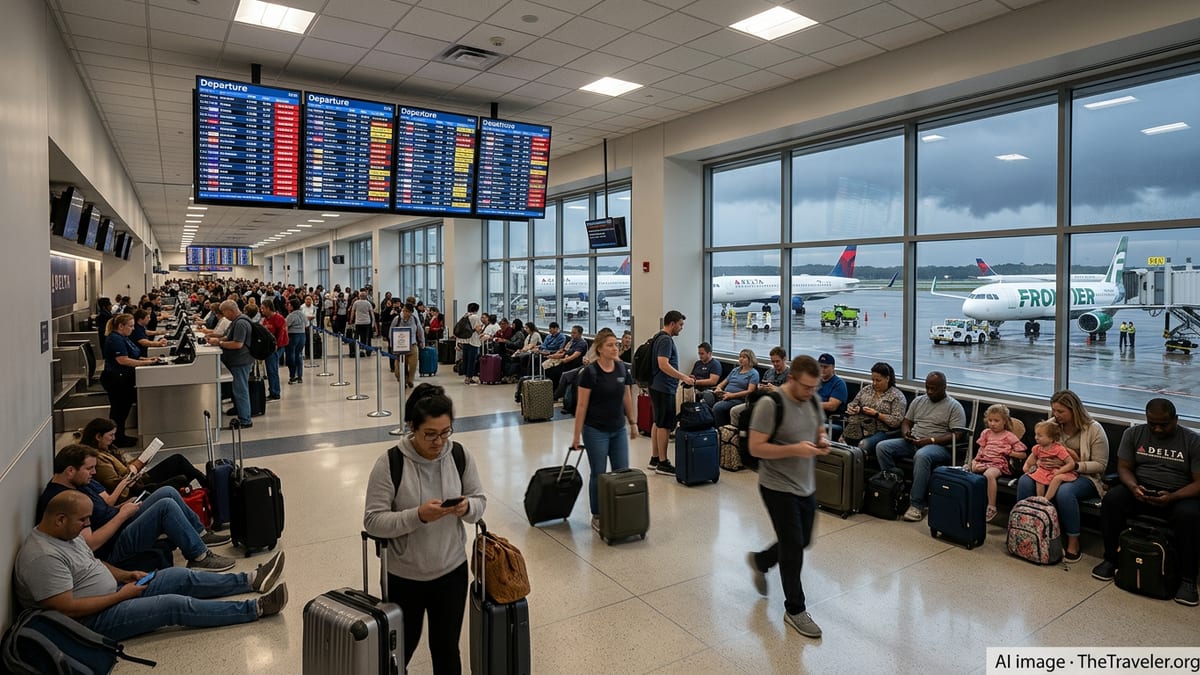
Weather Ground Stops Turn Houston Into a Bottleneck
Weather-related disruption at Houston Bush Intercontinental escalated sharply on May 23 when a Federal Aviation Administration ground stop temporarily halted departures as thunderstorms swept across the region. Publicly available aviation data and local media coverage indicate that United Airlines, the dominant carrier at the airport, was forced to cancel and delay a significant share of its Houston schedule as storms and low visibility moved through the area.
Tracking services showed Houston briefly ranking among the world’s most disrupted airports, with United accounting for most of the cancellations linked to the ground stop. A travel advisory on United’s website highlighted “Houston Thunderstorms,” and outlined options for customers whose flights through the hub were affected during the May 22 to May 26 window.
While the ground stop was lifted after conditions improved, knock-on effects persisted well into the following day. Aircraft and crew were left out of position, forcing additional cancellations and extended delays even after skies began to clear above Houston.
The situation echoed an earlier disruption in March, when a separate weather system triggered a United-specific ground stop at Bush Intercontinental. That episode underlined how quickly operations at a single carrier’s primary hub can be destabilized when storms stall arrivals and departures at peak times.
United Airlines Bears the Brunt at Its Houston Hub
Operational data compiled over the long Memorial Day travel stretch showed United absorbing the heaviest impact at Houston. The airline, which operates an extensive domestic and international network from Bush Intercontinental, saw hundreds of flights across multiple days either delayed or canceled as the storms coincided with already busy spring schedules.
Industry trackers reported that United ranked near the top of global cancellation tables on the height of the disruption, with its Houston hub acting as the main pressure point. Long-haul routes to Latin America and Europe, as well as high-frequency domestic services to cities such as Chicago, Denver, and Washington, appeared prominently among affected flights.
United’s travel waiver allowed customers ticketed to, from, or through Houston during the thunderstorm period to rebook once without a change fee, provided their new itinerary departed by May 26 and remained on United or United Express metal. This type of time-limited flexibility is a standard tool carriers use to reduce last-minute airport crowding and encourage travelers to move trips away from peak storm windows.
Even with those measures, social media posts and aviation forums reflected scenes of long lines at customer service desks, crowded gate areas, and aircraft waiting for takeoff slots as lightning and heavy rain forced repeated pauses in ramp activity.
American Airlines Disruption Spreads Across Texas
American Airlines, while not a hub carrier at Houston, was hit hard elsewhere in Texas as the same storm system and broader regional instability rolled across the state. Data from flight tracking platforms and published coverage show that severe thunderstorms around Dallas Fort Worth International Airport over the Memorial Day weekend led to more than two hundred American cancellations in a single day, along with hundreds of additional delays.
With Dallas Fort Worth serving as American’s largest hub, those cancellations quickly rippled out to secondary Texas cities, including flights that connect into and out of Houston-area airports. Travelers heading between Houston and destinations such as Austin, San Antonio, El Paso, and out-of-state cities relying on DFW connections encountered missed onward flights, unplanned overnight stays, and last-minute rebookings.
American has recently emphasized in public guidance that large-scale weather events remain the leading trigger for mass cancellations across its system. During significant storms, the airline’s operations center in Fort Worth often proactively trims schedules to avoid having passengers stranded on aircraft or in long runway queues when lightning or tornado warnings force ground stops.
In the latest Texas storms, reports indicate that this protective approach translated into high cancellation figures at Dallas Fort Worth, even as some flights at other airports continued to operate around gaps in the weather. That contrast added to the perception among travelers that Texas as a whole was in the grip of rolling airline disruption across the long weekend.
Network Ripple Effects Hit National and International Routes
The combined impact of United’s Houston problems and American’s Dallas Fort Worth disruptions extended far beyond Texas. Because both airports function as major connecting hubs, ground stops and mass cancellations quickly spilled into flight schedules for the Midwest, East Coast, Mountain West, and international gateways.
Published data from global flight trackers over the affected days showed thousands of delays within, into, or out of the United States, with United, American, and other large carriers all listed among the top airlines for late or canceled services. Routes linking Houston to major cities such as Chicago, New York, Washington, and Los Angeles recorded repeated schedule changes, often cascading into missed connections on transatlantic and Latin American flights.
Analysts note that hubs like Houston and Dallas operate on tight banked schedules, where waves of arriving flights feed coordinated departures. When thunderstorms disrupt even one of those banks at peak times, aircraft and crews can be displaced for many hours, leading to cancellations later in the day on routes that may be hundreds or thousands of miles from the original storm zone.
In this latest episode, those network dynamics meant that travelers departing from airports as far-flung as Mexico City, Calgary, and various European cities encountered rolling delays or aircraft substitutions tied back to the earlier weather interruption in Texas.
What Travelers Can Expect as Storm Season Builds
Texas is entering the heart of its warm-season thunderstorm period, and aviation observers caution that similar episodes of disruption are likely in the coming weeks. Historical patterns show that late spring and early summer frequently bring severe weather outbreaks across the state, with Houston and Dallas particularly exposed due to their heavy traffic volumes and location on key storm tracks.
Airline guidance published in recent months has consistently urged passengers to monitor weather forecasts closely and to build extra connection time into itineraries that route through major hubs such as Houston Bush Intercontinental and Dallas Fort Worth. Many carriers, including United and American, now post travel waivers more proactively when forecasters highlight heightened risks of thunderstorms, hail, or flooding around key airports.
For passengers, the latest chaos at Houston underscores how quickly even routine afternoon storms can spiral into a multi-day operational challenge for large carriers. Disruption at one or two Texas hubs can, within hours, affect travel plans for passengers across the United States and on international routes that rely on these airports as critical connecting points.
With forecasts calling for additional unsettled weather across portions of Texas and the central United States, travelers moving through Houston and Dallas in the days ahead may continue to encounter residual delays and schedule adjustments as airlines work to realign aircraft and crews after the latest round of storms.