


More news on this day
Cypriot travellers who have grown used to relying on European Union flight compensation rules when journeys go wrong could soon see a reshaped system, as Brussels advances reforms on air passenger rights and package travel that aim to clarify delays, cancellations and refunds across the bloc.
Get the latest news straight to your inbox!
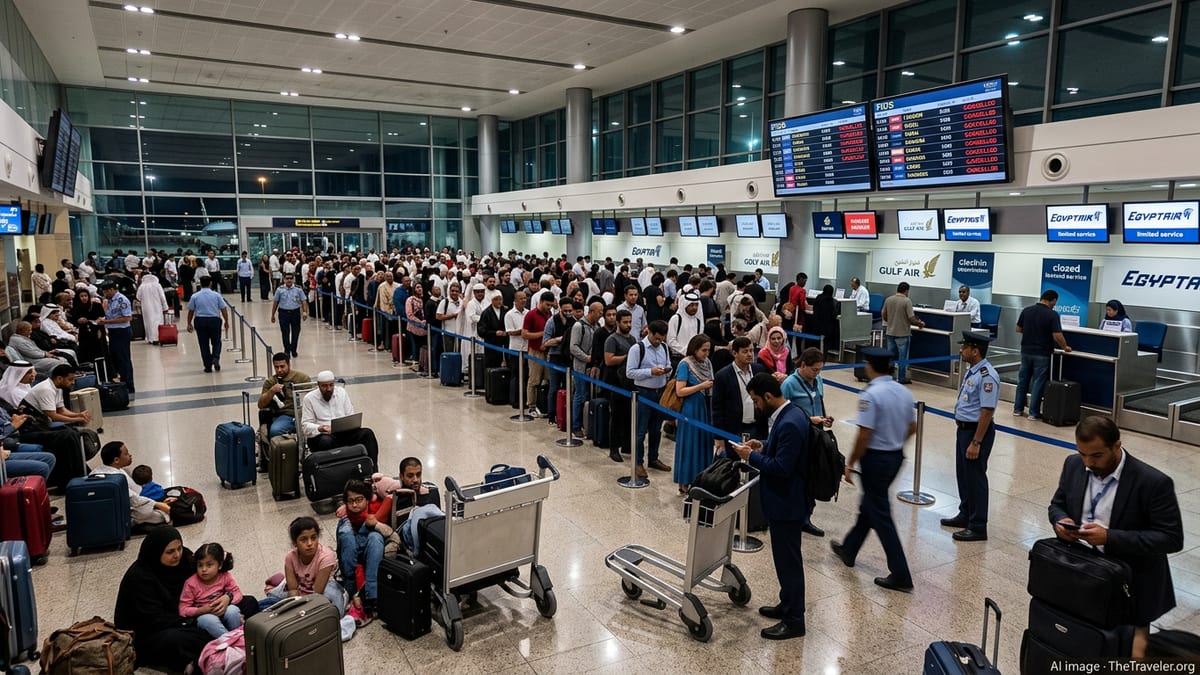
From EU261 to an updated rulebook
For two decades, Cypriot air passengers have been protected under Regulation 261/2004, the cornerstone EU law that sets out when travellers are entitled to care, rerouting, refunds and cash compensation after serious flight disruption. The regulation applies to all departures from Larnaca and Paphos, as well as to flights into Cyprus operated by EU carriers.
Under the current framework, passengers may claim compensation when a flight is cancelled at short notice or arrives with a delay of more than three hours, unless the airline can show that extraordinary circumstances such as severe weather or airspace closures were to blame. They are also entitled to meals, refreshments and, when necessary, overnight accommodation while they wait. National consumer centres in Cyprus already provide detailed guidance in Greek and English on how to file claims and what evidence to keep.
However, a growing volume of complaints across Europe has highlighted persistent problems with enforcement, uneven interpretation of “extraordinary circumstances,” and lengthy waits for payments. These pressures, combined with the travel chaos seen during the pandemic and subsequent recovery, have pushed EU institutions to revisit the rules and strengthen how they are applied.
According to recent European Parliament briefings and Commission material, the review of EU261 is now part of a wider “passenger mobility” package that links air travel to rail, coach and ferry rights. For Cypriots, who rely almost entirely on air links for international travel, the outcome of this process could significantly affect how quickly and easily they receive redress when flights fail to operate as planned.
What could change for delays, cancellations and compensation
The most closely watched element of the reform is how the EU may adjust the thresholds and levels of compensation for delays and cancellations. Council documents and think tank analyses suggest that ministers have backed a tiered approach, retaining shorter delay thresholds for intra EU and shorter haul routes while contemplating longer thresholds for long distance journeys. For Cyprus, this matters because many routes are medium haul links to central and northern Europe, where any change in the trigger point for compensation would be felt by holidaymakers and business travellers alike.
Proposals under discussion seek to codify in more detail when an airline can deny compensation by invoking extraordinary circumstances, aiming to reduce disputes over issues such as technical faults or air traffic control restrictions. Consumer groups argue that a clearer definition could prevent carriers from routinely citing broad safety or operational reasons to avoid payouts, while airlines warn that overly strict rules could raise costs and ultimately ticket prices. The emerging compromise appears to focus on better documentation and more transparent communication of the reasons for disruption.
Another potential shift concerns missed connections and complex itineraries, which are increasingly common for Cypriots using hub airports in Athens, London or the Gulf. Draft texts referenced in recent passenger rights reports indicate that lawmakers want more explicit obligations when a passenger misses a connecting flight under a single contract, including minimum assistance and rerouting timelines. That could give Cypriot travellers stronger grounds to insist on being rebooked swiftly when a delay on the first leg causes them to miss a long planned onward journey.
There is also a focus on handling long tarmac delays, when passengers are kept on board an aircraft for extended periods before take off or after landing. Council positions point to a maximum waiting time before airlines must begin disembarkation and provide assistance. For airports in Cyprus, where high summer temperatures can already put pressure on cabin comfort, stricter rules on tarmac delays could translate into more predictable procedures during peak season disruptions.
Stronger enforcement and complaints handling
Beyond the size of individual payouts, one of the central aims of the EU package is to tighten enforcement across member states. Studies cited by consumer organisations note that many travellers simply give up on claims after airlines delay responses or reject applications without clear reasoning. The Commission’s passenger rights initiative therefore pairs updated rules with a stronger role for national enforcement bodies and shared standards for complaint handling.
A draft regulation on enforcement of passenger rights, currently progressing through the EU legislative process, would introduce common timelines for airlines to acknowledge and respond to complaints, as well as standards for the information provided to passengers at the airport. For Cypriots, whose claims often involve foreign carriers operating to and from the island, the promise of more consistent procedures across jurisdictions could reduce the uncertainty that currently surrounds cross border disputes.
Publicly available information indicates that national consumer centres, including the European Consumer Centre in Cyprus, are expected to play a continued role in advising passengers and helping to resolve cases that cross national borders. At the same time, the EU is looking at ways to make it easier for travellers to understand their rights in real time, such as harmonised notices at check in and digital tools linked to booking platforms.
These enforcement reforms are likely to be particularly significant for package holidaymakers from Cyprus, who frequently book flights and accommodation together through tour operators. When a delay or cancellation hits, travellers often struggle to determine whether to pursue the airline, the organiser, or both. Clearer allocation of responsibilities between carriers and intermediaries is one of the objectives of the current reform push.
New safeguards for package trips and refunds
Alongside the revision of air passenger rights, EU institutions have been overhauling the Package Travel Directive, which governs trips that combine flights with hotels, cruises or other services at an inclusive price. A new directive approved by the Council in March 2026 introduces additional safeguards for travellers across the bloc, including shorter refund deadlines and clearer rules when a trip is cancelled because of unavoidable and extraordinary circumstances.
According to Council material, organisers will in future have to refund travellers within a fixed 14 day period when a package is terminated, closing loopholes that left many waiting months for money back during the pandemic. The updated law also restricts the use of vouchers, specifying that they must be voluntary, financially protected and clearly explained. For Cypriot consumers, who faced high levels of disruption on popular European package routes during recent summers, these measures are expected to improve cash flow and legal certainty when holidays collapse.
The directive also refines travellers’ rights when they cancel due to serious and unavoidable circumstances at the destination, such as major health emergencies or significant safety risks. In such cases, consumers may be entitled to terminate the contract without paying disproportionate fees. This approach reflects lessons from recent crises and may prove relevant to Cypriot residents considering trips to regions affected by sudden instability or natural disasters.
Because many Cypriot travellers purchase packages that bundle flights from Larnaca or Paphos with accommodation elsewhere in the EU, the interaction between the new package rules and any revised air passenger regulation will be critical. Depending on how final texts are aligned, a traveller whose outbound flight is cancelled could benefit both from EU261 style flight protections and from package specific refund rights, potentially simplifying what has often been a legal maze.
What Cypriot travellers should watch next
Although some elements of the EU reform agenda are now agreed, others remain under negotiation between the European Parliament, the Council and the Commission. The air passenger rights regulation in particular is still moving through the legislative process, meaning that precise thresholds and obligations could shift before a final compromise is adopted. Once the revised rules enter into force, airlines and national authorities will have a transition period to adapt.
For Cypriot passengers, the practical impact will depend on how quickly carriers update their terms and how effectively enforcement bodies ensure compliance on routes to and from the island. Observers expect airlines serving Cyprus to adjust their conditions of carriage and customer information materials in advance, outlining when compensation is due, how to request rerouting, and what documentation must be provided.
Travel industry analysts note that, taken together, the revision of EU261, the horizontal enforcement regulation and the modernised Package Travel Directive amount to the most significant shake up of passenger protections in years. While some airlines caution that tighter obligations could increase operational costs, consumer advocates argue that more predictable, clearly communicated rights will help restore trust after a turbulent period for European aviation.
Cypriot travellers planning summer holidays or business trips in the coming seasons are therefore being advised, through public information campaigns and consumer guidance, to familiarise themselves with both the current rules and the upcoming changes. As the EU finalises its new framework, the way delays, cancellations and refunds are handled from Cyprus’ airports may look different, but the overall direction points toward more structured and enforceable protections when journeys do not go to plan.