


More news on this day
Ongoing street protests across France, centered on student grievances and broader cost-of-living anger, have begun to spill into some of the country’s most visited tourist areas, prompting renewed calls for caution from American travelers and tour operators monitoring conditions in Paris and other major cities.
Get the latest news straight to your inbox!
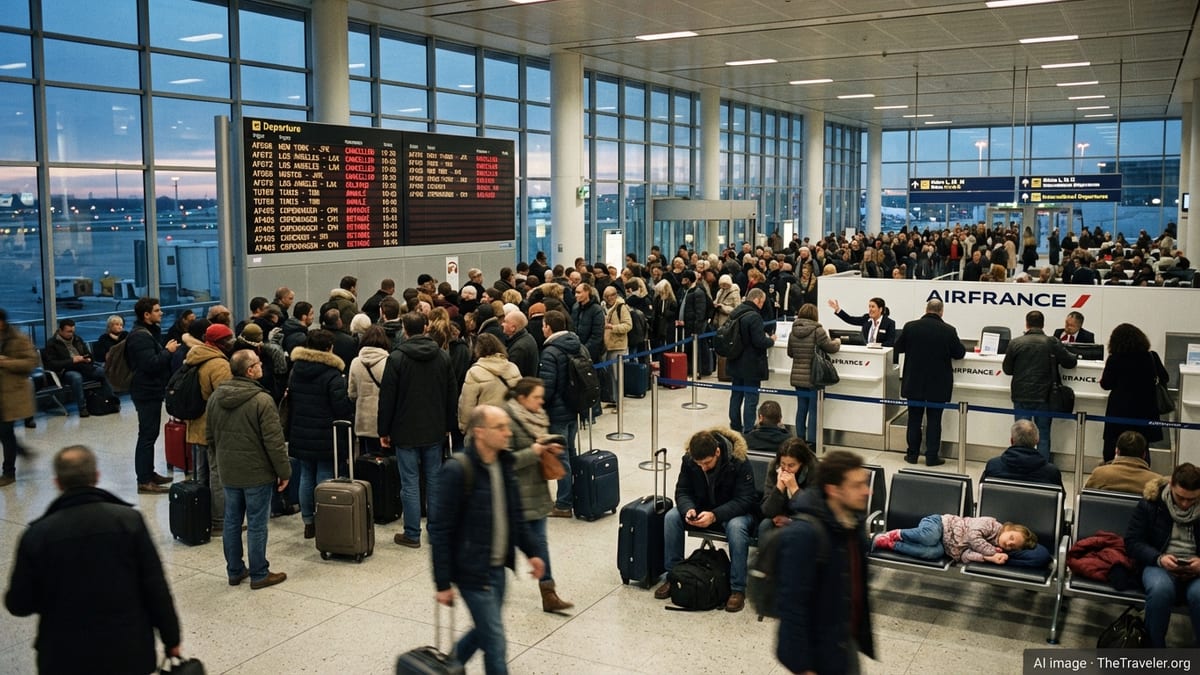
Protests Intensify Around Central Paris Landmarks
In recent weeks, a wave of demonstrations has moved beyond university campuses and local town halls into areas that attract large numbers of international visitors. Published coverage in French and international media describes tens of thousands of protesters joining coordinated marches in Paris on October 17 and October 24, with gatherings routed through central hubs such as Bastille, Nation and République. These areas lie within the broader zone many visitors traverse between the Marais, the Seine and key museum districts.
Reports from outlets including AP, Le Monde, Euronews and specialist travel publications indicate that students and workers temporarily blocked entrances to the Louvre on October 19, leading to the museum’s closure that day. Visitors encountered barriers positioned roughly 100 meters from the glass pyramid, with flyers distributed in French and English explaining the protesters’ aims and contributing to tense exchanges between demonstrators and tourists waiting to enter.
French cultural news sites and art-industry media further note that protests have coincided with the busy autumn art-fair calendar, pushing some rallies and police cordons into neighborhoods near the Grand Palais, the Tuileries and the Left Bank quays. While the most intense confrontations have been confined to limited streets at specific hours, footage shared by news organizations shows small groups of masked protesters and riot police in areas that many travelers associate primarily with museums, river cruises and shopping streets.
Beyond the capital, student-led actions and cost-of-living demonstrations have also been reported in cities such as Lyon, Marseille and Nice. Although these have not matched the scale of marches in Paris, they add to a nationwide pattern of localized disruption that travelers may encounter near main squares, railway stations and municipal buildings.
Closures and Restrictions at Major Museums and Venues
The most visible impact for visitors over the past ten days has been the temporary closure of high-profile cultural institutions. According to museum announcements and widely reported statements by France’s Culture Ministry, the Louvre, Musée d’Orsay and Musée Picasso all shut their doors to the public on Saturday, October 24, citing security concerns related to planned marches in central Paris. Art Basel Paris, staged at the Grand Palais, also curtailed its public program, with organizers bringing the fair to an early close on October 23.
The Louvre has additionally introduced a mandatory reservation system from October 17 to November 1, according to information published on the museum’s official channels. This measure, framed as a crowd-management step during a volatile period, is designed to control flows through entrances that protesters have previously targeted for sit-ins and blockades. Travelers who purchased timed tickets for affected dates have reported receiving cancellation notices and refund instructions, though many were able to rebook for later in their stay or visit alternative museums.
City tourism information platforms report a patchwork of schedule changes around protest days, with some venues opting for early closure and others remaining open but advising visitors to adjust routes to avoid demonstration corridors. For example, one Paris tourism site lists early closing hours at the Bourse de Commerce and notes that certain cultural events have been modified on days when large marches are announced.
Importantly for travelers planning near-term trips, publicly available guidance compiled by travel media and local visitor bureaus stresses that these closures are currently targeted and date-specific rather than indefinite. Iconic outdoor attractions including the Eiffel Tower, Sacré Coeur in Montmartre and riverfront promenades have, in most recent reports, remained open, although access routes and nearby streets can be affected when marches pass through adjacent neighborhoods.
US Travel Advisory and Calls for Increased Vigilance
The United States Department of State currently lists France at Level 2, advising travelers to exercise increased caution due to risks that include unrest and terrorism. The advisory, updated in late October 2026, highlights the regular occurrence of demonstrations and labor strikes and notes that protests can arise with limited notice in major cities, sometimes turning confrontational near government buildings and around large gatherings.
While the advisory does not instruct Americans to avoid travel to France, it urges visitors to stay aware of their surroundings, particularly in tourist areas, transport hubs and places where large crowds gather. Travelers are encouraged, through official guidance, to enroll in the Smart Traveler Enrollment Program so they can receive security updates and facilitate communication in an emergency. The advisory also recommends that visitors monitor local media and follow instructions from local services if they find themselves near a protest.
Separate public statements by individual US officials in recent days have also drawn attention to upcoming high-profile events that are expected to bring more Americans to Paris, including a National Football League game scheduled for Sunday, October 25 at the Stade de France. News reports summarizing these comments emphasize that street demonstrations are a longstanding feature of French political life and that there is no indication of specific threats to the game or to American tourists, while still counseling prudence in neighborhoods hosting protests.
Tour operators that specialize in educational and group travel to France have begun posting online updates explaining how they are interpreting the advisory and current news. These companies generally reference the Level 2 status and note that decisions on whether to alter itineraries depend on official advisories, local partner feedback and real-time conditions on the ground.
Impact on Transport and Day-to-Day Tourist Mobility
Transport authorities around Paris are issuing rolling updates on station closures and service changes linked to protest routes. Notices on the RATP network’s public information platforms indicate that on recent demonstration days, selected metro stations, including those near the Louvre and key squares, have temporarily closed from midday onward to prevent overcrowding and to keep march routes clear. Travelers are being advised to check mobile apps and station boards before setting out, especially when moving across central districts.
Travel accounts and local advisories compiled by city tourism offices suggest that, unlike some previous strike waves, the current protests have so far produced only limited disruption to long-distance rail services. Trains in and out of Paris on October 17 and 24 largely operated on schedule, according to these reports, allowing visitors to pivot to day trips outside central neighborhoods when marches became more intense. However, buses and surface trams along key boulevards have seen intermittent delays and diversions when demonstrators occupy major intersections.
Within the city, guidance from local travel resources encourages visitors to build extra time into journeys, especially when crossing the Seine or traveling between the Right Bank museum districts and the Left Bank’s Latin Quarter. Alternative transport options such as licensed taxis, ride-hailing services and the expanding network of bike lanes can help bypass congested areas, although road closures around rally points may still lead to detours.
Hotel districts in the 6th, 7th and 8th arrondissements, which host many American guests, have remained accessible, according to reports compiled by travel forums and news outlets. Nevertheless, visitors are being urged to pay attention to announcements about planned marches two or three days in advance, particularly if staying near traditional gathering spots such as Place de la Bastille, Place de la République or Place d’Italie.
Practical Guidance for Americans Traveling Now
For Americans contemplating imminent travel to France, publicly available information from consular resources, tourism boards and independent travel experts converges on a few practical steps. First, travelers are urged to verify the latest advisory level for France shortly before departure, as updates can occur without long lead time. Second, visitors are encouraged to keep flexible plans on days when large protests are announced, focusing on neighborhoods and attractions away from march routes during peak hours.
Checking official museum and monument websites in the days leading up to a visit is increasingly important, particularly for the Louvre, Musée d’Orsay and other central institutions that have already modified opening hours. Many sites now provide same-day alerts about closures, time-slot cancellations and entry restrictions, and some require advance booking windows that may tighten if further security measures are introduced.
Travelers are also advised to avoid joining crowds out of curiosity, even when marches appear peaceful. Guidance drawn from previous advisories suggests staying at least several blocks from active demonstration columns, steering clear of side streets where police vehicles are assembling and promptly leaving any area where fireworks, tear gas or loud confrontations appear on the horizon. If trapped near unrest, the safest course typically involves sheltering inside a café, shop or hotel lobby until tensions subside and streets reopen.
Finally, travel planners recommend that Americans maintain up-to-date contact details with their airlines, tour operators and accommodation providers so that any schedule changes or local restrictions can be communicated quickly. With France remaining one of the most visited destinations in the world, most tourism infrastructure is practiced at adjusting to short bursts of unrest. For now, the prevailing message from publicly available guidance is one of vigilance rather than alarm: trips are going ahead, but informed situational awareness has become an essential part of the itinerary.