


More news on this day
Saul “Canelo” Álvarez has arrived in Riyadh ahead of his October 31 super middleweight title bout against Christian Mbilli, stepping into Saudi Arabia just as the United States intensifies its warnings to citizens considering travel to the kingdom.
Get the latest news straight to your inbox!
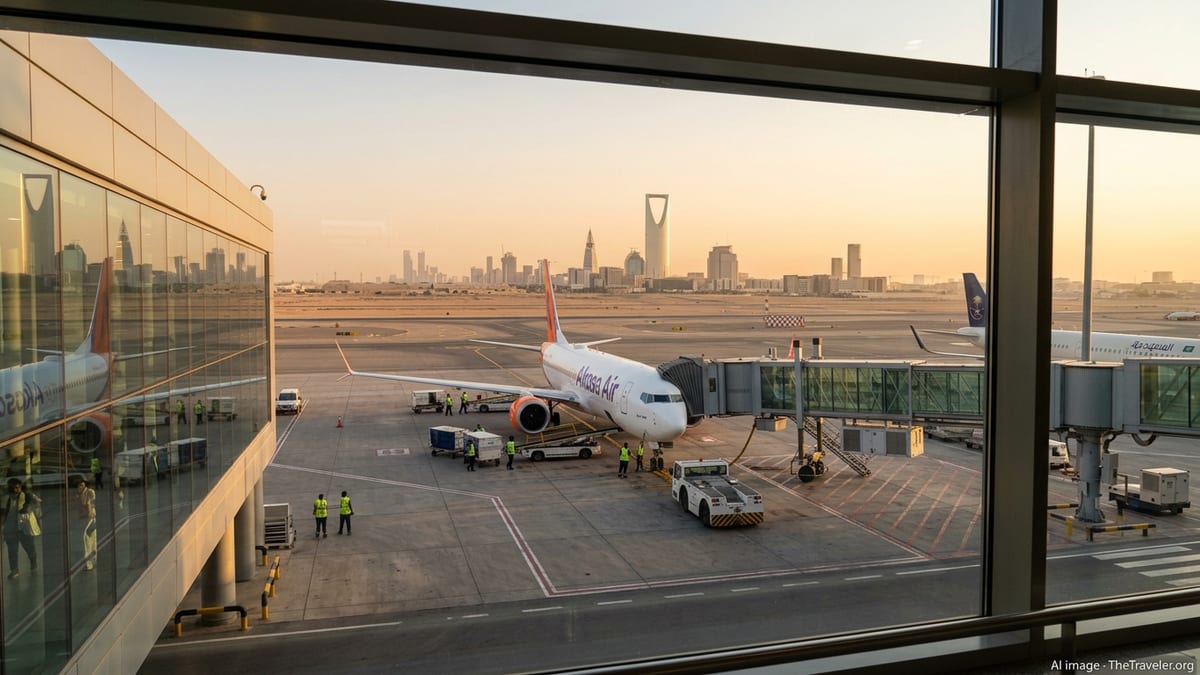
Canelo’s early arrival anchors a high‑stakes Riyadh fight week
Published coverage from boxing outlets indicates that Álvarez landed in Riyadh on Monday, October 26, for final preparations before facing WBC super middleweight champion Christian Mbilli on Saturday, October 31. The fight headlines the “Mexico vs The World” card at The Venue in the Saudi capital, part of the government backed Riyadh Season entertainment program.
Reports describe Álvarez checking into his fight week hotel after an overnight flight, greeted by choreographed fanfare and cultural performances as promoters sought to project business as usual. Local organizers have confirmed that the headline bout and its undercard remain scheduled for October 31, with ring walks expected in the early evening local time.
The matchup continues a multi fight relationship between Álvarez and Saudi event organizers, who have used high profile boxing cards to draw global attention and visitors. Despite an unsettled regional backdrop, there has been no formal indication from promoters that the event will move from Riyadh or be postponed.
For international fans holding tickets, Álvarez’s early arrival is viewed as a practical signal that fighters and teams are proceeding with fight week logistics, including open workouts, media events and weigh ins in the Saudi capital.
US raises Saudi advisory to Level 3 as security picture shifts
While Álvarez’s charter touched down, the United States adjusted its own stance on travel to Saudi Arabia. The latest advisory on the State Department’s public portal, updated in late October, now lists the kingdom at Level 3, “Reconsider Travel,” citing risks that include terrorism and ongoing missile and drone attacks affecting civilian infrastructure.
The advisory notes that US government employees in Saudi Arabia face significant movement restrictions, including a prohibition on travel within 20 miles of the Yemeni border and special authorization requirements for visits to several provinces and cities. The guidance also references recent incidents targeting airports and other critical facilities, which have caused casualties and disrupted commercial services.
Separate alerts reported by major US news agencies show that Washington has ordered the departure of nonessential US government staff and family members from its mission in Saudi Arabia following a string of deadly attacks attributed to Yemen based Houthi forces. The same reports indicate that the embassy remains open for limited operations, but staffing has been reduced as a precaution.
The combination of a higher advisory level, ordered departures and detailed security alerts underscores a rapidly changing threat assessment that contrasts with the festival atmosphere promoted around Riyadh Season events.
What the new warnings mean for US travelers heading to Riyadh
For US based boxing fans planning to attend Álvarez vs Mbilli or other Riyadh Season attractions, the latest State Department language carries practical consequences. A Level 3 notice does not prohibit travel, but it urges citizens to reconsider nonessential trips, review personal risk tolerance and develop contingency plans before departure.
Publicly available guidance emphasizes that American travelers should enroll in the Smart Traveler Enrollment Program so they can receive security alerts and make it easier for consular staff to contact them in an emergency. The same resources advise monitoring local news, being prepared for changes in flight schedules, and having backup arrangements in case of airport closures or route diversions.
Travelers are also encouraged to verify that their medical and evacuation insurance policies cover Saudi Arabia and potential disruptions linked to regional conflict. In light of recent attacks on aviation related infrastructure reported by international media, passengers are advised to allow additional time for screening and be prepared for last minute schedule changes, including delays or rerouting away from affected airspace.
Those who decide to proceed to Riyadh for the fight are urged to follow local security instructions, avoid sharing images of military or security activity, and keep copies of key documents such as passports and visas accessible both in print and in secure digital form.
Riyadh Season presses on as other events pause
Álvarez’s arrival comes at a time when Saudi Arabia’s wider sports calendar is under pressure. Regional media coverage notes that some tournaments and exhibitions in the kingdom and neighboring states have been postponed or scaled back in recent weeks due to security and budget considerations.
Riyadh Season, however, continues to position itself as a global entertainment hub, with boxing at the center of its strategy. The Canelo Mbilli card follows a series of heavyweight and crossover combat sports events held in the Saudi capital over recent years, many designed to attract international spectators and broadcast audiences even during periods of geopolitical tension.
Event organizers and local tourism promoters are highlighting the return of major live attractions as a sign of resilience, pointing to a packed slate of concerts, fan zones and sporting fixtures clustered around the fight date. For domestic audiences, the continuation of Riyadh Season offers a diversion from regional instability, while for international visitors it presents high profile events layered over a changing risk environment.
Industry analysts note that the decision to proceed with Álvarez Mbilli, despite the sharpened US advisory, reflects both the financial investments already committed and Saudi Arabia’s desire to maintain its position as a premium host for global boxing and entertainment.
Balancing spectacle and risk for visiting fans
The juxtaposition of a marquee world title fight with heightened security warnings places individual travelers at the center of a complex calculation. On one side is a rare chance to see one of boxing’s biggest stars attempt to reclaim a world title in a purpose built Riyadh arena, surrounded by large scale fan experiences and a stacked undercard featuring international talent.
On the other is a clearer signal from US authorities that the operating environment in Saudi Arabia has deteriorated in recent weeks, particularly around critical infrastructure. Travelers weighing whether to fly in for the fight must consider not just personal safety but also practical issues such as the reliability of return flights, potential rerouting through other hubs, and the possibility of sudden policy changes that could affect movement in and out of the country.
For now, the picture is one of parallel tracks. Public information indicates that Álvarez, Mbilli and the promotion are pushing ahead with final preparations in Riyadh, while US government messaging urges its citizens to take a more cautious view of nonessential travel. How many visiting fans ultimately decide to bridge that gap will become clear when the arena lights come up on October 31.