


Anse La Raye is one of Saint Lucia’s most atmospheric fishing villages, a place where brightly painted boats line a curving bay, soca music drifts from rum shops, and the scent of grilling snapper hangs in the air on Friday nights. For first-time visitors, it offers an easy way to step beyond resort life and experience a real working community on the island’s scenic west coast, within a short drive of Castries and the Pitons.
Get the latest updates straight to your inbox!
Where Anse La Raye Is and Why It Matters
Anse La Raye sits roughly midway down Saint Lucia’s western coastline, about a 20 to 30 minute drive south of Castries along the island’s main coastal highway. The road winds over headlands with sweeping views of the Caribbean Sea before dropping into the village at the edge of a small bay. Many visitors first glimpse Anse La Raye from a taxi or minibus window as they head toward Soufrière and the Pitons; others arrive by catamaran day cruise that calls into the bay for a swim stop and a look at village life.
The name Anse La Raye is often translated as “Bay of Rays,” a reference to the stingrays that local fishermen say once glided through the shallow waters of the bay. Today the village is part of the Anse La Raye District and serves as a local hub for small shops, schools, and churches serving the surrounding communities and valleys. For travelers, its appeal is the mix of low-key Caribbean charm, access to nearby waterfalls and rainforest, and a Friday night Fish Fry that has become one of the island’s best-known community events.
Because it lies on the main route between the north of the island and Soufrière, Anse La Raye is easy to include on most itineraries. Visitors staying in Rodney Bay, Marigot Bay, or Soufrière can come for a half day to explore the waterfront and have lunch, or stay into the evening on a Friday to experience the music and street food scene. It also works as a base for independent travelers who want simple guesthouses in a local setting rather than a full-scale resort.
First Impressions: Village Layout, Waterfront, and Beach
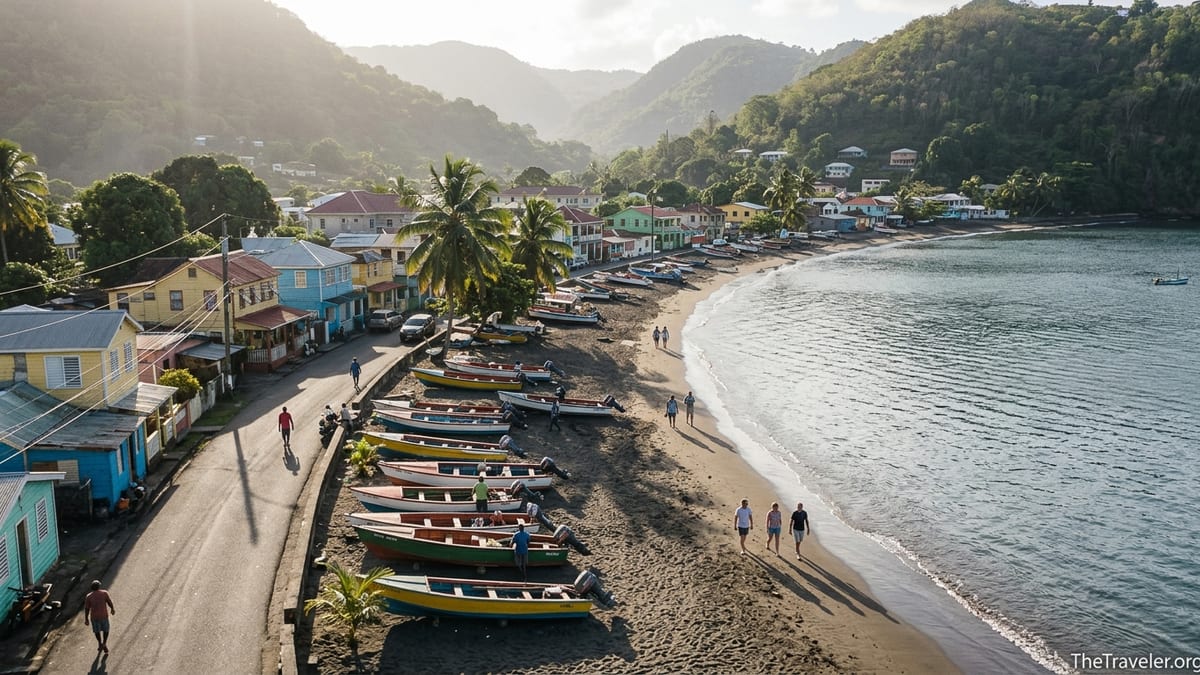
Arriving from Castries, the road curves down into the village and you will see clusters of wooden and concrete houses painted in mint green, turquoise, and coral, many with tin roofs and verandas. The main street, often called Front Street, runs parallel to the sea. Small groceries, rum shops, and snack bars line the roadside, while fishing skiffs and pirogues lie pulled up on the sand across the road, shaded by almond and coconut trees.
The waterfront itself is simple and working rather than manicured. You will likely see fishers mending nets, small boats heading out or coming in, and children playing football on the sand. This is one of the best places on the west coast to see authentic village life up close without needing a guided tour. There are concrete benches where you can sit and watch the late afternoon light on the bay. Most days you will not find beach umbrellas or loungers to rent, and services are minimal, so bring your own towel, water, and reef-safe sunscreen if you plan to linger.
The beach at Anse La Raye is a narrow strip of dark volcanic sand that shelves into generally calm water. It is suitable for a casual swim, especially in the morning when the bay is quiet and the fishing boats are out. The water clarity and sand conditions can vary with weather and recent rainfall, and the area closest to the fishing boats can feel busy and less suited to a long beach day. Travelers looking for wide, postcard-style beaches usually combine a short village stop here with time at larger beaches such as Anse Cochon to the north or Malgretoute and Sugar Beach closer to Soufrière.
What to See and Do in and around the Village
Within the village itself, the main activities are simple: strolling the lanes, watching the fishermen, and taking photographs of the colorful houses and churches framed by steep green hills. Respectful street photography is generally accepted, but it is courteous to ask before photographing individuals or small groups, especially older residents or children.
Several churches and chapels, including the Roman Catholic church near the center of the village, give a sense of Anse La Raye’s religious life. On Sundays and religious holidays, the village can feel noticeably busier, with residents in their best clothes heading to services. Visitors who happen to be in town on such mornings often comment on the contrast between the quiet midweek atmosphere and the more animated Sunday scene, with food vendors outside and children playing on the steps.
Local craft vendors sometimes set up small stalls, especially when cruise-ship excursions or catamaran tours are expected. Items are usually simple and handmade: shell jewelry, carved calabash bowls, and paintings of coastal scenes. Prices are often negotiable, but amounts tend to be modest by international standards, and many travelers choose to pay the requested price as a way of supporting local artisans.
Friday Night Fish Fry: The Village Comes Alive
The weekly Fish Fry, often called Fish Friday, is the main reason many visitors come to Anse La Raye. On Friday evenings, usually starting around 6 pm and building through the evening, Front Street and parts of the waterfront turn into a community food fair. Long grills and oil drums are set up along the road, smoke and steam rise into the night air, and music plays from speakers while locals and visitors queue for plates of freshly cooked seafood.
Typical offerings include whole grilled snapper, dorado, and tuna, as well as fish kebabs, fried fish, lobster when in season, and Creole-style sides such as green fig salad, fried plantains, and rice and peas. You might pay the equivalent of around 10 to 15 US dollars for a generous plate of fish and sides, with smaller portions and snacks, such as fish cakes or accras, for less. Local drinks range from bottled beer to rum punches and fresh juices. Prices can feel very reasonable compared with hotel restaurants, which is part of the event’s appeal.
The Fish Fry has had pauses and relaunches over the years, but as of 2026 it continues to draw a mix of residents from nearby communities, domestic visitors, and tourists from resorts along the coast. Some hotels and tour operators offer Friday evening transfers specifically to Anse La Raye, often combining the Fish Fry with sunset viewing from a coastal lookout. First-time visitors should expect a lively but relaxed street-party atmosphere with recorded music, occasional live performers, and family groups mingling with backpackers and cruise passengers.
It is wise to bring small bills in Eastern Caribbean dollars or US dollars, as most stalls are cash-only. Arriving earlier in the evening gives you a better chance of getting popular items before they sell out. Comfortable sandals are more practical than dress shoes because you will spend time standing and walking on uneven pavement and sand. As in any busy event, keep wallets and phones secure, but overall the atmosphere is friendly and welcoming.
Eating and Drinking: Local Spots and Nearby Options
Outside the Friday night event, Anse La Raye has a handful of small local restaurants and food stalls that serve Creole dishes, simple grilled fish, fried chicken, and stews. These are often family-run places with a few plastic tables and chairs and a small chalkboard menu that changes with the day’s catch. Lunch plates typically consist of a piece of fish or chicken with rice, salad, and plantains at prices that are modest by island standards, often noticeably less expensive than similar meals in resort areas.
Opening hours can be irregular and may depend on the fishing conditions, local events, and the owner’s schedule. It is common to find more options at lunchtime on weekdays when school and government workers are on break, and slightly fewer on quiet evenings early in the week. Asking your driver or guesthouse host for the latest recommendation usually yields a good suggestion, since residents know which spots are currently consistent.
For travelers seeking a more polished dining experience while still staying close to the village, there are beach bars and restaurants within a short drive north and south along the coast. For example, a number of travelers combine a daytime visit to Anse La Raye with lunch at a well-known boutique resort set on the cliff above Anse Cochon, where the restaurant serves seafood, salads, and cocktails overlooking the bay. To the south, the Soufrière region offers numerous oceanfront and hillside restaurants with views of the Pitons, so it is easy to build Anse La Raye into a broader food-focused day out.
Rum shops play a central role in village social life. These small bars typically offer local rum by the shot, mix simple rum punches, and sell bottled beer and soft drinks. They are informal spaces where domino games and sports on television screens create a relaxed atmosphere. Visitors are generally welcome as long as they are respectful, and ordering a round of drinks is an easy way to strike up conversation with residents and learn more about daily life in the village.
Waterfalls, Nature, and Nearby Excursions
Beyond the waterfront, Anse La Raye is a gateway to several of Saint Lucia’s lesser-known waterfalls and forested valleys. Inland from the village, the hills rise steeply into rainforest that feeds the rivers flowing down to the bay. A short drive or guided excursion takes you to the trailheads for two popular falls often mentioned together with the village: Anse La Raye Falls and River Rock Falls. Both are located in the wider Anse La Raye Quarter and are commonly visited on half-day tours that combine mild hiking with swimming.
Anse La Raye Falls is usually accessed via a short walk through lush vegetation, with guides explaining local plants and birdlife along the way. Travelers often describe the falls as intimate rather than towering, with clear water descending into a pool suitable for a refreshing dip. River Rock Falls, sometimes called Riverrocks Waterfall, is another scenic cascade that forms natural rock pools where visitors can swim or sit under the flowing water. Conditions can vary after heavy rain, so it is sensible to follow the advice of local guides about where and when to swim.
Many visitors reach these waterfalls as part of ATV, 4x4, or hiking tours that start closer to Marigot or the Roseau Valley and then head inland into the Anse La Raye area. These excursions generally include hotel pickup, transport along backroads and through small farming communities, and time at a waterfall for swimming and photographs. Prices vary depending on the operator and inclusions, but they typically cost more than a simple taxi transfer because they include specialized vehicles, guiding, and safety equipment.
Nature-focused travelers may also use Anse La Raye as a stopping point on a larger west-coast circuit that includes viewpoints above Marigot Bay, rainforest birdwatching near Millet, and Sulphur Springs and Tet Paul Nature Trail near Soufrière. The village’s position along the coastal road makes it an obvious place to pause for a snack, use facilities, or walk the waterfront before continuing south to the Pitons or north back to Castries and Rodney Bay.
Getting To and Around Anse La Raye
For most first-time visitors, the main choice is between hiring a private taxi, renting a car, or using the local minibus system. From Castries, a private taxi to Anse La Raye typically takes about 25 minutes in light traffic, longer when cruise ships are in port and the road is busier. Taxi fares are usually quoted per vehicle rather than per person and can increase in the evening, especially on Friday nights when demand is higher for Fish Fry transfers.
Local minibuses are the budget option and offer a more immersive experience of everyday island travel. These vans run regular routes along the west coast between Castries and communities such as Anse La Raye, Canaries, and Soufrière. Fares are modest by international standards, often only a few Eastern Caribbean dollars per person for the ride from Castries to Anse La Raye, paid in cash directly to the driver. Minibuses leave when they are reasonably full rather than on a strict timetable, so flexibility and patience are important, particularly in the evening.
Car rental is a good option for confident drivers who are comfortable with winding, sometimes narrow roads, driving on the left, and occasional sudden rain showers that can reduce visibility. Renting a small SUV offers extra clearance for rougher side roads leading to viewpoints and some waterfall trailheads. Having your own vehicle allows you to stop at roadside fruit stands, viewpoints, and small beaches between Castries and Soufrière, with Anse La Raye as one of several spontaneous stops.
Within the village, everything is walkable. The main street, side lanes, church, and waterfront are all within a few minutes of one another on mostly flat ground. There is no need for a car for local exploration, and in fact parking can be limited on busy Fridays. If you arrive by taxi for Fish Fry, consider arranging a specific pickup time and meeting point with your driver before they leave, particularly if mobile phone coverage or roaming is uncertain for you.
Safety, Etiquette, and Practical Tips for First-Timers
Anse La Raye is generally considered safe for visitors who take normal precautions. As in any small community, petty theft is possible, so avoid leaving bags unattended on the beach or in parked vehicles and keep valuables discreet. After dark, especially on nights without the Fish Fry, stick to the main streets and waterfront rather than wandering far into unlit back lanes that you do not know.
During the Fish Fry, the crowds, music, and flowing drinks can make the atmosphere feel like a street party. While incidents are uncommon, it is sensible to keep wallets, phones, and cameras close to your body and to be cautious about accepting drinks from strangers. If you are traveling with children, agree on a meeting point in case anyone becomes separated in the throng, and consider leaving the event by around 10 or 11 pm if you prefer a calmer scene.
Respectful behavior goes a long way in a village of this size. Greet people with a simple “good afternoon” or “good evening,” dress casually but not beach-bare when away from the sand, and ask before photographing individuals up close. If you are driving, be patient with slow traffic through the village and watch for pedestrians, dogs, and children who may step into the road unexpectedly.
Practical considerations include carrying cash in small denominations, wearing comfortable clothing that can handle humidity and the occasional passing shower, and bringing insect repellent, especially if you plan to visit waterfalls or stay into the evening. Mobile data coverage is generally available, but signals can weaken in some valleys inland, so it is wise to confirm meeting points and taxi arrangements in advance where possible.
Planning Your First Visit to Anse La Raye
For most travelers, Anse La Raye works best as part of a day or evening trip along the west coast rather than as a stand-alone destination for a full week. A common first-time plan is to stay in the north of the island, perhaps in Rodney Bay or around Castries, and then drive or take a tour south toward Soufrière, stopping at Marigot Bay for a viewpoint, Anse La Raye for a walk and snack, and then continuing to the Pitons. On a second day or evening, you might return specifically for the Friday Fish Fry.
If your schedule allows only a short stay in Saint Lucia, you can still include Anse La Raye by booking a catamaran or small-boat trip along the coast that calls at the village or passes close enough to appreciate its setting. Many such cruises include snorkeling stops at nearby bays, views of the Pitons from the water, and on-board drinks and snacks. These excursions cost more than traveling independently, but they remove the need to navigate the roads and allow everyone in the group to relax.
Independent travelers on longer trips sometimes choose to base themselves in a small guesthouse or apartment in or near Anse La Raye. This approach offers early-morning walks along the beach, easy access to nearby waterfalls, and regular interaction with residents. It also requires comfort with a quieter, less structured environment than that of a full-service resort, including occasional power or water interruptions, variable restaurant hours, and the sounds of village life from dawn roosters to late-night music.
Whenever you visit, build some flexibility into your plan. Weather can affect road conditions and waterfall access, local events can change the timing of the Fish Fry, and public holidays may alter minibus schedules. Checking with your hotel, host, or a local tour office a day or two before your planned trip can help you adjust your timing to current conditions.
The Takeaway
For first-time visitors to Saint Lucia, Anse La Raye offers a valuable glimpse of everyday island life along one of the Caribbean’s most scenic coasts. Its modest beach, working waterfront, and homes tucked between sea and forest create a setting that feels far removed from manicured resort grounds, yet it remains easy to reach from Castries and the main tourist centers.
Whether you come for an hour to stretch your legs and watch the fishermen, stay for a half day to explore waterfalls inland, or time your visit to coincide with the Friday night Fish Fry, the village rewards unhurried exploration. Simple meals of grilled fish and Creole sides, conversations at a rum shop, and the sight of children playing on the sand at sunset often linger in memory longer than formal excursions.
Approach Anse La Raye with curiosity, respect, and a flexible schedule, and it can become a highlight of a wider Saint Lucia itinerary. It is a place where the island’s landscape, culture, and community intersect in a way that feels both accessible to visitors and firmly rooted in local life.
FAQ
Q1. Is Anse La Raye safe for first-time visitors?
Anse La Raye is generally considered safe for visitors who use normal common-sense precautions, such as keeping valuables secure and staying on main streets after dark.
Q2. How do I get to Anse La Raye from Castries?
You can reach Anse La Raye from Castries by private taxi in about 25 minutes, by rental car along the west-coast road, or by local minibus for a low cash fare.
Q3. What is the best day to visit Anse La Raye?
Friday is the most popular day because of the evening Fish Fry, but weekdays are better if you prefer a quieter atmosphere and easier parking.
Q4. Can I swim at the beach in Anse La Raye?
Yes, you can swim from the dark-sand beach, though it is a working waterfront with fishing boats, so conditions are better for a short dip than a full beach day.
Q5. Do I need a tour to visit the waterfalls near Anse La Raye?
A tour is not strictly required, but many visitors find a guided excursion useful for transport, trail access, and local knowledge about conditions at Anse La Raye Falls and River Rock Falls.
Q6. What should I expect at the Friday night Fish Fry?
Expect food stalls grilling fresh fish and seafood, Creole side dishes, music, and a friendly crowd of locals and visitors in a relaxed street-party setting.
Q7. Are there vegetarian options in Anse La Raye?
Options can be limited, but some stalls and small eateries offer vegetarian sides such as rice and peas, salads, plantains, and breadfruit; ask vendors what is meat-free.
Q8. Can I pay by card at the Fish Fry and local restaurants?
Most street vendors and small village eateries are cash-only, so bring Eastern Caribbean dollars or US dollars in small bills; larger restaurants along the coast are more likely to accept cards.
Q9. Is Anse La Raye suitable for children?
Yes, many families visit, especially earlier in the evening on Fridays and during the day, but keep a close eye on children near the road, water, and crowds.
Q10. How much time should I plan for a first visit?
Plan at least one to two hours to walk the village and waterfront, or half a day if you also want to visit a nearby waterfall or stay for the Fish Fry.