


More news on this day
Following a disruptive air-traffic communications outage that rippled across the Northeast earlier this week, operations at Philadelphia International Airport appear to be stabilizing, with real-time data early Wednesday indicating only minor delays.
Get the latest news straight to your inbox!
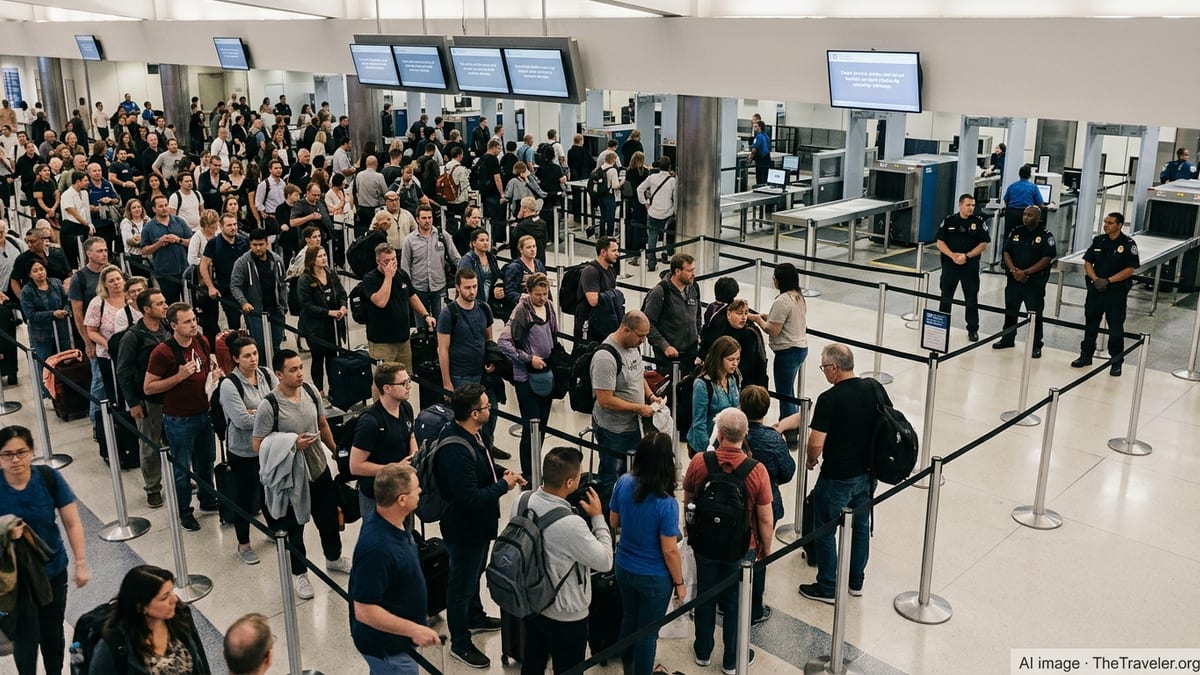
Current Status: Mostly Normal Operations at PHL
Real-time information from the Federal Aviation Administration’s airport status page for Philadelphia International Airport on September 23 indicates that general departure and arrival traffic is experiencing delays of 15 minutes or less. The FAA notes no destination specific delay programs in effect for Philadelphia, suggesting that the airport is functioning close to normal for an early autumn weekday.
Online departure boards for September 23 show a full morning schedule of flights from major carriers such as American Airlines, Delta Air Lines, United Airlines, Southwest Airlines and Frontier Airlines leaving Philadelphia on time or with only modest schedule changes of a few minutes. Overnight cargo departures also appear as scheduled on live tracking boards, with no widespread pattern of significant postponements or cancelations.
Philadelphia’s official airport flight information portal, which provides status by city, airline or flight number, lists a typical mix of on time, delayed and canceled operations, but without the large clusters of disruptions that characterized the height of this week’s outage. The overall picture points to normal variability rather than a continuing systemic problem.
Impact of the Recent Northeast Air-Traffic Outage
The more stable conditions follow a period of significant disruption across the Northeast air corridor earlier in the week, when construction related damage to critical communications lines serving a key air traffic facility near Philadelphia caused widespread delays and ground stops. National and regional coverage from outlets such as the Associated Press and Axios describes hundreds of cancellations and extensive delays at major airports from Philadelphia to New York and Newark on September 21 and 22.
Those reports indicate that once telecom lines were repaired, federal transportation officials reported that operations at Philadelphia and other major Northeast airports were resuming. Flight tracking data for long haul services from Philadelphia, including recent Qatar Airways and American Airlines codeshare routes to Doha, still show some departures leaving 15 to 30 minutes behind schedule on individual days, but these appear as isolated flight based issues rather than evidence of an ongoing network wide outage.
Airlines serving Philadelphia also issued temporary travel waivers earlier in the week for customers ticketed through affected dates, citing air traffic control delays in the region. Public postings about one such waiver referenced travel between September 21 and September 23, signaling that carriers viewed the most acute disruption as a short term event tied to the infrastructure failure rather than a prolonged operational crisis.
How Today’s Delays Compare With Typical Conditions
On a normal day, a large hub such as Philadelphia International routinely experiences a mix of minor delays from weather, congestion and aircraft rotation. Industry data on individual routes from Philadelphia, such as American Airlines regional services to Providence or other short haul destinations, show that some flights historically depart an average of 30 to 50 minutes behind schedule, reflecting recurring operational pressures even outside headline making events.
Against that backdrop, FAA system summaries for the National Airspace System early on September 23 do not list Philadelphia among airports with active ground stops, extensive runway restrictions or large scale traffic management programs. The absence of Philadelphia from national delay summaries suggests that, at least as of the latest update, the airport is not experiencing unusual disruption beyond what travelers might expect from routine day to day variability.
Travelers checking third party flight tracking sites for Philadelphia on Wednesday will still see individual services listed as delayed or canceled, which is common at any large hub. A closer look at the distribution of disruptions, however, shows scattered instances across different airlines and destinations, not the concentrated waves of late departures that would indicate that the earlier control center problem is still constraining capacity.
What Travelers Through Philadelphia Should Do Now
For passengers flying through Philadelphia today, publicly available data suggests that conditions are generally favorable but still fluid at the level of individual flights. The FAA stresses that its airport status page describes overall conditions rather than specific services, and that travelers must verify details directly with their airline before heading to the airport.
Given the recent outage and the possibility of schedule adjustments as airlines reset aircraft and crew rotations, travelers may still encounter residual delays, particularly on routes that saw repeated disruptions earlier in the week. Monitoring carrier apps or text alerts, and checking flight numbers repeatedly on day of departure, remains advisable until operations have run smoothly for several consecutive days.
Passengers connecting through other Northeast hubs, such as Newark, LaGuardia or Kennedy, should also consider that knock on effects from prior cancellations can persist even after an underlying systems issue is resolved. When rebooking, focusing on earlier departures in the day and allowing longer connection times can reduce the risk of missed flights if new bottlenecks emerge elsewhere in the network.
Outlook for the Rest of the Week at PHL
As of early September 23, national traffic planning summaries from the FAA describe no major weather systems or airport closures specifically targeting Philadelphia, although routine congestion programs may still be introduced later in the day as traffic builds. In the absence of renewed technical issues with communications or radar equipment, the airport is expected to function near normal capacity.
Longer term reports on controller staffing in the New York and Philadelphia region highlight that the area operates with relatively tight margins, which can magnify the impact of any infrastructure failure or weather system. That backdrop means that while the immediate crisis appears to have passed, travelers using Philadelphia International should expect that future storms, construction mishaps or staffing constraints could once again translate into pronounced delays.
For now, however, the latest publicly accessible FAA data and independent flight tracking boards indicate that flights at Philadelphia International Airport are not experiencing the broad, sustained delays seen earlier this week. The pattern on Wednesday morning looks much more like a typical busy hub managing a full schedule, rather than an airport still in the grip of a major disruption.