


For many travelers, seeing the northern lights is a once-in-a-lifetime dream. For photographers, it is also one of the most demanding subjects on earth: frigid temperatures, fast-changing skies and a narrow window of darkness. Small group aurora tours bridge that gap, combining expert local knowledge with space, flexibility and photo-focused guiding. From Tromsø and Abisko to Iceland’s dark lava fields, here is how to choose and book the best small group northern lights tours for photography and Arctic adventures in the coming seasons.
Get the latest updates straight to your inbox!
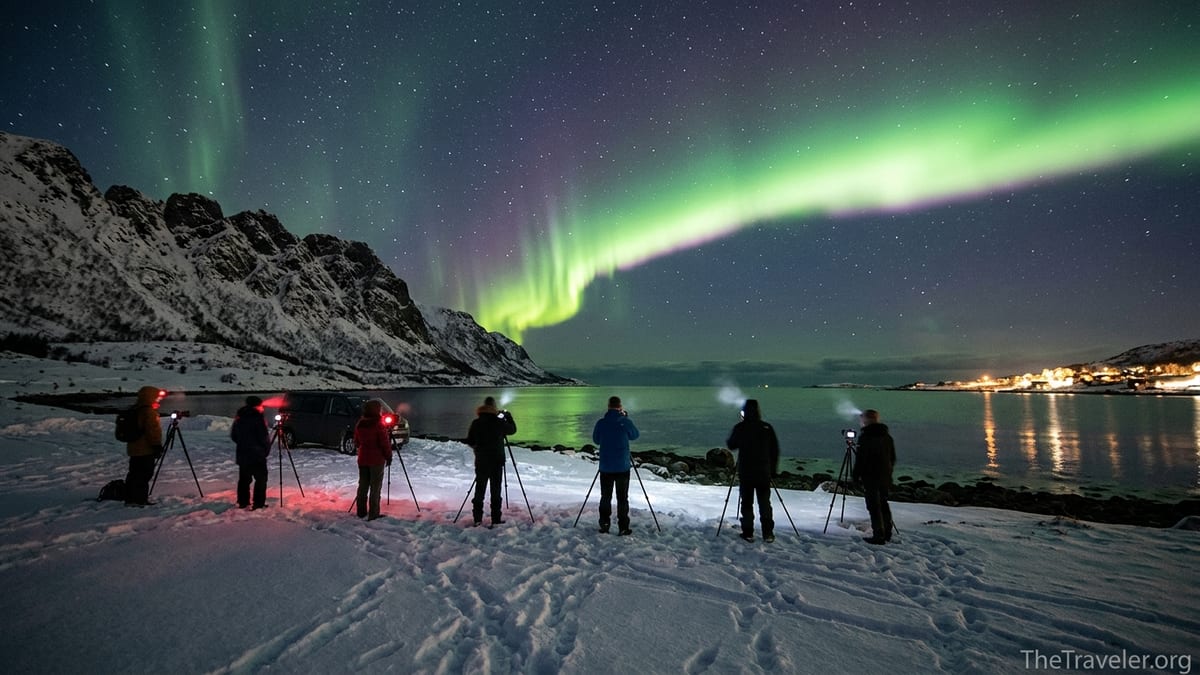
Why Small Group Northern Lights Tours Work Best for Photography
Photographing the aurora is very different from simply watching it. You need time to set up a tripod, experiment with shutter speeds, and move around without people constantly walking into your frame. That is where small group tours, typically capped at 6 to 18 guests, shine. Operators in Tromsø, Abisko and Iceland increasingly market “mini-bus” or “micro group” departures specifically for photographers and serious aurora chasers, avoiding the 40-seat coach model that dominates mass tourism.
In Northern Norway, companies like Arctic Circle Tours Tromsø and Arctic GM advertise small groups combined with real-time aurora tracking, using networks of cameras and weather data to find clear skies rather than sticking to a fixed viewpoint. Their vans hold around a dozen people, which means everyone can get in and out quickly and guides can help adjust camera settings one-on-one when the lights appear. That level of attention is difficult on a large bus where a single guide might be juggling dozens of questions at once.
For photographers, another major benefit of a small group is flexibility on location. If the aurora arc starts strengthening behind a nearby hill, a group of six can simply walk a few hundred meters to reframe the shot. Tours that carry a compact mini-bus can also pivot to a different fjord or valley when clouds move in. In practice, that can be the difference between going home with a handful of faint green streaks and a memory card full of bright curtains, coronas and reflections on snow or water.
Small groups also create a calmer atmosphere. Instead of a crowd of people talking over each other, you are more likely to find guests passing around thermos flasks, sharing tripod space and letting each other take turns in the classic “silhouette under the lights” portrait. For long winter nights that may stretch from 7 p.m. to 2 a.m., that sense of camaraderie often matters as much as the photography itself.
Tromsø: Norway’s Capital of Small Group Aurora Chases
Tromsø, inside the Arctic Circle in Northern Norway, remains one of the most reliable hubs for small group aurora tours. The city has over a hundred different operators active each season, from big-bus companies to owner-operated vans. In recent years, there has been clear growth in photo-focused small groups, particularly for the 2025–2026 season, as demand from serious photographers and repeat visitors increases.
Newer outfits like Arctic Photo Guide, led by a single photographer-guide, deliberately run with very low capacity and use modified 4x4s to reach more remote valleys and mountain passes. They equip guests with thermal suits, snowshoes or traction cleats and lead short night hikes away from roadside parking areas. For photographers, that means darker skies, fewer car lights sweeping through long exposures and more natural foregrounds such as frozen lakes, boulders and birch trees instead of guardrails.
Other Tromsø companies combine small groups with higher comfort. Arctic Circle Tours Tromsø promotes groups of roughly 15 guests using comfortable vans and a wide-area camera system to monitor skies from dozens of locations. Arctic GM advertises “Guaranteed Northern Lights” small group expeditions in brand-new 4x4 vans, with photographers on staff, unlimited mileage and no fixed cut-off time. In practice that can mean driving deep inland toward the Finnish border if coastal weather closes in, staying out into the early hours when solar activity peaks, and sending guests professional photos after the tour.
Tromsø also offers layered options at different price points. Northern Shots Tours, for example, runs classic big-bus “Aurora Chase” departures starting around the lower end of the local price spectrum, but also a more expensive small or private group product with 4 to 7 people. The small group version typically includes more personalized photography tuition and a “second chance” policy that lets you join a larger bus tour on another night if you did not see the lights the first time. That flexibility is attractive if you only have three or four nights in town and want to maximize your odds without booking multiple premium tours.
Abisko and Swedish Lapland: Clear Skies and Dedicated Photo Tours
Across the border in Swedish Lapland, Abisko has built a reputation among photographers for unusually clear skies. Sheltered by surrounding mountains and sitting in a rain shadow, the village statistically records fewer cloudy nights than many coastal locations. That makes it a magnet for small group aurora and landscape photo tours, especially between December and March when snow cover is deep and the polar night is at its height.
Operators like Lights Over Lapland and Visit Abisko’s in-house photography teams run small group aurora photography tours that might cost the equivalent of a few hundred US dollars per person for an evening session. Groups are kept tight so guides can help each participant with focus, exposure and composition. Many tours include rental of a tripod and sometimes even a camera body with a fast wide-angle lens, which can be invaluable if you are flying in with only a basic kit zoom or a smartphone.
Abisko also offers themed experiences that combine northern lights with Arctic culture and dining. Scandinavian Sami Photoadventures, for example, runs an aurora tour with dinner where guests share a local meal and then head into the dark to look for the lights, with photography handled by the guiding team. Swedish Tourist Association programs around Abisko Turiststation include guided northern lights hikes that appeal to more active travelers happy to walk on snowshoes or winter trails under the stars, often in small, intimate groups.
For photographers, the big advantage of Abisko is consistency rather than spectacle. While you still need solar activity, the chances of a clear window somewhere in the sky are often better here than along stormy coasts. Many repeat visitors report multiple aurora nights in a single week. That reliability encourages multi-day small group itineraries where you spend several evenings with the same guide, refining your photography and revisiting favorite compositions when conditions improve.
Iceland: Boutique Aurora Experiences Beyond the Big Bus
Iceland’s capital Reykjavík is another major starting point for northern lights tours, but the scene is split between very large bus operators and a growing number of boutique small group companies. For photographers, the latter are usually worth the premium because they can leave the city behind quickly and adjust routes dynamically as conditions change, instead of heading to a single overused car park.
Companies like Aurora Experts and Norse Adventures focus on small group aurora chasing with an emphasis on comfort and photography support. Aurora Experts, recognized by major review platforms for the quality of their “Ultimate Northern Lights Tour,” limits capacity to under 20 guests, provides warm snowsuits, outdoor chairs and traditional Icelandic snacks, and includes unlimited high-end photos taken by the guide. Norse Adventures runs small group minibus tours where routes are chosen each afternoon by checking cloud cover, solar wind data and local road conditions, then refined again during the night as new information comes in.
In Reykjavík, you will also find micro operators and independent guides recommended in traveler communities for their tiny groups and highly personalized approach. Some run with a maximum of 8 passengers in a single van, often combining aurora photography with lessons on Icelandic geology, history and folklore. Travelers who have tried both big-boat or big-bus experiences and these small vans often report that the latter feel more like spending an evening with a knowledgeable local friend, rather than attending a group excursion.
Because Iceland’s weather is volatile and coastal skies can cloud over quickly, many small group operators build in generous rebooking policies. If you do not see the lights on your scheduled night, they may offer a heavily discounted or free second attempt subject to availability. When comparing tours, photographers should look out for those conditions in the fine print, especially for trips planned during shoulder months such as early October or late March when weather patterns can be more unsettled.
What to Look For in a Photography-Focused Aurora Tour
Regardless of destination, there are a few concrete features that make a northern lights tour truly photography-friendly. First is group size. For active shooting, groups of 6 to 15 work best. Anything larger generally becomes more about sightseeing than serious photography. When comparing operators in Tromsø, Abisko or Reykjavík, check that the “max group size” listed for the specific product you are booking aligns with your expectations, and understand that private options will cost more but offer complete control over pacing and locations.
Next is the guide’s photography expertise. Many of the strongest small group operators highlight that their guides are working photographers who will help you with manual settings, focusing in the dark and composing shots that include both aurora and foreground interest. In practice, this might mean the guide walking down the line of tripods at your first stop, checking that everyone is shooting with a wide lens, an aperture around f/2 to f/4, and exposure times appropriate to the speed of the aurora. It can also mean them suggesting turning off image stabilization on tripods or using the two-second timer to avoid camera shake.
Logistics matter too. Good small group tours typically include thermal suits or extra parkas, hand warmers, hot drinks and snacks, and frequent checks on guests’ comfort. They avoid lighting up the scene with strong white flashlights once everyone is set up, instead using red headlamps or dimmed lights to preserve night vision and avoid ruining long exposures. The best companies will also discuss basic etiquette at the start of the evening, asking participants not to shine phone screens toward other cameras and to move carefully around tripods.
Finally, look at how flexible the tour is in terms of route and time. A photography-centric operator will often advertise “unlimited mileage” or an end time that depends on conditions rather than a fixed schedule. That might translate into leaving Tromsø at 6 p.m., driving two hours inland, staying out past midnight if the aurora is active, and returning only once the show dies down. For photographers chasing a strong KP event or a rare corona display overhead, those extra hours can be priceless.
Pairing Northern Lights Photography With Arctic Adventures
Many small group northern lights tours slot into wider Arctic adventures that fill your daylight hours with other activities. In Tromsø, for example, companies that run evening aurora chases often also offer small group daytime snowshoeing, photography walks around coastal fjords, or wildlife-focused excursions. You might spend a morning photographing reindeer and learning about Sámi culture, then return to the same operator in the evening for an aurora chase that complements what you saw by day.
In Swedish Lapland, multi-day packages can combine several nights of northern lights hunting with dog sledding, cross-country skiing or ice fishing. Some Abisko-based companies run dedicated landscape photography workshops where you shoot frozen waterfalls, mountain vistas and the start of the Kungsleden trail by day, then pivot to aurora sessions at night if the forecast looks promising. The continuity of working with the same guide over several days can dramatically speed up your learning curve, since they will already know your camera, your goals and your tolerance for cold.
Iceland likewise rewards travelers who mix aurora hunting with its rugged day scenes. You might book a Golden Circle tour with a photography guide that visits waterfalls and geysers in soft winter light, then pair it with a small group aurora chase the same night. Some operators in and around Reykjavík sell combination packages that bundle a sightseeing circuit with a night tour at a slight discount, while keeping group sizes manageable so that photo stops are not rushed.
For adventure seekers who prioritize movement as much as images, there are also more active aurora products. These include snowmobile safaris that extend into dark tundra, fat-biking routes lit only by headlamps and the sky, or overnight cabin stays far from town where you can step outside when alerts indicate activity. While these experiences sometimes have slightly larger groups, you can still look for companies that cap numbers, keep pace relaxed, and allow time to set up tripods at scenic viewpoints along the way.
Practical Booking Tips, Budgets and Timing
Booking a small group northern lights tour is as much about timing and expectations as it is about destination. The core aurora season in the Arctic runs roughly from late September to early April, with the darkest months from November to February providing long nights for photography. Prices vary by country, but in current seasons a quality small group evening tour often falls into a mid-range bracket. In Norway or Iceland, that might translate to the equivalent of a few hundred US dollars per person, while Swedish Lapland sometimes trends slightly lower depending on inclusions.
When comparing tours, look closely at what the base price includes. Some Tromsø and Reykjavik operators provide thermal suits, boots, photos, hot meals and hotel pickup as standard, while others charge extra for clothing rental or sell professional photo packages separately. In Abisko, tripods and fast lenses may or may not be included, and private tours typically cost significantly more than shared-group departures. If you are a photographer traveling light, choosing a company that can supply proper gear can save both money and luggage space.
Availability is another factor. Popular small group operators in Tromsø, Abisko and Iceland often sell out peak dates such as Christmas, New Year and February weekends months in advance. If your schedule is fixed, it is worth booking key nights early, then staying flexible with additional evenings that you can fill based on the forecast once you arrive. Many travelers find that booking at least two aurora tours on separate nights balances cost with the reality that weather and solar activity fluctuate.
Above all, keep expectations grounded. Even in strong solar years, no operator can guarantee a display on a particular night, although some, such as Arctic GM or Northern Shots Tours with their “second chance” approaches, try to offset the risk. Think of the tour price as covering a night out in dramatic Arctic landscapes, with experts guiding you to the best possible conditions. If the sky explodes in green and purple, that is the bonus that turns a memorable trip into an unforgettable one.
The Takeaway
Small group northern lights tours occupy a sweet spot between independent travel and mass-market excursions. They provide access to local expertise, flexible routing, and enough personal attention for meaningful photography guidance, without sacrificing the social element that makes long winter nights enjoyable. Whether you choose Tromsø’s fjords, Abisko’s clear mountain skies or Iceland’s lava plains, the right small group operator can dramatically raise your chances of returning home with both vivid memories and portfolio-worthy images.
For photographers, investing in a dedicated small group or private aurora tour is usually worth the extra cost over a big bus. You gain more time at carefully chosen locations, better control over light and movement, and the reassurance that someone who understands both camera settings and Arctic weather is watching the sky on your behalf. Combined with thoughtful planning around season, gear and comfort, these tours turn a hopeful bucket-list outing into a well-supported Arctic adventure.
FAQ
Q1. When is the best time of year to book a small group northern lights tour?
The core season in Arctic regions runs from late September to early April, with peak darkness and frequent tours from roughly November through February. Shoulder months such as October and March can be excellent for photographers who like a mix of twilight colors and aurora, but you will have shorter nights than midwinter.
Q2. Which destination is best for a first-time aurora photography trip?
Tromsø is popular for a first trip because it combines easy access, many small group tour options and relatively mild coastal temperatures for the Arctic. Abisko appeals to photographers who value clear skies and a compact, nature-based setting, while Iceland suits travelers who want to pair aurora hunting with dramatic daytime landscapes and geothermal sights.
Q3. How small should a small group tour be for serious photography?
For active night shooting, groups of about 6 to 15 guests usually work best. That size lets guides provide individual help and keeps the scene manageable at photo stops. Larger groups can still be enjoyable but tend to feel more like general sightseeing than a focused photography workshop.
Q4. Do I need a professional camera to photograph the northern lights?
You do not need to be a professional, but a camera that allows manual control and accepts a tripod makes a big difference. Many guests use mirrorless or DSLR bodies with wide, fast lenses. Some small group operators in places like Abisko or Tromsø offer rental cameras or lenses and will help you with settings if you are new to night photography.
Q5. What should I wear on a small group aurora tour?
Dress in multiple warm layers, including thermal base layers, an insulating mid-layer, and a windproof outer shell. Insulated boots, thick socks, gloves or mittens, a hat and a scarf or buff are essential. Good tours often provide extra parkas or thermal suits, but it is wise to arrive already dressed for temperatures well below freezing.
Q6. How long do northern lights tours usually last?
Most evening small group tours last between 5 and 8 hours door to door. Many leave early in the evening and return after midnight, with exact timing depending on conditions and travel distances. Some operators keep their schedule flexible and will stay out longer if the aurora is particularly active and guests are comfortable.
Q7. Are small group tours suitable for beginners with no photography experience?
Yes. In fact, small group tours are often ideal for beginners because guides have time to explain basic camera functions and composition. Many companies specifically welcome newcomers, provide simple tripods and share recommended starting settings so you can concentrate on enjoying the experience as well as capturing it.
Q8. What happens if I do not see the northern lights on my tour?
Because the aurora is a natural phenomenon, no tour can promise a display. However, a number of reputable small group operators offer discounted or free “second chance” tours if conditions were poor or the lights were not visible. When booking, check the company’s policy on rebooking, refunds or alternative activities in case of a no-show night.
Q9. How far in advance should I book a small group northern lights tour?
For peak dates such as Christmas, New Year and popular February weeks, it is wise to book several months ahead, especially in Tromsø, Abisko and Reykjavík where capacity is limited. Outside of those periods, you may find more last-minute availability, but photographers with fixed travel dates usually benefit from reserving at least one or two key nights well in advance.
Q10. Can I combine a northern lights tour with other Arctic adventures?
Yes. Many operators bundle aurora chases with daytime dog sledding, snowshoeing, reindeer visits, photography workshops or sightseeing circuits such as Iceland’s Golden Circle. Booking a package with the same company can streamline logistics and often saves money compared with arranging every activity separately, while keeping group sizes small enough for a personalized experience.