


The Northern Lights sit high on many travel wish lists, yet a surprising number of people leave their aurora trip disappointed. Often, it is not bad luck that ruins the experience, but preventable planning mistakes made before a single tour is even booked. Understanding how Northern Lights tourism really works, what tour operators can and cannot control, and how conditions vary between destinations will dramatically improve your odds of seeing the aurora and enjoying the Arctic in comfort.
Get the latest updates straight to your inbox!
Confusing “Aurora Season” With “Best Chance” Months
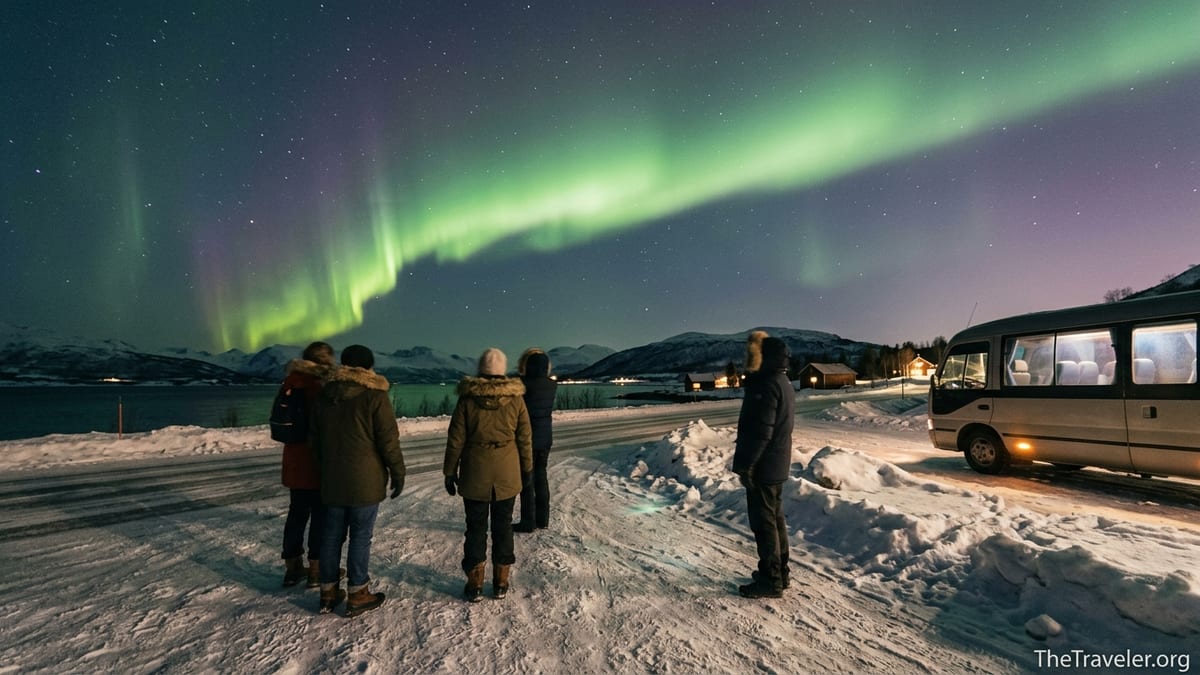
One of the biggest mistakes travelers make is assuming that any date within the advertised “Northern Lights season” offers equal chances of success. Many destinations promote a viewing season from roughly late August or September through late March or April, but that wide window hides major differences. In Tromsø, for example, the official tourism board notes that aurora can be seen from September to April, yet local guides and tour companies consistently highlight the mid-winter months as having the most reliable dark skies and snow-covered landscapes that people imagine when they picture the Arctic.
In Abisko National Park in Swedish Lapland, operators explain that December to March is generally the prime period for Northern Lights, thanks to long dark nights and typically drier, clearer conditions than many coastal areas. Several specialist outfitters describe Abisko as having a microclimate that often remains cloud-free when the rest of the region is covered in overcast skies, which is one reason it is frequently called one of the most reliable places on Earth to see the aurora. Booking a random weekend in early October or late April simply because it falls within “season” can mean very different odds than a carefully chosen window in mid-winter.
In Alaska, the official state travel information notes that the aurora is visible from late August to late April, but many Fairbanks-based guides now steer visitors toward February and March for a balance of frequent activity, clearer skies, and less brutal cold than mid-winter. Planning around the heart of the season in each destination, rather than just any date when it might be dark enough, reduces the chances that you arrive to a week of cloudy skies or barely-there twilight.
A practical approach is to start by picking your region, then search for “best months to see Northern Lights” specific to that area. If you find that an Abisko operator emphasizes December to March, a Tromsø company promotes October to March, and an Alaskan guide highlights February and March in Fairbanks, treat those as your target windows. Traveling outside those months is not wrong, but you should calibrate expectations accordingly and possibly plan a longer stay.
Underestimating How Many Nights You Need
Another common mistake is booking just one Northern Lights tour night and assuming that will be enough. Even in top locations with strong statistics, the aurora is never guaranteed on a specific night. Clouds can roll in, solar activity can be low, or you might only get a brief faint glow that is difficult to appreciate with the naked eye. In Fairbanks, for example, some local operators suggest that staying at least three or four nights gives a strong chance of seeing the lights at least once, simply because it allows you to ride out passing weather systems and varying solar conditions.
This pattern repeats across the Arctic. In Tromsø, highly rated operators that run “Northern Lights chase” tours by minibus or bus often tell guests to book two or even three chases if the budget allows. Travelers regularly report that they saw nothing on the first night because of clouds, a faint display on the second night, and a spectacular show only on the third when conditions finally aligned. In Swedish Lapland, multi-night packages that combine Abisko with nearby Kiruna are popular precisely because they allow repeat attempts under different local skies.
A good rule of thumb is to treat your Northern Lights trip as a three- to five-night project, not a one-night event. If your schedule and budget only allow for a single night, focus on destinations with relatively high clear-sky statistics and consider staying slightly outside city centers to avoid light pollution. But if the aurora is your primary reason for traveling, plan for multiple nights on location and consider pre-booking more than one tour or choosing lodging that offers aurora wake-up calls and on-site viewing areas.
Some tour companies help manage this risk by offering reduced rates if you join a second chase after a no-show night, or by building multi-night programs that spread the cost. Before you book, read the tour description carefully to see if they explicitly discuss average success rates and recommended stay lengths. If a provider promises virtually guaranteed sightings in a single evening regardless of conditions, treat that as a red flag.
Picking the Wrong Destination for Your Travel Style
Many travelers focus solely on where the aurora statistics look best and forget to consider their own comfort, mobility, and interests. That mistake can turn a dream trip into a difficult experience, especially in harsh Arctic conditions. For example, Tromsø in northern Norway offers a rare combination of a lively small city with restaurants and museums, plus easy access to rural islands and fjords for Northern Lights chases. This makes it suitable for visitors who want some city comfort and who may not want to drive on icy roads, because many operators run nightly bus or minibus chases that include warm transport and winter suits.
By contrast, Abisko in Swedish Lapland is far smaller and more remote, with a handful of guesthouses and the well-known STF Abisko Turiststation. It offers excellent aurora conditions, but the experience is quieter and more nature-focused. This can be fantastic if you love hiking, photography, or the feeling of being in a national park, but it may feel too isolated if you are expecting nightlife or a wide choice of restaurants. Similarly, Finnish Lapland hubs like Rovaniemi or Ivalo combine winter sports, Santa-themed attractions, and glass igloos with aurora tours, which can be ideal for families, but the presence of more lights and infrastructure means you will likely rely on tours or transfers to reach darker skies.
In North America, Fairbanks is often praised by travelers as a high-reliability choice thanks to its inland, relatively dry climate. From the city, you can join van-based aurora chases or stay at specialty lodges outside town that offer domes or cabins with clear sky views. However, the cold can be intense, especially in January, with temperatures often dropping well below freezing. If you dislike cold or have health conditions affected by extreme temperatures, a slightly milder coastal destination, such as parts of coastal Norway earlier in the season, might suit you better, even if the cloud risk is somewhat higher.
Before booking a tour, match the destination with your travel style. Ask yourself whether you want a city plus nature, a quiet wilderness lodge, family-focused activities, or a photography-intensive trip. Then look for tour operators and packages that align with that profile. Reading recent reviews that mention the type of guests and atmosphere can be more helpful than simply scanning star ratings.
Booking the Wrong Type of Tour for the Conditions
Not all Northern Lights tours are created equal, and one of the most frequent booking mistakes is choosing a format that does not match the local weather patterns or your expectations. In places like Tromsø and Reykjavik, for instance, you will find both boat-based aurora cruises and minibus or large-coach “chase” tours. On a night with clear skies directly above the city, a calm fjord cruise can be magical, with reflections of the aurora on the water. However, on marginal nights with patchy clouds, a static boat anchored near city lights cannot relocate quickly to clear areas, while a minibus can drive for hours inland or across borders to chase gaps in the clouds.
Experienced travelers in Tromsø often recommend bus or minibus chases when cloud cover is uncertain, because reputable operators use real-time weather models and satellite imagery to decide whether to head toward inland valleys, coastal clear patches, or even all the way into Finland if that is where the openings appear. Some companies advertise all-night chases of seven to ten hours that may return very late, reflecting the reality that finding clear skies sometimes requires long drives. Travelers who board an inexpensive, static tour without realizing this limitation might later regret not spending a bit more for a flexible chase.
Another common error is underestimating how physically demanding certain tours can be. Small-group photography tours may involve short hikes through snow to reach dark, secluded viewpoints. Snowmobile or dog sled tours with aurora components can be exhilarating but require balance, core strength, and tolerance for cold wind. If you have mobility issues or are traveling with older relatives, a heated bus with infrequent, easy-access photo stops may be more appropriate than a remote cabin reached by snowmobile. Reputable operators usually describe the activity level and accessibility on their websites; reading these details closely before booking prevents surprises.
Finally, some travelers do not think through their tolerance for group size and atmosphere. Large-coach tours in Norway, Iceland, or Finland can be good value and often include helpful guides and photography assistance, but they also mean more people at each stop and less personalized attention. Small vans or premium “unlimited chase” products are quieter, more flexible, and often more photography-focused, but come at a higher cost per person. Choosing the right format for your personality, energy level, and budget is just as important as picking the right night.
Ignoring Weather, Light Pollution and Moon Phase
The aurora itself is driven by solar activity, but what you actually see on the ground depends heavily on local weather and darkness. A frequent planning mistake is focusing only on solar forecasts or geomagnetic indices while ignoring the very real impact of clouds, artificial light, and the moon. In coastal destinations such as Tromsø or Reykjavik, fast-changing weather means that clouds are often the main obstacle. This is why so many successful tours from Tromsø report crossing into inland valleys or even Finland on cloudy nights: escaping the coastal cloud deck can make the difference between no show and spectacular display.
Light pollution is the next factor travelers underestimate. While it is sometimes possible to see the aurora from city centers during strong storms, the contrast and color are usually much weaker than in dark-sky locations. Many visitors to Reykjavik, Rovaniemi, or Fairbanks are surprised when they discover that their hotel rooftop view is not nearly as impressive as photographs taken just an hour away in the countryside. Booking a tour that deliberately targets low-light areas, or staying in lodgings outside the main urban cores, dramatically improves visibility and the quality of your photos.
The moon phase also matters, although not in as absolute a way as some assume. A bright full moon will illuminate snow and mountains, which can be beautiful for photography, but it also reduces the contrast of faint aurora, making subtle displays harder to see. Around new moon, the sky is darker, so even low-level aurora stands out more strongly. For travelers prioritizing deep, vibrant aurora images, scheduling a trip around new moon within the prime season months can be worthwhile. Those who care equally about the snowy landscape and do not mind slightly washed-out faint aurora may be perfectly happy traveling during a brighter moon.
Before committing to dates, check typical cloud cover for your chosen region, scan a moon phase calendar, and understand that detailed aurora forecasts more than a few days ahead are inherently uncertain. The best strategy is to give yourself multiple nights in a reliable region, then use flexible tours that can move to clearer skies on the day. An operator that talks openly about cloud strategies and prioritizes weather models over simple “aurora percentage” smartphone apps is usually a good sign.
Overlooking Safety, Legality and What’s Really Included
The growth of Northern Lights tourism has attracted both excellent professionals and occasional questionable operators. One mistake travelers make is booking solely based on price or social media photos without checking basic safety and legal credentials. In northern Norway, for example, local discussions over recent seasons have highlighted concerns about unlicensed van operators running aurora chases without proper transport permits or insurance, leading to police checks and, in some cases, guests being left to find alternative transport when drivers were pulled from service.
Reputable companies, whether in Tromsø, Rovaniemi, Fairbanks, or Abisko, generally make their licensing, insurance, and local partnerships clear on their websites or through regional tourism boards. They also provide thorough safety briefings, maintain their vehicles for winter conditions, and equip guests with thermal suits, boots, or reflective vests where appropriate. When comparing tours, look for clear information about maximum group size, whether guides are trained in winter safety, and how they handle emergencies or last-minute weather-related changes.
Another common oversight is misunderstanding what the advertised price really includes. A bus-based aurora chase from Tromsø might be listed from around 1,300 Norwegian kroner, but that price can cover very different inclusions from one operator to another. Some provide full thermal suits, hot meals, professional photography, and access to an indoor base camp with toilets and warm shelters. Others may offer only basic transport, a hot drink, and limited help with cameras. In Alaska or Finland, some aurora lodge packages include nightly group excursions, while others simply give you a cabin in a dark area and expect you to watch the sky independently.
Before booking, read the inclusions line by line: transport distance, clothing, food, photography, rebooking policies, and what happens if you do not see the lights. Some companies offer partial refunds, discounts on repeat tours, or flexible rescheduling within your stay. Others are clear that there are no refunds if nature does not cooperate. Since no operator can control solar activity, transparent policies are more trustworthy than vague promises of success. If a company advertises “guaranteed Northern Lights or your money back” without explaining the fine print, ask for clarification before you commit.
Arriving Underprepared for Arctic Conditions
Even travelers who book the right destination and tour type often underestimate how physically demanding a long night under Arctic skies can be. Standing still on a frozen lake near Abisko at midnight in February or on a hillside outside Fairbanks in March feels very different from walking between city sights during the day. Temperatures can drop quickly, wind can pick up, and even the best thermal suits provided by operators cannot fully compensate for inadequate base layers, thin socks, or fashion-oriented boots with poor insulation.
Mistakes here are often practical. Visitors arrive in Tromsø in sneakers and a city parka, then discover that their feet become painfully cold within minutes of stepping onto icy ground. Others pack jeans, which trap moisture and become clammy, instead of breathable thermal layers. In Finnish Lapland, guests sometimes underestimate how quickly young children or older relatives will get cold and tired on a late-night outing, leading to early returns or uncomfortable hours in a minibus while more prepared travelers continue to enjoy the show outside.
To avoid this, build a clothing checklist before you go. At minimum, plan for moisture-wicking base layers, a proper insulating mid-layer such as fleece or wool, a windproof and waterproof outer shell, insulated gloves and mittens, a warm hat that covers your ears, and sturdy winter boots with space for thick wool socks. Chemical hand and foot warmers can make a huge difference. Many tour operators lend or rent thermal suits and boots, but they generally expect you to arrive with adequate base layers. Asking in advance what they provide, and what you should bring yourself, is an essential step before finalizing your booking.
Lastly, consider the length and timing of your tour. Long “unlimited chase” products may keep you on the road for eight or more hours, returning in the early hours of the morning. That can be tiring even when the aurora is spectacular. Make sure this matches your energy levels and schedule, especially if you have early excursions planned the next day. It is better to enjoy one realistic, well-prepared chase than to suffer through a night for which you are not physically ready.
The Takeaway
Seeing the Northern Lights is never entirely within human control, but the decisions you make before booking your tour dramatically influence your chances of success and your overall comfort. Choosing dates within the prime months for your destination, allowing multiple nights on location, and matching the destination and tour format to your travel style will all pay dividends when the skies finally clear and the aurora appears.
Equally important is understanding that weather, light pollution, and moon phase shape what you will actually see, and that no operator can honestly guarantee a show on a specific night. By favoring reputable, licensed companies that explain their strategies and inclusions clearly, and by arriving properly equipped for long hours in the cold, you convert a risky gamble into a well-informed adventure.
Ultimately, the magic of the aurora lies partly in its unpredictability. What you can control is the quality of your planning. Avoiding the mistakes that most travelers make before they even depart will not only improve your odds of witnessing the Northern Lights, it will also ensure that the journey itself becomes one of your most memorable travel experiences.
FAQ
Q1. How many nights should I plan in a Northern Lights destination?
Most travelers should plan at least three to four nights in a reliable aurora region to allow for changing weather and solar activity. More nights further increase your chances.
Q2. Is Tromsø, Abisko, Iceland or Fairbanks best for seeing the Northern Lights?
All are excellent, but each suits different styles. Tromsø and Reykjavik offer lively cities plus tours, Abisko and Finnish Lapland are quieter and nature-focused, and Fairbanks is drier and often clearer but colder.
Q3. Do I really need a guided tour, or can I see the Northern Lights on my own?
If you are comfortable driving in winter and know how to find dark, safe locations, you can go independently. However, tours add local weather expertise, warm transport, and often better odds on cloudy nights.
Q4. What month is best to book a Northern Lights trip?
It varies by region, but many operators highlight December to March in Scandinavia and roughly late August to late April in Alaska, with February and March often offering a good balance of darkness, activity and temperatures.
Q5. Are boat cruises or bus chases better for seeing the Northern Lights?
Boat cruises are wonderful on clear, calm nights, but bus or minibus chases are usually better when clouds are variable because they can relocate quickly to clearer skies away from city lights.
Q6. How cold will it be on a Northern Lights tour?
Temperatures vary by region and month, but it is common to experience well below freezing conditions, especially at night. Plan for extended time standing still in the cold, not just daytime sightseeing temperatures.
Q7. What should I wear for a Northern Lights tour?
Wear moisture-wicking base layers, warm mid-layers like fleece or wool, a windproof outer shell, insulated boots, thick socks, gloves or mittens, and a warm hat. Many operators provide thermal suits, but you still need proper layers underneath.
Q8. Can tour companies guarantee that I will see the Northern Lights?
No company can truly guarantee the aurora, because it depends on solar activity and weather. Honest operators explain their success rates and offer clear policies for nights when the lights do not appear.
Q9. Is it worth paying more for a small-group or “premium” tour?
Often yes, if you value flexibility, personalized guidance and photography help. Small-group tours usually move faster, make more stops, and allow guides to adjust plans more easily than large coaches.
Q10. How important is moon phase when booking a Northern Lights trip?
Moon phase affects how bright the sky appears. New moon periods offer darker skies and better contrast for faint aurora, while a brighter moon can illuminate snowy landscapes but wash out subtle displays.