


Perched on the fells of southern Finnish Lapland, Riisitunturi National Park has quietly become one of the most talked‑about landscapes in the north. Travelers swap photos of surreal snow‑laden trees, describe it as a dream for photographers, and routinely drive more than two hours from Rovaniemi or Kuusamo for a single winter hike. But is Riisitunturi really worth adding to your Lapland itinerary, especially if time and budget are tight? Here is what you can realistically expect, what people love most about it, and how to decide if it fits your style of travel.
Get the latest updates straight to your inbox!
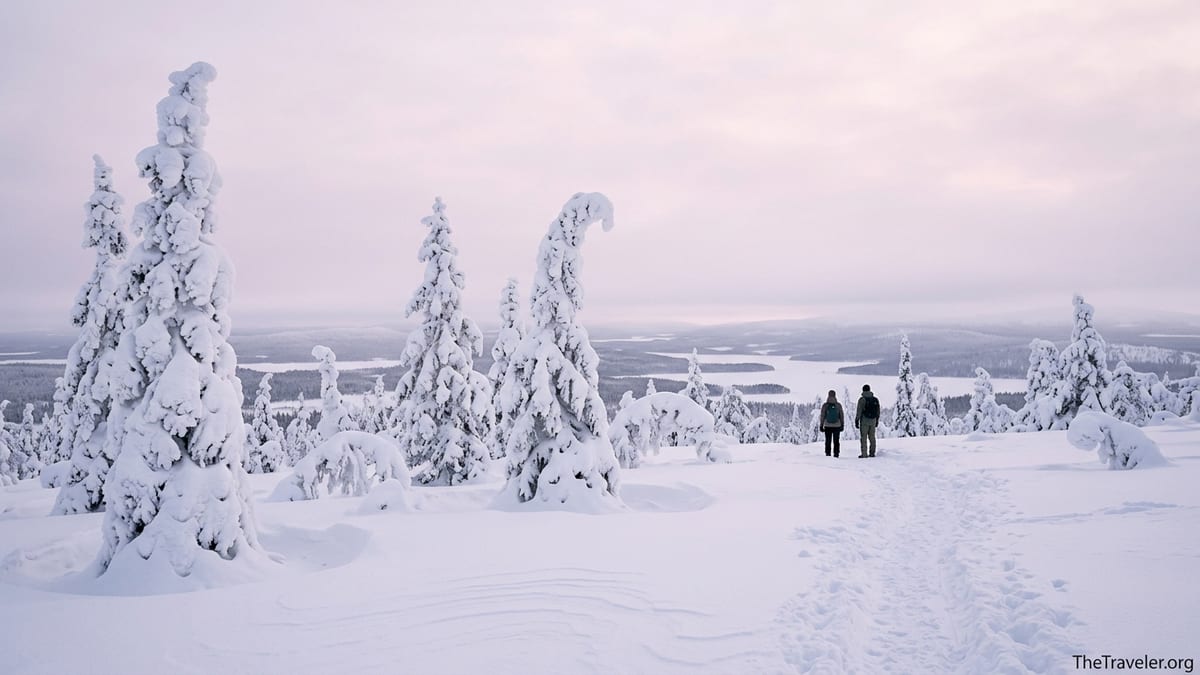
Where Riisitunturi Is And Why Travelers Go Out Of Their Way
Riisitunturi National Park sits near the small town of Posio in southern Finnish Lapland, roughly a 1‑hour drive from Kuusamo, about 45 minutes from the Ruka ski resort area, and a little over 2 hours from Rovaniemi by car. The park covers around 77 square kilometers of fells, spruce forest and wetlands. On paper, that sounds similar to many other Nordic protected areas. In reality, Riisitunturi has developed a reputation as one of Lapland’s most atmospheric winter destinations, with many travelers visiting Finland specifically to see its snow‑laden trees.
Unlike larger, more remote parks deeper in Lapland, Riisitunturi is relatively compact and easy to sample in a single half‑day trip. Most first‑time visitors start from the main parking area at the end of Riisitunturintie road. From there, marked loop routes begin almost immediately, climbing up through spruce forest to open fells with big views toward Lake Kitkajärvi and the surrounding hills. The accessibility, combined with the dramatic scenery available after just a short climb, is a key reason so many travelers feel the detour is worth it.
Another part of the appeal is that Riisitunturi is still quieter than headline Lapland attractions such as the Santa Claus Village area near Rovaniemi or the most built‑up ski resorts. Even in high winter season, you are more likely to share the trail with a mix of local families, independent photographers, and a few small guided groups rather than big tour buses. For visitors hoping to experience Lapland in a setting that still feels close to wilderness, this balance of access and serenity is a major draw.
Finally, the park is free to enter, with no ticket or gate system. For budget‑conscious travelers who have already spent on accommodation in Rovaniemi or Ruka, that can make Riisitunturi a smart value: your primary costs are fuel or a guided excursion, plus any snacks or supplies you bring along.
The Famous Winter “Snow Monsters” And Tykky Trees
What most travelers come to see in Riisitunturi are the so‑called “snow monsters” or “tykky trees.” In midwinter, moist air and persistent cold cause rime and snow to accumulate on the tall spruces that blanket the slopes. Over weeks, this builds into thick white coats that bend and twist the trees into uncanny shapes. Walk just 30 to 40 minutes uphill from the trailhead on a good year and the forest can look like a gallery of snow sculptures, each tree encased in several layers of ice and powder.
These conditions are never completely guaranteed, but they are most likely from late December through February, sometimes into early March if temperatures stay low and the snow does not collapse. Many photographers time their visit for the short, colorful “blue hour” afternoons of January and early February, when the sun barely rises and the sky glows pink and violet above the white fells. It can be brutally cold, with real‑world reports of temperatures dipping below minus 25 degrees Celsius and wind chill making it feel even harsher, so proper winter clothing is essential.
For travelers who enjoy photography or simply dramatic landscapes, this is where Riisitunturi really stands out. Compared with other accessible Lapland locations, the concentration of heavily coated trees close to the main trail is unusual. Visitors often comment that they were able to capture some of their best Lapland images on the 4.3 kilometer Riisin Rääpäsy loop without needing technical backcountry skills or long approaches. You can expect to see plenty of tripods, people lying in snowbanks to get low angles, and visitors slowly zigzagging from one tree to the next chasing the best formations.
If you visit outside peak tykky season, the park still has winter charm: open views, quiet spruce forest, and good chances of soft, untouched snow. However, if your primary goal is those iconic heavily burdened trees, it is worth checking recent photos from local operators or social media before committing, as some winters are leaner than others.
Hiking Experience: Trails, Difficulty And Typical Itineraries
Most visitors experience Riisitunturi through a half‑day hike on a marked loop trail. The most popular route is the Riisin Rääpäsy loop, around 4.3 kilometers long with roughly 200 meters of elevation gain. From the main parking lot, the route climbs steadily but not steeply through forest up to a series of open, undulating fells. For the average reasonably fit adult, the loop takes about 2 to 3 hours in winter conditions, longer if you are stopping often for photos, as many people do.
In terms of difficulty, travelers generally describe Riisin Rääpäsy as easy to moderate. There are no exposed sections, scrambling, or technical moves. The main challenges are winter underfoot conditions and the cold. In deep snow, you may be walking in a packed trail corridor, but fresh snowfalls can make the path softer and more tiring. If you join a guided tour from Rovaniemi or Ruka, snowshoes are often included, which can make the climb more comfortable on powder days. Families with children frequently complete the loop, though you should plan extra time and bring plenty of warm layers and hot drinks.
In addition to Riisin Rääpäsy, there are longer routes such as Riisin Rietas, around 11 kilometers, which venture farther into the park and take 4 to 6 hours depending on snow and pace. These are better suited to visitors with some winter hiking experience and a full day available. Many independent travelers base themselves in Ruka or Posio and visit Riisitunturi one day, Oulanka National Park or the Korouoma canyon on another, creating a varied multi‑day Lapland hiking or photography trip.
One of the advantages of Riisitunturi for time‑pressed visitors is that the rewarding views arrive early. After about 1 to 1.5 kilometers, trees start to thin and the horizon opens onto the lake‑dotted landscape of Koillismaa. Even if you decide to turn around before completing the loop because of tired legs or worsening weather, you will likely have already had a taste of the park’s signature scenery.
Seasonal Highlights: Winter Magic Versus Quiet Summer Bogs
Riisitunturi is strongly associated with winter, but it is open year‑round and offers a very different experience in summer and autumn. Visiting in July or August, you will trade the famous ice‑coated trees for green fells, hanging bogs, and long daylight hours. The park is known among Finnish hikers for its colorful hillside wetlands that drape the slopes like a patchwork of moss, grasses, and small pools. On a warm evening, you might see cloudberries ripening along the trail or hear the calls of birds that favor these open, damp habitats.
For many international visitors, summer Riisitunturi feels less dramatic than the deep‑winter scene they see online, but it has advantages. Trails are easier to walk, you do not need specialized cold‑weather gear, and the risk of weather‑related disruption to travel is lower. If you are driving a rental car from Kuusamo or Rovaniemi, the journey is more relaxed without ice and snow on the road. This makes Riisitunturi a good option for travelers who prefer gentle day hikes and picnics over extreme cold.
Autumn, particularly from mid‑September to early October, can be a sweet spot. The bogs and dwarf birches shift to shades of orange, red and gold, while temperatures are cooler but often still comfortable during the day. Nights are long and dark enough for northern lights, yet trail conditions remain mostly dry or only lightly frosted. If your priority is a quiet, contemplative hike rather than snowshoeing, this can be the most rewarding time to visit.
It is worth noting that April and May can be shoulder months with slushy, heavy snow and unstable trails. Some years, this is a beautiful period for spring skiing, but it can also mean wet boots and limited visual contrast as snowbanks dirty and settle. If your schedule is flexible and you are traveling mostly for scenery, it is often better to aim for mid‑winter or late summer and early autumn.
Practicalities: Getting There, Parking, Costs And Facilities
For most travelers, Riisitunturi is reached by car. From Ruka or Kuusamo, the drive is usually around 30 to 60 minutes depending on starting point and road conditions. From Rovaniemi, online route planners estimate about 2 hours to the park, assuming winter driving speeds. Roads are ploughed in snow season, but conditions can vary with recent storms. Visitors driving standard rental cars in winter typically manage the route without issue, provided they respect speed limits, leave extra time, and feel comfortable driving on snow. Studded winter tires are standard in Finland during the cold season.
Public transport connections are limited. In practice, if you do not want to drive, the most realistic option is to book a guided day trip from Rovaniemi, Ruka, or Kuusamo that includes transportation. These excursions typically bundle transfers, snowshoes if needed, a guide, and sometimes hot drinks or snacks. Prices fluctuate, but it is common to see half‑day winter hikes in the region marketed in the range of roughly 120 to 180 euros per person, with smaller local operators occasionally offering slightly lower rates for small groups or self‑drive options.
The main parking area at Riisitunturi is free and can get busy at peak times, especially on clear winter weekends and during northern European school holidays. Travelers report that midday slots on sunny days can fill quickly, forcing later arrivals to park farther down the access road or wait for spaces to open. If you are traveling independently, consider arriving early in the morning or later in the afternoon to find easier parking and quieter trails.
Facilities at the trailhead are simple but adequate. There is usually a dry toilet, information boards and route maps, and in recent seasons a small seasonal café nearby has offered warm drinks and basic snacks. Out on the trail, open wilderness shelters and designated campfire sites provide places to rest and, if you bring your own food, to cook over a fire using wood provided by the park authorities. You should carry your own drinking water or be prepared to melt snow in winter.
Who Will Love Riisitunturi Most, And Who Might Skip It
Riisitunturi is particularly rewarding for travelers who prioritize scenery, photography, and a sense of calm over extensive activity options. If your ideal Lapland day involves a quiet hike through snow‑laden forest, setting up a tripod on a fell ridge, and lingering as the sky shifts from pale blue to pastel pink, this park fits the bill. It also suits visitors who enjoy a touch of adventure and are comfortable with basic winter hiking: walking in snow, wearing multiple layers, and being outdoors in temperatures well below freezing for a few hours at a time.
Families with older children often find the Riisin Rääpäsy loop to be a manageable challenge. The route is short enough for kids who are used to walking, with plenty of visual rewards and the fun of playing in deep snowbanks along the way. Many guided tours cater to first‑timers, supplying snowshoes and offering regular breaks. For couples and solo travelers keen on northern lights photography, Riisitunturi can be magical on clear winter nights, though this involves hiking back in the dark and requires caution, proper lighting, and navigation skills.
On the other hand, Riisitunturi might be less ideal if you strongly prefer highly developed tourist centers with restaurants, shops and multiple indoor attractions all in one place. Unlike Ruka or Levi, there are no ski lifts, hotels or entertainment venues directly at the trailhead. You visit Riisitunturi for a few hours, then return to your base elsewhere. Travelers with limited mobility may also find the steady uphill walking and winter underfoot conditions challenging, as there is no cable car to viewpoints or short paved scenic loop.
For visitors planning only a very short stay in Lapland, the decision often comes down to priorities. If you are in Rovaniemi for two nights mainly for Santa activities and have one spare day, driving or joining a trip to Riisitunturi can be a fantastic contrast, giving you a wilder, less commercial experience of Finnish nature. If your schedule is packed with husky safaris, snowmobile tours, and evenings in glass‑roofed accommodation, you may decide that the extra travel time to reach Riisitunturi is not essential on a first visit.
How Riisitunturi Compares To Other Lapland National Parks
Lapland is home to several well‑known national parks, including Oulanka, Pallas‑Yllästunturi, Urho Kekkonen, and Pyhä‑Luosto. Each has a distinct character. Oulanka, nearer Ruka, is famous for its river canyons, hanging bridges and the longer Karhunkierros hiking trail. Pallas‑Yllästunturi is beloved for long ridgeline hikes and big, open fell views. Urho Kekkonen, further northeast, offers vast wilderness and multi‑day ski and snowmobile routes.
Riisitunturi’s unique selling points are its compact size, its easily reached snow‑coated spruce forests, and its hillside bog landscapes. You can have a “big” visual experience with relatively little time and logistical complexity. For visitors who are not ready to embark on multi‑day treks or remote cabin stays, Riisitunturi offers a way to feel immersed in Lapland’s winter without committing to expedition‑style travel. It is especially popular among photographers and social media‑minded travelers, who value how photogenic the snow formations can be even close to the main trail.
If your trip already includes time in Ruka or Kuusamo, adding a half‑day at Riisitunturi is straightforward and highly recommended. If you are based entirely in Rovaniemi and are trying to choose one major nature excursion, it becomes a comparison with alternatives like Korouoma canyon or Pyhä‑Luosto National Park. Korouoma offers frozen waterfalls and a deeper gorge setting, while Pyhä‑Luosto combines fells with better public transport links. Travelers who have visited all three often describe Riisitunturi as the most surreal winter forest, Korouoma as the best for icy cliffs, and Pyhä‑Luosto as the most versatile for mixed activities.
For repeat visitors to Lapland, Riisitunturi works well as a focused day dedicated to hiking and photography, slotting into a broader itinerary of skiing, aurora hunting, and cultural experiences elsewhere. Many travelers report that while they came to Lapland for multiple reasons, their time in Riisitunturi stands out as one of the most memorable single outings.
The Takeaway
So, is Riisitunturi National Park worth visiting? For most travelers with an interest in nature, photography, or simply seeing Lapland beyond its resort centers, the answer is yes. The park delivers a concentrated dose of classic northern scenery: snow‑burdened spruce forests, open fells, quiet bogs, and wide views toward distant lakes. It does this without demanding advanced outdoor skills or multi‑day commitments. A half‑day loop hike from the main parking area is enough to understand why winter images from Riisitunturi have quietly gone global.
That said, Riisitunturi is not for everyone. It asks you to embrace real winter conditions, invest time in getting there, and accept that facilities are limited to basic shelters and toilets. There are no cafés in the forest, no heated viewing platforms, and no ski lifts to whisk you to the top. What you receive in return is silence, space, and a landscape that can feel almost otherworldly on a cold, clear day.
If your Lapland itinerary already takes you near Ruka, Kuusamo or Posio, Riisitunturi is an easy recommendation. If you are based solely in Rovaniemi and pressed for time, it becomes a question of how much you value seeing one of Finland’s most distinctive winter forests. For those who decide to go, good clothing, flexible expectations about weather, and a willingness to slow your pace on the trail will go a long way toward making the visit memorable.
FAQ
Q1. How long does a typical visit to Riisitunturi National Park take?
A typical winter visit for first‑timers involves hiking the 4.3 kilometer Riisin Rääpäsy loop, which usually takes 2 to 3 hours of walking, plus time for photos, breaks and driving to and from the park. Many travelers end up dedicating half a day in total.
Q2. Do I need a guide to hike in Riisitunturi?
No, you do not strictly need a guide if you are comfortable with winter hiking, can follow marked trails, and have adequate clothing and navigation tools. However, many visitors staying in Rovaniemi or Ruka join guided excursions that include transport, snowshoes and local knowledge, which can be helpful in poor visibility or very cold weather.
Q3. What is the best time of year to see the famous snow‑covered trees?
The heavily snow‑laden “tykky” trees are most likely from late December through February, when temperatures stay consistently below freezing and snow accumulates without frequent thaws. Conditions vary by year, so checking recent photos from local operators shortly before your trip is wise.
Q4. Can I visit Riisitunturi without a car?
Public transport to the park is limited, so visiting without a car usually means joining a guided day tour that includes transfers from Rovaniemi, Ruka or Kuusamo. If you prefer full independence and flexibility, renting a car is generally the more practical option.
Q5. Is Riisitunturi suitable for children and beginners?
Yes, many families and first‑time winter hikers visit Riisitunturi. The main loop trail is short and well marked, and there are shelters for breaks. The key is to dress children and beginners warmly in multiple layers, bring hot drinks and snacks, and be willing to turn back early if anyone is tired or cold.
Q6. Are there entrance fees or permits required?
There is currently no entrance fee to visit Riisitunturi National Park, and day visitors do not usually need special permits for hiking the marked trails. Costs arise mainly from transportation, gear rental if needed, and any guided services you choose to book.
Q7. What facilities will I find at the trailhead and on the trail?
At the main parking area you can expect an information board, a dry toilet and, in recent seasons, a small seasonal café nearby. On the trail there are open shelters and designated campfire sites with firewood provided. There is no running water, so you should bring your own drinking water or be prepared to melt snow in winter.
Q8. How challenging is winter driving to Riisitunturi?
Winter roads in the area are generally well maintained and local drivers, including rental agencies, are used to snowy conditions. That said, visitors unfamiliar with snow and ice should drive cautiously, allow extra time, and be prepared for reduced visibility and slippery sections, especially after fresh snow or during cold snaps.
Q9. Can I see the northern lights from Riisitunturi?
Yes, on clear, dark nights there is a chance to see northern lights from the open fell areas of Riisitunturi. However, auroras are never guaranteed, and winter nights can be extremely cold. If you plan a night hike, bring a headlamp, extra layers, and be conservative in judging your comfort and navigation skills.
Q10. How does Riisitunturi compare with other Lapland nature excursions?
Compared with places like Korouoma canyon or Pyhä‑Luosto National Park, Riisitunturi stands out for its dense forests of snow‑covered spruces and relatively short access to big views. Korouoma is stronger for frozen waterfalls and deep gorges, while Pyhä‑Luosto offers a mix of fells and better public transport. Which is “best” depends on whether you prioritize snowy trees, icy cliffs or a broader mix of activities.