


Choosing between Finland and Norway for a Northern Lights trip can feel like an impossible decision. Both sit directly under the auroral oval, both offer polished winter tourism, and both promise those surreal curtains of green and purple across the Arctic sky. Yet they deliver quite different experiences on the ground, from weather patterns and tour styles to prices and crowd levels. This guide compares the two countries with a practical, traveler-focused lens to help you decide which destination gives you the best real-world chance of seeing the aurora borealis.
Get the latest updates straight to your inbox!
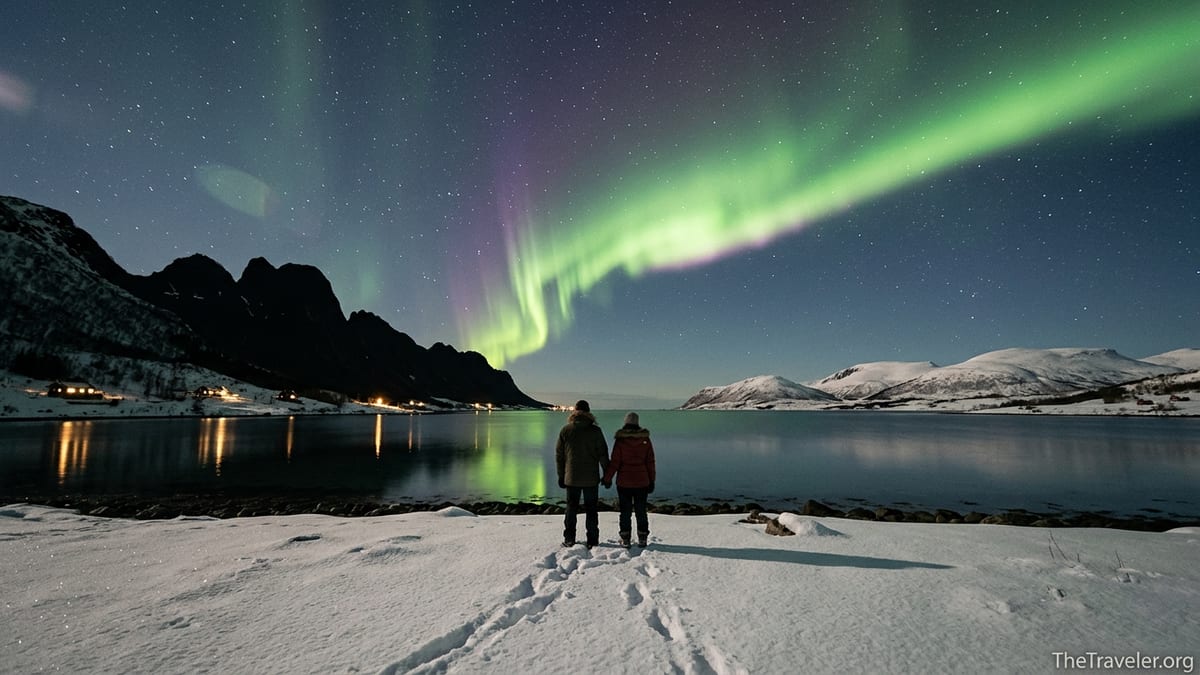
Understanding Your Real Chance of Seeing the Northern Lights
Before putting pins in the map, it helps to understand what actually has to go right for a successful Northern Lights trip. In simple terms, three things matter: the aurora must be active, the sky must be dark, and the sky must be reasonably clear. Destinations in northern Finland and northern Norway sit under or close to the core auroral oval, which means that on many geomagnetically active nights there is at least some aurora overhead. What often ruins trips is not a lack of aurora, but stubborn cloud cover or limited flexibility with dates and locations.
Solar activity is broadly similar no matter where you stand in the Arctic, so your destination choice mostly influences cloud statistics, local microclimates, and how easy it is to move around in search of clearer skies. In northern Norway, the coastal climate around Tromsø often brings fast-changing weather: you might drive an hour inland through a fjord and escape heavy clouds. In Finnish Lapland, inland high-pressure systems can create long runs of clear, cold nights in places like Rovaniemi, Ivalo or Kilpisjärvi, but if a thick cloud deck settles in, it can also linger.
That is why many serious aurora chasers talk about “mobility” as much as “location.” In practice, this means booking minibus tours that are willing to drive two or three hours in search of clear skies, or renting a car and planning flexible road-trip style itineraries with multiple bases in both Finland and Norway. Whether you pick a glass igloo in Finnish Lapland or a fjord-view cabin outside Tromsø, your odds rise sharply if you build in at least three to four aurora nights and accept you may need to move.
Finland: Glass Igloos, Dry Air and Long Winter Nights
Finland’s main advantage is its continental climate. Lapland sits inland, away from the North Atlantic, and that usually means drier, colder air and a relatively high number of clear winter nights. Tourist boards commonly quote that northern Finland sees some form of aurora activity on most clear nights between late August and early April, with peak viewing hours around 9 pm to 2 am. Towns such as Rovaniemi, Ivalo, Levi, Saariselkä and the tiny village of Kilpisjärvi are all well-known bases for aurora tourism.
Rovaniemi, just below the Arctic Circle, is the easiest Finnish option for first timers. It has an international airport with winter flights from major European hubs, extensive hotels, Santa-themed attractions, and dozens of tour operators running nightly aurora minibus chases, snowmobile safaris and reindeer sleigh rides. A typical small-group Northern Lights minibus tour from Rovaniemi in the 2025–2026 winter season runs in the region of 80 to 150 euros per person, including thermal clothing, hot drinks and a basic photo package. Resorts on the outskirts, such as Apukka or Arctic SnowHotel & Glass Igloos, deliberately sit away from city glare so you can step outside your cabin and scan the sky without driving anywhere.
Farther north, villages such as Ivalo and Saariselkä are smaller and darker, with short transfers from Ivalo Airport and easy access to treeless fells and frozen lakes. Many properties, like glass-cabin resorts near Ivalo, market the fact that you can watch the aurora from bed. Prices here range widely: a simple log cabin might start around 150 to 250 euros per night in peak winter, while a designer glass suite often runs from 400 to 700 euros per night, sometimes higher on Christmas and New Year weeks. In return you get low light pollution, deep snow, and minimal need to join a formal tour if the sky is already clear overhead.
Norway: Fjords, Coastal Climate and High-Latitude Hotspots
Norway’s big draw is scenery. Nowhere else offers the combination of steep fjords, mountains dropping into the sea, and aurora overhead quite like northern Norway. The unofficial capital of this experience is Tromsø, a lively university city sitting above 69 degrees north, directly under the auroral oval. When conditions are right, you can sometimes see the lights right from the harborfront or from a house on the hillside, yet within an hour’s drive you can be in very dark fjord country or across the border in Finland.
Tromsø is one of the most accessible Arctic cities in Europe. For recent winters, airlines such as Norwegian, SAS and several low-cost carriers have maintained seasonal direct routes from cities including London, Paris, Frankfurt and Amsterdam, alongside frequent connections from Oslo. This has turned Tromsø into a major winter hub. Local tour companies run nightly aurora chases in minibuses or coaches, often marketed as “small groups” of 8 to 15 guests, with prices usually between the equivalent of 130 and 220 euros per person depending on inclusions. Many operators advertise long drives, sometimes 2 to 3 hours each way, and stay out as late as 1 or 2 am if there is a decent chance of a display.
Other Norwegian hotspots include Alta, often called the City of the Northern Lights, and the inland plateau of Finnmark. Alta’s more stable winter weather and smaller size appeal to visitors who prefer a quieter base than Tromsø but still want a working town with services. Multi-day tour packages that combine Alta with husky sledding, ice hotel overnights and aurora chases are commonly priced from about 1500 to 2500 euros per person for 4 or 5 days, including accommodation, breakfasts and several excursions. For something different, coastal voyages on expedition-style ships cruising between Bergen and Kirkenes offer Northern Lights guarantees on certain winter sailings, sometimes promising a free cruise if no aurora appears during a multi-day voyage.
Weather Patterns: Clear Skies vs Dramatic Landscapes
When you strip away marketing, the question most travelers ask is simple: where are the skies clearer on average, Finland or Norway? There is no single number that applies to all of Lapland and all of northern Norway, but some broad patterns emerge. Coastal Norway, including Tromsø, gets more Atlantic moisture, which can mean frequent cloud and snow showers. The upside is that weather systems move fast, and experienced guides often spend the evening driving through narrow fjords and over passes to reach gaps in the cloud. On some nights, Tromsø-based tours will end up across the border in Finnish Lapland, precisely because the continental side has clearer skies.
Inland Finland typically has colder, more stable high-pressure spells during mid-winter. In practice, this means a better chance of long, crystal-clear nights in places like Rovaniemi, Ivalo and Kilpisjärvi when conditions align. The trade-off is temperature: minus 20 degrees Celsius is not unusual in January and February. That can be uncomfortable if you are standing still on a frozen lake for hours, but it also means crisp, dry air that photographs beautifully. Tour operators in both countries provide heavy overalls and boots, yet Finland’s extra-dry nights are a real, if unglamorous, advantage when your goal is maximizing viewing odds.
On a practical level, this balance often leads photographers and repeat visitors to split their trips between both climates. A common itinerary is to fly into Tromsø for two or three nights to capture fjord landscapes, then drive or take a bus east into Finnish Lapland for three or four nights around Kilpisjärvi or Rovaniemi. This adds transport complexity and cost, but it also gives you a plan B if either side of the border ends up under thick cloud for several days. Travelers doing this frequently report at least one strong aurora night in a week-long trip, though nothing is guaranteed.
Accessibility, Costs and Comfort: What Your Trip Will Feel Like
From most of Europe, reaching either country has become easier in recent winters. Rovaniemi and Ivalo in Finland and Tromsø and Alta in Norway all have winter non-stop flights from several major European airports, alongside connections via Helsinki or Oslo. For North American travelers, a typical routing is via Helsinki for Finland or via Oslo for Norway, sometimes combined with an overnight in the capital. Helsinki Airport is known for quick connections to Lapland, with short minimum transfer times that make same-day arrivals in Rovaniemi or Ivalo viable on a single ticket.
Once you land, Finland often works out slightly cheaper, especially if you avoid peak Christmas and New Year weeks. Mid-range hotels in Rovaniemi might cost 130 to 220 euros per night for a double room in January or February, while similar standards in Tromsø or Alta often run higher, sometimes 180 to 260 euros or more, reflecting Norway’s generally higher cost of living. Restaurant prices follow the same pattern: a basic main course in a casual restaurant might be 18 to 25 euros in Rovaniemi and 25 to 35 euros in Tromsø. Guided tours are more closely aligned in price, but multi-activity winter packages in Finland can feel better value once you factor in meals and transfers.
Comfort is where Finland particularly shines for families and travelers who want to watch the aurora without long, cold minibus rides. The famous glass igloo resorts scattered around Rovaniemi, Levi, Saariselkä and Ivalo are designed precisely for this: you go out for daytime activities, then spend the evening in a heated cabin with alarm systems that buzz if an aurora appears. These properties often have on-site saunas, short snowshoe trails, and minimal light pollution, so you can have several viewing attempts in one night simply by stepping outside between sauna sessions.
Tour Styles: Minibus Chases, Snowmobiles and Slow Evenings
Tour styles differ subtly between Finland and Norway, which can influence your experience. In Tromsø, the classic product is the “Northern Lights chase” by minibus. Groups of around 8 to 15 people set off between 6 pm and 7 pm, sometimes earlier in mid-winter, and may drive well over 100 kilometers into inland valleys or even into Finland to find clear skies. Operators build campfires, offer hot soup and snacks, and help guests with camera settings. It is a social, sometimes intense experience: you might get back to your hotel at 2 or 3 am. Boat-based aurora cruises from Tromsø are another option, staying close to the city but using the dark waters of nearby fjords as a reflective foreground.
In Finnish Lapland, there are also minibus chases, especially out of Rovaniemi, but a greater proportion of tours bundle in other activities. You will see products labeled “Northern Lights snowmobile safari,” “aurora husky ride” or “reindeer sleigh under the Northern Lights,” where the main attraction is a motorized or animal-powered ride into the forest with a chance of aurora as a bonus. These tours often last 3 to 4 hours, depart later in the evening, and are less willing to drive very long distances in search of clear skies. This suits travelers who want a gentle, atmospheric experience more than a hard-core chase.
Independent viewing also differs between the two countries. Around Tromsø, popular free spots include local beaches and viewpoints such as Telegrafbukta or the upper station of the Fjellheisen cable car, where a short ride puts you above much of the city glow. In Finnish Lapland, the usual advice is to head for the nearest frozen lake or open field away from village lights. In and around Rovaniemi, for example, lakes north of town are favorite spots, reachable by short taxi rides or rental car. In both countries, having your own vehicle and checking hourly cloud forecasts dramatically improves your flexibility, but icy roads and darkness demand confidence driving in winter conditions.
Who Should Choose Finland, Who Should Choose Norway?
If your priority is the highest practical probability of getting at least one clear, dark night in a short trip, Finnish Lapland often edges ahead for many travelers. Its inland climate generally brings more stable runs of clear sky in mid-winter, and the proliferation of glass igloos, lakeside cabins and small villages means you can sleep in reliably dark locations without long transfers. Families with children, couples looking for a cozy atmosphere, and anyone who prefers soaking in a sauna between sky checks may feel more at home around Rovaniemi, Levi or Ivalo than in a bustling fjord city.
On the other hand, if you dream of aurora above jagged mountains and deep fjords, Norway is hard to beat. Tromsø offers a unique blend of urban buzz, cultural attractions, and quick access to wild landscapes, while Alta and the wider Finnmark region provide a slightly quieter, more local feel. Travelers who like the idea of active chasing, do not mind long evenings on the road, and want to combine Northern Lights with whale watching, fjord cruises or ski touring often gravitate to northern Norway.
Budget and timing matter too. If you are constrained to traveling over Christmas or New Year, you may find that Finnish packages in early January offer better value than the days directly surrounding the holidays, whereas Norwegian coastal cruises and Tromsø hotels can be heavily booked and expensive. Conversely, shoulder months like late September or late March might see more competitive prices in Norway, with the added bonus of milder temperatures and the possibility of combining aurora viewing with hiking or autumn colors.
The Takeaway
There is no single right answer to the question of whether Finland or Norway gives you the “best” chance of seeing the Northern Lights. Both countries lie in the auroral sweet spot, both have built entire winter economies around aurora tourism, and both can deliver unforgettable displays on a lucky night. What differs is how those odds play out in daily life: Finland’s drier, continental climate and dark, resort-style accommodation versus Norway’s dramatic coastal landscapes, flexible minibus chases and vibrant Arctic cities.
If you want a slightly higher probability of clear, cold nights and the comfort of watching the sky from your own glass-roofed cabin, Finland is often the smarter bet. If you are willing to trade a bit of cloud risk for iconic fjord scenery and a more adventurous chasing style, Norway is the better match. In either case, your personal choices matter even more than the country: travel in the main aurora season from roughly September to March, stay at least three or four nights in the auroral zone, build in flexibility to move for clearer skies, and focus on enjoying the journey rather than chasing a guarantee that no destination can truly provide.
FAQ
Q1. Which country statistically offers more clear nights, Finland or Norway?
In broad terms, inland Finnish Lapland usually enjoys more dry, clear winter nights than coastal northern Norway, but local weather varies a lot from week to week.
Q2. Is Tromsø or Rovaniemi better for a first Northern Lights trip?
Tromsø is better if you want a lively city, fjords and active minibus chases, while Rovaniemi suits first timers who prefer resort-style stays, easier logistics and family-friendly activities.
Q3. When is the best time of year to visit for Northern Lights in Finland or Norway?
Aurora season runs roughly from late August to early April, but the most popular months in both countries are from late September to March when nights are long and dark.
Q4. How many nights should I stay to have a good chance of seeing the aurora?
Most guides suggest at least three to four nights in the auroral zone, with five to seven nights giving a much better chance of getting at least one clear, active night.
Q5. Are glass igloos in Finland worth the extra cost?
They can be, especially if you value comfort and want to avoid long late-night tours, but they are expensive and still cannot guarantee that the sky will be clear or the aurora active.
Q6. Do I need to book guided tours, or can I chase the lights myself?
You can self-drive in both countries if you are confident on icy roads, but guided tours are helpful for first timers because they handle routing, weather checks, safety and photography.
Q7. Is Norway always more expensive than Finland for a Northern Lights trip?
Norway generally has higher food and accommodation costs, though prices overlap, and careful planning in either country can keep a trip within a mid-range budget.
Q8. Will I see the Northern Lights from the city center in Tromsø or Rovaniemi?
It is occasionally possible in both, especially during strong storms, but your chances improve dramatically if you go to darker areas outside the main city lights.
Q9. What temperatures should I expect during peak aurora season?
In mid-winter, night-time temperatures commonly range from around minus 5 to minus 20 degrees Celsius, with Finland often colder and drier than coastal Norway.
Q10. Is it worth visiting outside the peak winter months?
Yes. September, October, March and early April can offer a good balance of darkness, milder temperatures and other outdoor activities, with active aurora still possible in both countries.