


More news on this day
Passengers traveling through Phoenix Sky Harbor International Airport on September 21 and 22, 2026, are facing significant disruption, with around 100 flights reported delayed and travelers urged to closely monitor airline flight status before leaving for the airport.
Get the latest news straight to your inbox!
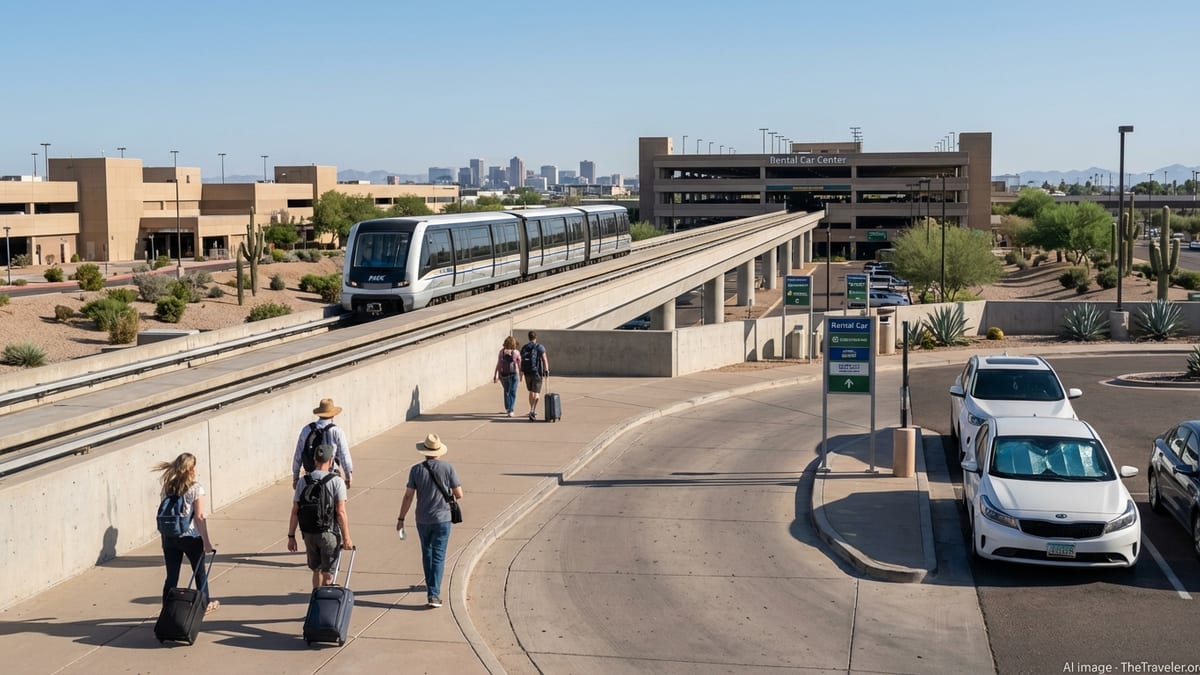
Flight delays mount across Phoenix Sky Harbor
Published reports and airport information indicate that around midday on Monday, September 21, roughly 100 flights at Phoenix Sky Harbor International Airport were showing delays. Coverage of the disruption describes affected departures and arrivals scattered across multiple airlines and destinations, rather than confined to a single route or carrier.
According to publicly available information summarized by local media, some domestic services have been running about two hours behind schedule, while certain international flights have faced delays of approximately three hours. These extended holds mean that passengers with connections through Phoenix risk missing onward flights if they do not build in extra time or rebook in advance.
Flight tracking data for the early hours of September 22 shows continued schedule pressure, with a mix of on-time services, delayed departures, and a smaller number of cancellations listed on live departure boards. The overall picture points to a system working to recover after a burst of disruption rather than a complete halt in operations.
Observers note that delay counts at a large hub such as Phoenix Sky Harbor can change rapidly throughout the day. A snapshot showing about 100 delayed flights at midday reflects a moment of peak strain and may improve as airlines reposition aircraft and crews, or worsen if fresh issues appear upstream in the national network.
National airspace constraints feeding local slowdowns
Reports on the September 21 disruption point to a mix of broader network constraints that have contributed to the problems at Phoenix. Information shared from federal airspace status feeds shows that other major U.S. hubs, including New York John F. Kennedy International and Newark Liberty International, have recently experienced equipment-related ground delays and departures held at origin airports.
On September 16, separate analysis of Federal Aviation Administration delay programs highlighted Phoenix Sky Harbor as one of the hardest-hit airports in the country, when thunderstorms led to a ground stop that lasted several hours. That earlier disruption illustrates how quickly operations at PHX can be affected when weather or traffic control restrictions reduce capacity in the national airspace system.
Because airlines operating at Phoenix are deeply connected to those larger networks, equipment outages or traffic management initiatives at distant hubs can cascade into multi-hour waits in Arizona even when local skies remain clear. Passengers departing Phoenix for congested East Coast and Midwest airports may see flights held on the ground or assigned later departure times as part of national flow-control measures.
Industry data used by travel analysts shows that some carriers serving Phoenix have averaged double-digit percentages of flights with moderate or significant delays in recent months. Although this performance reflects a broad mix of causes over time, the numbers help explain why even a single day of concentrated delay activity can result in hundreds of affected passengers at Sky Harbor.
What travelers at Phoenix Sky Harbor are seeing on the boards
Live departure boards for Phoenix Sky Harbor on September 22 display a familiar pattern for a busy hub in recovery mode. In the early morning hours, some flights list routine on-time departures, while others show revised departure times pushed back by an hour or more. A handful of services, including select flights to major domestic hubs, appear as cancelled, reflecting decisions by airlines to consolidate schedules as they work through the disruption.
At the same time, airport status tools that summarize overall conditions at PHX have indicated only limited general arrival and departure delays. This contrast underscores an important reality for passengers: an airport can be labeled as operating with “minor” delays at the system level even when individual airlines or specific banks of flights are experiencing much heavier disruption.
Travelers moving through the terminals are likely to encounter long lines at check-in counters and security checkpoints when delayed flights create compressed departure waves. Gates serving popular destinations such as Denver, Dallas, and major West Coast cities may cycle quickly between boarding, extended holding, and reboarding as airlines adjust equipment and crew assignments.
For those connecting in Phoenix, disruptions can manifest as tight or missed connections, last-minute gate changes, or unexpected overnight stays. Anecdotal reports from recent weeks describe multi-hour delays on certain routes combined with last-minute rebookings, illustrating how individual experiences can vary widely within the same period of airport-wide disruption.
Why checking flight status repeatedly matters
In response to the current wave of delays, Phoenix Sky Harbor has urged travelers, through its public channels, to confirm flight status directly with airlines before heading to the airport. Published coverage emphasizes that airline websites, mobile apps, and text alerts typically provide the most current information on departure times, gate assignments, and rebooking options.
Passenger advocates note that checking only once several hours before departure may not be enough when conditions are shifting quickly. A flight that appears on time in the morning can slip into a moderate delay by midday, then become significantly delayed or cancelled as knock-on effects from other airports or earlier segments take hold.
Travel information services recommend checking status again two to three hours before leaving home, then monitoring updates frequently on the way to the airport and once inside the terminal. Because delay estimates can move in both directions, travelers sometimes find that a posted two-hour delay shrinks as operations recover, making it risky to arrive too close to the revised departure time.
Those who purchased tickets through third-party agencies are also encouraged to verify details with the operating carrier rather than relying only on booking confirmations. Differences between schedule data held by intermediaries and real-time airline systems can lead to confusion at check-in if passengers do not review the most up-to-date flight information.
Practical steps for passengers facing delays at PHX
For travelers already at Phoenix Sky Harbor and confronted with a newly announced delay, publicly available guidance highlights several practical steps. The first is to confirm whether the revised departure time still allows for any onward connections and, if not, to seek rebooking assistance from the airline as soon as possible, either through mobile apps, customer-service phone lines, or service desks in the terminal.
Airlines often begin reassigning passengers to alternative flights while they wait in line, so checking available options in an app or on a website can speed up the process. In some cases, travelers may find it faster to accept a longer but more reliable alternative routing than to hold out for a heavily delayed nonstop service from Phoenix.
With temperatures in Phoenix frequently climbing well above 90 degrees Fahrenheit in September, airport guidance also stresses the importance of allowing extra time for transit to the terminals and for clearing security, particularly during afternoon peak hours. Travelers using ride-hailing or rail connections are advised to monitor local traffic conditions and events that could further slow their arrival.
For those whose flights are pushed into an overnight delay, publicly available information from consumer agencies suggests reviewing airline policies on hotel, meal, and transportation assistance. Coverage of recent disruptions points out that benefits vary widely by carrier and by the underlying cause of the delay, so passengers may need to ask specific questions about what support is available in their situation.