


More news on this day
Air travelers across parts of Asia faced a rough stretch on September 14, 2026, as publicly available flight-tracking data showed 165 cancellations and 3,258 delays across a wide swath of major hubs, turning routine connections into long waits, gate changes, and hurried rebookings.
Get the latest news straight to your inbox!
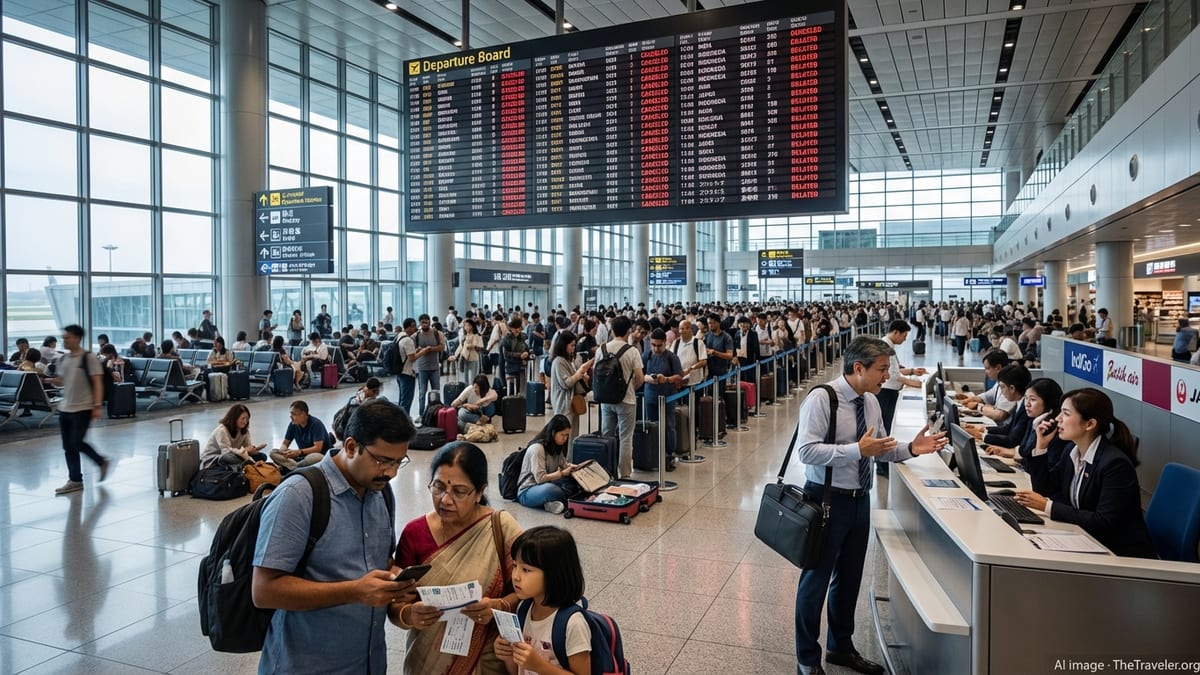
What happened on Sept. 14, 2026, and where disruptions clustered
Published coverage drawing on FlightAware data described a single-day surge of disruptions spanning key airports in Japan, China, India, Indonesia, Malaysia, Vietnam, Saudi Arabia, and the United Arab Emirates. The combined tally of 3,258 delays and 165 cancellations reflected a network-wide problem rather than a single isolated outage, with knock-on effects for travelers connecting between Northeast Asia, Southeast Asia, and the Gulf.
Tokyo Haneda stood out for the scale of delays cited in the reports, with hundreds of flights running late in a compressed window. Other large nodes frequently used for onward connections, including Guangzhou Baiyun, Shanghai Pudong, Delhi Indira Gandhi, Jakarta Soekarno-Hatta, Kuala Lumpur International, Hanoi Noi Bai, and Dubai International, were also listed among the airports seeing elevated delay and cancellation activity.
It is important to note what “delay” counts can represent in real-world operations: many delays are relatively short, but a dense concentration at a hub can still cause missed connections, aircraft swaps, and crew reassignments that spill into subsequent flight banks later in the day.
Airports and airlines most affected in published coverage
Airport-level breakdowns in the published coverage highlighted uneven impacts across the region. Tokyo Haneda was cited with one of the highest raw delay totals, while major mainland China gateways such as Guangzhou Baiyun and Shanghai Pudong were also described as absorbing significant schedule disruption, consistent with their role as high-volume transfer points.
In South and Southeast Asia, Delhi, Jakarta, Hanoi, and Kuala Lumpur were described as experiencing substantial numbers of delayed departures and arrivals. For travelers, those airports matter because they feed large waves of domestic and short-haul flights that connect onward to long-haul departures, so even moderate disruption can quickly cascade across multiple countries.
On the airline side, published coverage indicated that a mix of full-service and low-cost carriers experienced operational strain. When a carrier runs tight aircraft utilization across multiple legs in a day, an early disruption can propagate across the schedule, making later flights more vulnerable to delay and, in some cases, cancellation if crew duty-time limits or aircraft availability become binding constraints.
Why delays can spike without a single headline event
The published coverage pointed to familiar operational pressures that can combine quickly: aircraft availability bottlenecks, crew scheduling constraints, planned maintenance, airport congestion, air traffic control flow restrictions, localized weather, and last-minute changes to operating plans. Any one of those can create manageable disruption, but in combination they can produce a rapid rise in delays at hub airports.
Even when a disruption begins locally, today’s interconnected flight banks mean an aircraft arriving late into one hub may be scheduled to depart again within a short turnaround window. If ground handling, gate availability, or air traffic flow constraints are also tight, the system can lose its ability to recover within the same day.
For travelers, that distinction matters because it affects how quickly schedules normalize. When disruption is driven by a temporary constraint like a short-lived weather cell, recovery may be fast. When it is driven by network-wide constraints like crew and aircraft positioning, disruption can linger into the next day’s rotations.
What travelers should do if their Asia itinerary is affected
For anyone traveling through the affected hubs, the most useful first step is to verify the status of each flight segment directly with the operating carrier and through reputable flight-tracking tools, then re-check frequently as departure times, aircraft assignments, and gates can change multiple times during a disruption day. Travelers with connections should pay close attention to minimum connection times and any terminal-to-terminal transfers that may be strained when delays compress boarding windows.
If a cancellation occurs, many carriers prioritize rebooking onto the next available routing, which may involve alternative hubs or later departures. In practical terms, travelers can often speed decisions by knowing acceptable alternates in advance, such as switching between nearby airports in the same metro area where that is realistic, or shifting to a later flight bank that still preserves onward international connections.
Because disruption days can lead to long customer-service queues, travelers may get faster results by using airline apps and self-service rebooking features where available, while keeping documentation of expenses and itinerary changes. Rules and entitlements vary by airline, route, and ticket type, so travelers should rely on the carrier’s published policies for their specific booking rather than assuming a uniform standard across countries.
How this fits into wider reliability trends in 2026
While a single day of heavy disruption can feel exceptional, broader performance data shows reliability shifting month to month across the region. Cirium’s monthly on-time performance coverage for Southeast Asia in 2026 has described periods of improvement alongside months where cancellation pressure increased across the wider Asia-Pacific market, underscoring how quickly operational conditions can change with weather patterns, traffic volumes, and network complexity.
For travelers planning upcoming trips, the key takeaway is less about predicting a specific disruption day and more about building resilience into itineraries: choosing longer connection buffers at major hubs, avoiding last flight-of-the-day connections when possible, and monitoring hub conditions during peak travel periods. In a network where many routes depend on tightly timed aircraft rotations, small schedule shocks can still ripple across regions within hours.