


More news on this day
Air travel across Asia is facing a fresh wave of disruption as 335 flights are cancelled and 3,609 delayed in a single day, snarling operations at major hubs from Beijing and Bangkok to Dubai and Singapore and unsettling schedules for leading carriers including Thai Airways, Emirates, Singapore Airlines and Air China.
Get the latest news straight to your inbox!
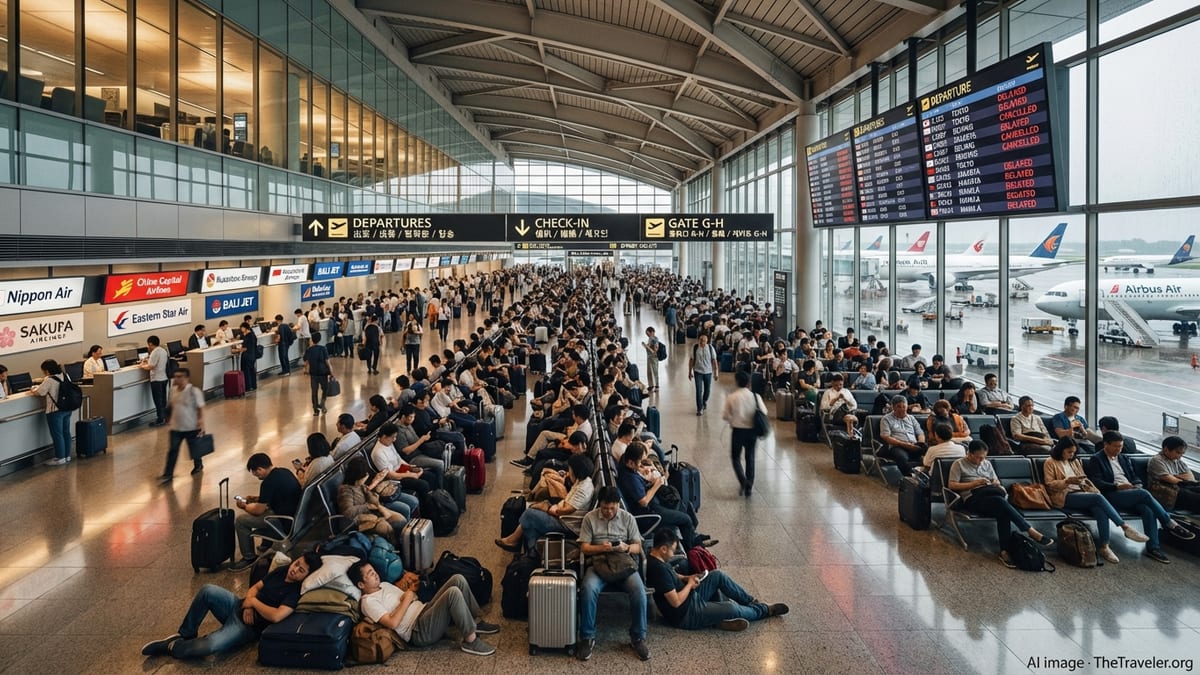
Major Asian Hubs Struggle With Concentrated Disruptions
Publicly available tracking data and recent aviation reports indicate that the latest disruption peaked on June 7, 2026, when hundreds of cancellations and thousands of delays rippled through airports in China, Thailand, the United Arab Emirates, Singapore and Japan. Activity was particularly intense at Chinese hubs such as Beijing Capital, Shanghai Pudong and Shenzhen Bao'an, where heavy delay volumes compounded congestion built up earlier in the week.
Operational summaries compiled from flight tracking platforms show that China absorbed the largest share of the disruption, with several airports each recording more than 100 delayed departures and arrivals. Secondary hubs, including Hangzhou, Xi'an and Kunming, also reported elevated delay levels, reinforcing the picture of a region-wide network under strain rather than isolated bottlenecks at one or two gateways.
In Southeast Asia, Bangkok Suvarnabhumi and Singapore Changi both reported significant knock-on effects as late-arriving aircraft and crew rotation issues cascaded through regional schedules. While outright cancellations in these hubs remained lower than in some Chinese airports, the volume of late operations was sufficient to create long queues at check-in, security and rebooking desks across much of the day.
In the Gulf, Dubai International experienced a smaller number of cancellations but a notable cluster of delays, affecting long-haul links between Asia, Europe and Africa. Airline operations through Dubai are closely interwoven with Asian schedules, so even modest disruptions in the emirate can have an outsized impact on itineraries involving multiple connections.
Flag Carriers From Thailand, UAE, Singapore And China Hit
The wave of disruptions has affected a broad group of airlines, including national and long-haul carriers that underpin much of Asia's international connectivity. Thai Airways, Emirates, Singapore Airlines and Air China all feature in the latest operational data either through cancellations on specific routes or sustained delays to key trunk flights.
In Thailand, recent planning updates show that Thai Airways has already suspended or reduced several services for June 2026, including the Bangkok to New Delhi route TG335 for the entire month and selected services to destinations such as Kaohsiung and Sapporo. These structural cuts, tied to higher fuel costs and adjustments following earlier Middle East conflict impacts, intersect with day-of-operation delays to create a challenging environment for passengers connecting through Bangkok.
Emirates continues to adjust its schedules through Dubai following earlier episodes of congestion and weather-related disruption during March and April. Publicly released schedule summaries for those periods documented a number of changes to flights linking Dubai with Bangkok and other Asian cities, and recent reports from travellers describe continued instances of rebooking pressure when services between Thailand and Europe are disrupted at short notice.
Singapore Airlines, which has been gradually restoring and reshaping its network in 2026, has also been swept up in the latest wave of delays. Coverage of recent operations notes that while the carrier has resumed or expanded several routes, it faces the same constraints as peers when air traffic control restrictions or weather-related flow limits are imposed around regional hubs. Air China, meanwhile, is heavily exposed to conditions at Beijing and Shanghai, where even modest disruptions can create knock-on effects across domestic and international services.
Beijing, Bangkok, Dubai And Singapore See Cascading Network Effects
Beijing's dual-airport system has been a focal point of the current turbulence. Earlier in May, reports highlighted cancellations and delays at Beijing Daxing involving carriers such as China Eastern and XiamenAir, and the latest figures suggest that pressure has now broadened to include Beijing Capital as well. Together, the two airports function as a central node for much of northern China's traffic, so any disruption tends to reverberate along east-west and north-south corridors.
Bangkok's role as a regional connecting hub has meant that even relatively limited cancellations quickly translate into missed connections and overnight stays. Recent regulatory briefings from Thailand's civil aviation authorities show that airlines serving the country have already removed thousands of flights from schedules in the first half of 2026 as they respond to higher fuel prices and shifting demand patterns. When same-day delays are layered on top of these structural adjustments, spare capacity for rebooking becomes scarce, especially on popular links between Bangkok and cities such as Singapore, Tokyo and Beijing.
Dubai and Singapore, both heavily reliant on sixth-freedom connecting traffic, are seeing similar cascading effects. When arrivals from East Asia run late into Dubai, onward connections to Europe and Africa are pushed back or missed altogether, forcing airlines to juggle aircraft rotations and crews. In Singapore, late inbound flights from China, Japan and Thailand disrupt tightly timed connection banks that normally allow passengers to move smoothly between Southeast Asia, Australia and long-haul markets.
These network effects mean that travellers may encounter disruption far from the airports where the initial problems occurred. A weather system over eastern China or an airspace restriction near the Gulf can lead to missed flights hours later in cities such as Osaka, Jakarta or Kuala Lumpur, even when local operating conditions appear normal.
Weather, Airspace And Operational Strain Behind The Numbers
Analysts and aviation commentators point to a blend of factors behind the 335 cancellations and 3,609 delays recorded across Asia on June 7. Short-term triggers have included bouts of adverse weather in parts of China and seasonal storms across Southeast Asia, along with intermittent air traffic control flow restrictions in congested corridors.
At the same time, airlines and airports are still contending with wider structural challenges. Industry publications in recent weeks have highlighted lingering pilot and ground staff shortages in some markets, volatility in jet fuel prices and the operational complexity created by rapid capacity restoration after the pandemic years. When demand spikes during holiday weekends or peak travel periods, these stresses can combine to reduce the system's tolerance for even minor shocks.
Airspace issues are another recurring theme. Coverage of earlier disruption episodes this year described how reroutings around sensitive areas in the Middle East and Central Asia extended flight times and tightened aircraft rotations, particularly for carriers operating long-haul services between Europe and Asia. Although some corridors have since reopened or stabilized, the knock-on effects in scheduling and fleet utilization are still being felt across the region.
These pressures are not unique to one airline or country, which helps explain why the latest disruption statistics cut across a wide range of carriers, from Gulf superconnectors and major Chinese groups to Southeast Asian low-cost operators. The shared reliance on a relatively small number of high-traffic hubs magnifies the impact when any part of the system falters.
What Travelers Can Expect In The Coming Days
Looking ahead, publicly available commentary from airport operators and aviation agencies suggests that conditions may gradually improve as weather systems move through and air traffic control restrictions are fine-tuned. Reports from the United Arab Emirates indicate that airspace capacity around Dubai is trending back toward more typical levels, while data from several Chinese hubs shows intermittent easing in delay volumes compared with the peak disruption day on June 7.
However, travel experts caution that the broader pattern of volatility is likely to persist through the current peak season. Recent analyses of flight performance data across early 2026 show repeated clusters of delays and cancellations around weekends and holidays, particularly in the Asia Pacific region. That trend suggests that while daily numbers may fluctuate, travellers should continue to plan for potential disruptions when transiting major hubs such as Beijing, Bangkok, Dubai and Singapore.
For passengers booked on services with Thai Airways, Emirates, Singapore Airlines, Air China and other carriers operating through the affected airports, the practical implications are longer queues, tighter connection windows and a higher chance of last-minute schedule changes. Observers note that airlines are generally prioritizing the protection of long-haul services and high-demand routes, which can mean deeper cuts or rolling delays on secondary and regional sectors.
Consumer advocates and travel planners advise passengers heading to or through Asia to monitor flight status closely in the 24 hours before departure, allow additional time for connections where possible and be prepared for rebooking scenarios if cancellations occur. With the aviation network still under strain, flexibility in routing and timing remains one of the most effective tools for navigating an increasingly unpredictable travel landscape.