


More news on this day
Passengers traveling between Europe and the Gulf on Tuesday faced fresh disruption as delays and cancellations at major hubs in Spain and Qatar rippled out to airports in Portugal, Saudi Arabia and other destinations.
Get the latest news straight to your inbox!
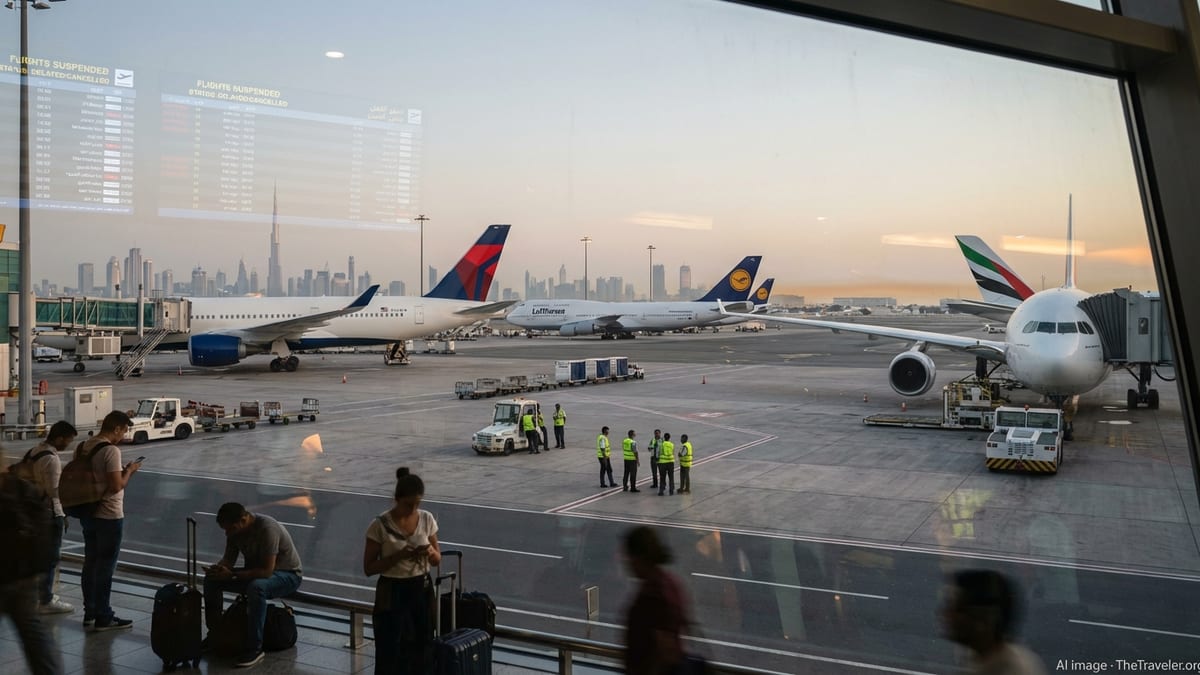
Patchy Operations at Madrid Barajas and Other European Hubs
Adolfo Suárez Madrid Barajas, one of Europe’s busiest connecting airports, is again under scrutiny as fresh delays and targeted cancellations affect short and medium haul services. Publicly available airport boards and flight tracking data for early June show a pattern of rolling schedule changes, with a core of 26 flights experiencing significant delay and 17 services canceled across recent operating windows, concentrating the impact on peak connection banks.
While overall traffic at Madrid remains high, industry statistics indicate that the airport has been working through a period of elevated delay, tied to a mix of congestion, staffing pressures and residual knock-on effects from spring weather and airspace restrictions in wider European air corridors. Operational performance reports for the European network highlight Madrid as a hub that improved after heavy weather earlier in the year but continues to experience above average reactionary delay as schedules remain tight.
Travelers connecting through Madrid on routes to Lisbon and other Iberian and Atlantic destinations are reporting longer minimum connection times and a higher risk of missed onward flights when earlier sectors run late. Airlines have responded by adjusting aircraft rotations and, in some cases, thinning frequencies on specific days to create more operational slack, a strategy that helps stabilize the schedule overall but concentrates disruption on the passengers booked on the affected flights.
Advisories from European carriers emphasize the importance of checking real time status on airline apps on the day of travel, particularly for itineraries involving intra-European connections that feed long haul services. Publicly available guidance also stresses that same-day rebooking options may be limited during peak periods when load factors are already high.
Hamad International’s Recovery Still Sends Shockwaves
Hamad International Airport in Doha has moved from the acute crisis phase of mass cancellations earlier in the year toward a more stable, though still fragile, operating pattern. In early March, passenger rights trackers documented hundreds of flights canceled or heavily delayed within a 24 hour window following regional airspace restrictions linked to the Iran conflict, leaving large numbers of travelers stranded across key Gulf corridors.
Since then, published coverage shows that Hamad International has gradually restored capacity, with more airlines resuming services and rebuilding networks through Doha. However, schedules remain sensitive to evolving airspace routings and crew positioning constraints. Even as the number of outright cancellations has fallen, smaller clusters of disrupted flights continue to appear, creating localized spikes in delays similar in scale to those cited this week.
The lingering volatility means that even when an individual flight operates, its departure or arrival time may shift considerably, upsetting carefully timed connections between Europe, the Gulf and Asia. Travelers using Doha as a transit point on itineraries between Lisbon, Madrid or Barcelona and destinations such as Riyadh, Kuwait City or Karachi are particularly exposed, since many of these journeys rely on tight connection windows.
Consumer advocates note in published commentary that passengers affected by disruptions connected with regional airspace issues may in some circumstances be eligible for rebooking flexibility, travel vouchers or partial refunds, depending on the carrier and jurisdiction. They recommend that travelers document delays, keep boarding passes and use airline digital channels as a first step to seek redress.
Impact on FlyDubai, KLM, EasyJet and Other Carriers
The latest round of disruptions is being felt across a broad mix of full service and low cost airlines. Publicly accessible travel alerts from major European carriers show ongoing schedule adjustments on routes into and out of the Gulf, including suspensions or reduced frequencies on some services to Riyadh, Dammam and Dubai. These changes often have knock-on effects for connecting traffic at European hubs such as Amsterdam and Madrid that feed Middle Eastern destinations.
FlyDubai, which relies heavily on flows through Gulf airspace, has already been heavily exposed to previous rounds of closures and restrictions centered on Doha and neighboring states. Industry reporting indicates that the carrier has periodically consolidated flights, swapped aircraft types and rerouted passengers via alternative hubs when particular corridors became constrained. That pattern appears to be continuing in a milder form as operations normalize but remain sensitive to sudden changes.
KLM and partner airlines have published travel alerts outlining longer term suspensions or reductions on certain Gulf routes, including cities such as Riyadh and Dubai, as they recalibrate networks to factor in operational risk and aircraft availability. These measures, while framed as temporary, effectively cap capacity on some corridors and leave fewer options when disruption hits, which helps explain why even a limited cluster of 26 delayed and 17 canceled flights can produce outsized inconvenience.
Low cost European carriers such as easyJet, which serve Lisbon and other Southern European airports heavily, are also exposed when congestion or staffing issues flare at large hubs like Madrid or at air traffic control centers. Their point to point model relies on fast turnarounds, and reactionary delays on one aircraft rotation can cascade through the day, leading to last minute cancellations on later sectors if crews exceed duty time limits.
Lisbon, Riyadh and Other Destinations Feel the Ripple Effect
At Lisbon Airport, scheduled operations remain broadly stable, but periodic clusters of delays and cancellations tied to upstream disruptions in Madrid and other hubs continue to affect departures and arrivals. Airport schedule data for recent days shows hundreds of planned flights, with the vast majority operating close to time, yet a noticeable minority pushed back or canceled when inbound aircraft or crews arrived late from elsewhere in Europe.
For travelers flying from Lisbon to long haul destinations via Madrid, Amsterdam or Doha, this environment increases the importance of building more generous connection times into itineraries. Several travel advisories suggest that passengers consider avoiding the shortest possible layovers advertised by booking tools, particularly on journeys that involve a change from a European carrier to a Gulf airline on separate tickets, where protection in the event of misconnection can be limited.
In Riyadh, public reports depict a paradoxical picture of a functioning airport serving a country whose airspace and regional links have been periodically strained by the wider Gulf disruptions. Saudi hubs including Riyadh and Jeddah remain open, and domestic flights continue to operate at high volumes, yet international services have been more prone to changes as foreign airlines fine tune their exposure to regional volatility.
Passengers traveling between Europe and Riyadh via Gulf hubs report a mix of smooth journeys and abrupt last minute changes, depending on the day and routing. Some itineraries have been rebooked via alternative hubs such as Istanbul or Cairo when Gulf connections became unworkable, while others have proceeded as scheduled. Publicly available information highlights that flexibility in routing and dates remains one of the most effective tools for reducing the risk of extended disruption.
What Travelers Can Do Now
Given the current pattern of scattered but sometimes severe disruption across key hubs, travel experts cited in published coverage recommend that passengers planning trips involving Madrid, Doha, Lisbon or Riyadh monitor conditions closely in the days leading up to departure. This includes checking airline travel alerts, reviewing airport status boards and, where possible, signing up for push notifications from carriers or booking platforms.
For those who have not yet booked, choosing itineraries with longer connection windows and fewer separate tickets can provide a useful buffer. Travelers may also wish to prioritize routes that avoid multiple known pinch points in a single journey, for example by routing through a relatively stable European or Middle Eastern hub rather than chaining together two airports currently experiencing elevated delays.
Passengers already affected by the specific cluster of 26 delayed and 17 canceled flights are being redirected through a patchwork of alternative services, often involving overnight stays or enforced layovers. Public information from airlines and airports underscores that reaccommodation options are constrained on heavily booked days, particularly for flights between Europe and the Gulf, where demand remains strong even in the face of operational challenges.
Looking ahead, aviation analysts quoted in industry coverage suggest that the combination of high summer demand, ongoing regional tensions and tight airline staffing could keep disruption risk elevated across the network. While there are signs of gradual stabilization at hubs like Hamad International and Madrid Barajas, travelers using these airports as gateways to Portugal, Qatar, Spain, Saudi Arabia and beyond are being encouraged to plan for contingencies and remain prepared for last minute changes.