


More news on this day
Widespread disruption across Asian and Middle Eastern air corridors has led to more than three hundred flight cancellations and over five thousand delays in recent days, with publicly available tracking data and regional coverage indicating that major carriers including Emirates, Saudia and Air China are facing sharply deteriorating on-time performance as they navigate congested airspace, rerouted flight paths and strained airport infrastructure.
Get the latest news straight to your inbox!
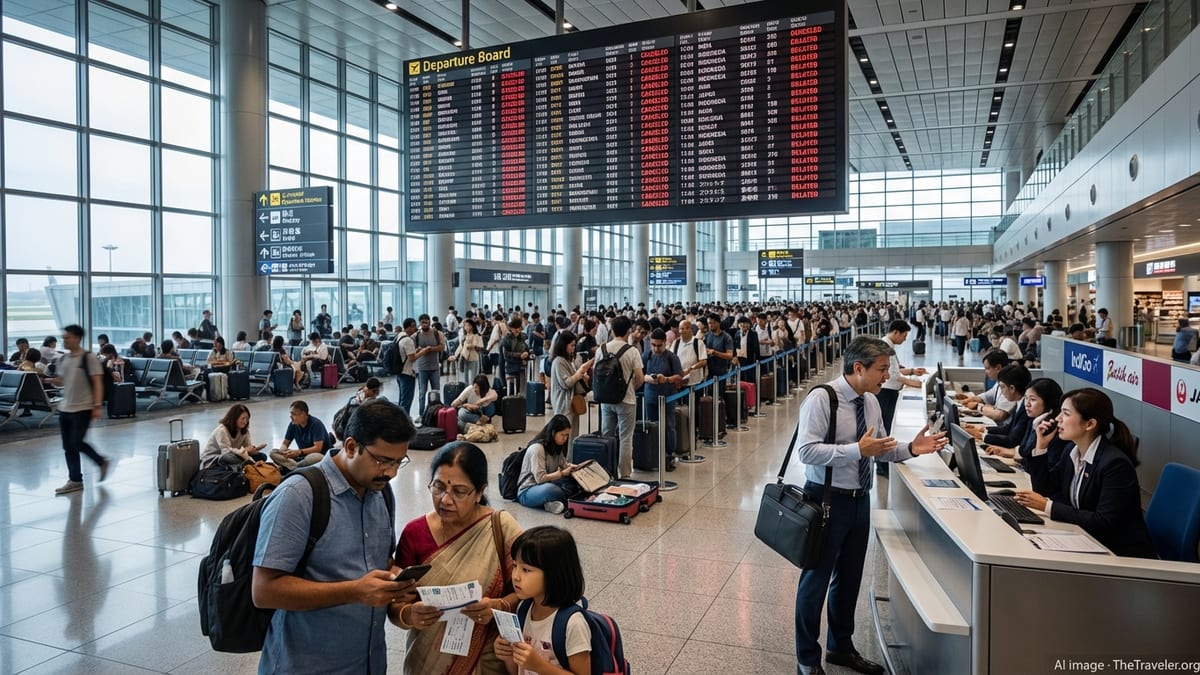
Regional Disruption Spreads Across Key Asian Hubs
Reports from aviation data platforms and regional media indicate that the latest wave of disruption is concentrated along the busy East–West corridors linking Asia, the Middle East and Europe. Flight tracking snapshots compiled over the past 48 hours show hundreds of cancellations and thousands of late departures and arrivals scattered across hubs such as Dubai, Riyadh, Jeddah, Hong Kong and major mainland Chinese gateways.
Industry commentary suggests that operational pressure has been building for months as carriers contend with volatile fuel prices, shifting airspace availability and already stretched schedules. Recent geopolitical tensions affecting Middle Eastern airspace have further compressed available routes, forcing airlines to fly longer detours around sensitive zones and placing additional strain on air traffic control systems across the region.
Travel analyses focused on Gulf and Asian operations describe a patchwork of airline responses, with some carriers suspending selected routes outright and others attempting to maintain connectivity while accepting higher rates of delays and same-day schedule changes. The result for passengers has been a noticeable rise in missed connections, extended layovers and rebookings across the network.
Emirates Faces Knock-On Effects at Dubai Hub
Emirates, which relies heavily on its Dubai hub to funnel traffic between Europe, Africa, Asia and Australasia, has emerged as one of the most visible carriers affected by the latest disruption. Publicly accessible flight status boards and third-party tracking dashboards show a marked uptick in delayed and cancelled rotations through Dubai, with ripple effects reaching connecting cities across South and Southeast Asia.
Specialist aviation outlets focusing on Gulf traffic note that Dubai International and nearby regional airports have been operating under sustained pressure, with congestion at peak bank times complicating recovery efforts when individual flights run late. When aircraft arrive behind schedule from one region, the delay often cascades into onward sectors, amplifying the impact on Emirates’ extensive connecting network.
Passenger accounts collected on social platforms and travel forums describe long rebooking queues, extended ground time at intermediate stops and occasional last-minute downgrades or reroutes. While Emirates’ published guidance continues to direct travelers to check real-time status before leaving for the airport, the combination of congested airspace and constrained turnaround times has made operations more vulnerable to even minor upstream disruptions.
Saudia Grapples With Strain on Saudi Gateways
Saudia’s operations through Riyadh, Jeddah and other Saudi airports are also being tested as regional conditions tighten. Recent Middle East travel advisories and analytical pieces on Gulf aviation highlight that Saudi airspace remains a critical link in an already narrowed band of safe and commercially viable East–West corridors, funneling traffic that might previously have been spread across a wider geographic area.
As flights are funneled through these remaining corridors, air traffic control complexity and airport congestion increase, making on-time performance more difficult to sustain. Independent tallies based on real-time tracking feeds point to a growing share of Saudia departures operating behind schedule, alongside a cluster of same-day cancellations affecting both regional and long-haul routes.
Travel-focused commentary indicates that passengers transiting Saudi hubs, particularly those connecting between Europe and Asia, have experienced a rise in missed onward flights and involuntary overnight stays. Airlines across the region, including Saudia, have been adjusting schedules and occasionally trimming frequencies in an effort to stabilize operations, though the fast-changing environment has limited their ability to offer long-term certainty.
Air China and Asian Carriers Adjust to Volatile Summer Conditions
In North Asia, Chinese carriers such as Air China are managing a different but related set of challenges. Recent corporate disclosures and business reporting portray a difficult financial backdrop marked by elevated fuel costs and cautious demand projections for the peak summer season, with some analysts warning of mounting pressure on profit margins and network planning.
Publicly available aviation statistics and monthly traffic monitors suggest that Chinese airlines have not fully regained the momentum seen in earlier recovery phases, even as international services continue to rebuild. Against this fragile backdrop, any disruption along key international corridors, including those routed through the Middle East, can have outsized effects on punctuality and capacity utilization for carriers like Air China.
Travel industry coverage notes that Air China and its regional peers have been fine-tuning schedules, swapping aircraft types and selectively trimming frequencies to manage costs and operational risk. However, when delays accumulate at overseas hubs or connecting gateways, the knock-on effects can be felt across domestic feeder networks, contributing to the broader tally of thousands of delays now recorded across Asia.
Travelers Confront Longer Journeys and Changing Rules
For passengers, the combined impact of more than three hundred cancellations and over five thousand delays is translating into longer travel days, shifting itineraries and a need for closer monitoring of flight information. News and advisory services aimed at travelers in the Gulf and Asia urge passengers to build extra time into connections, stay alert to last-minute schedule changes and familiarize themselves with airline rebooking and refund policies.
Consumer-focused analyses highlight that rerouting around closed or restricted airspace has extended flying times on many routes by up to several hours, even when flights operate as planned. When delays are added to those longer routings, same-day connections that once felt comfortable can become risky, prompting some travel planners to recommend longer layovers and more flexible ticket conditions.
Regulatory and legal guidance published in recent months emphasizes that passengers affected by cancellations may be entitled to rebooking, refunds or other forms of assistance, depending on the jurisdiction and the airline’s conditions of carriage. With operational conditions still described as fluid across parts of the Middle East and Asia, industry observers expect a continued period of elevated disruption risk for Emirates, Saudia, Air China and other carriers that rely on these vital air corridors.