


More news on this day
Hundreds of passengers across Asia and North America are facing missed connections, overnight airport stays and disrupted itineraries as a fresh wave of flight cancellations and delays hits key hubs in China, Indonesia, Canada and Japan, affecting services from China Eastern, Batik Air, Hainan Airlines, PAL Airlines, Chengdu Airlines, Garuda Indonesia and Japan Air Commuter.
Get the latest news straight to your inbox!
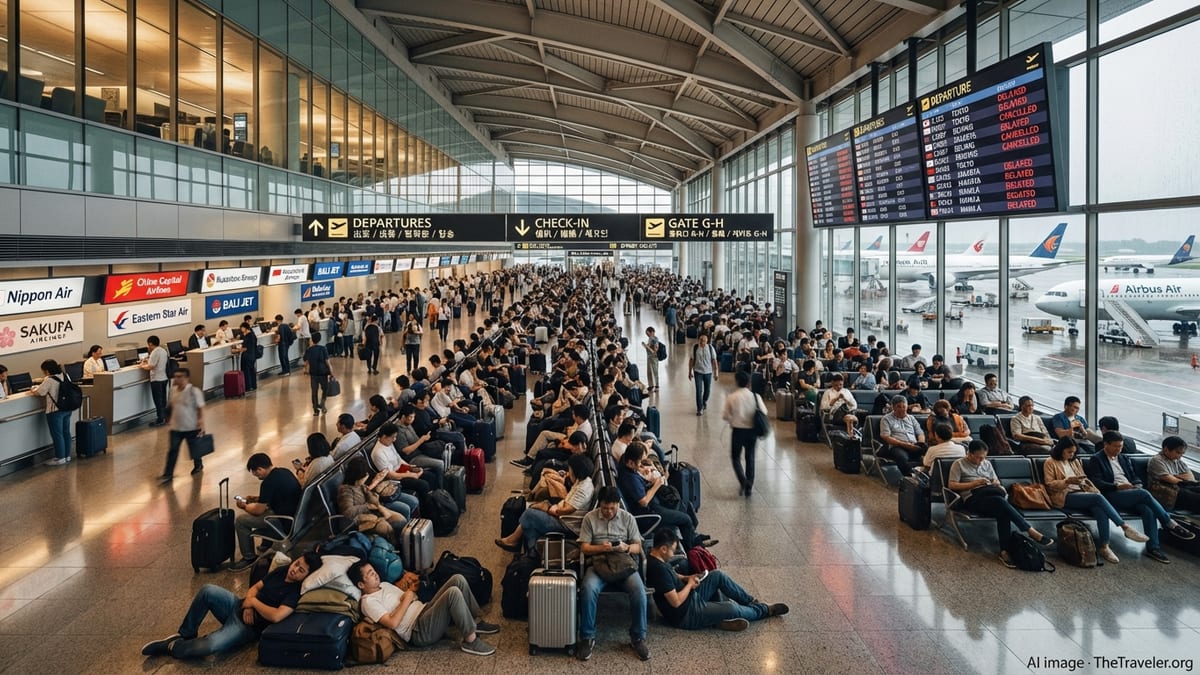
Fresh Disruptions Hit Major Asian and North American Hubs
Publicly available tracking data and recent aviation reports indicate that at least 74 flights have been cancelled and a further 349 delayed across multiple carriers serving China, Indonesia, Canada and Japan, compounding an already difficult travel season. The latest disruptions are concentrated around major airports including Beijing, Jakarta, Shenzhen, Montreal and regional Japanese gateways such as Kagoshima, but knock-on effects are being reported on connecting routes throughout the region.
In China, recent coverage of network problems and severe congestion at Beijing, Shanghai and Shenzhen points to continuing strain on both domestic and international operations. China Eastern and Hainan Airlines are among the carriers adjusting schedules and trimming frequencies, contributing to a pattern of short-notice cancellations and rolling delays that has left some travelers waiting many hours for alternative departures.
In Southeast Asia, Indonesian carriers Batik Air, Garuda Indonesia and Chengdu Airlines’ regional services have been affected on routes in and out of Jakarta, with additional pressure on secondary hubs that feed the capital. In Canada, regional operator PAL Airlines has reported schedule changes and delays on short-haul services, while in Japan, Japan Air Commuter’s network has experienced interruptions that are being felt most acutely at smaller airports where backup options are limited.
While the absolute numbers of cancellations and delays fluctuate throughout the day, aggregated data suggests that the current wave of disruption aligns with a broader pattern of operational volatility that has emerged across the Asia Pacific in 2026, particularly during periods of adverse weather or air traffic control congestion.
Beijing, Shanghai and Shenzhen Remain Pressure Points
China’s large hubs continue to act as focal points for disruption. Recent analyses of flight movements in and out of Beijing and Shanghai describe large clusters of delayed departures and arrivals, especially during peak morning and evening banks, as crews and aircraft rotate through congested airspace. Shenzhen, a fast-growing tech and manufacturing center, has also been highlighted in several reports as a significant bottleneck when weather or traffic control measures tighten capacity.
China Eastern, Hainan Airlines and other mainland carriers operating dense domestic networks have been particularly exposed when thunderstorms, low visibility or temporary airspace restrictions force schedule revisions. When multiple hubs such as Shanghai Pudong, Beijing Capital and Shenzhen Bao’an experience issues on the same day, the knock-on effect ripples quickly into secondary cities including Chengdu, Nanjing and Changsha, stranding connecting passengers who rely on short domestic legs to reach long-haul gateways.
Observers note that these hubs have been operating close to capacity during busy travel periods, leaving limited flexibility for recovery when flights are grounded or heavily delayed. Aircraft and crew repositioning efforts, while necessary to keep core routes running, can lead to last-minute cancellations on lower-yield services, a pattern that has been documented in several recent operational summaries.
For passengers, the impact is felt most sharply in missed onward connections and overnight stays in hub cities. With hotel availability and rebooking options tightening during major disruption events, many travelers in Beijing and Shenzhen have been forced to queue at service desks for extended periods as airlines triage itineraries based on available seats.
Jakarta and Indonesian Routes Grapple With Knock-on Effects
Indonesia’s sprawling domestic network has also been under strain. Recent statistical snapshots of operations at Jakarta’s Soekarno Hatta International Airport show elevated levels of delays and a noticeable rise in same-day cancellations, affecting carriers including Batik Air and Garuda Indonesia. These disruptions are often amplified by Indonesia’s geography, where many communities depend on air links for essential travel.
On busy trunk routes linking Jakarta with cities such as Makassar, Medan and Surabaya, even modest schedule changes can quickly snowball. When aircraft are held on the ground due to congestion, weather or late-arriving inbound flights, subsequent rotations face compressed turnarounds or must be cut entirely, leading to clusters of delayed departures late in the day.
For Batik Air and Garuda Indonesia, which mix point-to-point leisure traffic with business and government travel, these operational challenges can be particularly acute at the start and end of the work week. Passengers have reported rolling departure estimates and tight connection windows, while some have had to accept rerouting via secondary airports or overnight stops to reach their final destinations.
Regional carriers such as Chengdu Airlines, linking Chinese cities with Southeast Asian gateways, add another layer of complexity. When schedules are adjusted on China-facing segments, Indonesian and broader ASEAN networks may see sudden gaps in service or compressed departure banks, further complicating planning for travelers attempting multi-country itineraries.
Canada and Japan Feel the Strain at Regional Airports
Beyond Asia’s megahubs, the latest wave of disruption is also affecting smaller airports, where the loss or delay of even a handful of flights can have an outsized impact. In Canada, PAL Airlines’ regional operations across eastern provinces have experienced weather-related and operational delays, according to flight tracking platforms and local aviation coverage. These short-haul services often provide essential links between smaller communities and major cities and are more vulnerable when aircraft utilization plans are disrupted.
Montreal’s role as both a domestic and transborder gateway means that delays on PAL Airlines or interline partners can cascade into missed connections for passengers heading to other parts of Canada or onward to the United States and Europe. With limited frequencies on some regional routes, travelers may face waits of a full day or more for the next available departure if a flight is cancelled outright.
In Japan, publicly accessible operational data indicates that Japan Air Commuter, which serves islands and regional centers from bases in southern Japan, has encountered interruptions on certain services. Airports such as Kagoshima, which handle a mix of commuter and leisure traffic, can see significant crowding when several departures are delayed or when a cancellation removes a key link in the daily schedule.
The challenges in Japan echo those seen elsewhere: high utilization of small fleets, tight turnarounds and the sensitivity of turboprop and regional jet operations to coastal weather conditions. When combined with broader congestion in East Asian airspace, these factors increase the risk that minor delays turn into missed connections for travelers heading onward to larger Japanese hubs or international flights.
Passengers Face Long Waits and Limited Alternatives
For passengers caught up in the latest disruptions, the main challenges are uncertainty and limited alternatives. As cancellations and delays accumulate, spare seats on later departures become scarce, especially on popular corridors linking Beijing, Jakarta, Shenzhen, Montreal and regional destinations. Travelers without flexible tickets or travel insurance often discover that same-day rebooking options are either sold out or significantly more expensive.
Consumer advocates and travel analysts note that publicly available airline conditions of carriage typically outline what carriers will provide during major disruptions, but implementation can vary in practice. In some cases, passengers receive meal vouchers, hotel accommodations or complimentary rebooking, while in other instances only a refund or a later flight is offered, particularly when disruption is attributed to weather or air traffic control constraints.
Recent online discussions and traveler reports underscore how quickly itineraries can unravel when a single domestic link is cancelled. A missed regional hop to Beijing or Jakarta can jeopardize long-haul flights onward to Europe, North America or Oceania, and not all tickets are protected on a single booking. Passengers who assembled complex trips through multiple platforms may find that each segment is treated separately when disruption strikes.
Travel planning guidance widely circulated during this period suggests that passengers build longer connection windows, monitor flight status frequently, and consider routing through alternative hubs where possible. With operational volatility likely to continue in the short term across China, Indonesia, Canada and Japan, particularly during busy holiday and summer travel periods, travelers are being encouraged to prepare for delays and to keep contingency plans in mind when booking.