


More news on this day
Qatar Airways is preparing to restore nonstop flights between Doha and Philadelphia in 2026, positioning the relaunch as a pivotal move in reclaiming a lucrative US–South Asia corridor just as American Airlines withdraws from the route.
Get the latest news straight to your inbox!
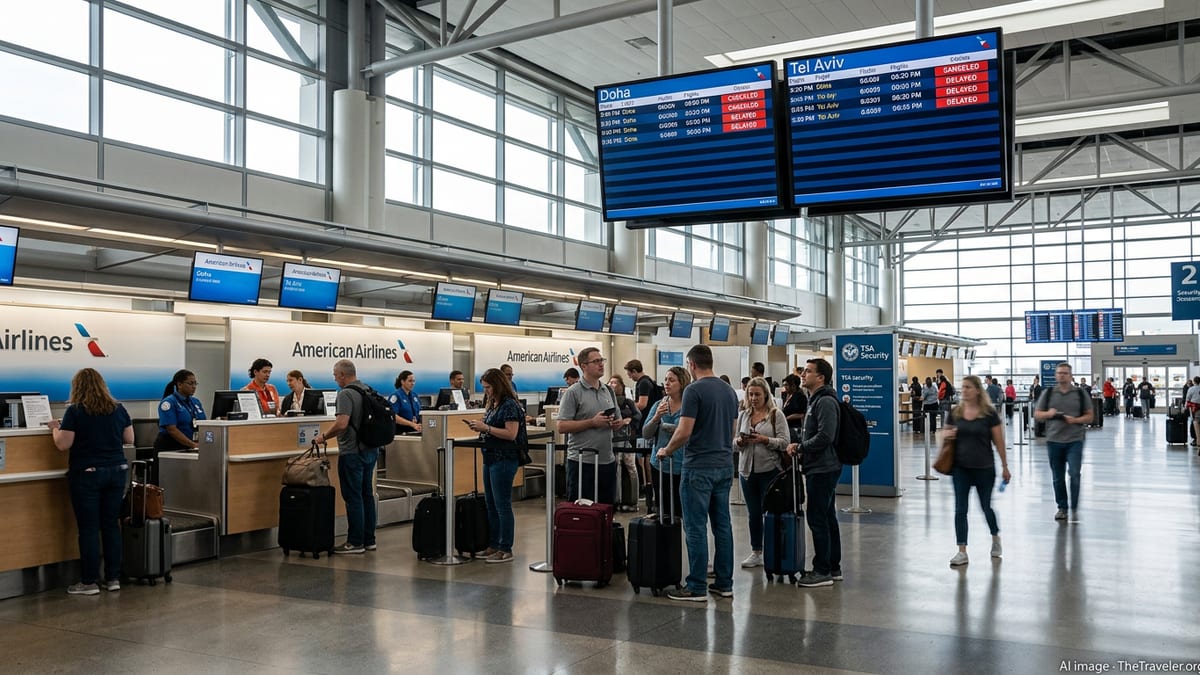
Qatar Airways Steps Back In After American’s Exit
Publicly available schedule information and industry reports indicate that Qatar Airways is working toward a restart of daily nonstop service between Doha’s Hamad International Airport and Philadelphia International Airport from February 2026. The move would end a roughly ten month gap in nonstop connectivity between the two cities following American Airlines’ decision to suspend and then remove its Philadelphia–Doha operation from future schedules.
American first took over the corridor after Qatar Airways ended its own Philadelphia flights in late 2023, a handover that aligned with the deepening commercial partnership between the oneworld carriers. The US airline operated the link under its AA120 and AA121 flight numbers, providing a direct bridge from its primary Northeast transatlantic hub to Qatar Airways’ global network.
According to published coverage, American has now permanently pulled the service, with the last flights expected to operate in late February 2026. Industry analysis describes the cancellation as closing the book on the longest flight ever operated from Philadelphia, while creating space for Qatar Airways to step back into a market that previously supported its own metal.
Specialist aviation outlets report that early schedule filings and internal planning documents point to Qatar Airways returning with Boeing 787-9 aircraft configured for long haul operations. That equipment choice would give the airline a modern, fuel efficient platform with a competitive premium cabin aimed at corporate and high yielding connecting traffic.
Rebuilding a One Stop Super Corridor to South Asia
The Doha–Philadelphia link is regarded by network planners as more than a point to point route. For the broader Mid Atlantic region, it restores a one stop connection to dozens of destinations across the Middle East, East Africa, South Asia and parts of Southeast Asia that are difficult to reach nonstop from the United States.
From its hub at Hamad International Airport, Qatar Airways publishes an extensive network into South Asia, including major cities in India, Pakistan, Bangladesh and Sri Lanka, as well as secondary gateways that are not typically served nonstop from North America. Travel industry analysis notes that itineraries from Philadelphia to cities such as Delhi, Mumbai, Lahore, Islamabad, Dhaka and Colombo frequently route over Doha, using the carrier’s tightly timed bank of arrivals and departures.
With American’s service coming off the board, travelers in the Philadelphia catchment area face less straightforward options for reaching these destinations, often involving additional connections at European hubs or alternative US gateways. The planned Qatar Airways relaunch is therefore seen as a strategic attempt to recapture flows that have historically performed well for Gulf carriers, particularly among visiting friends and relatives traffic and small business travelers.
Analysts also highlight that the corridor has become more complex to manage amid evolving airspace restrictions in parts of the Middle East and surrounding regions. A carrier based in Doha with longstanding experience in the area is viewed in some commentary as better positioned to adjust routings and capacity while maintaining a consistent product for passengers.
Strategic Stakes for Philadelphia’s Transatlantic Gateway
For Philadelphia International Airport, the prospective return of Qatar Airways carries significance that extends beyond a single long haul route. The airport functions as American’s primary East Coast transatlantic hub, inheriting a strong European franchise from the former US Airways and leveraging a large domestic feed network across the United States.
Industry fact sheets and traffic data show that long haul services from Philadelphia have historically skewed toward Europe, with only a handful of flights reaching deep into the Middle East or Asia. The Doha route has been an outlier, offering one stop access far beyond traditional European endpoints and diversifying the airport’s long haul portfolio.
Published analyses suggest that regaining Qatar Airways while losing American’s operation produces a mixed picture for the airport. On one hand, the carrier shift could reduce the number of US branded long haul seats; on the other, a dedicated Gulf hub operator may be able to cultivate more diverse transfer traffic and stimulate new demand from surrounding states such as New Jersey, Delaware and Maryland.
Observers note that Philadelphia faces competition from New York, Washington and even Boston for international connectivity, all of which host multiple Middle Eastern and European hub carriers. A reinstated Doha flight by Qatar Airways would give the city a renewed point of differentiation, especially for passengers prioritizing one stop access to South Asia and beyond rather than nonstop service to Europe alone.
Alliance Dynamics and the Qatar–American Partnership
The evolving story of Doha–Philadelphia also reflects the broader relationship between Qatar Airways and American Airlines. After years of tension related to alleged state support and competition concerns, the two carriers rebuilt their partnership in the early 2020s, culminating in an expansive codeshare and reciprocal frequent flyer benefits within the oneworld alliance.
Under that framework, each airline can place its code on a wide range of the other’s flights, enabling itineraries that combine American’s domestic and transatlantic network with Qatar Airways’ reach to Africa, the Middle East and Asia. Industry commentary has described the tie up as one of the largest codeshare arrangements in the global airline sector by number of destinations.
Reports indicate that Qatar Airways never fully stepped back from the Philadelphia market at the commercial level, continuing to market itineraries that originated or ended there even while American physically operated the transatlantic leg. The anticipated return of Qatar Airways aircraft to the route would therefore represent more of an operational reshuffle inside the partnership than a complete strategic reset.
A key question for alliance watchers is how the two airlines will balance capacity and market share in the corridor once Qatar Airways resumes flying. Some analysts expect American to lean more heavily on feeding passengers from its US domestic network into Qatar Airways’ flight at Philadelphia, rather than maintaining its own long haul metal on the route.
What Travelers Can Expect When Flights Return
While final schedules and launch dates have yet to be formally published through official timetables, pattern analysis of advanced booking data and aircraft assignments offers an early indication of what the restored route could look like for passengers.
Reports suggest that Qatar Airways is planning a daily service timed to connect into its main late night departure bank from Doha, which is optimized for onward flights to South Asia and Southeast Asia. For travelers originating in Philadelphia and nearby cities, this would translate into late afternoon or evening departures to Doha, followed by early morning arrivals that feed into regional connections.
Industry sources monitoring fleet plans indicate that the Boeing 787-9 is the likely workhorse for the route, offering a mix of lie flat business class seating and a refreshed economy cabin. That layout would place the product broadly in line with Qatar Airways’ service on other major US gateways, targeting both premium and price sensitive segments.
Fare and capacity dynamics will depend heavily on how quickly demand rebounds on long haul markets affected by recent geopolitical and airspace developments. However, travel analysts widely view the planned Doha–Philadelphia relaunch as a sign of confidence from Qatar Airways in the resilience of US outbound and diaspora driven traffic to South Asia, and as a reminder of how critical a single nonstop can be in shaping global access for one American metropolitan region.