


More news on this day
Flight disruption across Asia has intensified in mid-August, with major hubs in China, Japan and Southeast Asia reporting waves of delays and cancellations tied to typhoon activity, airspace constraints and stretched airline capacity at the height of the region’s summer travel season.
Get the latest news straight to your inbox!
Typhoon Dolphin Slams China’s East Coast Hubs
Travel disruption has been most visible in eastern China, where Typhoon Dolphin made landfall in recent days and forced large-scale schedule cuts at Shanghai’s two major airports. According to widely circulated airport operations data and media coverage, more than 1,300 flights were canceled on Sunday, August 9, as the storm’s outer bands brought heavy rain and gusty winds to the Yangtze River Delta.
The following day, publicly available figures from Shanghai Airport Group indicated that Hongqiao and Pudong airports scrapped roughly 40 percent of their planned services, amounting to more than 900 additional cancellations as the system weakened to a tropical storm but continued to disrupt operations. The reductions affected both domestic and international services, including connections to major Asian hubs and long haul links to Europe and North America.
Airlines have generally opted to suspend flying rather than risk extended airborne holding or diversions while the storm moves through one of Asia’s busiest air corridors. Aviation observers note that even as conditions improve, the backlog of aircraft and crew displaced around the region can take several days to resolve, prolonging the impact for travelers well after the worst weather has passed.
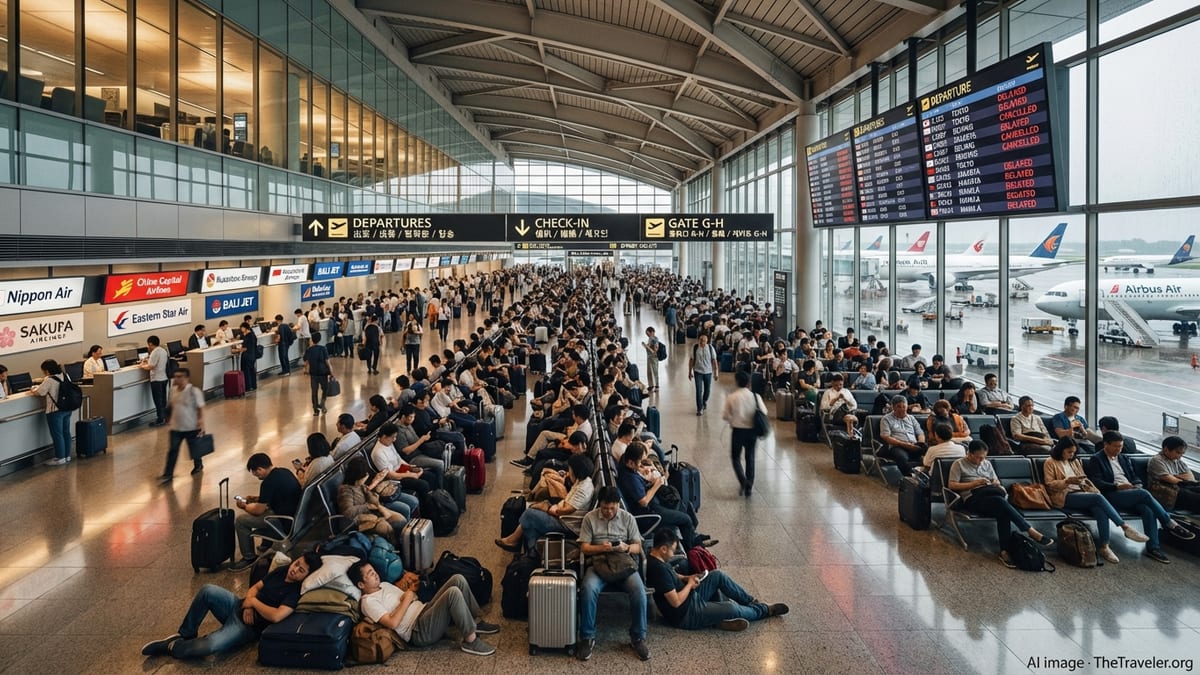
Airport messaging in Shanghai and other affected Chinese cities has emphasized that safety-driven flow restrictions will continue to influence operations as ground staff work through rebookings and repositioning flights. For passengers, that has translated into crowded terminals, long queues at service desks and limited short-term alternatives on already full peak-season routes.
Ripple Effects Across Northeast Asia and Regional Gateways
The same weather system has also affected travel in nearby markets, including Taiwan, Japan and the Philippines, where carriers have reported a mix of outright cancellations and rolling delays. Social media posts and local travel forums over the past week describe extended waits at Manila’s main international airport, with some flights to Tokyo and other Northeast Asian cities delayed by 90 minutes or more as airlines adjust routings around adverse conditions in the broader region.
In Japan, travelers to and from Okinawa have reported cancellations and schedule changes as carriers responded to strong winds and heavy rain. Discussions on consumer platforms point to short-notice changes by major Japanese and regional airlines for flights between Naha, Tokyo and Hong Kong as successive tropical systems brushed the Ryukyu island chain. Some hotels and ground transport providers also saw reduced services, complicating rebooking options for stranded passengers.
While many operations in Taipei and other Northeast Asian gateways have continued with only moderate disruption, analysts say the need to reroute aircraft, respect crew duty limits and manage ground-time bottlenecks has created a patchwork of delays that can cascade throughout airline networks. A late departure from one hub can easily translate into missed connections and cancellations several sectors down the line, especially for carriers that operate dense schedules with limited spare capacity.
Aviation specialists in the region note that the broader geography of summer typhoons means even airports experiencing clear skies can see disruptions if their inbound aircraft are caught up in restrictions elsewhere. For travelers, this has made it harder to predict which flights will operate normally, even when local weather appears benign.
Airspace Constraints and Tight Capacity Add Pressure
Beyond immediate weather impacts, Asia’s airlines and airports continue to grapple with structural constraints that magnify the effect of each new disruption. Industry analyses published this year highlight how reroutings around restricted or congested airspace over parts of West and Central Asia have added flying time and complexity to many long haul routes connecting East Asia with Europe and the Middle East.
Longer routings, combined with high summer demand and limited availability of widebody aircraft, leave airlines with little slack in their schedules. Trade publications tracking regional reliability trends in 2026 point to a noticeable uptick in flight delays of more than two hours and a rise in last minute cancellations when storms, technical issues or crew shortages intersect with already stretched operations.
For Asian hubs such as Bangkok, Singapore and Kuala Lumpur, which rely heavily on connecting traffic, knock on effects from typhoon related disruptions in China and Japan can be particularly acute. A wave of missed inbound connections can force airlines to consolidate or cancel onward services to secondary cities across the region, affecting travelers who never planned to pass through the hardest hit weather zones.
Airport authorities and air traffic managers have been working with airlines to implement flow control measures and tactical rerouting to smooth peaks, but public reports and passenger feedback suggest that recovery times after major disruptions remain lengthy. In some cases, travelers have reported being rebooked two or three days later on already crowded flights, especially on popular leisure routes.
Travelers Face Longer Delays and Limited Rebooking Options
The latest round of disruption has generated a familiar pattern for passengers: prolonged waits, scarce information and difficulty securing alternatives on short notice. Posts from stranded travelers across regional forums describe hours long queues at help desks in Shanghai, Manila and various Japanese airports, with many customers relying on airline apps or third party travel agents to secure new itineraries.
Travel rights vary considerably across Asia, and consumer advocates note that compensation rules are generally less robust than those in parts of Europe. However, publicly available guidance from many airlines in the region indicates that when flights are canceled or heavily delayed for weather or air traffic reasons, passengers are typically offered free rebooking on the next available service or refunds, subject to fare rules and capacity.
In practice, the tight availability of seats during August’s peak travel period has limited those options. Reports from Chinese and Japanese social media point to situations where travelers accepted overnight stays at airport hotels or opted to reroute through secondary hubs to reach their destinations sooner. Some leisure travelers have also described abandoning short trips altogether when the prospect of losing multiple days to delays outweighed the value of the journey.
Industry observers say the current turbulence in Asia’s air travel system underlines the importance of building additional resilience into airline schedules, particularly as climate change contributes to more intense and less predictable storm seasons. For now, the advice circulating among frequent travelers is pragmatic: allow extra buffer time for connections, travel with flexible plans where possible and monitor flight status closely as weather systems develop.
Outlook for the Remainder of the Summer Peak
Forecasts from regional meteorological agencies indicate that the Western Pacific typhoon season is far from over, with additional systems likely to form through September and into October. Historical patterns show that repeated storms can keep pressure on aviation networks well beyond the initial landfall events, particularly when they track across major population centers and transport corridors.
Airline scheduling data for the remainder of August suggest that carriers intend to maintain high levels of capacity, reflecting strong demand for both outbound tourism and intra Asia business travel. Analysts warn that this leaves little margin for error if further weather related or operational shocks emerge, raising the risk of continued rolling delays and localized waves of cancellations at key hubs.
Some airports and airlines are using the latest disruption as a catalyst to refine contingency plans, including preemptive schedule thinning, earlier communication of likely cancellations and more flexible rebooking policies during severe weather events. Publicly available statements from several carriers in the region in recent months show a greater willingness to cancel flights a day or more in advance when significant storms are forecast, in an effort to reduce last minute chaos.
For travelers planning trips through Asia in the coming weeks, the deepening disruption serves as a reminder to check itineraries frequently, build in generous layovers for complex routings and consider travel insurance that covers weather related delays. While most flights will still operate close to schedule, the combination of active storm systems, busy airports and tight airline resources means that unexpected changes are likely to remain a feature of Asia’s skies for the rest of the season.