


More news on this day
Air travel across Asia entered another turbulent weekend as operational data pointed to 3,940 flight delays and 141 cancellations in and out of Singapore and other regional hubs on August 29, 2026, disrupting thousands of journeys at the height of the late-summer travel period.
Get the latest news straight to your inbox!
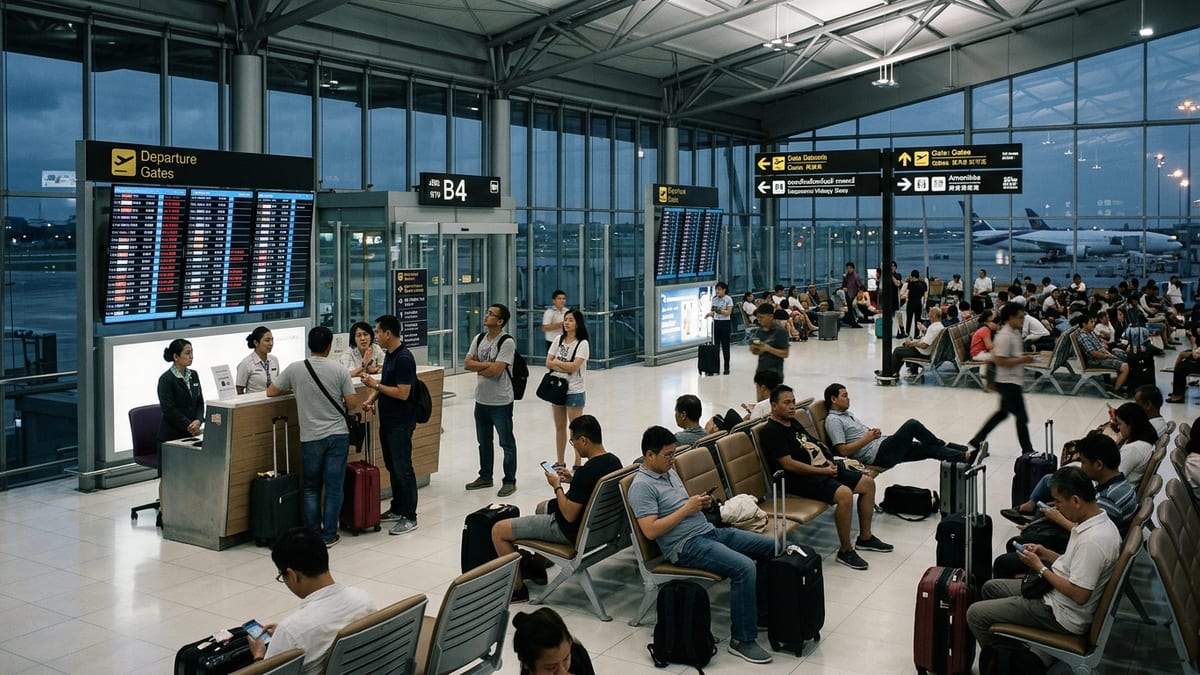
Singapore Changi at the Heart of Regional Disruption
Tracking platforms monitoring movements at Singapore Changi and major Asian gateways recorded a sharp spike in late-running services on August 29, with Singapore among the most affected hubs. Aggregated figures from multiple aviation data providers indicated nearly 4,000 delayed flights across Asia that day, alongside more than 140 cancellations, as knock-on effects spread through tightly timed networks.
Live departure and arrival boards for Changi on August 29 and 30 showed a rolling pattern of schedule changes, with flights reclassified from on time to delayed or cancelled as the day progressed. Publicly available boards for Singapore’s main terminals listed a broad mix of affected operators, from regional low-cost carriers to long-haul airlines linking the city to Europe and North America.
Data from Singapore’s official statistics portal shows that scheduled aircraft movements at Changi in 2026 are tracking close to pre-pandemic levels, while passenger volumes have continued their recovery. That combination of near-2019 traffic and high aircraft utilization leaves limited operational slack when weather, technical issues or airspace constraints arise.
Industry data and recent monthly figures underline Changi’s role as a high-density transfer hub, where a significant share of passengers connect between Asia, Oceania and long-haul routes. In such an environment, delays on a single inbound leg can quickly cascade into missed connections, aircraft rotation challenges and crew duty-time pressures across multiple subsequent flights.
Weather Systems and Technical Issues Add to Strain
The late-August disruption unfolded against a backdrop of unstable regional weather and recent storm systems that have already triggered schedule changes. In the week leading up to August 29, tropical weather activity in East Asia prompted airlines to retime and cancel services, particularly around Japan, eastern China and Taiwan, all of which are key destinations from Singapore.
According to published coverage in Singaporean and regional media, several carriers with operations at Changi have recently issued notices about route-specific disruption. Singapore Airlines and its low-cost partner Scoot adjusted flights to Japanese and Chinese airports in response to approaching typhoons, while Japanese carriers temporarily halted some Okinawa services as local authorities braced for high winds and heavy rain.
Technical events have also added pressure for individual airlines based at the hub. Recent reports highlight instances of Singapore Airlines services turning back to Changi shortly after departure or being delayed for several hours while aircraft were replaced, with passengers moved to substitute jets to allow engineering checks to continue. Although isolated in scale compared with the wider August 29 event, such occurrences contribute to overall congestion when aircraft and crews are already tightly scheduled.
Across the wider region, separate operational data for August 20 documented more than 4,500 delays and over 200 cancellations in Asia’s large hubs, including Shanghai, Delhi and Jakarta. That earlier wave of disruption illustrates how regional weather and capacity constraints can generate extended knock-on effects, leaving airports such as Singapore vulnerable to secondary impacts even when local conditions are relatively stable.
How the Delays Played Out for Travellers
For passengers transiting Singapore and neighbouring airports, the late-August disruption translated into missed connections, last-minute gate changes and long waits for updated departure times. Flight-status pages and third-party tracking sites showed some services slipping by 15 to 30 minutes, while others accumulated multi-hour delays or were removed from schedules entirely.
Publicly accessible discussion forums and social platforms carried accounts from travellers describing extended ground holds, diversions and overnight misconnections, particularly on long-haul services linking Singapore with North America and Europe. Several posts referenced duty-time limitations for flight and cabin crew, which can force airlines to postpone or reroute services when earlier delays push operations beyond regulatory limits.
Live arrivals and departures boards for Changi on August 30 reflected the hangover from the prior day’s congestion, with some early-morning flights still marked as delayed or operating with revised timings. Similar patterns were visible at other Asian hubs, where aircraft arriving late from Singapore and regional points compressed turnaround windows and complicated crew scheduling.
Airport data providers indicated that, despite the widespread disruption, the majority of services continued to operate, albeit behind schedule. However, with load factors reported to be high during the late-August travel peak, travellers whose flights were cancelled often faced limited rebooking options, longer transit times and, in some cases, unplanned overnight stays en route.
Operational Tightrope at Asia’s Key Hubs
Changi’s position as one of Asia’s busiest connecting hubs, combined with strong seasonal demand, has created a finely balanced operating environment in 2026. Government statistics up to June show sustained growth in passenger movements, supported by airlines restoring and expanding regional and long-haul capacity across Southeast and East Asia.
Schedule data filed by carriers such as Scoot indicates that some operators have already trimmed planned frequencies for July and August, in part to manage resources and balance demand with available aircraft and crew. Even modest reductions, however, have not fully offset the impact of robust traffic growth and ongoing constraints in aircraft availability, particularly as widebody jets remain in high demand across long-haul networks.
According to industry analyses of recent delay waves in Asia, the interconnected nature of regional hubs means localized issues can rapidly turn into cross-continental challenges. When a single aircraft arrives late into a hub like Singapore, the downstream effect may extend across multiple onward legs, affecting domestic feeders, regional spokes and long-haul routes over a period of many hours.
Operational experts point to a combination of factors behind this vulnerability, including limited spare aircraft, high utilization of existing fleets, congested airspace around major cities and the growing complexity of crew rostering across multi-stop itineraries. As airlines rebuild networks, these elements have made it harder to absorb unexpected shocks without visible disruption to passengers.
What Travellers Can Expect in the Coming Days
With Asia’s typhoon season and late-summer travel peak continuing into September, aviation data providers and travel analysts suggest that intermittent disruption is likely to persist across regional networks. Forecasts for further storm activity in parts of East Asia, coupled with ongoing operational pressures, are expected to keep airlines and airports on alert for additional waves of delays.
Public travel advisories and airline updates consistently encourage passengers flying to or through Singapore and other Asian hubs to monitor flight-status pages and mobile apps closely in the 24 hours before departure. Real-time trackers can provide early visibility of incoming aircraft and route-specific weather impacts, helping travellers anticipate potential schedule changes.
For now, publicly available information from live airport boards shows operations at Changi gradually stabilizing after the August 29 spike, though with pockets of residual delay. Travel specialists note that the situation can evolve quickly, particularly when storms or airspace restrictions emerge on short notice, and recommend allowing additional time for connections where possible.
As airlines, airports and air navigation providers work to navigate the remainder of the busy season, the events of late August underline how swiftly Asia’s aviation system can move from smooth operations to widespread disruption when multiple pressure points converge on the same weekend.
Singapore Changi Airport live departures
Singapore Changi scheduled aircraft and passenger statistics
Regional August 2026 Asia delay and cancellation overview
Storm-related schedule changes on Singapore-linked Asian routes