


More news on this day
Japan’s trains have long been a symbol of efficiency and speed, but recent shifts in rail passes and tourism patterns are putting slower, local services in the spotlight as visitors look for new ways to explore cities and countryside alike.
Get the latest news straight to your inbox!
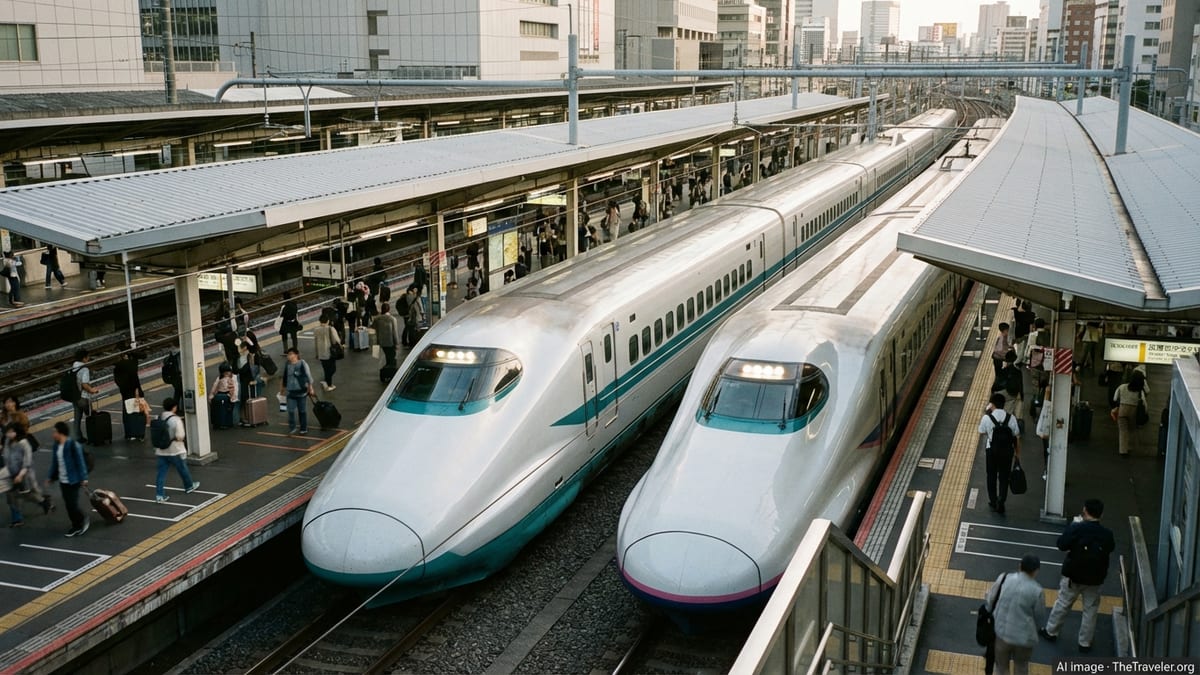
Price Shifts Push Travelers Toward Regional and Local Lines
The nationwide Japan Rail Pass, once regarded as a bargain for long distance travel, has undergone significant price increases since October 2023, with published guidance from Japan’s National Tourism Organization now listing a regular seven day adult pass at 50,000 yen. Public information from JR group companies also indicates a further average rise of around 6 percent scheduled from October 2026, reinforcing a trend toward higher costs for unlimited nationwide travel.
These changes are altering how visitors think about rail in Japan. Travel advisories and specialist guides note that for many itineraries focused on a single region, point to point tickets or regional passes now offer better value than the national product. As a result, more travelers are spending longer periods in one area and relying on local trains, suburban networks and short haul limited express services, rather than chaining together multiple cross country Shinkansen trips.
Tourism promotion materials highlight that this shift can benefit lesser known destinations. By reducing the financial incentive to cover vast distances in a short time, the rising price of the Japan Rail Pass is nudging visitors toward slower, more localized journeys that align more closely with how residents use the rail system day to day.
Regional Rail Passes Spotlight Kansai, Kyushu and Hokkaido
As the national pass becomes more expensive, regional rail passes are gaining prominence. The Japan National Tourism Organization’s rail information hub lists dozens of area specific products, from Hokkaido in the north to Kyushu in the south, many of which bundle unlimited travel on local and limited express trains within defined zones.
In western Japan, recently promoted passes such as the Kansai Railway Pass Lite and the JR Kyushu Rail Pass allow visitors to move freely between major hubs and outlying towns on local and rapid services during their validity period. JNTO coverage emphasizes that these tickets are designed to make spontaneous, short hops easier, lowering the barrier to visiting secondary cities, coastal communities and onsen areas that lie off the main tourist circuit.
Further north, JR Hokkaido continues to market products like the Sapporo Noboribetsu and Sapporo Furano area passes for foreign visitors, giving access to trains serving hot spring resorts, national parks and farming towns outside the capital. Regional tourism sites describe how these passes encourage travelers to board conventional trains that thread through farmland and forest, mirroring the journeys taken by residents for commuting and daily errands.
Printed visitor guides produced for metropolitan governments and railway operators also underscore that many of these regional tickets incorporate private railways, local buses and even ferries, effectively turning local public transport into an integrated tourism platform.
Local Railways Offer a “Neighborhood Level” View of Japan
Urban travel resources for Tokyo and other major cities increasingly promote local and private railways as an alternative to JR lines, particularly for visitors who no longer hold a nationwide pass. The official Tokyo tourism website, for example, describes how lines operated by companies such as Tokyu and Keio can carry riders beyond the usual inner city stops to residential districts, sub centres and smaller temple towns on the metropolitan fringe.
These routes often lack the high profile branding of the Shinkansen, yet they provide what planners describe as a neighborhood level view of Japanese cities. Short hop fares and frequent stopping patterns make it possible to explore areas where station surroundings feature shopping arcades, small parks and schools, rather than landmark attractions. Travel guidance notes that these are the same lines used by commuters and students, giving visitors a closer look at daily urban life.
In regional centers, conventional JR lines and third sector railways perform a similar role. Central Japan marketing materials illustrate how travelers on the so called Golden Route can leave the bullet train behind and transfer to local services to reach historic post towns, river valleys and smaller hot spring settlements. These slower trains typically call at every station, exposing passengers to working landscapes of factories, rice paddies and riverside neighborhoods that are rarely visible from high speed tracks.
Scenic and Themed Trains Turn Rail Travel into the Main Event
The growing attention on local lines coincides with efforts by railway companies and tourism bodies to develop scenic and themed services. JNTO’s overview of scenic railway journeys highlights examples across the country, from coastal routes in western Honshu to heritage trams and countryside lines in Shikoku, many of which operate on conventional tracks shared with regular commuter services.
On these routes, operators deploy special rolling stock with panoramic windows, redesigned interiors or onboard exhibitions, but the fundamental experience still reflects local rail culture: relatively low speeds, close spacing between stations and frequent interaction with the surrounding landscape. Promotional materials describe trains that trace the shoreline, cut through mountain gorges or pass directly behind small towns, reinforcing the sense that rail travel itself is the main attraction rather than simply a way to reach it.
Newsletter coverage from Japan’s tourism agency focusing on Shikoku, the only main island currently without a Shinkansen link, underscores how regional and private railways have stepped into this role. Sightseeing trains there connect medium sized cities such as Matsuyama and Takamatsu with rural stops, positioning the journey and the act of riding local rail as a core part of the tourism offer.
Local Etiquette and Technology Shape Visitor Experience
As more travelers spend time on everyday services, local rail etiquette and ticketing technology are becoming a larger part of the visitor experience. Authorities and tourism boards publish multilingual guidance encouraging behaviors such as queuing in marked lines on platforms, keeping phone calls to a minimum and placing backpacks on racks rather than in aisles, reflecting norms long established among Japanese commuters.
At the same time, contactless smart cards and app based tickets are extending beyond the better known Suica and Pasmo brands in major cities. While some regional systems have recently been consolidated or withdrawn, most large metropolitan areas now promote interoperable IC cards that work across rail, subway and bus networks, allowing visitors to tap in and out on the same lines used by residents. Official guides emphasize that these tools complement, rather than replace, paper based regional passes, which continue to be marketed as the most economical option for concentrated travel in a single area.
The combined effect is that Japan’s rail culture for visitors increasingly resembles that experienced by locals: a mixture of high speed trunk lines, dense suburban networks and slow, scenic branches, all navigated through a mix of passes, smart cards and local practice. With pricing dynamics encouraging more time on local tracks, the country’s everyday trains are taking center stage in how travelers come to understand its cities, towns and countryside.
Japan National Tourism Organization – Japan Rail Pass guide
Tokyo Metropolitan Government – Local railways information