


Stockholm’s compact center means you can walk from medieval alleys to hipster coffee bars in under fifteen minutes, yet the feel of each neighborhood could not be more different. Nowhere is that contrast sharper than between Gamla Stan, the city’s storybook Old Town, and Södermalm, the creative island just across the water. Choosing where to base yourself will shape everything from your daily budget to your nightlife, so it is worth matching the right district to your travel style.
Get the latest updates straight to your inbox!
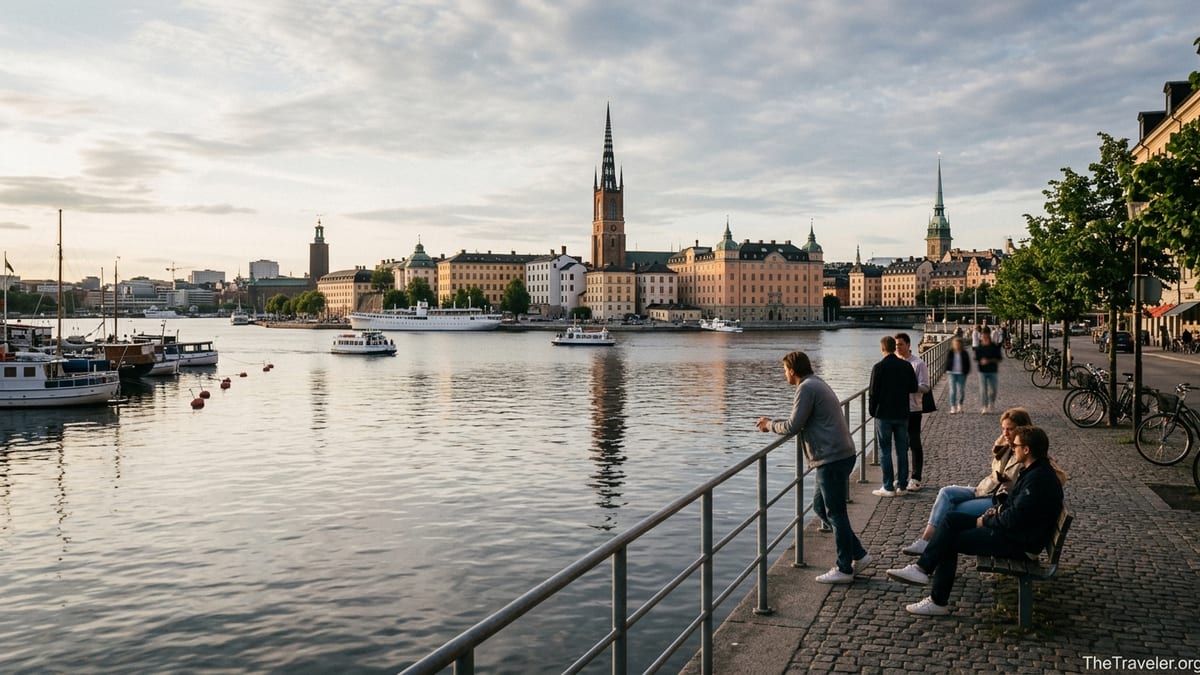
Getting Oriented: Two Islands, Two Different Stockholms
Gamla Stan is Stockholm’s original heart, founded in the 13th century and still packed with narrow cobbled lanes, crooked townhouses and the Royal Palace. Many first-time visitors step out of the Gamla stan metro station and feel like they have walked straight into a Nordic history book. Stortorget square, with its colored facades, and Västerlånggatan, the main shopping street, are almost always busy with walking tours and souvenir shoppers. It is small enough that you can cross the island on foot in under ten minutes, yet every turn seems to reveal another courtyard, church spire or cellar restaurant.
Directly south, across the water and the Slussen interchange, lies Södermalm. Historically working class and a little rough, it has gradually become Stockholm’s creative and alternative hub, with vintage shops, indie design boutiques and serious coffee bars concentrated in sub-areas like SoFo around Nytorget. Today many visitors compare Södermalm to districts such as Nørrebro in Copenhagen or Kreuzberg in Berlin, thanks to its mix of students, young families, artists and tech workers. The architecture is more varied than in Gamla Stan, with 19th century apartment blocks, 20th century functionalist housing and dramatic cliffs with sweeping harbor views.
From a practical point of view, both districts are central. Gamla stan and Slussen stations sit on Stockholm’s green and red metro lines, and the distance between the two islands is a short walk across a bridge. You can stroll from Gamla Stan up to Södermalm in roughly ten minutes, which means you do not have to choose one or the other for sightseeing. Where you stay, however, will decide what you see when you step out of your door each morning: tour groups queuing for the Royal Palace, or locals queuing for flat whites.
Atmosphere Check: Fairytale Old Town vs Everyday Creative City
If you dream of lantern-lit lanes and centuries-old facades, Gamla Stan is hard to beat. In the evening, when day-trippers thin out, the island can feel incredibly atmospheric. You might wander past the Royal Palace at dusk, hear a violinist busking in a side street, then duck into a vaulted cellar restaurant serving reindeer with lingonberries by candlelight. Many travelers say that staying in Gamla Stan makes it easier to wake up early and photograph the alleys before the first cruise ship groups arrive, capturing that quiet, almost cinematic mood.
Södermalm’s atmosphere is more lived-in and contemporary. On a weekday morning around Nytorget, you will see parents pushing strollers, freelancers opening laptops in cafes, and teenagers cutting through the park on their way to school. Streets like Skånegatan and Södermannagatan feel unmistakably local, with bike shops, tattoo studios and record stores sharing space with bakeries. Rather than feeling like a preserved historic center, Södermalm feels like a modern city neighborhood that happens to have some of Stockholm’s best viewpoints and bars.
Consider how you like to experience a city. If you want to feel wrapped in history at almost every step, ready to duck into churches and museums between photo stops, Gamla Stan is the stronger choice. If you prefer to blend into local life, lingering over coffee, browsing secondhand stores and seeking out small galleries, Södermalm will likely feel more natural. Many repeat visitors end up spending their days moving between the two: a heritage fix in Gamla Stan, then a late lunch and people-watching session over on Söder.
Where You Sleep: Hotels, Guesthouses and What Your Money Buys
Accommodation in both neighborhoods covers a range from hostel bunks to boutique hotels, but what you get for your krona feels different. In Gamla Stan, you are often paying a premium for historic character and postcard-perfect location. Rooms are frequently in centuries-old buildings, which can mean thick stone walls, charming beams and slightly quirky layouts. A compact double in a mid-range hotel here might start around the equivalent of 180 to 250 US dollars per night in peak summer, especially if it is on or near the main lanes between Stortorget and the Royal Palace.
Södermalm, by contrast, tends to give you a bit more space and a more contemporary design aesthetic for the same budget. Mid-range hotels around Medborgarplatsen or Skanstull often come with clean Scandinavian interiors, larger windows and better soundproofing, since the buildings are newer. You may find doubles in the 150 to 220 US dollar range in high season, with breakfast buffets featuring Swedish staples like knäckebröd, cheese, cold cuts and filmjölk. There are also several stylish budget hotels and hostels further west near Zinkensdamm and Hornstull that appeal to younger travelers and festival-goers.
Short-term apartments follow the same pattern. A small studio in a medieval Gamla Stan building can be romantic but might come with steep stairs and no lift, something to keep in mind if you have heavy luggage or mobility issues. In Södermalm, flats often have better lifts and laundry facilities and are close to supermarkets that locals actually use. If you are planning a week-long stay and want to cook at home some nights, Södermalm usually works out more comfortable and slightly better value.
Daytime Exploring: Sights, Views and Everyday Errands
Gamla Stan packs many of Stockholm’s essential sights into a tiny area. Within a short walk you can visit the Royal Palace, the Stockholm Cathedral, and the Nobel Prize Museum, as well as smaller churches and museums tucked into side streets. The Royal Armoury in the palace’s basement is often highlighted by travelers because its permanent collection is free to enter and gives a surprisingly vivid look at Swedish royal history with armor, carriages and ceremonial outfits. It makes an easy add-on if you are already nearby watching the changing of the guard outside the palace.
Södermalm’s daytime appeal is less about blockbuster attractions and more about slow exploration. The island’s northern edge along Monteliusvägen and the cliffs above Mariatorget offers some of the best free views in the city, looking back over Gamla Stan’s spires and the water. Walkers often combine this with a loop through leafy Tantolunden park on the southwest side, where locals grill and sunbathe in summer. SoFo’s backstreets are ideal for browsing independent Swedish fashion labels, vintage denim and design stores, then taking a long break in a specialty coffee bar that roasts beans on site.
Practical errands are much easier on Södermalm. Gamla Stan has convenience stores and a few small supermarkets, but much of the ground-floor space is taken up by souvenir shops, ice cream stands and tour operators. For a full-sized supermarket, you will likely cross to Södermalm or over to Norrmalm. On Södermalm itself, stores around Medborgarplatsen, Götgatan and Hornstull cover everything from outdoor gear to organic groceries. If you like traveling light and buying toiletries and snacks on arrival, staying on Södermalm keeps those everyday stops effortless.
Food, Fika and Nightlife: How You Like to Eat and Go Out
Both neighborhoods can keep a food lover happy, but they play to different strengths. In Gamla Stan you will find classic Swedish restaurants serving dishes such as meatballs with mashed potatoes and lingonberry jam, herring platters and elk stew, often in candlelit cellars or wood-paneled dining rooms. Many visitors choose to splurge on one traditional meal here, both for the food and the atmosphere of thick stone walls and centuries-old arches. There are also several cozy cafes where you can pause for fika with a cinnamon bun between museums.
Södermalm’s food scene is more experimental and international. Around SoFo and Mariatorget you will find ramen bars, plant-based eateries, Middle Eastern street food, modern bistros and serious third-wave coffee shops. Prices are still high by global standards but can be slightly friendlier than in the most touristed corners of Gamla Stan by lunchtime. For example, a weekday lunch dish such as a vegetarian bowl or pasta in Södermalm might run around the equivalent of 13 to 18 US dollars, often including bread and coffee, while a sit-down dinner in Gamla Stan at a tourist-facing restaurant can easily reach 30 dollars or more per main course.
Nightlife is where the difference really shows. Gamla Stan quiets down quickly once the dinner crowd disperses, aside from a handful of wine bars and pubs frequented by visitors. Södermalm, on the other hand, is one of Stockholm’s main evening hubs. Bars along Götgatan, Söder Mälarstrand and around Hornstull offer everything from craft beer to natural wine and live DJs. In summer, outdoor terraces and waterside bars fill up early, and locals often hop between spots by foot or by bus. If your perfect trip includes late nights and a bar scene that feels more local than touristy, Södermalm is the stronger base.
Costs and Crowds: Budget, Season and Tolerance for Tour Groups
Sweden is not a budget destination, and Stockholm’s center reflects that, but you can control your costs somewhat through neighborhood choice. Gamla Stan’s restaurants, cafes and souvenir shops lean toward higher prices, especially close to the main pedestrian streets and squares. Simple snacks like ice cream or takeaway coffee can cost a little more here than in residential parts of the city simply because of location and demand from day visitors and cruise passengers in peak season.
Södermalm still has its share of high-end dining and trendy coffee, but because it functions as an everyday neighborhood for residents, it offers better access to regular-priced supermarkets, street food and lunch deals. Traveling pairs or groups staying on Södermalm often save money by picking up items in a grocery store and picnicking with a harbor view or in a park, then choosing just a few special restaurant meals. Over the course of a long weekend, that difference can add up to the cost of a museum pass or a boat tour.
Crowds are another factor. From roughly late spring through early autumn, Gamla Stan can be intensely busy in the middle of the day, particularly when multiple cruise ships are in port. Narrow lanes like Västerlånggatan sometimes feel packed shoulder to shoulder with tour groups. If you are sensitive to crowds, staying in Gamla Stan means timing your walks for early morning or late evening to enjoy its charm in relative peace. Södermalm, in contrast, spreads visitors out over a larger area, and even its popular spots tend to feel less overwhelmed, except on warm weekend nights when outdoor bars are at their busiest.
Transport, Convenience and First-Time Logistics
Both Gamla Stan and Södermalm plug neatly into Stockholm’s wider transport network. The Gamla stan metro station sits right in the Old Town on the city’s main green and red lines, with frequent trains running through to the central hub at T-Centralen and out to residential suburbs. Just to the south, Slussen on Södermalm is another major interchange, serving metro lines, buses to eastern suburbs and ferries to islands in the archipelago. For many visitors, it feels natural to pass through Slussen several times a day as they move between sights and their accommodation.
If you plan to rely on public transport, consider how often you expect to use it. Stockholm’s center is compact enough that you can walk from Gamla Stan to Södermalm, Norrmalm and even up toward Östermalm within 20 to 30 minutes in many cases. Travelers who enjoy walking may base themselves in Gamla Stan and cover most central sights on foot, supplementing with the metro only for longer trips. Those with limited mobility or traveling in winter, when sidewalks can be icy, might prefer Södermalm for its easier access to supermarkets and services close to major metro stops like Medborgarplatsen or Skanstull.
Arrival and departure logistics are similar from both areas. From Stockholm’s main railway station and the long-distance bus terminals, you can take the metro directly to Gamla stan or Slussen in under ten minutes. The express train and airport buses from Arlanda airport feed into this same central hub. Taxi prices vary, and ride-hailing is available but regulated, so most budget-conscious travelers opt for public transport, which is integrated and generally reliable. Because both neighborhoods are in the core zone, you will not have to juggle different tickets or fare zones for most sightseeing.
Who Should Stay Where: Matching Neighborhood to Travel Style
Gamla Stan is usually the best match for first-time visitors who want the Stockholm of postcards and do not mind sacrificing a bit of space and peace for atmosphere. If you are arriving for just one or two nights, especially in cooler months, waking up in the Old Town can feel magical and efficient. You can slip out early to photograph Stortorget without crowds, pop into the Royal Armoury as it opens, and be back in your hotel room for a quick rest before an afternoon boat tour. Couples on short romantic getaways and travelers deeply interested in history often gravitate here.
Södermalm is a natural fit for repeat visitors, younger travelers, digital nomads and anyone who sees food, coffee and nightlife as key reasons to travel. If you imagine yourself moving between cafes with a laptop, shopping for Scandinavian design, joining locals in parks and exploring bars with live music, Södermalm offers that everyday urban rhythm. Families also appreciate its playgrounds, parks and easier access to supermarkets and casual dining. You can still walk or ride the metro to Gamla Stan whenever you want a dose of medieval charm, without having to navigate crowds every time you step outside.
Travelers on a tighter budget who still want a central base generally find Södermalm more forgiving, especially if they are willing to stay a stop or two away from Slussen. Those with mobility challenges, or simply a preference for lifts, larger rooms and modern bathrooms, also tend to be happier in Södermalm’s more contemporary housing stock. Gamla Stan’s cobbles, stairs and older buildings can be demanding, though some hotels there do a good job of balancing accessibility with heritage.
The Takeaway
Choosing between Gamla Stan and Södermalm is less about right or wrong and more about what kind of Stockholm you want to step into each morning. Gamla Stan wraps you in a tight cluster of medieval lanes, royal history and picture-perfect facades, with top sights on your doorstep and a constant buzz of visitors. Södermalm opens out into broader streets, viewpoints, cafes and bars, offering a lived-in, creative city vibe that many travelers end up preferring once they have seen the Old Town.
If you can, structure your trip to experience both neighborhoods. Some visitors split their stay, spending the first nights in Gamla Stan for orientation and history, then moving over to Södermalm to settle into a more local rhythm. Others stay in Södermalm the entire time and treat Gamla Stan as a nearby open-air museum for early morning or late evening walks. Either way, the distance between them is short, and by the end of your visit you will likely have favorite corners on both islands.
When you book, think honestly about your priorities: Do you want the romance of stepping out into a storybook Old Town, even if it means higher prices and more crowds, or the satisfaction of finding your regular cafe and a bench with a view where you start to feel like a temporary local? Answer that, and Stockholm’s neighborhoods will tell you where you belong.
FAQ
Q1. Is Gamla Stan or Södermalm better for a first visit to Stockholm?
For a short first trip focused on classic sights and atmosphere, Gamla Stan is often better, as you are surrounded by history and can walk to major landmarks in minutes.
Q2. Which neighborhood is more budget friendly, Gamla Stan or Södermalm?
Södermalm is generally more budget friendly day to day, with easier access to regular supermarkets, lunch deals and a wider range of mid-range and budget accommodation.
Q3. Is it noisy to stay in Gamla Stan at night?
Some streets in Gamla Stan can be noisy in peak season due to restaurants and tour groups, but many side streets quiet down early; choosing a room facing a courtyard helps.
Q4. Is Södermalm safe to walk around after dark?
Södermalm is widely considered safe, and locals are out late around main streets and squares, though as in any city it is wise to stay in well-lit areas and be aware of your surroundings.
Q5. How long does it take to walk between Gamla Stan and Södermalm?
The walk between central Gamla Stan and northern Södermalm via Slussen usually takes around ten minutes at a relaxed pace, making it easy to visit both in one day.
Q6. Which area is better for nightlife, Gamla Stan or Södermalm?
Södermalm is better for nightlife, with a wide choice of bars, music venues and late-opening cafes, while Gamla Stan is quieter after dinner.
Q7. Is Gamla Stan suitable for travelers with limited mobility?
Gamla Stan has many cobblestone streets, slopes and older buildings without lifts, so travelers with limited mobility may find Södermalm or nearby flat areas more comfortable.
Q8. Can families with children stay comfortably in Södermalm?
Yes, Södermalm works very well for families, offering parks, playgrounds, child-friendly cafes and supermarkets within easy walking distance of many hotels and apartments.
Q9. Do I need to use public transport if I stay in either Gamla Stan or Södermalm?
You can walk to many central sights from either neighborhood, but using the metro or buses is convenient for longer trips and in winter when weather is harsher.
Q10. If I only have one night in Stockholm, where should I stay?
With just one night, many visitors choose Gamla Stan for maximum atmosphere and proximity to headline sights, then visit Södermalm for a meal or viewpoint if time allows.