


More news on this day
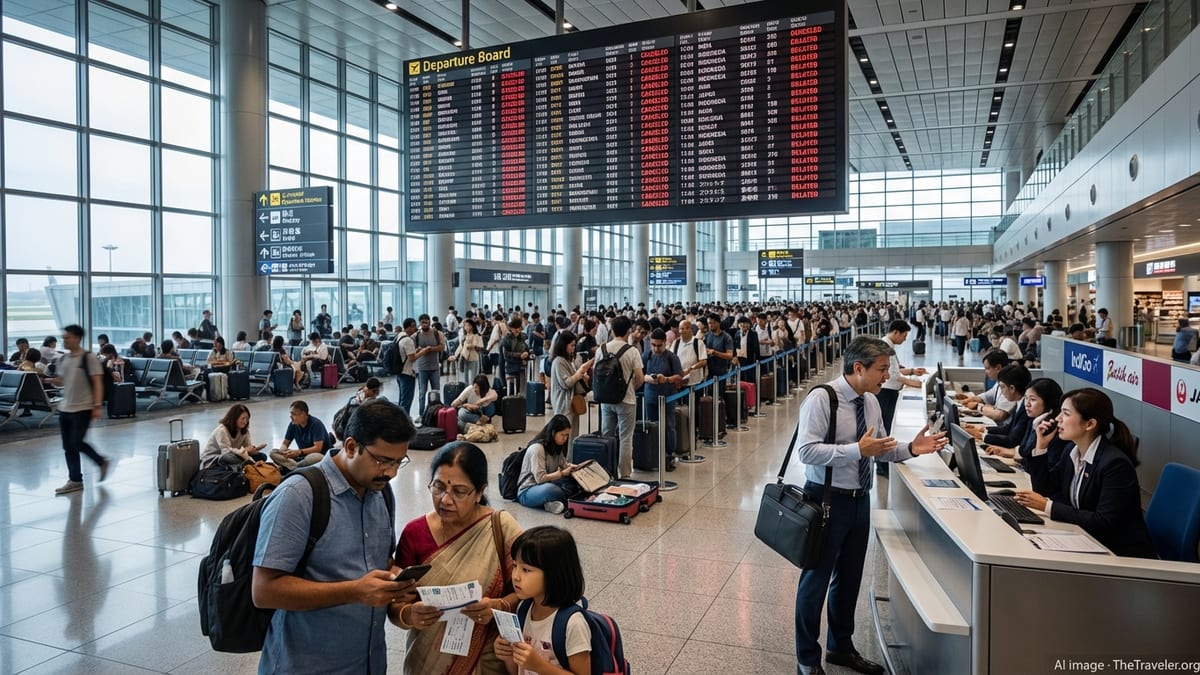
A fresh spike in flight disruptions across Asia is rippling through major hubs in China, Indonesia, Singapore, and neighboring markets, as operational data and airport departure boards point to at least 75 cancellations and 432 delays involving carriers including China Eastern, Shenzhen Airlines, Batik Air, and Garuda Indonesia, triggering significant chaos for passengers at the height of the late May travel surge.
Get the latest news straight to your inbox!
Disruptions Concentrated at Major China and Indonesia Hubs
Publicly available airport and aviation tracking dashboards for late May 2026 show dense clusters of delays and cancellations around major Chinese hubs such as Shanghai Pudong, Guangzhou, Chengdu, and Shenzhen, where China Eastern and Shenzhen Airlines operate extensive domestic and regional networks. Compiled figures for recent operating days indicate that Chinese carriers have collectively recorded hundreds of delays and dozens of cancellations in a single trading day, with China Eastern frequently listed among the hardest hit on routes connecting secondary cities to the country’s largest hubs.
Similar patterns are emerging in Indonesia, where Garuda Indonesia and Batik Air are central players in the country’s domestic and regional connectivity. Data and local coverage highlight repeated disruption on key corridors such as Jakarta to Bali and other high-density routes, with Garuda’s widebody services to Australia and the Middle East regularly operating with notable delay intervals, and Batik Air reporting schedule changes and diversions on domestic links serving Jakarta and Surabaya.
Aggregated across the region, the latest snapshots of operating performance suggest that at least 75 flights involving China Eastern, Shenzhen Airlines, Batik Air, and Garuda Indonesia have been cancelled in recent days, while more than 400 further services have operated late, in some cases by several hours. The resulting backlog has created heavy congestion at check-in counters and transfer desks, particularly at Shanghai, Shenzhen, Jakarta Soekarno Hatta, and Bali’s Denpasar airport.
The impact is not limited to point-to-point passengers. Because many of the affected flights serve as feeders into wider long haul networks, delays on short hops between Chinese and Southeast Asian cities are cascading into missed onward connections to Europe, the Middle East, and Australia, forcing rebookings and overnight accommodation for travelers who find themselves stranded mid-journey.
Operational Pressures, Weather, and Airspace Constraints Drive Chaos
Operational pressures are emerging as a recurring theme in the current disruption wave. Airline schedule adjustments, tighter aircraft utilization, and fleet rotation changes appear to be squeezing recovery time between flights, leaving limited room for irregular operations when problems arise. Publicly filed conditions of carriage and travel advisories from several of the affected airlines highlight the potential for last minute modifications to timetables, with rerouting or cancellation framed as responses to operational requirements.
Weather has also played a visible role, particularly in Indonesia’s densely trafficked airspace. Recent reports from local outlets describe Batik Air flights on routes such as Yogyakarta to Jakarta being diverted due to poor conditions around the capital’s main international gateway, an outcome that strands passengers far from their intended destination and intensifies pressure on already stretched ground handling resources. Thunderstorms and seasonal weather patterns in South and East Asia commonly trigger holding patterns, diversions, and temporary airport closures, and late May appears to be no exception.
In addition, aviation analysts point to broader regional airspace constraints and geopolitical tensions as contributing factors. Reroutings around sensitive zones in parts of the Middle East and Asia, along with periodic military exercises that temporarily restrict certain corridors, can force longer flight paths and create knock-on scheduling challenges for carriers operating tightly timed rotations between Asia, Europe, and the Gulf. When such adjustments intersect with busy holiday or business travel peaks, even modest delays can compound rapidly.
For flag carriers such as Garuda Indonesia, which is still emerging from a period of financial strain and undergoing fleet and network restructuring, these pressures add an extra layer of complexity to timetable planning. Service recovery measures, including aircraft swaps and last minute crew reassignments, can themselves generate additional disruption, especially when aircraft or crews are out of position for subsequent sectors.
Passenger Experience: Missed Connections and Overnight Airport Stays
The surge in cancellations and delays is being felt most acutely by passengers, many of whom are sharing their experiences through social media, online forums, and consumer review platforms. Narrative accounts gathered from these channels describe travelers facing abrupt cancellations on China Eastern services within China and on international routes, with some reports indicating that notice of disruption was provided only a few days or even hours before departure.
In southern China, Shenzhen Airlines passengers have described situations in which flights were cancelled with limited clarity on options for rebooking or refunds, prompting confusion about how to secure alternate journeys or financial redress. Screenshots of carrier messages and boarding pass records circulating online show some travelers resorting to third party platforms or in-person visits to ticketing offices to resolve their cases.
Across Southeast Asia, Batik Air is attracting particular scrutiny from leisure travelers heading to Indonesian resort destinations. Recent accounts from routes into Bali and Lombok describe extended delays, rolling schedule changes, and overnight waits in transit hubs such as Kuala Lumpur, with some passengers only learning of new departure times on the day of travel. Baggage issues and strict enforcement of weight allowances, reported anecdotally on several routes, are compounding traveler frustration.
Garuda Indonesia, long marketed as a full service premium option, is also under pressure. Travelers on long haul flights between Jakarta and destinations such as Sydney and Jeddah are reporting repeated late arrivals and schedule changes over the past month. While many flights are still completing as planned, clusters of delays and occasional cancellations are feeding perceptions that reliability has slipped at a time when demand for travel to and from Indonesia is growing.
China Eastern, Shenzhen Airlines, Batik Air, and Garuda in the Spotlight
The current disruption wave is focusing attention on how the four airlines at the center of the latest figures manage crisis operations and customer care. China Eastern, one of China’s largest state-linked carriers with an extensive domestic and international network, publishes detailed rules governing delays and cancellations that set out entitlements to rebooking, refunds, and basic care such as meals and accommodation in certain scenarios. However, real world experiences shared by passengers suggest that applying these rights on the ground can be inconsistent, particularly in peak periods.
Shenzhen Airlines, a significant player in China’s Pearl River Delta region, is facing similar questions. With much of its traffic concentrated in short haul domestic and regional markets, even relatively minor operational issues can cascade quickly, particularly at airports where runway and airspace capacity are constrained. Travelers reporting last minute cancellations are increasingly turning to consumer protection avenues and public complaints when responses from customer service channels are slow or unclear.
In Indonesia, Batik Air, part of the wider Lion Air Group, has grown rapidly as a full service and hybrid carrier linking secondary cities with major hubs and international gateways. This expansion has allowed the airline to capture price-sensitive leisure demand but has also coincided with recurring criticisms about schedule reliability and communication during irregular operations, especially when flights are delayed overnight or rerouted through unfamiliar airports.
Garuda Indonesia’s challenges are somewhat different, rooted in a multi-year financial restructuring and a deliberate trimming of unprofitable routes. Recent corporate filings and independent analysis highlight efforts to improve on-time performance, delay management, and service recovery, yet the latest wave of disruptions indicates that the path to consistently reliable operations remains uneven, particularly when external shocks such as weather and airspace congestion intersect with internal restructuring.
What Travelers Can Do as Disruptions Continue
With conditions remaining fluid across Asian aviation networks, front line travel experts and passenger advocacy organizations emphasize the importance of preparation and flexibility. Travelers are being encouraged to monitor flight status closely through multiple channels, including airline apps, airport boards, and independent flight tracking services, given that schedule changes may be posted at short notice and may not always be accompanied by direct notifications.
For those connecting across different airlines or tickets, building in generous layover times and avoiding the tightest possible connections can help reduce the risk of missed onward flights if an initial sector is delayed. In regions currently experiencing frequent disruption, some seasoned travelers are choosing longer but more robust itineraries operated on a single ticket, which can make it easier to secure rebooking and assistance if something goes wrong.
Consumer advocates also stress the value of understanding the basic provisions in airline contracts of carriage related to delays and cancellations, including any references to care obligations such as meals, accommodation, and ground transport when disruptions are within a carrier’s control. While regulatory compensation frameworks in Asia are generally less far-reaching than those in some other regions, clear documentation of disruption, including boarding passes, delay notices, and receipts for additional expenses, can support later claims through airline channels or travel insurance providers.
With peak summer and festival travel periods approaching, there is little sign that pressure on airline operations in Asia will ease immediately. Unless carriers can create more slack in schedules, reinforce ground handling capacity, and improve real time communication with passengers, the pattern of rolling cancellations and delays seen in recent days is likely to remain a defining feature of the region’s aviation landscape in the weeks ahead.