


More news on this day
Passengers traveling through the United Arab Emirates are facing fresh disruption as at least seven flights operated by Flydubai, Etihad Airways and Air Arabia have been cancelled, affecting services to Addis Ababa, Riyadh, Hong Kong, Islamabad, Peshawar and several other key regional hubs.
Get the latest news straight to your inbox!
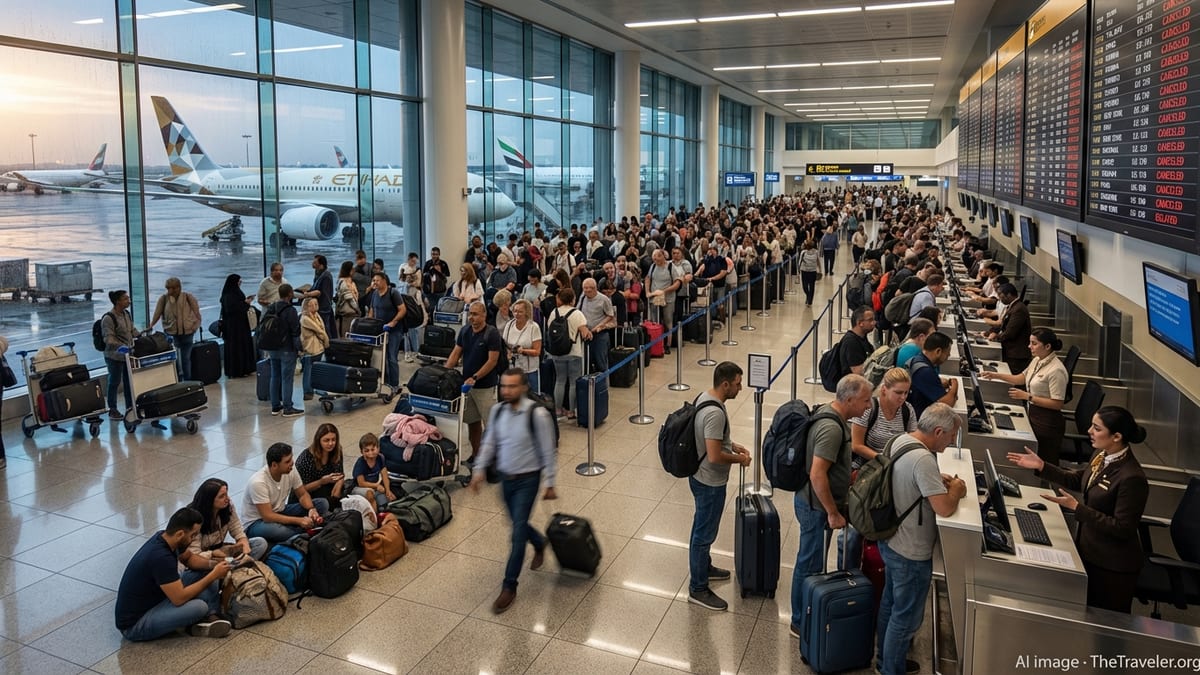
Fresh Cancellations Hit Key Regional Routes
Newly published operational data and regional aviation reports indicate that a fresh wave of cancellations has affected multiple routes from UAE airports, with services to Ethiopia, Saudi Arabia, Pakistan and Hong Kong among those impacted. The latest disruption follows months of intermittent schedule changes across the Gulf as carriers respond to volatile regional conditions and constrained airspace.
Etihad Airways, based in Abu Dhabi, has been rebuilding a limited network since March, including routes to Addis Ababa, Hong Kong, Islamabad and Riyadh. Publicly available schedule notices emphasize that the programme remains highly dynamic, with services subject to last minute changes where security assessments or airspace restrictions evolve at short notice.
Flydubai and Air Arabia, two of the UAE’s main low cost operators, have also adjusted their programmes out of Dubai and Sharjah respectively. Industry trackers and passenger accounts point to cancellations involving Pakistan routes such as Islamabad and Peshawar, as well as selected regional services that feed major Middle East hubs.
Aviation monitoring platforms show that the combined impact amounts to at least seven individual flight cancellations across the three carriers over the most recent cycle, contributing to a broader pattern of reduced and re timed operations across the UAE.
Ongoing Fallout From Regional Airspace Restrictions
The cancellations are the latest visible sign of continuing turbulence for Gulf aviation since late February, when escalations in the wider Middle East conflict prompted temporary closures and tight controls over sections of regional airspace. Airport and airline updates from March described periods in which commercial traffic was funnelled through emergency corridors, forcing carriers to pause or sharply curtail their schedules.
While full network shutdowns have eased, many routes now operate on thinner frequencies than before, and several carriers continue to publish advisories warning that flights may be cancelled or rerouted at short notice. Reports on operations at Dubai International and Abu Dhabi’s Zayed International underline that even on days when most services run, a proportion of departures and arrivals continue to be withdrawn from the schedule late in the booking cycle.
For travellers, this means that journeys which previously relied on dense daily frequencies now carry a higher risk of disruption, particularly on secondary routes into Africa and South Asia. Addis Ababa, Islamabad and Peshawar fit into this category, while demand heavy flows between Gulf hubs and Riyadh or Hong Kong are also exposed whenever geopolitical conditions tighten.
Analysts tracking Middle East aviation trends note that these rolling adjustments are likely to continue as long as regional tensions remain unpredictable and overflight approvals are granted in short increments instead of long term guarantees.
Stranded Passengers Report Last Minute Changes
The practical impact of these cancellations has been most visible in traveller accounts from Pakistan and the wider region. Social media and online travel forums have carried multiple recent reports from passengers booked on Flydubai, Etihad and Air Arabia services between the UAE and cities such as Islamabad and Peshawar who describe flights being cancelled or pushed back by several days.
Some passengers detail being forced to extend hotel stays, rebook on alternative airlines at higher fares or reroute via third country hubs to reach their destinations. Others have reported receiving schedule change notifications only shortly before departure, limiting their ability to adjust land arrangements or onward connections.
Travel publications that track Middle East operations have previously highlighted days when hundreds of services across multiple Gulf airports were delayed or cancelled, leaving thousands of travellers in transit terminals for extended periods. The newly reported seven flight cancellations across the three UAE carriers form part of this wider picture of unpredictable operations rather than an isolated incident.
Consumer advocates in the region continue to urge travellers to factor in potential disruption when planning itineraries, especially on long haul journeys that depend on tight connections through UAE hubs.
Rebooking Options, Vouchers and Refund Challenges
UAE airlines have publicly outlined a range of options for customers affected by cancellations, but the practical experience of passengers has varied. Guidance on carrier websites typically points to free rebooking within defined travel windows, the ability to reroute in some circumstances, and in certain cases eligibility for refunds.
Etihad has previously detailed policies allowing ticket holders on cancelled flights issued before late February to rebook onto alternative services without change fees for travel within a set period. Similar frameworks are in place at Flydubai and Air Arabia, where rebooking or travel vouchers are often promoted as the primary remedy when flights do not operate as scheduled.
However, travel press coverage and online accounts indicate that some passengers face delays in receiving refunds or find that reimbursements are issued as airline credit rather than returned to the original form of payment. Others report difficulties in contacting customer support during peak disruption, especially when call centres and chat services are overwhelmed by simultaneous schedule changes.
Specialist aviation and consumer sites advise affected travellers to document all communication with airlines, keep receipts for unavoidable additional expenses such as accommodation and meals, and review both airline conditions of carriage and any applicable travel insurance coverage, particularly where disruptions are linked to conflict related events.
What Travellers Should Do Now
With the situation across the region still fluid, industry experts recommend that passengers flying to or from the UAE build additional flexibility into their plans. Checking flight status frequently in the days and hours before departure, ensuring that airlines have up to date contact details, and considering longer layovers for critical connections can all reduce the impact of any late schedule change.
Travellers heading to destinations that have recently seen cancellations, including Addis Ababa, Riyadh, Hong Kong, Islamabad and Peshawar, may wish to review alternative routings or backup options, particularly if they are travelling for time sensitive reasons. Those already holding tickets are encouraged by travel advisories to monitor airline announcements closely, as carriers sometimes add extra flights or upgauge aircraft when conditions improve and demand outstrips available capacity.
Observers of Gulf aviation stress that despite the headline grabbing cancellations, the majority of flights on major UAE airlines are operating, albeit with occasional delays and reroutes. For now, however, the latest cluster of seven cancelled services underscores that travel through the region remains vulnerable to sudden shifts, and that travellers should approach upcoming trips with contingency plans in mind.