


Airport lounges used to be the preserve of business class road warriors. Today, brands like Aspire have turned lounge access into something almost any traveler can buy, bundle or tap into through a credit card. But is paying for an airport lounge package actually better value than simply booking an Aspire Lounge directly, and what is the on-the-ground experience really like in 2026?
Get the latest updates straight to your inbox!
What Is Aspire, Really?
Aspire is the dedicated airport lounge brand of Swissport, the Swiss aviation services company that also handles ground operations and cargo for airlines around the world. In recent years Swissport has aggressively expanded Aspire as a global hospitality arm, adding new lounges and refurbishing older spaces in Europe, North America, Africa and Australia. Corporate material from Swissport notes that the Aspire network now covers around 100 lounges globally when you include both Aspire-branded spaces and co-branded lounges such as Club Aspire at London Heathrow.
The key point for travelers is that Aspire is an independent lounge brand. You do not need to fly a particular airline or hold elite status to get in. Instead, Aspire partners with the big lounge access programs like Priority Pass, DragonPass and LoungeKey, while also selling day passes directly on its own site and through resellers. In practice this means you will often see Aspire Lounges listed next to airline-branded lounges when you search for your airport in an app.
Typical Aspire locations are in mid to large airports where there is enough demand from leisure and business travelers but not always enough premium-cabin traffic to justify multiple airline lounges. Examples include San Diego and Ontario in California, Copenhagen, Geneva, Manchester, Inverness and Kilimanjaro, along with a growing presence in Canadian airports like Montreal and Quebec City. At London Heathrow, Club Aspire lounges in Terminals 3 and 5 serve as the main independent options alongside airline and alliance clubs.
Because Aspire focuses on being a broadly accessible brand, it sits at an interesting intersection between pay-per-use comfort and membership-based lounge ecosystems. That makes it a useful test case when deciding whether a lounge package is worth the cost for your particular travel pattern.
Inside an Aspire Lounge: What You Actually Get
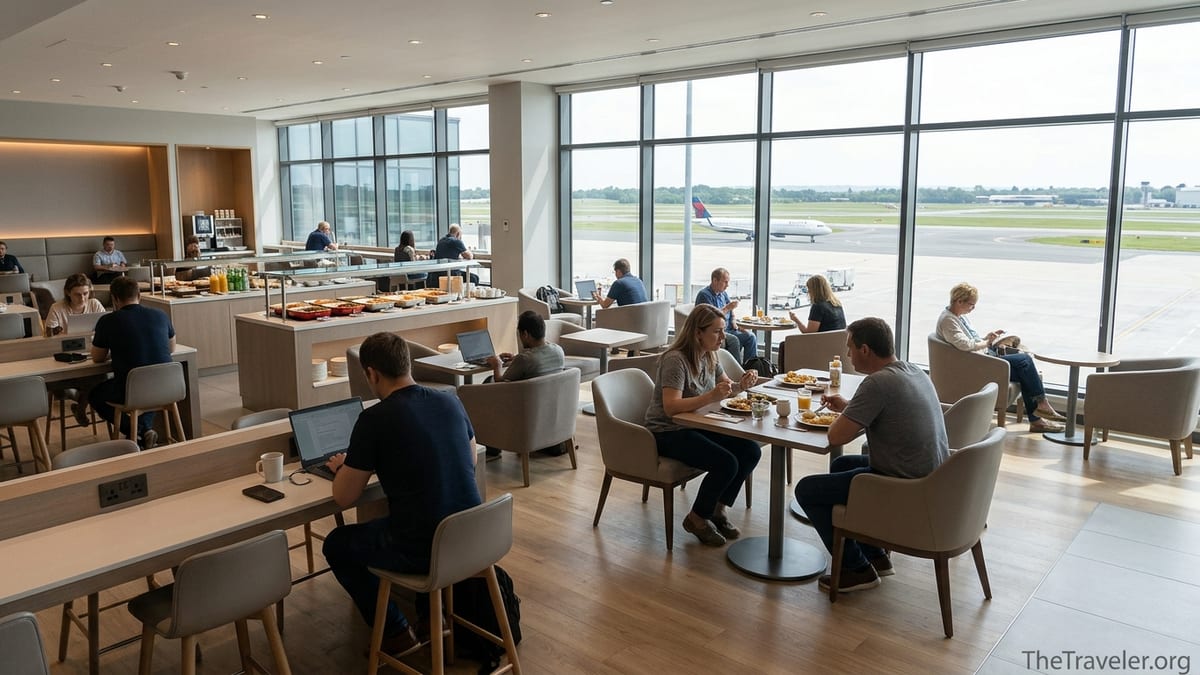
Across the network, Aspire Lounges are designed as calm, moderately upscale spaces that deliver the essentials: reasonably comfortable seating, hot and cold buffet food, a selection of alcoholic and soft drinks, Wi‑Fi, power outlets and clean restrooms. Many locations also add business corners with desks, printers or meeting tables, and some long-haul hubs such as San Diego include shower facilities so you can freshen up before or after a flight.
Food quality varies by location and time of day, but you can typically expect a breakfast spread of pastries, cereal, fruit, yogurt and at least one or two hot items such as scrambled eggs or bacon. Lunchtime and evening rotations usually include a couple of hot dishes, salads, soup and snack items. Drink offerings usually feature self-serve soft drinks, coffee from a machine, basic spirits, wine and a draft or bottled beer. Premium cocktails or top-shelf labels, if available, may carry a surcharge.
Seating layouts tend to mix armchairs by the windows, bar-style high tables with charging points, and quieter corners with softer lighting. At newer Aspire Lounges like those in Ontario and refurbished sites such as San Diego, floor-to-ceiling windows offer apron views, which makes a significant difference to the overall feel. In more compact outstations, such as the lounge at Inverness, the space is smaller and more functional, but still a notable upgrade over a crowded gate area.
A realistic expectation is important. Aspire is not trying to compete with the most exclusive airline first-class lounges or invitation-only spaces. Think of Aspire as a solid mid-tier product: better than most standard Priority Pass partners in the United States, roughly similar to many contract lounges in Europe, and occasionally excellent in locations where the space and catering budget allow.
How Aspire Works With Lounge Packages
From a traveler’s perspective, Aspire Lounges matter because they are heavily integrated into the big lounge access packages. The brand publicly confirms partnerships with Priority Pass, DragonPass and LoungeKey at most of its locations, with notable exceptions such as Tokyo Narita and some Club Aspire lounges that operate under different arrangements. That means if you hold a lounge package through a credit card or a direct membership, there is a good chance an Aspire Lounge will appear as an option at your departure airport.
Take Priority Pass as an example. Direct membership as of April 2026 is advertised in three tiers: Standard at about 99 US dollars per year, Standard Plus at about 329 dollars and Prestige at about 469 dollars, with most visits on the lower tiers costing roughly 35 dollars per person. Exact pricing varies slightly by currency and promotions, but this gives a reasonable benchmark. Many premium credit cards in the United States, the United Kingdom and Asia offer a Priority Pass Select or equivalent membership that waives some or all visit charges for the cardholder and sometimes for guests.
LoungeKey, which many Mastercard products bundle, works a bit differently. Rather than a separate plastic card and standalone fees, LoungeKey access is embedded in your eligible credit card. You present that card at the desk or use it to book online, and the issuer decides whether visits are unlimited, capped per year or charged per entry. DragonPass is yet another network that partners with banks in Europe and Asia, and it increasingly lists Aspire Lounges in its app, though local limitations at busy airports can apply.
The practical impact is that Aspire is often the first-line lounge for package holders. In Copenhagen, for example, travelers report that the Aspire Lounge near the A gates is the primary Priority Pass and LoungeKey option in the Schengen area, while in smaller airports like Inverness, Aspire may be the only lounge in the terminal. When your package works, you simply check in with your membership and boarding pass, find a seat and treat the food and drinks as included.
Comparing Direct Aspire Day Passes With Lounge Packages
To judge whether lounge packages are worth it, you need to compare them with simply buying access to Aspire directly when you actually need it. At major European hubs, advance-booked day passes for Aspire typically run in the range of 30 to 45 US dollars per person, depending on exchange rates, time of day and whether you book through Aspire’s own site or a reseller. For example, travelers commonly see prices around 38 to 42 US dollars equivalent for a three-hour slot at Club Aspire in London Heathrow Terminal 3, with similar pricing at some Swiss and German airports.
Walk-up pricing is often a bit higher. At busy times, Aspire may not accept unbooked walk-ups at all if the lounge is near capacity, a situation that has become more frequent at constrained locations such as Heathrow Terminal 5 or Montreal during evening bank departures. In those periods, having a pre-booked slot or access through a high-tier package can make the difference between enjoying a quiet workspace and eating at a crowded terminal restaurant.
Now compare this with a typical lounge package. A direct Priority Pass Standard Plus membership at about 329 dollars includes 10 visits per membership year before per-visit charges start. If you are certain you will use all 10 visits at Aspire or equivalent lounges, your effective cost is about 33 dollars per entry, roughly on par with a pre-booked Aspire pass, before you factor in guest charges. However, if you only manage four lounge visits in a year, your effective cost jumps to over 80 dollars per visit, far more than buying individual Aspire passes.
This is where credit-card-linked packages change the equation. A United States premium travel card with a 550 to 695 dollar annual fee that includes a Priority Pass Select membership with at least 10 or more free visits can make lounge access feel “free” if you are already using the card for other benefits such as airline credits, travel protections and points earning. Similarly, some European bank cards bundle DragonPass visits at 25 to 30 euros of imputed value per entry, which can easily beat paying full cash price at Aspire if you travel several times a year.
Real‑World Scenarios: When Aspire Shines and When It Disappoints
How this plays out at the airport level is mixed, and that nuance is critical. In cities where Aspire has been able to build or refurbish generous spaces, feedback trends positive. For instance, travelers stopping at the Aspire Lounge in Inverness often remark that it is impressive for such a small regional airport, with a quiet atmosphere, decent food and a sense of local character. In San Diego, the refurbished Aspire Lounge in Terminal 2, built out from a previous contract lounge, frequently earns praise for its runway views and the usefulness of its showers on long connections.
In contrast, some of the busiest Aspire and Club Aspire locations at Heathrow have built a reputation for crowding during morning and evening peaks. Several recent firsthand accounts note 15 to 20 minute waits to get in, limited seating and buffet areas that struggle to keep up with demand at Terminal 5 in particular. While conditions ebb and flow, it is fair to say that at the most congested hubs, Aspire can feel more like an upgraded cafeteria than a tranquil retreat, especially for travelers used to premium airline lounges with stricter capacity controls.
Outside Europe, experiences can be similarly uneven. In Montreal, for example, the newer Aspire-branded lounge improved overall lounge availability but also introduced restrictions. Some travelers arriving with DragonPass credentials report being turned away during evening peaks when the lounge prioritizes airline business-class and certain credit-card guests. Others find that their package still works but the space is crowded enough that seats are scarce. Conversely, at mid-tier airports like Ontario, Aspire’s spaces can feel almost like private clubs during quieter periods of the day, making even a short 90‑minute visit worthwhile.
The takeaway is that the value of Aspire plus a lounge package is highly airport and time dependent. A single calm, productive three-hour session before a long flight, with two meals and a couple of drinks, can justify the cost of both a day pass and a chunk of your package’s annual fee. A rushed, overcrowded 40‑minute visit where you struggle to find a seat might not be worth more than a quick stop at a decent airport restaurant.
Crunching the Numbers: Which Package Works Best With Aspire?
To decide whether a lounge package makes sense for your Aspire use, start with your actual travel history, not your aspirational plans. Look back over the last 12 months and count how many times you flew from airports with an Aspire Lounge and had at least 90 minutes to spare before departure. If that number is fewer than four, a paid membership like direct Priority Pass is unlikely to beat simply buying the occasional Aspire day pass.
Consider an example. Suppose you take three international round trips per year from a European hub where Aspire is your main independent lounge option. On two departures you have time to visit a lounge, and on the third the timing does not work out. If a pre-booked Aspire visit costs the equivalent of 40 dollars, your total annual lounge spend for those two visits would be about 80 dollars. In that case, a standalone 329‑dollar membership that may or may not get fully used looks expensive relative to the benefit.
Now flip the scenario to a consultant or remote worker who flies twice a month from airports where Aspire or its partners dominate the lounge landscape. If that traveler manages even 15 lounge visits per year, and holds a Priority Pass Select membership via a premium card with no incremental visit charge for the cardholder, the effective cost per visit can easily drop below 20 dollars once the card’s broader benefits are considered. For that profile, Aspire plus a lounge package is a clear lifestyle and productivity upgrade.
Guest policies are another important factor. In 2026, issuers have steadily tightened rules around bringing families or colleagues into lounges for free. Many United States cards that once granted unlimited free guests at Priority Pass lounges now either charge around 35 dollars per guest per visit or require a higher-fee premium tier. If you routinely travel as a couple or with children, you should treat guest entries as full‑price visits when you do your math, whether that cost is billed explicitly or baked into your card’s annual fee.
Tips for Getting the Most Out of Aspire Lounges
Whatever package you hold, a bit of planning dramatically improves your Aspire experience. First, check capacity notes and opening hours in your lounge app and, if possible, pre-book a slot on busy travel days. Heathrow, Amsterdam, Geneva and Montreal are all examples of airports where Aspire lounges can hit capacity and temporarily restrict entry for walk‑ins and some package holders at peak times. A confirmed booking or early arrival within the lounge’s permitted three-hour window before departure gives you a better shot at getting in.
Second, manage expectations around food and drink. Aspire generally offers a step up from terminal fast food in both choice and cost effectiveness, especially in airports where restaurant prices are high. However, the buffet is designed for self-service convenience rather than fine dining. Plan to treat the lounge more like a casual bistro where you can have a proper meal and a drink while working, rather than a destination restaurant. If you have strict dietary needs, review recent traveler photos or descriptions for your specific location to ensure there are suitable options.
Third, use Aspire’s spaces strategically. In airports where security or immigration wait times are unpredictable, it can make sense to clear formalities early and use the lounge as your buffer zone rather than gambling on cutting it close. The availability of showers at some Aspire locations is particularly valuable on long multi‑segment itineraries. A 20‑minute shower and change of clothes can materially improve how you feel on arrival, which many travelers underestimate when they focus only on the headline cost of entry.
Finally, treat your lounge package as one tool in a broader comfort strategy. At airports where Aspire is crowded or not available airside for your terminal, it may be better to keep your membership in your back pocket and instead use a quiet gate, a paid priority security lane or even a landside hotel day room. The best value comes from using Aspire when it genuinely enhances your trip, not from forcing every airport visit into a lounge just because you technically can.
The Takeaway
Viewed in isolation, Aspire Lounges deliver a consistent, decent-quality experience that can turn a stressful airport environment into a workable, occasionally pleasant space to eat, drink and get tasks done. Facilities, catering and ambiance vary by airport, but the baseline product is usually good enough that frequent economy travelers see it as an attractive upgrade, especially on long or multi‑leg journeys.
When you layer lounge packages on top of Aspire, the value equation becomes more complex. Direct memberships like Priority Pass Standard Plus or Prestige only make sense if you realistically expect to use a lounge at least eight to ten times per year, and even then your effective per‑visit cost often mirrors or only slightly beats advance-booked Aspire passes. For many travelers, especially those who fly a few times a year from Aspire airports, buying occasional day passes remains the most straightforward and financially sensible choice.
The calculus tilts in favor of packages when access is bundled into a credit card or bank account you already hold for other reasons. In that context, Aspire often becomes a genuinely valuable perk rather than a separate purchase. Still, crowding and guest policy changes in 2026 mean that even package holders should adjust their expectations: think of Aspire as a generally comfortable shared workspace and dining room, not a guarantee of luxury or privacy.
If you are honest about your travel habits, check which airports you actually use and run the numbers with conservative assumptions, you can decide whether Aspire plus a lounge package fits your reality. For some, it will be a game-changing improvement to every trip. For others, an occasional paid visit before a particularly long flight will deliver most of the benefit without the ongoing cost.
FAQ
Q1. What is the main difference between Aspire Lounges and airline lounges?
Aspire is an independent brand that sells access to any eligible traveler, while airline lounges are usually reserved for that airline’s premium-cabin passengers and elite members. Aspire focuses on broad access via day passes and lounge packages rather than tying entry to a specific carrier or frequent-flyer status.
Q2. How much does it typically cost to use an Aspire Lounge without a lounge package?
Pricing varies by airport, but many European Aspire Lounges charge roughly the equivalent of 30 to 45 US dollars per person for a pre-booked three-hour visit, with walk-up prices sometimes higher and subject to capacity.
Q3. Which lounge packages most commonly work at Aspire Lounges?
Most Aspire locations accept Priority Pass, DragonPass and LoungeKey, although a few lounges, such as some Club Aspire sites and certain co-branded locations, may have different rules. It is important to check your specific lounge in the relevant app before traveling.
Q4. Are Aspire Lounges usually crowded?
Crowding depends heavily on airport and time of day. Busy hubs like London Heathrow or Montreal can see Aspire Lounges reach capacity during morning and evening peaks, while regional airports such as Inverness or some mid-size US airports are often much quieter outside rush periods.
Q5. Do Aspire Lounges offer good food and drinks compared with terminal restaurants?
In general, Aspire provides a buffet with hot and cold dishes, snacks and a selection of alcoholic and soft drinks that compares favorably with paying restaurant prices, especially in high-cost airports. The food is designed to be practical and satisfying rather than gourmet.
Q6. Is it better value to buy a direct lounge membership or just pay for Aspire as needed?
If you only expect to use a lounge a few times per year, paying for Aspire visits individually is usually more economical. Direct memberships such as Priority Pass tend to become good value only once you are using lounges at least eight to ten times annually.
Q7. Can I bring guests into an Aspire Lounge with my lounge package?
Most packages allow guests, but the cost and number of free entries depend on your specific card or membership. Many credit cards now charge around 30 to 35 dollars per guest per visit, so it is important to treat guest entries as a real cost when evaluating value.
Q8. Do Aspire Lounges have showers and quiet work areas?
Some Aspire Lounges, particularly at long-haul hubs such as San Diego and certain European airports, offer showers and designated business areas with desks and power outlets. Smaller locations may provide only basic seating and dining areas, so it is worth checking amenities for your specific lounge in advance.
Q9. How early can I enter an Aspire Lounge before my flight?
Most Aspire Lounges permit entry up to about three hours before scheduled departure, though local rules can vary slightly. Booking platforms and lounge apps typically display the maximum stay allowed for each location.
Q10. If my lounge package is included with a credit card, is Aspire access really free?
Access may feel free at the point of use, but its cost is effectively bundled into your card’s annual fee and any guest charges. It still makes sense to count how many lounge visits you are likely to make each year to decide whether that card and its lounge access justify their overall price.