


Aspire Lounges sit in a sweet spot between airline business lounges and basic terminal seating. They are widely available, usually more affordable than airline-branded lounges, and easy to access through day passes and popular cards. Yet many travelers are surprised when they discover that fees vary widely by airport, and that even with Priority Pass or a prepaid booking, entry is never absolutely guaranteed. Here is what you really need to know about Aspire Lounge pricing and your chances of getting through the door in 2026.
Get the latest updates straight to your inbox!
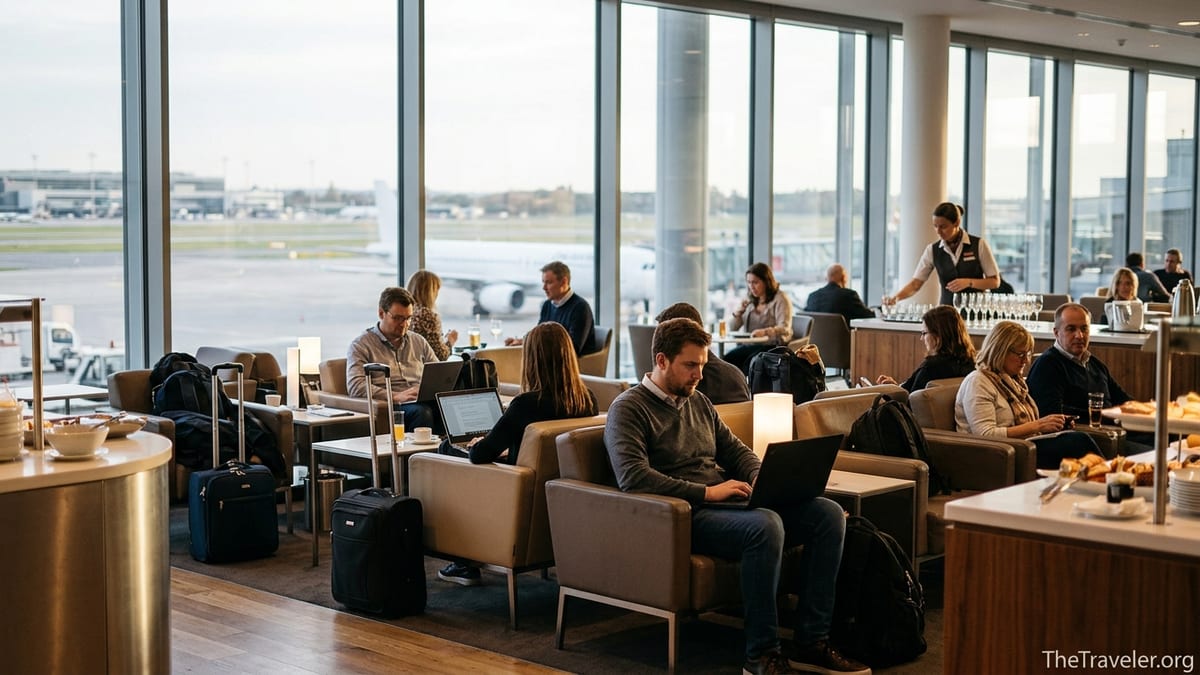
Who Actually Runs Aspire Lounges and Where You Will Find Them
Before talking about money and access, it helps to understand what Aspire is. Aspire Executive Lounges is the lounge hospitality brand of Swissport, a major global ground-handling company based near Zurich. Swissport provides check in, baggage and cargo services for hundreds of airlines around the world, and over the last three decades has built Aspire into one of the most recognizable independent lounge networks in Europe and beyond. The first lounge under the brand opened in Manchester in the late 1980s, and the portfolio has grown steadily since.
Today Aspire operates and co-brands more than 100 lounges in roughly 20 countries, with a particularly strong presence in the United Kingdom and continental Europe, and a growing footprint in Canada, Africa, the Middle East and Asia. Examples many travelers will recognize include Aspire lounges at London Heathrow Terminal 3, Amsterdam Schiphol, Zurich, Copenhagen, Calgary, Montreal, Ottawa, San Diego and Ontario in California. In some airports, the brand appears as Club Aspire or The House by Aspire, reflecting joint ventures or premium sub-brands geared to specific markets.
Aspire’s role also extends beyond its own logo. Swissport and Aspire operate lounges on behalf of other brands and alliances, such as certain oneworld and Star Alliance facilities, and they manage lounges for banks and card issuers in markets like Canada and South America. For a typical traveler, that means you may be sitting in an Aspire-operated lounge even when the sign above the door carries an airline or bank name. The pricing and access rules in these contract lounges may differ from the classic Aspire-branded spaces.
Because Aspire is an independent operator rather than an airline, it has to fill seats from a patchwork of sources: direct-paying guests, airline contracts, corporate agreements and membership programs like Priority Pass and DragonPass. That mix is at the heart of why fees vary and why access can tighten suddenly at peak times, even if the lounge looks like a single uniform brand from the outside.
How Aspire Lounge Fees Work in Practice
Aspire promotes itself as open to any passenger regardless of airline or cabin, which is accurate, but “open” does not mean “one price fits all.” The same underlying product of comfortable seating, snacks, drinks and Wi-Fi is priced differently depending on airport costs and demand. Across the network, a typical Aspire day pass booked in advance on the company’s website usually falls in the equivalent of about 35 to 50 US dollars per adult. For example, at regional UK airports, prebooked access often comes in around 34 to 40 pounds, while at major hubs such as Heathrow and Amsterdam you are more likely to see online prices in the mid-40s to low-50s when converted to dollars.
Walk up prices at reception are usually higher than advance online rates. Aspire itself notes that pay-on-entry costs are set at or above prebooking fees and are always subject to availability. In practice, that means a traveler arriving at London Luton or Birmingham without a reservation might be quoted a price that is 5 to 10 pounds higher than what would have been available online, and may also be told that spaces are reserved for airline-invited guests or those who prebooked. In Canadian locations such as Calgary or Montreal, third-party guides routinely show walk up rates in the range of 50 to 60 Canadian dollars, again with prebook discounts when space allows.
Some Aspire lounges are also accessible through regional annual passes. One example is the Aspire and Swissport Lounge annual membership sold in the United Kingdom and certain nearby countries, roughly priced in the mid-200 pound range per year for unlimited visits to participating lounges in the UK, Canada, Denmark and the Netherlands. For a frequent regional traveler hopping monthly between London, Amsterdam, Copenhagen and Toronto, that membership can quickly work out cheaper than repeated day passes. For an occasional vacationer flying once or twice a year, individual prebooked visits will almost always be more economical.
Children are usually charged reduced rates or, at some locations, admitted free below a certain age when accompanied by a paying adult, but policies vary by lounge. The main cost lever that Aspire controls consistently is time: standard bookings typically cover a stay of up to three hours before departure, with possibilities to buy extra time at selected lounges. Trying to outstay the standard window is one of the most common triggers for extra fees or a polite request to leave.
Membership Cards, Priority Pass and the Myth of “Free” Access
For many travelers, Aspire is less about buying a separate lounge ticket and more about using an existing membership or credit card. Aspire works with a wide range of access programs, including Priority Pass, DragonPass, Lounge Key and Diners Club, and with proprietary airline and bank schemes. In the United States, a common scenario is a traveler holding a bank-issued Priority Pass Select membership via a premium card such as Capital One Venture X or certain Chase or Citi products, walking into the Aspire lounge at San Diego or Ontario and presenting the digital membership at the reception desk.
The key truth is that this access is not truly “free.” The cost has been bundled into the annual fee you pay for the card or membership. Still, at the point of use, you will often be admitted without an additional payment, sometimes with complimentary guest access built in. For example, some Priority Pass Select memberships issued by US banks allow the cardholder plus two guests at no extra charge, while additional guests incur a per-visit fee charged back to the card, generally in the 30 to 35 dollar range. Those terms are controlled by the card issuer and Priority Pass, not by Aspire itself.
Because Aspire partners with many overlapping programs at once, staff will typically ask to see both your lounge membership (such as the Priority Pass QR code) and your boarding pass. The boarding pass confirms that you are departing that same day from the correct terminal and that your stay will not exceed the allowed time before departure, usually three to four hours. If your card or membership has expired in the background, the lounge’s system will reject the swipe even if the physical card still shows a date in the future. Travelers holding co-branded cards like the Hilton Honors Aspire credit card have occasionally reported being turned away at Aspire and other lounges when the issuing bank ended Priority Pass benefits, despite the printed card still looking valid.
Another common misunderstanding around memberships is reciprocity. Many travelers assume that if they can see an Aspire lounge in their Priority Pass app, they are guaranteed free entry for themselves and multiple guests at any time. In reality, each partner lounge has its own capacity rules, operating hours and sometimes caps on the number of Priority Pass or DragonPass visitors it will accept in a given hour. That is why you might breeze into the Aspire lounge at Calgary in the middle of a weekday but face a long wait list when trying the same at London Gatwick on a Sunday morning.
Access Success Rates: Why Being Turned Away Is Becoming More Common
Unlike an airline lounge tied to specific premium tickets, Aspire tries to juggle several different streams of demand at once. It must honor prebooked day passes, airline-invited business class guests, annual members and walk up visitors, all while taking in guests from large third-party programs like Priority Pass and Lounge Key. When flights are delayed or peak departure waves hit, that mix can overwhelm the lounge’s comfortable capacity even if it technically still meets fire-code limits. The result is a rising number of travelers being told that access is temporarily restricted, especially during evening peaks and holiday seasons.
A traveler at Ontario International Airport in California in late summer, for example, might find that the Aspire lounge in Terminal 2 admits Priority Pass guests without any wait around midday, but starts turning away non-booked visitors around the 9 pm bank of departures as transcontinental and Mexico flights bunch together. Online listings even flag that access “may be restricted due to space constraints” during late evening hours. Similar anecdotes from London Gatwick, Amsterdam and Heathrow describe walk up and membership guests facing 30 to 60 minute waits or outright denial when the lounge is already full of airline-contracted passengers and prebooked day pass holders.
It is impossible to quote a universal “success rate” for getting into Aspire with a card or day pass, because conditions vary by airport, season and time of day. However, patterns are clear enough to guide expectations. At secondary airports with limited premium traffic, such as some regional UK fields or mid-sized Canadian cities, holders of Priority Pass or prebooked Aspire passes still report high success rates, especially outside the busiest morning bank. At global hubs like Heathrow or Amsterdam, and at leisure gateways like Malaga or Faro in high summer, the odds drop noticeably at peak times. Think of your membership not as a guaranteed reservation but as a strong discount voucher that works smoothly when the lounge has space and loses power when it does not.
Even prebooked access is not absolutely bulletproof, though it is close. When you book directly through Aspire’s website, your place is reserved within a defined entry window and you are refunded or reprotected in rare cases when operational disruptions force the lounge to close. In practice, travelers with confirmed bookings are among the last to be turned away in a crowding situation. They might face a short wait for seating, but they are far less likely to be denied outright compared with walk up or membership-only guests arriving at the same time.
Time Limits, Overstays and Other Hidden Frictions
Another aspect that shapes the real-world success of a lounge visit is time. Aspire, like many independent lounges, usually defines a standard stay of three hours. This is typically enforced through the time printed on your boarding pass and, in some locations, through the system that records your lounge entry time. If you arrive five hours before your departure hoping to work for a full day in comfort, you may be told to come back later or, at minimum, to leave once you reach your booked limit.
Policies vary slightly by airport. At Heathrow Terminal 3, for instance, travelers planning a long layover sometimes ask whether Aspire or Club Aspire will let them in more than three hours ahead of their next flight. Responses suggest that staff are often flexible when the lounge is quiet, but will fall back on the formal three hour rule during busy periods to keep seats turning over. In North American locations, such as San Diego, three-hour limits are also commonly referenced, and guests approaching their limit may receive a friendly reminder from staff if the lounge is filling up.
Alcohol consumption can also impact your stay. Aspire follows airline and airport rules and applies a “fit to fly” policy that allows staff to ask guests to limit their drinking or, in more serious cases, to leave the lounge. That may sound harsh, but from the operator’s perspective, removing an intoxicated guest avoids potential issues at the boarding gate that could also reflect badly on the lounge. From the traveler’s perspective, it is another reminder that paying a fee does not give unlimited rights, and that discretion and moderation will quietly improve your odds of a smooth visit.
A final friction point is documentation. To get in, you will need to show your lounge booking or membership plus the boarding pass for the same day and terminal. Forgetting to download your Priority Pass card to your phone, or arriving with a boarding pass for the wrong terminal, will often lead to an awkward queue-side scramble to sort things out. Technically, Aspire staff cannot bypass this requirement, even if you insist that you have an eligible card somewhere in your email. Much like a hotel desk at check in, they need a live record in their system that can be billed properly and audited later.
Real-World Cost Calculations: When Aspire Is Worth It
Putting theory aside, the key question for most travelers is simple: when does paying Aspire’s fees or carrying the right card actually deliver good value? Consider a typical family of four flying economy from a UK regional airport during school holidays. If an Aspire prebooked rate is around 36 pounds per adult with a discount for children, the total may come to roughly 110 to 120 pounds for up to three hours of snacks, soft drinks and Wi-Fi. In a crowded terminal where a sit-down restaurant could easily cost 15 to 20 pounds per person for a single meal and where finding four seats together is difficult, that lounge visit can feel like decent value, especially if you plan to have a substantial breakfast and drinks.
Contrast that with a solo business traveler flying through Amsterdam on a short hop who already holds an airline ticket that includes lounge access, for example a business class fare on a SkyTeam or Star Alliance carrier. Buying a separate Aspire pass in that scenario would usually be redundant unless the airline’s own lounge is closed, overcrowded or inconveniently located. In some cases Aspire runs the contract lounge for the airline anyway, so the separate logos mask a single underlying product. Checking which lounge your airline actually uses at that airport can avoid double-paying for the same seat.
For US-based travelers, a common comparison is between using Aspire via Priority Pass and investing in a premium credit card that costs upwards of 550 dollars per year but offers a larger range of lounges. If you typically take two or three international trips a year and value quiet work time before flights, the combination of Aspire and other third-party lounges reachable with Priority Pass can justify the card fee, especially at airports like San Diego or Ontario where Aspire is often the only non-airline lounge option. If you mostly fly short domestic routes from hubs dominated by airline lounges, you might be better served by a card tied directly to your main carrier instead.
There are also cases where Aspire is simply not the best choice on the day. At Heathrow Terminal 3, for instance, travelers with broad lounge access might compare Aspire or Club Aspire with airline lounges such as those operated by Cathay Pacific, Qantas or American Airlines. Those airline lounges can offer higher-end dining, better showers and quieter spaces, although they are generally restricted to business and first class passengers or elite status holders. In other airports, Aspire competes with other independent brands such as Plaza Premium or No1 Lounges, which may offer slightly different food, design and crowding profiles at similar price points.
The Takeaway
Strip away the marketing language and Aspire Lounges are best understood as flexible, mid-range airport lounges that sell comfort by the hour to a mix of direct customers, airlines and membership programs. Their fees are not extreme by lounge standards, typically landing in the 35 to 50 dollar range for day passes when booked in advance, but they are high enough that you should think deliberately about how often you fly and what you value most during your time at the airport.
Your chances of getting in depend heavily on timing, airport and the way you access the lounge. A direct prebook with Aspire gives the strongest protection in busy periods, with membership programs like Priority Pass following behind as powerful but not guaranteed options. Walk up visitors relying on spare capacity are at the bottom of the priority ladder, particularly during evening departure waves and holiday rushes.
If you view Aspire as a certainty, you are likely to be frustrated the first time a “lounge full” sign greets you at the door. If you view it as a comfortable upgrade that often works, especially when you plan ahead, it can meaningfully improve the travel experience without breaking the bank. The real truth about Aspire’s fees and success rates is somewhere in between the promise of unlimited lounge access and the reality of crowded terminals: access is widely available, reasonably priced for what it offers, but always subject to the limits of space and time.
FAQ
Q1. How much does an Aspire Lounge typically cost if I pay cash?
Most Aspire day passes fall in the equivalent of about 35 to 50 US dollars per adult when booked in advance, with walk up prices often a little higher depending on the airport.
Q2. Is access guaranteed if I have Priority Pass or another lounge membership?
No. Priority Pass, DragonPass and similar memberships give you eligibility to enter, but Aspire can still restrict access or place you on a wait list if the lounge is full.
Q3. Does prebooking an Aspire Lounge visit mean I cannot be turned away?
Prebooking offers the strongest protection and you are very unlikely to be turned away, but extreme crowding or operational issues can still lead to delays or rare cancellations with refunds.
Q4. How long can I stay in an Aspire Lounge on a standard visit?
Most Aspire lounges set a standard stay of up to three hours before your scheduled departure time, with some locations allowing extensions for an extra fee when space permits.
Q5. Can I use Aspire Lounges if I am flying economy?
Yes. Aspire is an independent lounge brand and welcomes eligible guests regardless of airline or cabin class, as long as you have a valid access method and boarding pass.
Q6. Are food and alcoholic drinks included in the Aspire Lounge fee?
Light meals, snacks, soft drinks and many alcoholic beverages are usually included, though some premium spirits, champagne or a la carte dishes may carry extra charges at certain locations.
Q7. What are my chances of getting into an Aspire Lounge without a reservation?
At quieter airports and off peak times your chances are good, but at major hubs during busy periods you may face a wait or be refused if prebooked and airline guests already fill the lounge.
Q8. Do children pay full price to enter Aspire Lounges?
Often children pay reduced rates or may enter free below a certain age when accompanied by a paying adult, but exact child pricing depends on the individual lounge and country.
Q9. Can I enter an Aspire Lounge on arrival rather than before departure?
Most Aspire access rules are written for departing passengers only, and many lounges will not admit arriving travelers unless a specific local arrangement explicitly allows it.
Q10. How can I improve my chances of Aspire Lounge access during busy times?
Booking in advance through Aspire, arriving within the three hour window before departure, avoiding peak holiday periods when possible and carrying a backup plan in the terminal all help improve your odds.