


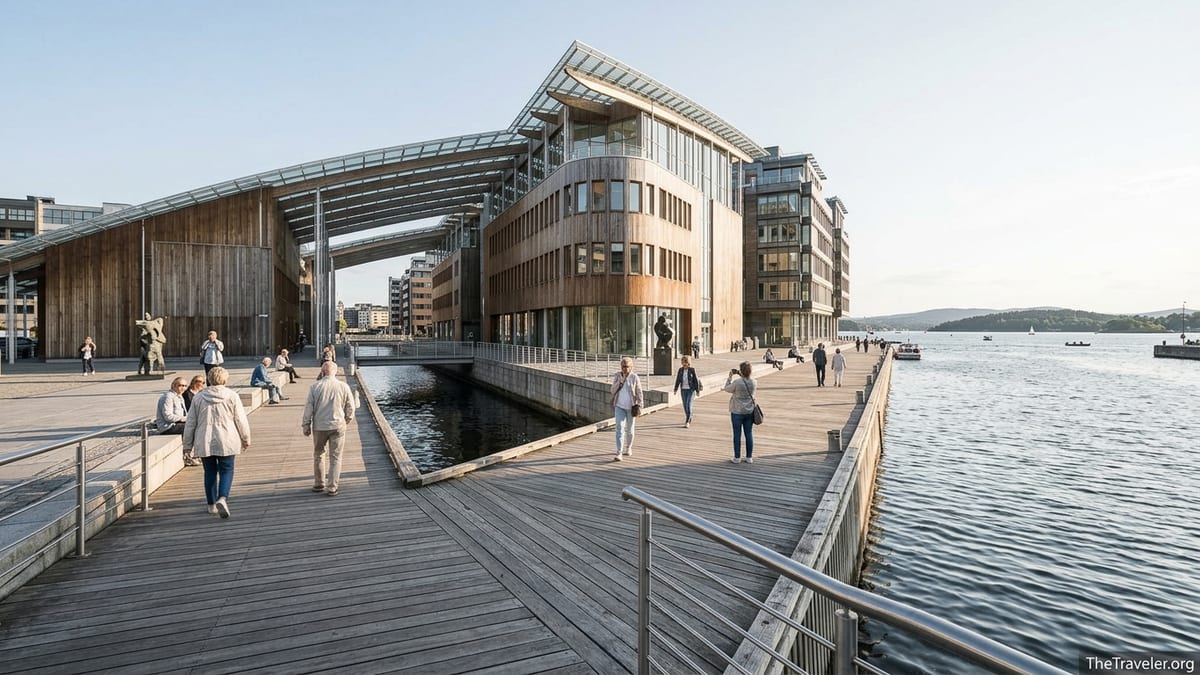
Set at the edge of Oslo’s fjord on Tjuvholmen, the Astrup Fearnley Museum of Modern Art is as much about its Renzo Piano architecture and waterfront setting as the provocative contemporary art inside. Before you rush to buy tickets, a little planning goes a long way. From choosing the right time slot to understanding discounts, exhibitions and neighborhood logistics, here are the visitor tips that matter most.
Get the latest updates straight to your inbox!
Know the Basics Before You Choose a Ticket
The Astrup Fearnley Museum is a private contemporary art museum housed in striking timber and glass pavilions at the far end of Oslo’s Aker Brygge and Tjuvholmen waterfront. It focuses on international contemporary art, including well known names such as Jeff Koons, Cindy Sherman and Olafur Eliasson, alongside rotating temporary exhibitions. Most visitors spend 1.5 to 3 hours here, especially if they also wander through the Tjuvholmen Sculpture Park that wraps around the museum.
Standard adult admission is currently around 180 Norwegian kroner, with reduced admission of about 100 kroner for students and seniors. Children and teenagers under 20 enter free, which makes the museum a good value stop for families compared with other big ticket Oslo attractions. During exhibition changeovers, when parts of the galleries are closed, the museum typically lowers prices slightly, so you may see a reduced adult rate advertised if you visit between major shows.
The museum is usually closed on Mondays, with regular hours from midday to late afternoon on weekdays, extended into early evening on Thursdays, and earlier opening times on weekends. In July and August, the museum often opens on Mondays for limited hours, which can be helpful if you are visiting Oslo in peak summer. Always double check opening hours for your specific date, especially around Easter, Christmas and Norwegian public holidays when schedules may change.
Because the museum is not enormous and uses timed events only occasionally, you do not usually need to lock yourself into a tight schedule far in advance. However, online ticket purchase is still recommended so you can walk past the small line at the entrance and head straight for the gallery doors, particularly on busy Saturday afternoons and on rainy days when many travelers look for indoor activities.
When to Visit for the Best Experience
The atmosphere at the Astrup Fearnley Museum can vary a lot depending on the time of day and season. On a bright July weekend, the promenade outside is filled with locals sunbathing on the wooden decks, swimmers using the small urban beach across from the museum, and diners at waterfront restaurants. Inside, the galleries can feel lively and occasionally crowded, especially when the museum is hosting a high profile exhibition. If you want quieter viewing conditions, consider visiting on a midweek afternoon between Tuesday and Thursday, when business travelers and cruise passengers are less likely to arrive in large groups.
Thursday evenings are particularly appealing if you like a slower pace. The museum usually stays open later, and Oslo residents often drop by after work, creating a relaxed local feel. You can pair your visit with an early dinner at VentiVenti, the Italian restaurant attached to the museum building, or at one of the nearby Aker Brygge brasseries, watching the sun lower over the Oslofjord before or after you explore the art.
In winter, the museum takes on a different character. Short daylight hours and snow or drizzle mean visitors spend more time indoors. The glass roof and wooden beams designed by Renzo Piano let in soft, northern light, which feels very different from the sharp glare of a summer afternoon. If you are in Oslo in January or February, consider booking your ticket for the middle of the day to enjoy what daylight there is when walking to and from the museum, then dive into the galleries as temperatures drop.
Travelers with tight schedules, such as cruise passengers docked near Akershus Fortress or those on a long airport layover, should think realistically about time. It takes around 15 to 20 minutes to walk from Oslo City Hall along Aker Brygge to the museum at the tip of Tjuvholmen, and you should allow at least an hour and a half inside. Booking a ticket for a flexible time on the day you plan to be waterside lets you decide on the spot whether you have enough energy for a full museum visit after other sights like the Nobel Peace Center or the National Museum.
Choosing the Right Ticket Type and Discounts
Before you click “buy,” check whether you qualify for discounts or free entry. Students with valid ID and seniors typically receive a reduced price, and children and teens under 20 are admitted free. This age threshold is higher than at many European museums and can make a meaningful difference for families with older teenagers. For example, a family of four with two teens aged 16 and 18 would pay for only the two adults, while a similar visit to some other capital city museums might require four full or partial tickets.
If you are planning museum hopping in Oslo, look at the benefits of the city’s sightseeing passes. The Oslo Pass, for instance, has historically included free entrance to the Astrup Fearnley Museum along with local public transport and entry to other cultural attractions. While the exact list of included museums can change from year to year, many visitors find that a one or two day pass pays for itself if they combine this museum with the Munch Museum, the Fram Museum and the Norwegian Museum of Cultural History. Check the latest pass details for your travel dates and compare against paying individual admission.
Membership is another option if you are staying in Oslo longer or anticipate multiple visits. An annual membership at the Astrup Fearnley Museum typically provides unlimited entry, invitations to exhibition openings, and discounts in the museum shop or for special events such as talks and guided tours. This arrangement can suit art students or expatriates who want to see how the hanging changes with new exhibitions through the year.
Pay attention to any special pricing periods. During times when the main collection galleries are partially closed for rehanging, the museum often applies reduced admission, clearly marked at the ticket desk and online. If your main interest is the building and the waterfront setting rather than a specific blockbuster show, these shoulder periods can offer a quieter, slightly cheaper visit. On the other hand, if you are traveling specifically to see a celebrated temporary exhibition, check whether a timed entry or separate surcharge applies and plan accordingly.
Online Tickets vs Buying on Arrival
For many travelers, the main ticket decision is whether to purchase in advance online or simply walk up. In Oslo, visitor numbers to the Astrup Fearnley Museum are steady but not overwhelming, and the museum does not generally sell out on ordinary weekdays. That means same day tickets at the door are usually available, particularly outside peak summer and major school holidays. However, weekend afternoons can be noticeably busier, especially when there is a buzz-worthy exhibition or when poor weather drives more visitors indoors.
Buying online in advance offers several practical advantages. First, you can avoid queuing at the ticket counter, which matters if you arrive with a stroller, small children or limited mobility and want to head straight into the galleries or the café area. Second, advance tickets sometimes come with optional add-ons, such as a guided tour in English on specific days. For example, on a Saturday you might see a mid-afternoon tour slot included at a modest supplement, which can be easier to secure online than trying to add it on arrival.
On the other hand, if your Oslo itinerary is weather dependent, a fully flexible approach may suit you better. Because the promenade and sculpture park are a highlight of the visit, many locals recommend saving the museum for a day when the weather is at least dry, then buying tickets that morning. This is especially true if you want to combine the visit with a walk from the City Hall along the harbor, or a session at one of the nearby floating saunas further along the waterfront.
Whichever method you choose, keep a digital copy of your ticket easily accessible on your phone, or print it out if you prefer paper. The staff will typically scan a QR or barcode at the main entrance. If you are using an Oslo Pass or similar card, be prepared to show it at the desk where it will be validated and exchanged for a museum entry sticker or receipt.
Planning Your Route and Time on Tjuvholmen
The Astrup Fearnley Museum sits at Strandpromenaden 2, on the tip of Tjuvholmen, a small peninsula that extends from the popular Aker Brygge waterfront district. Most visitors approach on foot, following the harbor promenade past restaurants, bars and residential buildings until they reach the distinctive sail-like roofline of the museum. From Oslo’s central area near the National Theatre or the City Hall, the walk typically takes 15 to 20 minutes at a relaxed pace.
Public transport options include buses and trams that connect to stops within a short walk of Aker Brygge, after which you continue on foot. Taxi or rideshare vehicles can drop you very close to the entrance, though traffic can be slow in peak dining hours as cars and delivery vehicles navigate the narrow streets of Tjuvholmen. If you intend to combine your museum visit with a fjord cruise or island hopping, check schedules for boats leaving from nearby piers so you can move smoothly between activities without rushing.
Allow extra time to explore the Tjuvholmen Sculpture Park that spreads around the museum. Here you can see pieces by international artists positioned against views of the Oslofjord and Akershus Fortress, with walking paths and lawns popular for picnics in summer. Many visitors like to arrive 30 to 45 minutes before their intended museum entry, wander the park and perhaps take photos of the museum’s dramatic wooden cladding and glass roofs, then head inside as their timed ticket window begins.
If you are driving, be aware that parking in the Tjuvholmen and Aker Brygge area is primarily in underground garages and can be expensive by international standards. For example, hourly rates in central Oslo garages can quickly accumulate, meaning that for a three hour visit you might pay more for parking than for a single adult museum ticket. Whenever possible, use public transport or walk from your accommodation to keep costs down and avoid navigating tight one way streets.
Making the Most of the Collection, Exhibitions and Facilities
Unlike encyclopedic museums that try to cover centuries of art history, the Astrup Fearnley Museum focuses on contemporary work from the late 20th century onward. The collection is known for pieces by American appropriation artists and major figures of international contemporary art. Visitors may encounter shiny, large scale sculptures by Jeff Koons, narrative photographs by Cindy Sherman, installations by Matthew Barney, or immersive works by Olafur Eliasson, alongside Norwegian and Nordic artists. The roster changes as curators rehang the collection and bring in loans for temporary shows.
Because contemporary art can be conceptually dense, give yourself time to read the wall texts and any exhibition booklets provided at the entrance. Many displays include both Norwegian and English descriptions, explaining how certain works engage with themes such as consumer culture, identity, or climate change. For instance, a sculptural installation constructed from everyday consumer products may be accompanied by a text explaining how the artist critiques global branding and excess. Taking five minutes to read the introduction to each gallery can significantly enrich what you see.
Audio guides and guided tours can help if you are new to contemporary art. Check whether the museum offers scheduled tours in English during your visit period, often on weekends or linked to specific exhibitions. These tours might cost a little extra but provide curated insight into a selection of works, which is valuable if you feel overwhelmed by too many unfamiliar names. Families should ask about activity sheets or family trails, which sometimes encourage children to search for particular colors, shapes or materials within the galleries.
On the practical side, the museum provides standard facilities such as restrooms, a cloakroom or lockers, and a shop selling exhibition catalogues, design objects and art books. The onsite restaurant VentiVenti serves Italian influenced dishes with large windows and terraces facing the water, making it a natural spot for a pre or post museum meal. Because seating here can fill quickly on sunny summer days, it may be wise to arrive early for lunch or reserve if you are visiting at a peak hour, so that your dining schedule does not eat into your museum time.
Smart Etiquette, Photography and Accessibility Tips
Like most art museums, the Astrup Fearnley has a few rules to protect the works and ensure a pleasant experience for everyone. Small bags and daypacks are usually allowed, but larger backpacks or umbrellas may need to be left in lockers or at the cloakroom. Food and drink are not permitted inside the galleries, so finish takeaway coffee before you enter. Parents with strollers are generally welcome; lifts provide access between floors, and wide circulation spaces make it reasonably easy to navigate with young children.
Photography policies can vary between permanent and temporary exhibitions, depending on loan agreements. In many cases, non flash photography for personal use is allowed in parts of the collection, but staff may ask you not to photograph certain works or entire exhibitions. Always watch for posted signs at gallery entrances and follow staff instructions. If you wish to share photos on social media, remember that not everyone in the galleries wants to be in the background of your shots, so be considerate when framing images.
The building itself offers good general accessibility, with step free entrances and elevators to different levels. Visitors with mobility challenges should still allow extra time for the walk along the promenade and through the sculpture park, as surfaces can be uneven in places and may be slippery in wet or icy weather. If you use a wheelchair or mobility scooter, consider approaching via the most direct route from the main Aker Brygge area to minimize distance.
Finally, remember that Norwegians value shared public space and quiet reflection in cultural venues. Speak in low voices, keep phone notifications on silent, and supervise children closely around works that are displayed without barriers. Many installations invite close looking, and in some cases participation, but you should never touch a work unless it is clearly labeled as interactive. When in doubt, ask a guard before getting too close.
The Takeaway
Visiting the Astrup Fearnley Museum of Modern Art can be a highlight of an Oslo trip, especially if you appreciate striking architecture and contemporary art that sparks conversation. A little advance planning around tickets, timing and logistics will help you enjoy both the museum and its waterfront surroundings without stress or avoidable expense. Check current opening hours and prices, decide whether an Oslo Pass or membership suits your plans, and think through whether to book online or keep your schedule flexible.
Once there, give yourself time not only for the galleries but also for the Tjuvholmen Sculpture Park, the walk along Aker Brygge and perhaps a coffee or meal at VentiVenti with fjord views. The museum’s scale makes it manageable in an afternoon while still offering enough depth to engage seasoned art lovers. With these practical tips in mind before you book your ticket, you can focus on what matters most during your visit: experiencing thought provoking art in one of Oslo’s most distinctive waterfront settings.
FAQ
Q1. Do I really need to buy Astrup Fearnley Museum tickets in advance?
Buying in advance is not strictly necessary on quiet weekdays, but it is helpful on weekends, rainy days and during major exhibitions, when lines at the ticket desk can grow.
Q2. How much time should I allow for a visit to the Astrup Fearnley Museum?
Most visitors spend between 1.5 and 3 hours, including time to walk through the galleries, browse the shop and explore the surrounding Tjuvholmen Sculpture Park.
Q3. Is the Astrup Fearnley Museum included in the Oslo Pass?
The museum has often been included in the Oslo Pass, but benefits change over time, so you should check the latest pass information for your specific travel dates.
Q4. Are there discounts for students, seniors or families?
Yes. Students and seniors usually receive reduced admission, and children and teenagers under 20 years old are admitted free, which makes the museum good value for families.
Q5. What is the best time of day to visit for smaller crowds?
Midweek afternoons from Tuesday to Thursday are typically quieter, while Saturday and Sunday afternoons, especially in summer, are the busiest times inside the museum.
Q6. Can I take photos inside the Astrup Fearnley Museum?
Non flash photography for personal use is often allowed in parts of the collection, but some temporary exhibitions prohibit photos, so always follow posted signs and staff guidance.
Q7. Is the museum suitable for children and teenagers?
Yes. Entry is free for under 20s, and many exhibitions include visually engaging works. Families should still supervise children closely around fragile installations and sculptures.
Q8. How do I get to the Astrup Fearnley Museum from central Oslo?
The easiest route is to walk 15 to 20 minutes along the waterfront from the City Hall and Aker Brygge. Public transport, taxis and rideshares can also bring you close to Tjuvholmen.
Q9. Are there food and drink options at or near the museum?
There is an onsite restaurant, VentiVenti, offering Italian influenced dishes with fjord views, and many additional cafés and restaurants nearby in Aker Brygge and Tjuvholmen.
Q10. Is the Astrup Fearnley Museum accessible for visitors with reduced mobility?
The museum building has step free access and elevators, but the surrounding promenade and sculpture park can be uneven or slippery, so allow extra time and use the most direct routes.