


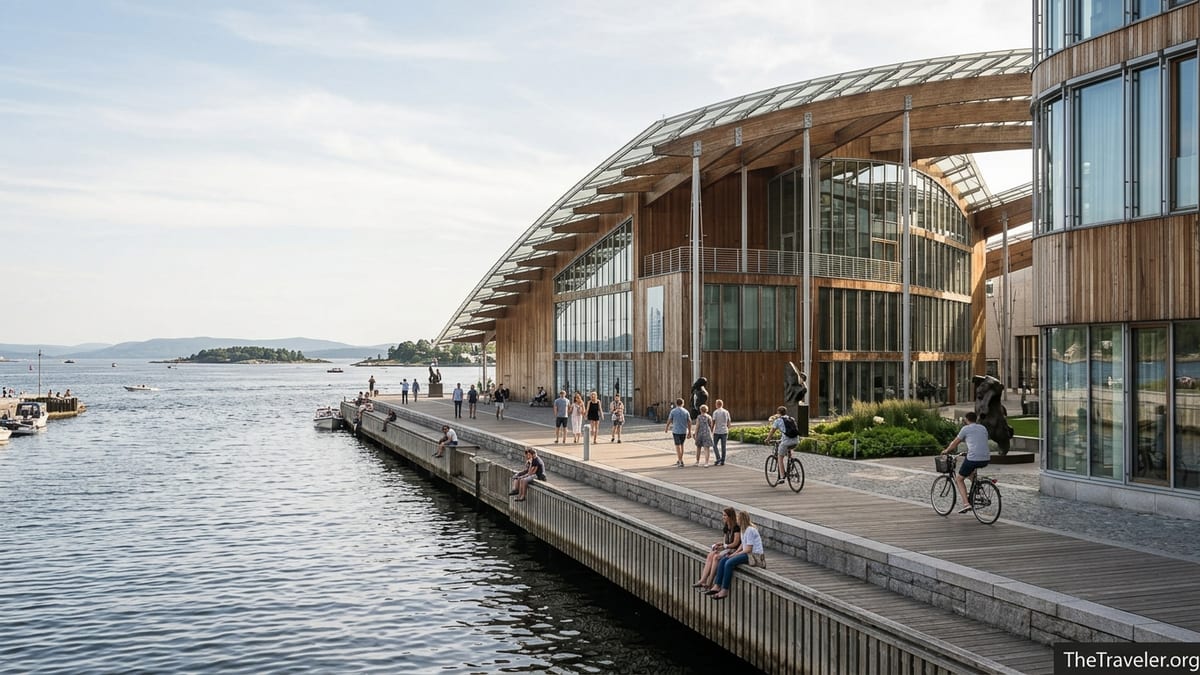
Anchoring the tip of Oslo’s Tjuvholmen peninsula, the Astrup Fearnley Museum of Modern Art pairs cutting-edge contemporary art with sweeping views of the Oslo Fjord. Housed in a striking Renzo Piano building of glass, wood and steel, this privately owned museum has become a key stop for travelers who like their city breaks with a side of bold sculpture and waterfront strolls. Planning ahead will help you make the most of both the art inside and the lively neighborhood outside.
Get the latest updates straight to your inbox!
Why the Astrup Fearnley Museum Belongs on Your Oslo Itinerary
The Astrup Fearnley Museum is one of Norway’s leading private museums of contemporary art, known for its ambitious program of temporary exhibitions and its substantial permanent collection. The collection includes works by internationally recognized artists such as Damien Hirst, Jeff Koons, Cindy Sherman and Anselm Kiefer, alongside important Norwegian and Nordic names. Visitors often encounter large, attention-grabbing pieces like monumental sculptures, installations that play with light and sound, and provocative video works that explore global politics and identity.
Part of the appeal is the museum’s setting on Tjuvholmen, a redeveloped waterfront district just beyond Aker Brygge. Here, the galleries spill out into a sculpture park on the grass and a small urban beach where locals sunbathe and swim in summer. Travelers who might normally feel “museum fatigue” often find the combination of indoor and outdoor art, plus the proximity to cafes and the fjord promenade, keeps the visit relaxed and varied. You can move from a darkened installation room straight out to open sky and sea air within minutes.
The building itself is a destination. Designed by Pritzker Prize–winning architect Renzo Piano, the museum is spread over two main wings separated by a narrow canal, all sheltered by a distinctive, sail-like glass roof. Inside, double-height galleries with filtered natural light create a calm, airy environment that suits large contemporary works. Architecture fans often plan their visit to coincide with late afternoon, when the sun slants through the roof and reflections ripple off the water just outside the floor-to-ceiling windows.
Location, Opening Hours and Ticket Basics
The Astrup Fearnley Museum sits at Strandpromenaden 2 on Tjuvholmen, within walking distance of central Oslo. From the City Hall and Aker Brygge area, most visitors simply follow the harbor promenade west, passing restaurants and residential blocks until the wooden pier narrows and the museum appears at the tip of the peninsula. It is feasible to reach this area on foot from many downtown hotels; for example, the walk from Oslo Central Station typically takes around 25 to 30 minutes at a comfortable pace.
As of mid-2026, the regular opening hours are generally Tuesday to Friday from midday to late afternoon, with extended hours on Thursday, and earlier opening on weekends. The museum is closed on Mondays outside peak summer, though in July and August it sometimes opens limited hours on Mondays in the early afternoon. Travelers should always confirm up-to-date hours directly with the museum shortly before visiting, especially around Norwegian public holidays when many attractions operate reduced schedules.
Standard adult admission is currently in the region of 180 Norwegian kroner, while students and seniors pay a reduced price of around 100 kroner. Visitors under 20 years of age can typically enter free of charge, which makes the museum a relatively budget-friendly option for families with older children and teenagers. During short periods when staff are installing major new temporary exhibitions, the museum often lowers the ticket price somewhat, reflecting the reduced number of galleries open to the public.
Tickets can be purchased at the entrance, but during busy weekends or special events it is sensible to buy in advance through the museum’s online system. This is particularly useful if you are visiting Oslo only for a day or arriving with a tight schedule, for example off a cruise ship currently docked at nearby piers. Advance tickets help you avoid queuing and allow you to time your visit to coincide with a guided tour or event if one is scheduled.
Getting There and Getting Oriented
Reaching the Astrup Fearnley Museum from elsewhere in Oslo is straightforward. Many visitors arrive by tram or bus to the Aker Brygge or Nationaltheatret stops and then continue on foot. The stroll from Aker Brygge is part of the experience: you walk along the car-free boardwalk, sharing space with locals out for an evening drink or lunchtime meeting. Signage for Tjuvholmen and the museum becomes more visible as you pass the luxury apartments and small jetties that characterize this waterfront district.
Another popular approach is by bicycle or electric scooter, which can be hired through several app-based services operating in central Oslo. The harbor promenade has shared-use paths, and there are bike stands and scooter parking zones close to the museum, but you cannot ride directly into the sculpture park itself. In summer, some visitors arrive by small boat or kayak, using nearby public docks on Tjuvholmen before continuing on foot to the museum entrance.
Once inside, the museum layout is relatively intuitive. You typically start at the ticket desk and museum shop, then move through a sequence of galleries that may include both works from the Astrup Fearnley Collection and one or more temporary exhibitions. Double-height spaces and a mix of mezzanines, staircases and bridges connect the two main wings. Staff at the entrance can provide a gallery map and highlight any sections that are temporarily closed. Information panels and wall texts are usually available at least in Norwegian and English, with some exhibitions offering additional languages or leaflets.
It is wise to allow at least 90 minutes inside the museum for a relaxed visit to both the collection and current temporary show, plus additional time to enjoy the outdoor sculpture park and waterfront. Travelers who are particularly interested in contemporary art, or who like to read wall texts in depth, may prefer to budget two to three hours. Those combining the visit with other central museums like the National Museum or the Munch Museum often spend a concentrated hour inside before continuing elsewhere and lingering longer outside on the pier.
Collections, Temporary Exhibitions and Guided Experiences
The Astrup Fearnley Collection focuses on contemporary art from around the late 20th century onwards, with strong representation from Europe and the United States along with selected works from Latin America, Asia and Africa. Pieces by high-profile artists such as Matthew Barney, Glenn Ligon, Rachel Harrison and Julie Mehretu appear in rotating displays, so returning visitors may see the galleries reconfigured every couple of years. Some works are challenging or playful, including sculptures made from everyday objects, conceptual installations and pieces that engage directly with social or political themes.
In addition to the collection, the museum typically mounts several temporary exhibitions each year, often dedicated to a single artist or a tightly themed group show. These might range from a large survey of a Latin American painter to a multimedia show exploring migration, climate or digital culture. For example, travelers in 2026 can expect a major exhibition focused on Colombian artist Beatriz González, presenting paintings and works on paper that reinterpret political imagery and mass media. Visiting during such a flagship show often adds a clear narrative to the visit, making it easier for first-time museum-goers to follow a thread through multiple rooms.
Guided tours are sometimes available in English on set days, especially on weekends or during key exhibition periods. These may be included in the ticket price or sold for a small supplement, and they typically run for 45 to 60 minutes, highlighting major works across both the collection and current show. Private group tours can often be booked in advance, which is useful for study-abroad programs, conference groups staying at nearby hotels, or families traveling together who want a more tailored introduction.
If you prefer exploring independently, consider renting an audio guide when available or downloading any official museum app or digital guide that might be offered. These can enrich the visit by providing artist interviews, curatorial commentary and suggestions for connections between works. Even for travelers with limited prior knowledge of contemporary art, having a bit of context can turn an initially puzzling installation into an engaging story about technology, memory or global culture.
Tickets, Budgeting and Saving Money
Compared with major museums in cities like London or Paris, admission prices at the Astrup Fearnley Museum are moderate but can still add up if you are traveling as a family. A realistic budget for two adults and one student might be around 460 Norwegian kroner at current rates, not including any paid tour or audio guide. If you are visiting several attractions, it may be worth checking whether any city passes or combination tickets that include multiple museums are currently available in Oslo, though these offers tend to change from year to year.
One potential way to save is to plan around free or reduced-price events. On some special days, such as local art festivals or cultural weekends, the museum has offered free access to parts of the collection or discounted entry for all visitors. These occasions are often listed in advance on the museum’s event calendar. Another strategy is to schedule your visit during an installation period when ticket prices are temporarily lowered, provided you are comfortable seeing fewer galleries.
Food and drink costs can also influence your budget. The museum’s on-site restaurant, VentiVenti, serves Italian-inspired dishes with fjord views, and prices here reflect both the waterfront location and the quality of ingredients. Expect to pay a mid-range restaurant price for a main course, closer to what you would find at other sit-down spots around Aker Brygge. Travelers aiming to keep expenses down sometimes opt for a coffee and pastry only, then pick up a more economical meal at nearby casual eateries or food halls closer to the city center.
Do not forget the museum shop in your budgeting. It is known for high-quality art books, exhibition catalogs and design objects. A well-produced catalog of a major exhibition can cost a significant amount, in line with similar publications elsewhere in Europe, and limited-edition posters or design items such as ceramics, textiles and mugs can quickly tempt design-conscious visitors. Browsing is free, so consider your luggage space and customs limits before committing to large or fragile purchases.
Combining Art with Fjord Views, Food and Neighborhood Walks
One of the pleasures of visiting the Astrup Fearnley Museum is the way art, architecture and everyday city life blend together. Immediately outside the museum doors is the Tjuvholmen Sculpture Park, a grassy area and waterfront path dotted with works by well-known contemporary sculptors. Families often let children run between sculptures, while adults photograph pieces with the fjord and islands in the background. The park is publicly accessible, so you can enjoy it both before and after going into the ticketed galleries.
On warm days, the small urban beach and wooden piers at the end of Tjuvholmen fill with swimmers, sunbathers and people dangling their feet over the water. If you feel comfortable with cooler temperatures, you can bring a swimsuit and towel and join locals for a quick dip after your museum visit. There are usually ladders and steps leading into the water, and many Norwegians swim well into early autumn. Just be sure to check local signage for any safety notices.
For food and drinks, Tjuvholmen and neighboring Aker Brygge offer a mix of sit-down restaurants, wine bars and bakeries. Visitors often pair a late-morning museum visit with an outdoor lunch at a harborfront brasserie, then stroll back toward the city center with an ice cream from one of the kiosks along the promenade. In the evening, the area can feel lively but not overwhelming, making it a good choice for travelers who want atmosphere without late-night noise.
If you have more time, consider linking the Astrup Fearnley Museum with other cultural stops along the fjord. A practical route might start with the National Museum near the City Hall, continue along the waterfront to the Nobel Peace Center and Aker Brygge, then finish at Tjuvholmen for the contemporary art and sunset views. This sequence provides a condensed overview of Norwegian art and design history, from older masterpieces to the avant-garde, all within walking distance.
Practical Tips for a Smooth Visit
Weather in Oslo can change quickly, even in summer. The museum itself is fully indoors, but much of the appeal lies in exploring the outdoor sculpture park and waterfront. Bring a light rain jacket or windproof layer, as the peninsula can feel breezy compared with streets further inland. In winter, icy paths are common along the harbor, so appropriate footwear is essential if you plan to walk from the City Hall area rather than using public transport for the final segment.
Inside the museum, large backpacks and umbrellas may need to be stored in lockers or a cloakroom. Photography is generally allowed in many areas, often without flash, but rules can differ depending on the exhibition and loan agreements for specific artworks. It is a good idea to check posted signs or ask staff before taking photos, especially of video installations or more delicate works. Professional equipment such as tripods may require prior permission.
Families will appreciate that stroller access is typically good, thanks to elevators and wide ramps between levels. Some exhibitions, however, may include loud sound works or darker rooms that can be overwhelming for younger children. Planning a flexible route and taking breaks in the sculpture park or cafe helps keep the experience positive. For accessibility, the museum is designed with step-free routes to most galleries, but travelers with specific needs should consult the museum’s visitor information or contact staff ahead of time for the latest details on elevator locations and accessible restrooms.
Norway is largely cashless, and the Astrup Fearnley Museum aligns with this trend. Credit and debit cards are widely accepted for tickets, the shop and the restaurant. Tipping in Norway is modest compared to some other countries; rounding up or leaving a small percentage at the cafe or restaurant is appreciated but not obligatory. English is spoken by most staff, so international visitors rarely face communication barriers when asking for directions or recommendations.
The Takeaway
Visiting the Astrup Fearnley Museum of Modern Art is about more than checking off another institution on an art lover’s list. It offers a compact yet layered experience where bold contemporary works, innovative architecture and a bustling waterfront setting all converge. Whether you are drawn by a specific temporary show, curious about the museum’s high-profile collection or simply looking for a scenic place to spend an afternoon, planning a bit in advance will help you get the most from your time.
By confirming opening hours, budgeting for tickets and a possible meal, and building in time for the outdoor sculpture park and fjord views, you can shape a visit that feels relaxed rather than rushed. Pair the museum with nearby neighborhoods like Aker Brygge, or fold it into a self-guided art trail that also includes the National Museum and the Munch Museum. However you structure your day, the Astrup Fearnley Museum provides a distinctly Oslo blend of culture, sea air and contemporary city life.
FAQ
Q1. Where exactly is the Astrup Fearnley Museum located in Oslo?
The museum is on the Tjuvholmen peninsula at the very end of the harbor promenade, within walking distance of Aker Brygge and the City Hall area in central Oslo.
Q2. How much time should I plan for a visit?
Most visitors are comfortable with 90 minutes to two hours inside the museum, plus extra time to explore the outdoor sculpture park, small beach and nearby cafes along the waterfront.
Q3. What are the typical opening hours, and is it open on Mondays?
Opening hours usually run from midday to late afternoon on weekdays, with earlier opening on weekends and longer hours on Thursdays. The museum is normally closed on Mondays outside the summer season, so always check the latest schedule before you go.
Q4. Do I need to buy tickets in advance?
Advance tickets are not strictly required but are recommended on busy weekends, during major exhibitions or if you are visiting Oslo for only a short time and want to avoid queues at the entrance.
Q5. Is the museum suitable for children and families?
Yes, families often enjoy the spacious galleries, outdoor sculpture park and waterfront setting. However, some artworks and dark or loud installations may not suit all children, so parents may wish to plan breaks and choose sections based on their kids’ ages and interests.
Q6. Are there guided tours available in English?
The museum periodically offers guided tours in English, particularly around major exhibitions, usually on selected days. It is best to check the current program or contact the museum in advance to confirm times and whether a reservation is needed.
Q7. Can I take photos inside the museum?
Photography without flash is often allowed in many areas, but restrictions can apply for certain loans or special exhibitions. Look for signage at the entrance to each gallery and ask staff if you are unsure about specific works.
Q8. How much does admission cost, and are there discounts?
Standard adult tickets are around 180 Norwegian kroner, with reduced prices for students and seniors and free entry for visitors under 20 years of age. Prices can be slightly lower during exhibition changeovers, and special events may occasionally offer free or discounted access.
Q9. Is the museum accessible for visitors with mobility needs?
Yes, the museum was designed with accessibility in mind, offering elevators and step-free routes to most galleries. Visitors with specific requirements should review the latest accessibility information or contact the museum directly before visiting.
Q10. What else can I do nearby after visiting the museum?
After your visit you can relax in the Tjuvholmen Sculpture Park, swim or sunbathe at the small urban beach, enjoy a meal at the on-site restaurant or nearby harborfront eateries, or walk back along the promenade toward Aker Brygge and central Oslo.