


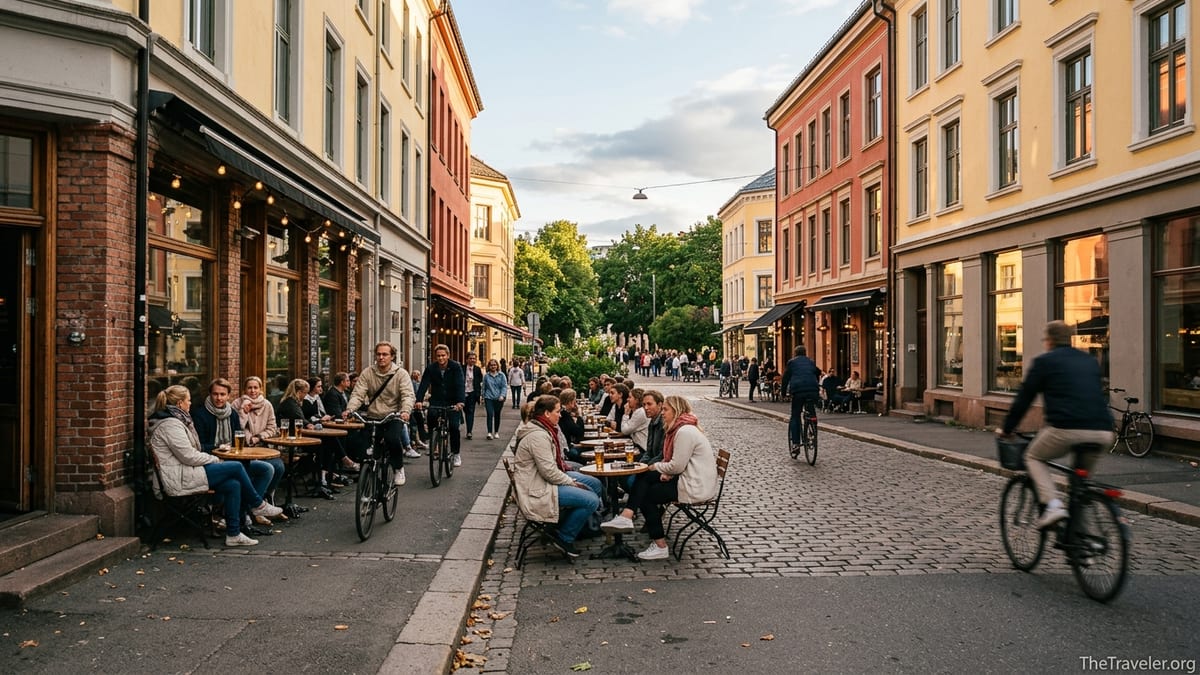
Grünerløkka is the Oslo neighborhood that locals recommend when friends ask where the city actually lives. Once defined by factories and workers’ housing, today it is a compact grid of coffee bars, vintage stores, pocket parks and buzzing nightlife along the Akerselva river. Planning a few focused hours here can easily turn into an entire day, so it helps to understand the layout, the pace and what is realistically possible with the time you have.
Get the latest updates straight to your inbox!
Getting Oriented and How Much Time You Really Need
Grünerløkka sits just northeast of central Oslo, about a 20 to 25 minute walk from Oslo S, the main train station, or around 7 to 10 minutes by tram. The district loosely runs from the river Akerselva in the west to busy Trondheimsveien in the east, and from Nybrua bridge in the south up towards the greener streets of Olaf Ryes plass and Birkelunden in the north. For trip planning purposes, think of it as a long rectangle that you will likely explore on foot, with the river and the two main squares as your anchors.
If you only have two to three hours, you can still get a feel for the area by focusing on a single axis, for example starting near Nybrua and walking up Thorvald Meyers gate to Birkelunden before looping back along Markveien. With half a day you can slow down enough to linger in a café, browse a couple of boutiques, and detour to the Akerselva riverside path. A full day lets you add a long lunch at Mathallen food hall in the adjacent Vulkan district, a swim at the Sofienberg park lawns in summer, or a live gig at venues like Parkteatret in the evening.
Public transport is straightforward, which makes Grünerløkka easy to slot into a wider Oslo itinerary. Several tram lines run up Thorvald Meyers gate and Markveien, and buses use the major roads on both sides. Tickets are integrated in the Ruter system, so the same day pass that takes you from the airport train connection into town will work on trams toward Grünerløkka. That flexibility makes it simple to commit an evening here even if you are staying near the waterfront or in the more business-focused western districts.
Because the neighborhood rewards wandering, it is worth building in buffer time between fixed plans. For example, if you have timed tickets at the Munch museum in Bjørvika earlier in the day, avoid scheduling a dinner reservation in Grünerløkka too tightly after. A 25 minute walk or a short tram ride between the two can easily double if you stop for river views, street art or a spontaneous beer garden break along the way.
Choosing the Right Time of Day and Season
Grünerløkka’s personality shifts noticeably from morning to late night, and across the seasons. Mornings are mellow and best for coffee-focused exploring. Bakeries such as Åpent Bakeri on Thorvald Meyers gate or Godt Brød around Olaf Ryes plass typically open around 7 or 8, and you will see locals grabbing cinnamon buns and strong filter coffee before work. If you are jet-lagged and awake early, this is a calm way to ease into the neighborhood before shops open closer to 10.
Afternoons, especially from 14:00 to 18:00, are prime time for browsing and people-watching. Vintage stores, record shops and independent design boutiques along Markveien and the cross streets are all open, and pavement tables start to fill with laptops and late lunches. On sunny days from late May through early September, parks like Birkelunden and Olaf Ryes plass become informal outdoor living rooms. It is not unusual to see groups grilling on disposable barbecues in the grass, people sharing supermarket strawberries, and families letting children play in the small playgrounds.
Evenings are when Grünerløkka’s nightlife reputation becomes obvious. By 19:00 or 20:00, bars like Crowbar & Bryggeri, Bar Boca or the beer gardens near Vulkan are busy, and restaurants along the main streets will often require a reservation on Friday and Saturday nights. Live music venues such as Parkteatret or the riverside club Blå host concerts and DJ sets that can run late into the night. If you want to experience this side of the neighborhood without the heaviest crowds, consider a Thursday evening or a Sunday, when the energy is still high but the lines are shorter.
Seasonal timing matters too. In winter, daylight is short and temperatures often hover around freezing, so you may want to concentrate activities into a five or six hour window in the middle of the day. The upside is a cozy bar and café culture, with candles in windows and hearty dishes like stews or fish soups appearing on menus. In summer, long evenings with light until 22:00 or later invite leisurely river walks and late outdoor dining. Shoulder seasons like April and October can be changeable, so bring layers and plan indoor options like Mathallen food hall or galleries in case of sudden rain.
Food and Drink: Planning Meals Without Losing the Day
Grünerløkka is one of Oslo’s densest clusters of places to eat and drink, and the sheer choice can eat up planning time. A practical approach is to decide in advance whether you want to anchor your visit with one long, sit-down meal or several smaller bites. Prices in Oslo are high by global standards, and Grünerløkka reflects that: a cappuccino commonly runs around 45 to 55 Norwegian kroner, a casual lunch in a café 150 to 230 kroner, and a main course with a drink at a midrange restaurant often 250 to 350 kroner or more.
If you prefer to sample several spots, Vulkan’s Mathallen food hall, just across the Akerselva from the southern end of Grünerløkka, is an efficient solution. Housed in a converted industrial building, it gathers around 30 different vendors under one roof, from fish counters like Vulkanfisk to tapas bars and specialty dessert stalls. You can share small plates from different kitchens, and a typical informal meal might be a fish soup, a couple of pintxos and a drink for roughly 200 to 300 kroner per person depending on choices. This is also a good fallback in bad weather, as you can eat, drink and people-watch without stepping outside.
For a slower, neighborhood-style meal, plan around the café and bistro culture on Thorvald Meyers gate and its side streets. It is common to see brunch dishes like shakshuka, sourdough toast with smoked salmon or vegetarian grain bowls on menus, which suits mixed dietary preferences within a group. Many places operate on a first-come basis during the day but take reservations for evening service. If you know you will be in Grünerløkka on a Friday night, consider booking a table earlier in the week to avoid spending half an hour in a line when you could be exploring.
Drinks can quietly inflate your schedule and your budget, so it is worth being intentional. Beer in bars typically costs somewhere between 100 and 130 kroner for a half liter, and cocktails in small craft bars may reach 150 to 170 kroner. If you want to experience the area’s nightlife without overspending, limit yourself to one or two venues that match your interests, for example a microbrewery for local beer tasting followed by a quick stop at a classic cocktail bar. Remember that Norway has strict rules around public drinking, so the relaxed atmosphere in parks does not mean it is acceptable to drink openly everywhere; stick to licensed patios and bars.
Shopping, Galleries and Street Life
Grünerløkka’s reputation as a creative district rests heavily on its small independent shops and informal art scene. Planning time for browsing requires a bit of strategy, especially if you are trying to balance it with other Oslo attractions. Most boutiques and galleries open late morning and stay open until early evening on weekdays, with slightly shorter hours on Saturdays and very limited or no opening on Sundays. If you care about shopping, avoid scheduling your Grünerløkka visit for a Sunday, when many smaller shops will be closed even though cafés and bars remain open.
Markveien, one block east of Thorvald Meyers gate, is often considered the main shopping spine. Here you find vintage clothing stores, design shops selling Scandinavian ceramics and textiles, and record stores that appeal to both collectors and casual browsers. Prices range widely: a second-hand wool sweater might cost around 400 to 700 kroner, while a handmade ceramic mug from an independent maker can be 250 kroner or more. If you are on a tight budget, treat the shops as galleries and focus your spending on a single meaningful item rather than scattered impulse buys.
Art is not confined to formal galleries. Wander any side street and you will encounter large murals, smaller stencil work and ever-changing sticker art on doors and lampposts. Some of the most striking pieces appear along the Akerselva riverbank, where former factory walls have become canvases. Because this street art scene is fluid, do not obsess about tracking specific works; instead, allocate 30 to 45 minutes to a slow walk between the bridges, stopping where something catches your eye. This approach keeps your schedule flexible while still acknowledging a key part of the area’s identity.
Weekend markets add another layer. On certain days in the warmer months, Birkelunden hosts a flea market where locals sell everything from mid-century furniture to stacks of Norwegian paperbacks. It is easy to lose an hour here sifting through boxes, so if you have museum tickets or dinner reservations later that day, set a time limit before you dive in. Carrying cash is less important than it used to be, as Norway is largely cashless and many stallholders accept payment apps or cards, but it can be helpful to have a mobile payment solution set up before you arrive.
Parks, the Akerselva River and Slower Moments
One of the reasons Grünerløkka feels livable rather than purely commercial is the number of green spaces and the presence of the Akerselva river along its western edge. The river, which runs through several Oslo boroughs from the hills north of the city down to the fjord, has been cleaned up in recent decades and now functions as a linear park with walking paths on both sides. From the bridges near Nybrua you can follow the paths northward into more residential areas or southward toward the city center, with small waterfalls, historical industrial buildings and clusters of outdoor seating along the way.
For visitors pressed for time, it makes sense to integrate a river walk into your movement between districts rather than treating it as a separate excursion. For example, if you are heading from the opera house in Bjørvika toward Grünerløkka, consider walking via the lower Akerselva for twenty minutes before cutting east into the neighborhood. This gives you a sense of how the former industrial belt has been transformed without significantly extending your travel time, and it provides a quieter contrast to the busy tram lines.
Within Grünerløkka itself, parks like Olaf Ryes plass, Birkelunden and the slightly further Sofienbergparken function as outdoor lounges, especially from late spring to early autumn. Locals bring portable speakers, picnic blankets and supermarket food, and the atmosphere on a warm evening can feel more like a festival than a city park. If you are planning a picnic, factor in local norms and regulations: barbecues are usually allowed in designated areas but can be restricted during very dry periods due to fire risk, and alcohol rules are enforced more strictly in some parks than others. Checking signage at entrances before you settle in will help you avoid an unwelcome interruption.
These slower moments are often what visitors remember most, so try not to overschedule your time. Even on a short trip, it is worth reserving at least half an hour to simply sit on a bench or a patch of grass and observe. Watch how parents navigate prams over cobblestones, how cyclists share space with pedestrians, and how students and young professionals use the parks as extensions of their small apartments. This everyday rhythm may tell you more about contemporary Oslo than any single attraction.
Budgeting, Safety and Practical Details
Norway’s reputation for high costs is justified, and Grünerløkka is no exception. When planning time here, it helps to decide in advance roughly how much you are comfortable spending per hour so you can adjust your activities accordingly. A modest half-day visit might look like this: morning coffee and pastry for around 80 to 100 kroner, a midrange lunch for 200 to 250 kroner, another coffee in the afternoon, and perhaps one drink in the evening. Add in a tram ticket or day pass and you are looking at approximately 500 to 700 kroner for several hours, not including any shopping.
There are ways to soften those costs without feeling deprived. Supermarkets such as Rema 1000, Kiwi or Coop are scattered throughout the area and sell prepared salads, sandwiches and fruit at far lower prices than cafés. Filling a backpack with picnic supplies before heading to a park can keep lunch costs closer to 100 to 150 kroner per person. Tap water is safe and good, and restaurants routinely provide it for free, so carrying a refillable bottle helps you avoid buying bottled drinks.
On the practical side, Grünerløkka is generally considered safe, including after dark, though the usual big-city precautions apply. Pickpocketing can occur in crowded bars or on late-night trams, so keep bags zipped and phones put away when you are not using them. Streets are well lit and busy into the evening, particularly on weekends, and there is usually a steady flow of people walking between venues. If you are returning to a hotel near the central station late at night, a short taxi ride can be a worthwhile expense if you are tired after a long day on your feet.
Weather is the primary factor that can disrupt your plans, especially in the cooler months. Snow and ice can make the cobblestone streets and sloping river paths slippery, so allow extra time when moving between points and wear shoes with good grip. Sudden summer downpours are common as well; having a light waterproof layer in your daypack makes it easier to keep to your schedule without searching for shelter. Many cafés and bars offer blankets and outdoor heaters, which allows you to continue sitting outside even when temperatures dip.
Combining Grünerløkka with the Rest of Oslo
Because of its position just north of the city center, Grünerløkka fits naturally into broader Oslo itineraries. You can easily pair a morning at the new Munch museum in Bjørvika or a visit to the National Museum near the waterfront with an afternoon or evening in Grünerløkka. Walking between Bjørvika and Grünerløkka takes around 25 to 30 minutes at a relaxed pace, partly along the river and partly through mixed residential streets, while a tram connection shortens that to around 10 to 15 minutes including waiting time.
If you are staying in Oslo for a long weekend, one effective strategy is to dedicate your first full day to the classic waterfront sights and museums, and reserve the second evening for Grünerløkka once you have adjusted to local prices and rhythms. This way, you arrive in the neighborhood with a clearer sense of what interests you most, whether that is trying Nordic natural wine bars, exploring the river’s industrial history, or simply finding a pleasant park bench.
Families with children can comfortably include Grünerløkka as a half-day excursion, using playgrounds in Olaf Ryes plass or Sofienbergparken as breaks between short walks. Many cafés are used to strollers and offer high chairs, and wide sidewalks along the main streets make it relatively easy to navigate with prams. For travelers with limited mobility, focusing on the flatter, central streets and using trams to avoid steeper river paths will make the experience smoother.
It is also worth paying attention to local events. Concerts, small festivals and neighborhood days can fill squares and parks with stages and stalls, changing both the atmosphere and how long it takes to move around. If your visit coincides with such an event, you may want to either fully embrace it and dedicate more time to Grünerløkka that day, or shift your neighborhood visit to a different afternoon when it is easier to access shops and cafés without crowds.
The Takeaway
Planning time in Grünerløkka is less about ticking off specific attractions and more about creating space to experience Oslo at everyday scale. The district’s compact footprint means you can cover a lot of ground in a few hours, but its dense concentration of cafés, shops, parks and bars rewards those who slow down rather than race between points on a map. A flexible plan that mixes one or two anchors, such as a meal at Mathallen or an evening concert, with unstructured wandering will serve most visitors well.
As you shape your itinerary, consider the rhythm of the day and the season you are visiting. Build in pockets for aimless walking, park time and coffee refills, and be realistic about how quickly the area’s easygoing atmosphere can stretch your schedule. Whether you spend a focused morning, a single long evening or an entire day in Grünerløkka, thoughtful planning will help you balance discovery with downtime and leave with a sense of how Oslo lives when it is off duty.
FAQ
Q1. How much time should I plan for a first visit to Grünerløkka?
For a first visit, plan at least three to four hours, which allows for a relaxed walk, a café stop and some browsing. If you want to include a long lunch at Mathallen and perhaps stay for evening drinks, a full afternoon and evening is more realistic.
Q2. What is the easiest way to get from central Oslo to Grünerløkka?
From Oslo S or the main downtown area, you can walk in about 20 to 25 minutes or take a tram that runs up Thorvald Meyers gate or Markveien in roughly 7 to 10 minutes. Use the same Ruter public transport ticket you would use for buses and the metro, and check tram numbers and stops on station displays before boarding.
Q3. Is Grünerløkka worth visiting in winter, or is it mainly a summer area?
Grünerløkka has a strong café and bar culture, so it remains appealing in winter even when parks and the river path are less comfortable. You will spend more time indoors, moving between bakeries, bars and small shops, and the candles and warm lighting create a cozy atmosphere. Just allow extra walking time on icy days.
Q4. Are shops and cafés open on Sundays in Grünerløkka?
Most cafés, bars and many restaurants open on Sundays, but smaller independent boutiques and some galleries often remain closed or keep very limited hours. If shopping is important to you, plan your Grünerløkka visit for a weekday or Saturday and use Sunday for slow walks, coffee and park time instead.
Q5. How expensive is it to eat and drink in Grünerløkka?
Prices are high by many international standards. Expect to pay around 45 to 55 kroner for a coffee, 150 to 230 kroner for a simple café lunch and 250 to 350 kroner or more for a main course at a midrange restaurant. Beer in bars typically costs around 100 to 130 kroner for a half liter. Using supermarkets for picnics can significantly reduce costs.
Q6. Is Grünerløkka safe to walk around at night?
Grünerløkka is generally regarded as safe, including in the evening, and there are usually plenty of people on the streets, especially on weekends. Normal city precautions still apply: keep valuables secure, stay aware in crowded bars or on late trams, and consider a short taxi ride back to your accommodation if you are out very late or feel tired.
Q7. Can I easily combine a visit to Grünerløkka with the Munch museum in one day?
Yes. The Munch museum in Bjørvika is close enough that you can visit it in the morning or early afternoon, then walk or take a tram to Grünerløkka for the rest of the day. Walking between the two districts takes about 25 to 30 minutes, while a tram connection is quicker. Just avoid scheduling tightly timed bookings back to back.
Q8. Are there good options in Grünerløkka for vegetarians and vegans?
Vegetarian and vegan options are common on menus in Grünerløkka, from plant-based burgers and pizzas to grain bowls and salads. Many cafés highlight oat or other plant milks for coffee as standard, and international restaurants in the neighborhood usually offer at least one or two clearly marked meat-free main dishes.
Q9. Is the area suitable for families with children?
Grünerløkka works well for families. The streets are walkable, there are several parks with playgrounds, and many cafés are used to children and strollers. A typical family visit might include a short river walk, time at a playground in Olaf Ryes plass or Sofienbergparken, a casual lunch at a café and an ice cream stop on the way back.
Q10. Do I need cash in Grünerløkka, or is it fully card-based?
Norway is highly cashless, and most places in Grünerløkka accept cards and mobile payments as standard. Even many flea market stalls and food trucks use card readers. It is rare to need physical cash, but having a functioning debit or credit card and, if possible, a mobile payment app will make day-to-day transactions smooth.