


More news on this day
Super Typhoon Bavi has thrown Guam’s travel industry into disarray, with powerful winds, torrential rain and emergency warnings disrupting flights, closing key tourism infrastructure and leaving thousands of travelers stranded across the western Pacific hub.
Get the latest news straight to your inbox!
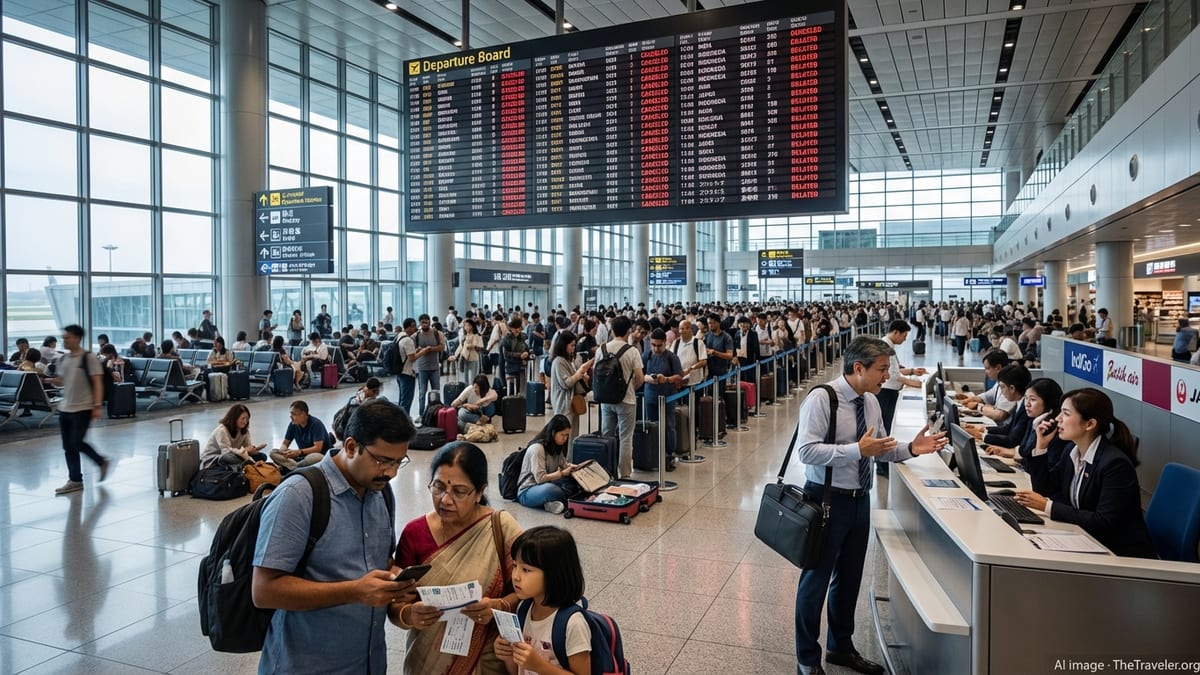
Airlines Cancel Flights as Storm Batters Key Pacific Hub
Guam’s Antonio B. Won Pat International Airport has emerged as one of the most affected transport nodes in the region as Super Typhoon Bavi’s intense winds and heavy rain forced widespread flight cancellations and schedule changes. Publicly available aviation data and local media coverage indicate that both international and inter-island services were suspended or significantly curtailed as the storm’s outer bands closed in over the weekend and into Monday.
Major regional carriers serving Guam from Japan, South Korea, the Philippines and the United States mainland cut or diverted services as crosswinds increased and airport authorities implemented safety protocols. Aircraft already on the ground were repositioned or secured, with apron activity reduced to essential operations only. Travelers attempting to reach or leave the island reported last-minute cancellations and rolling delays as carriers adapted to changing forecasts.
Flights linking Guam with neighboring Northern Mariana Islands, including Saipan and Rota, were especially disrupted, severing a vital air bridge for residents and visitors at the height of the storm. According to airline notices, some services were brought forward ahead of landfall to move people out of the projected impact zone, while subsequent rotations were scrubbed once conditions deteriorated.
As Bavi pushed westward, airlines began issuing flexible rebooking policies for affected passengers, allowing date changes and, in some cases, waiving penalties. However, the combination of limited seat availability, ongoing weather concerns and damage assessments meant that normal operations were expected to resume only gradually in the days following the storm’s closest approach.
Emergency Warnings and Preparedness Measures Across Guam
In the days before Bavi’s arrival, Guam’s government and emergency management agencies activated a series of escalating alerts as forecast models converged on a track through the Marianas. Public advisories described the storm as a Category 5 equivalent system, with sustained winds well over 150 miles per hour affecting the nearby island of Rota and dangerous gusts and squalls extending over Guam.
Condition of Readiness levels were raised, triggering closures of nonessential government offices, ports and many private businesses. Public information campaigns urged residents and visitors to secure property, stock up on essentials and remain indoors as the storm approached. For tourists staying in coastal resorts and hotels, management teams shifted guests to interior corridors and lower floors where possible, and in some cases suspended beach and pool access even before the heaviest weather set in.
Guam’s Office of Civil Defense and related agencies released detailed advisories on shelter locations, expected wind speeds and coastal hazards as Bavi neared. These notices highlighted the risk of life-threatening surf, coastal inundation and flying debris, pointing to the island’s experience with previous high-end typhoons as a guide for the scale of possible disruption.
Local media reported that many residents who had only recently repaired damage from a strong earlier-season storm faced renewed concerns about roof integrity, power reliability and access to potable water. Visitors unfamiliar with typhoon protocols relied heavily on hotel briefings and official bulletins to navigate curfews and mobility restrictions during the height of the weather emergency.
Power Outages, Flooding and Damage to Tourism Infrastructure
As Bavi’s strongest outer bands swept across Guam and the neighboring Northern Mariana Islands, widespread power outages, downed trees and localized flooding were reported. Publicly available information from utilities and local outlets described feeder-line failures and damaged poles affecting large portions of the island, though restoration crews began assessments as soon as winds dropped below safety thresholds.
For the tourism sector, early indications pointed to damage concentrated along exposed coastal areas, with resorts, beachfront bars and marine recreation operators bearing much of the brunt. Photos and initial assessments shared in news coverage showed debris-strewn promenades, toppled signage, damaged facades and inundated low-lying roads, particularly along popular visitor corridors.
Guam’s beaches, central to its appeal as a Pacific island destination, experienced dangerous surf and significant erosion in some locations. Diving and snorkeling operators suspended tours well ahead of the storm’s arrival, and many will now face days or weeks of poor underwater visibility, disrupted moorings and the need for equipment inspections before resuming operations.
Retail districts and dining hubs in the Tumon and Hagatna areas also saw impacts, ranging from broken windows and minor flooding to more substantial structural damage in a smaller number of properties. Insurance assessments and safety inspections are expected to shape the timeline for reopening, adding fresh uncertainty for businesses that remain dependent on steadily recovering post-pandemic tourism flows.
Travelers Stranded as Hotels Fill and Rebooking Proves Difficult
The combination of grounded flights and hazardous road conditions left significant numbers of travelers sheltered in hotels and guesthouses across Guam. With commercial aviation largely paused at the height of the storm, many visitors faced extended stays on the island, sometimes beyond visa-free windows, and worked with airlines and consular posts to adjust travel plans.
Reports from hospitality operators indicated that occupancy levels climbed sharply as stranded passengers sought last-minute rooms when flight cancellations mounted. Some large properties activated emergency accommodation protocols, opening ballrooms, meeting spaces and interior lounges to provide safe shelter for guests and, in a few cases, local residents whose homes were considered vulnerable to the high winds.
Rebooking proved challenging in the immediate aftermath, as airlines prioritized aircraft inspections, crew rest requirements and revised schedules. Travelers with connections onward to Asia, Oceania and North America encountered knock-on disruptions throughout the regional network, with some itineraries requiring complete re-routing once updated capacity became clear.
Travel insurance providers and credit card companies were cited in consumer reports as important avenues for recouping unexpected lodging and meal costs. However, coverage terms varied widely, and industry analysts noted that the scale of Bavi’s disruption is likely to add momentum to calls for clearer, storm-specific protection in standard travel policies for Pacific destinations.
Wider Regional Ripple Effects and Questions Over Resilience
Super Typhoon Bavi’s passage through the Marianas comes at a time when Guam and neighboring territories are still contending with cumulative damage from earlier cyclones. Publicly accessible climate and meteorological analyses in recent years have highlighted an apparent increase in the intensity of western Pacific storms, intensifying scrutiny of how exposed island tourism economies prepare for and recover from such events.
In the near term, Bavi’s westward track toward the broader western Pacific has triggered additional flight adjustments across the region, including potential diversions for long-haul routes that typically overfly or refuel in affected areas. Airlines and cruise operators serving Asian and Micronesian markets are monitoring the storm’s evolution for further schedule changes.
For Guam, the immediate focus remains restoration of critical infrastructure such as power, water and telecommunications, prerequisites for reliably restarting large-scale tourism operations. Airport inspections, runway debris clearance and navigation aid checks are expected to guide the phased resumption of flights, while port authorities assess harbor conditions for cargo and potential cruise calls.
Longer term, Bavi is likely to reignite debate over coastal development, building standards and redundancy in energy and communications systems on small Pacific islands that depend heavily on visitor arrivals. As one of the region’s most visited destinations and a key air hub, Guam’s experience in managing this latest episode of travel chaos will serve as a closely watched case study for disaster preparedness and tourism resilience across the wider Pacific.