


More news on this day
Mitsubishi Heavy Industries has secured a major contract to supply maintenance tools and equipment for Taiwan’s new generation of high-speed trains, underscoring deepening cooperation between Japanese rail manufacturers and Taiwan High Speed Rail Corporation as the island prepares to introduce N700ST trainsets from 2026.
Get the latest news straight to your inbox!
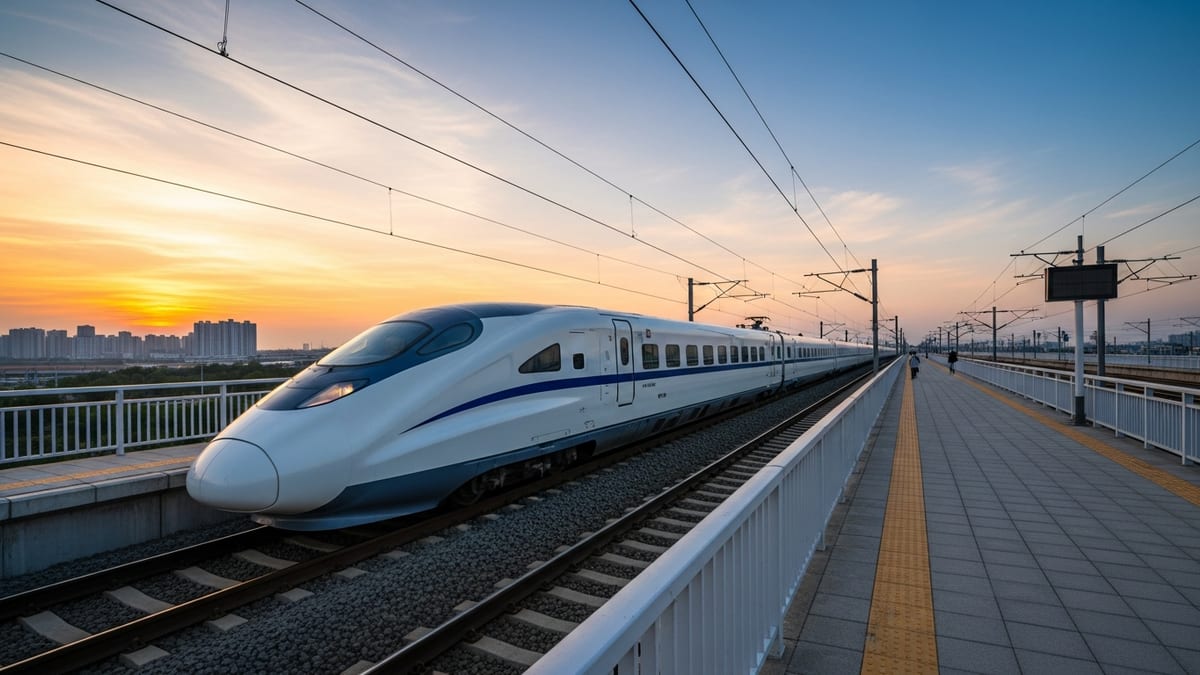
New contract underpins next-generation N700ST fleet
According to publicly available information from the companies involved, Mitsubishi Heavy Industries has signed an agreement with Taiwan High Speed Rail Corporation to provide maintenance equipment for the operator’s Yanchao Main Workshop in southern Taiwan. The tools will support inspections and overhauls for the forthcoming N700ST fleet, a 12-car derivative of Japan’s N700S Shinkansen platform tailored for Taiwan’s specifications.
Reports indicate that the contract value is in the tens of billions of New Taiwan dollars, and is part of a broader investment program to ready the high-speed rail system for the arrival of 144 new cars. Delivery of the first N700ST trains is expected to begin in the second half of 2026, with commercial service slated for the second half of 2027, replacing or supplementing the existing 700T fleet built on earlier Shinkansen technology.
The maintenance order is framed by observers as a continuation of long term cooperation between Taiwan and Japanese industry around high speed rail. Mitsubishi Heavy Industries acted as a key partner in the original buildout of Taiwan’s high speed line and remains closely involved in rolling stock and systems upgrades.
The new equipment will be installed at an integrated maintenance facility now being developed within the Yanchao depot area near Kaohsiung. Once fully operational, the site is expected to handle both routine bogie inspections and major overhauls for the new N700ST sets as well as existing trains.
Yanchao Main Workshop to become high-speed maintenance hub
Public planning documents show that Taiwan High Speed Rail Corporation has been reshaping the Yanchao Main Workshop into a central maintenance hub, with civil works, building upgrades and new parking capacity already under way. The contract with Mitsubishi Heavy Industries covers specialized ground equipment ranging from inspection stands to electronic control and re railing systems that allow staff to service the heavy, complex trainsets safely and efficiently.
Industry coverage notes that the new facility is intended to support what the operator calls autonomous maintenance capabilities, with more work performed in house and a gradual increase in local supply of components and services. By expanding the workshop and introducing state of the art diagnostic and overhaul tools, Taiwan High Speed Rail Corporation aims to reduce downtime while handling a growing fleet.
The Yanchao complex serves the southern segment of the north south line and is strategically located close to Kaohsiung, Taiwan’s main port city. Concentrating high speed maintenance there is expected to streamline logistics for parts and offer more flexibility in scheduling trains out of service for inspection.
Published information from the company indicates that the integrated facility and new equipment are targeted to be ready ahead of the first major bogie inspections for the N700ST fleet, which are expected around 2028. This timetable is designed to ensure there is no gap between the introduction of new rolling stock and the availability of appropriate workshop capacity.
Preparing for higher capacity and upgraded service
The new maintenance tools order is tied directly to Taiwan’s broader program to expand capacity on its high speed corridor. The N700ST trains are designed to operate at up to 300 kilometers per hour and to offer higher reliability and enhanced passenger comfort compared with the current 700T fleet, according to technical summaries of the platform.
Domestic coverage of recent shareholder meetings suggests that Taiwan High Speed Rail Corporation is planning timetable changes in the coming years, including more frequent services and potential adjustments to non stop and stopping patterns between Taipei and southern cities. Having additional, more efficient trainsets available is viewed as a prerequisite for that shift.
To sustain higher utilization, the operator is investing not only in trains but also in the systems that keep them running. Maintenance capacity is particularly critical on high speed networks, where strict safety and performance standards require frequent inspections of bogies, braking systems and onboard electronics. The contract with Mitsubishi Heavy Industries is positioned as part of this resilience strategy.
Observers note that Taiwan’s high speed line already ranks among the more intensively used long distance rail corridors in the region, carrying millions of passengers annually along the island’s western spine. The arrival of new trains and upgraded depots is expected to support both ridership growth and efforts to shift more medium haul travel from air and road to rail.
Japanese technology maintains strong foothold in Taiwan
The agreement reinforces the dominant role of Japanese technology in Taiwan’s high speed system. The original THSR 700T trains were derived from early generation Shinkansen models, and the N700ST represents a direct evolution from the latest N700S trains now operating on Japan’s Tokaido and Sanyo Shinkansen routes.
Analysts point out that choosing the N700ST platform allows Taiwan to benefit from a mature design that has been extensively tested in Japan, while still incorporating modifications for Taiwan’s loading gauge, power system and operating environment. Aligning maintenance equipment with these specifications is seen as essential to achieving the reliability levels that high speed passengers expect.
Japan based suppliers have continued to highlight exports of Shinkansen derived technology as part of their international strategy. For Mitsubishi Heavy Industries, the Yanchao Main Workshop order adds to a portfolio that includes rolling stock, signaling, depot equipment and turnkey rail systems in markets across Asia, Europe and North America.
The latest Taiwan contract also comes as several countries in the region advance plans for new high speed links or system upgrades. Industry commentators say Taiwan’s decision to double down on Japanese technology for its next generation fleet could influence procurement debates elsewhere, particularly in markets weighing safety records and lifecycle maintenance support.
Focus on long term reliability and lifecycle costs
Technical briefings on the N700ST and related maintenance tools emphasize lifecycle considerations such as energy efficiency, ease of component replacement and digital monitoring. By integrating data from onboard systems with depot based diagnostics, Taiwan High Speed Rail Corporation is expected to adopt more condition based maintenance, intervening before components fail rather than relying solely on fixed mileage intervals.
Mitsubishi Heavy Industries’ equipment package reportedly includes systems that support precise inspection of bogies and underfloor components, lifting and jacking solutions tailored to the 12 car sets, and tools for handling large, sensitive parts. Such systems are designed to reduce manual workload, enhance worker safety and shorten the time trains spend out of service.
From a financial perspective, the scale of investment in Yanchao and in the new train fleet reflects a long term view of Taiwan’s mobility needs. Although high speed rail infrastructure and rolling stock require substantial upfront spending, proponents argue that robust maintenance capabilities help control lifecycle costs by extending asset life and preserving performance.
As Taiwan approaches the arrival of its first N700ST trains, the maintenance contract with Mitsubishi Heavy Industries is emerging as a central element of that long term strategy, shaping how the system will operate and be sustained well into the 2030s.