


More news on this day
India’s first hydrogen-powered trainset, described in public coverage as the world’s longest and most powerful of its kind, has completed a landmark trial at 120 km/h on a key route in the northern state of Haryana, underscoring how emerging rail markets are beginning to shape the global race toward cleaner passenger transport.
Get the latest news straight to your inbox!
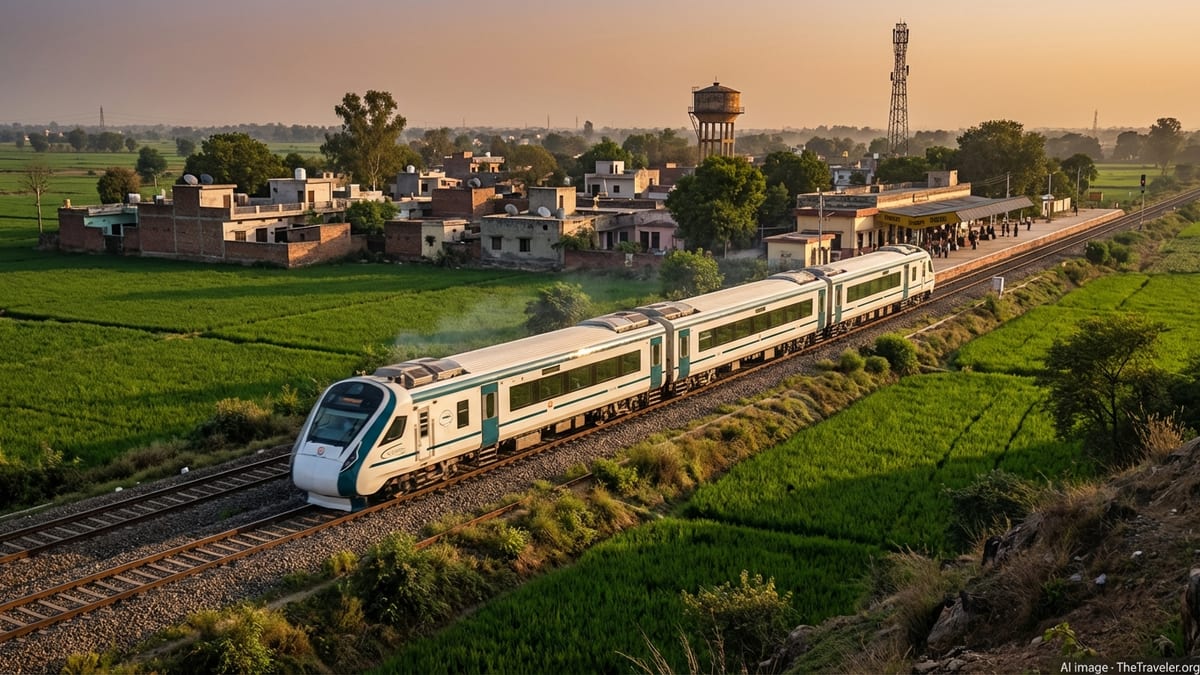
A Record-Setting Trainset on the Jind–Sonipat Corridor
Recent reports from Indian and international outlets indicate that the hydrogen-powered train reached 120 km/h during high-speed testing on the Jind–Sonipat section of Northern Railway, a largely non-electrified corridor earmarked as a showcase for next-generation rolling stock. The trial took place in late June 2026 and followed a series of lower-speed runs conducted earlier in the month.
The trainset consists of 10 coaches, including two driving power cars, and stretches to a length comparable with many conventional mainline passenger formations. Published technical details describe a hydrogen fuel cell power output of about 2,400 kW, placing the consist among the most powerful hydrogen passenger trains currently on rails worldwide and, by number of coaches, one of the longest single hydrogen passenger trainsets yet tested.
Railway-focused publications and specialist blogs have highlighted that the test section between Jind and Sonipat provides a relatively straight alignment suitable for progressive speed build-up. During the latest run, the train reportedly sustained the 120 km/h mark over multiple kilometers, demonstrating that the propulsion system and braking performance can support what rail planners in India classify as semi high-speed operation.
Observers note that this achievement gives India a visible entry in the growing field of hydrogen rail technology, which so far has been dominated by European and Chinese manufacturers. While other hydrogen trains have achieved higher top speeds individually, the combination of train length, power rating, and trial speed on an extended route has drawn particular attention from industry analysts.
Design, Powertrain, and Onboard Hydrogen Technology
According to publicly available technical summaries, the 10-car trainset is built on a broad-gauge platform tailored to India’s 1,676 mm network, with wide-body coaches engineered to handle large passenger volumes. The two end power cars house hydrogen storage tanks, fuel cell stacks, and associated cooling systems, while intermediate coaches are arranged for standard class seating and standing capacity typical of regional services.
The propulsion architecture centers on hydrogen fuel cells that generate electricity on board, feeding traction motors via power converters and battery buffers. The published power output of roughly 2,400 kW is significantly higher than that of many earlier two- or three-car hydrogen multiple units in Europe, reflecting both the longer consist and the need to maintain performance on heavy, broad-gauge rolling stock.
Hydrogen is stored in high-pressure tanks mounted within reinforced compartments, with multiple layers of protection, isolation valves, and continuous monitoring systems described in technical commentary. Excess energy during braking can be recuperated into onboard batteries, improving efficiency on stop-start regional operations. The system is designed to emit only water vapor at the point of use, eliminating local exhaust emissions along the route.
Indian engineering outlets report that the train has been developed with a designed speed capability above the 120 km/h used in the latest tests, suggesting that future upgrades of track and signaling could allow higher operating speeds once the technology moves into regular service. For now, however, the focus remains on validating acceleration, stability, and energy consumption at the 120 km/h threshold.
Part of a Global Shift to Hydrogen Rail
The test in Haryana comes as hydrogen-powered trains gain traction worldwide, from regional networks in Germany and Austria to pilot projects announced in Italy, Romania, China, and the United States. Earlier hydrogen multiple units in Europe, such as those deployed in northern Germany, typically operate at speeds up to 120 or 140 km/h on non-electrified routes, offering an alternative to diesel traction where overhead catenary is not economical.
In parallel, manufacturers in China have unveiled hydrogen and supercapacitor-powered trains capable of around 160 km/h for suburban and interurban services, while new projects in southern Europe include narrow-gauge hydrogen fleets designed to replace diesel units on tourist and regional lines. Together, these initiatives illustrate a diverse technology landscape in which train length, speed, and route profile are tailored to each region’s needs.
Within this context, the Indian trainset’s distinction as one of the world’s longest and most powerful hydrogen passenger formations offers a different benchmark from records based on maximum speed or single-charge range. Analysts point out that for densely populated countries, the ability to carry large numbers of passengers on hydrogen trains may be as significant as headline-grabbing speed records.
Hydrogen advocates argue that the technology can complement electrification, particularly where long distances, complex terrain, or budget constraints slow the installation of overhead wires. Skeptics continue to raise concerns about overall efficiency and the climate impact of hydrogen sourced from fossil fuels, a debate that is shaping national strategies from Europe to Asia.
Decarbonizing a Vast Rail Network
Indian Railways operates one of the world’s largest rail networks, and although electrification has accelerated in recent years, thousands of kilometers of track remain reliant on diesel traction. Policy documents and public statements from transport planners describe hydrogen as a potential solution for selected non-electrified corridors, especially where traffic levels justify a premium rolling stock investment but not the cost of full electrification.
The Jind–Sonipat corridor has been framed in local coverage as a test bed for this approach. In addition to the train itself, reports point to the construction of dedicated hydrogen fueling facilities at Jind, featuring storage, compression, and dispensing systems designed to turn around the 10-car consist within scheduled layovers. The integration of fueling infrastructure and train operations is seen as a critical element for any long-term deployment.
Questions remain about how quickly such hydrogen services could be scaled across the wider network and how they will compare economically with continued electrification or emerging battery train technologies. Some analysts suggest that hydrogen trains may be particularly suited to specific regional clusters or demonstration routes, where they can operate as high-profile symbols of a broader transition to cleaner energy.
For now, the successful 120 km/h trial is being interpreted as a proof of concept rather than a final operational milestone. Timelines reported in the Indian rail community suggest that regular passenger services on the Jind–Sonipat route could begin once safety certifications, crew training, and station-level adaptations are completed in the coming months.
What the Landmark Trial Signals for Future Travel
Travel industry observers note that hydrogen-powered rail could subtly change the experience of regional journeys, particularly in countries with hot climates and heavy diesel use. Passengers can expect a quieter ride compared with conventional diesel multiple units, with reduced vibration and the absence of exhaust smells at platforms and trackside settlements.
From a tourism perspective, greener rail technology is increasingly being used as a selling point for destinations promoting low-carbon itineraries. If India’s long hydrogen trainset enters regular service, it is likely to feature in campaigns aimed at domestic and international travelers seeking lower-emission ways to move between secondary cities.
The trial also adds to a wider narrative in which hydrogen trains are no longer confined to small pilot projects in a handful of European regions. Instead, they are beginning to appear in large emerging markets with very different operating conditions, passenger volumes, and infrastructure constraints. This geographic diversification is expected to influence future train designs, standards, and cost structures across the industry.
As global rail operators continue to test combinations of electrification, hydrogen, and batteries, the Jind–Sonipat run at 120 km/h offers a concrete example of how hydrogen technology can be scaled to longer, heavier trains. For travelers, it hints at a future in which low-emission rolling stock becomes a routine feature of everyday journeys rather than a novelty confined to demonstration routes.