


More news on this day
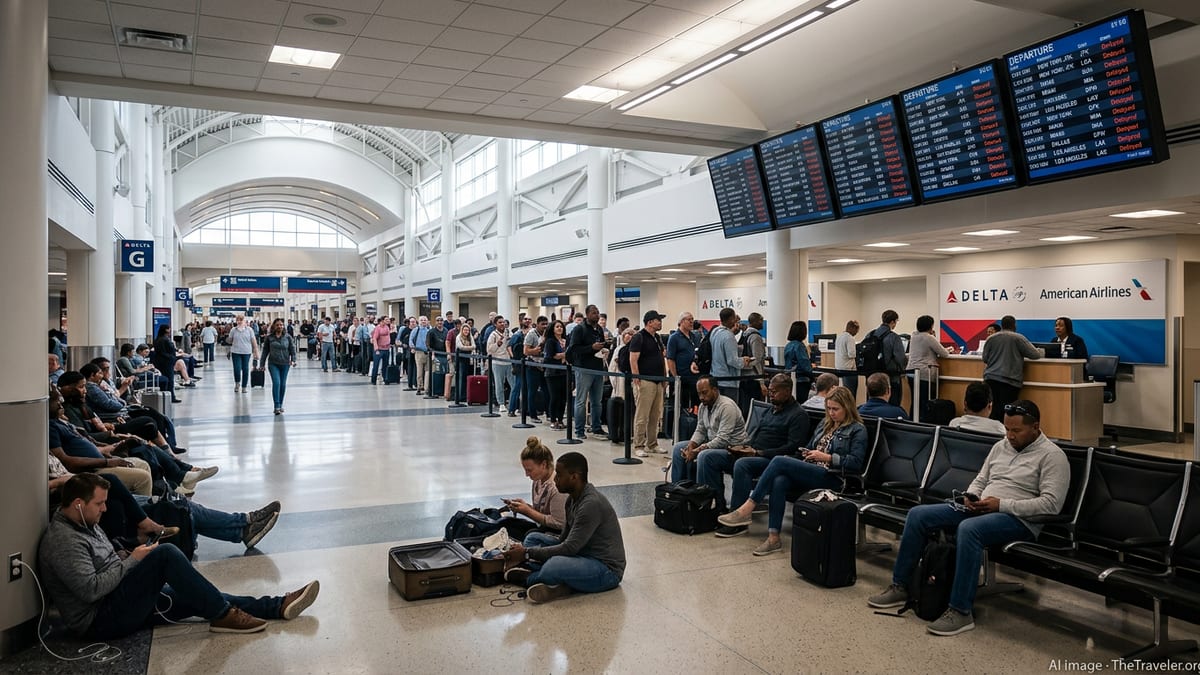
A cascading operational meltdown at Atlanta’s Hartsfield-Jackson International Airport has rippled across global air travel, as publicly available tracking data shows Delta Air Lines and Southwest Airlines suffering a combined 970 delays and 73 cancellations in a sprawling network disruption that left passengers stranded on multiple continents.
Get the latest news straight to your inbox!
Storms, System Strains and a Fragile Hub Network
Reports from aviation data providers and local media indicate that a convergence of severe weather, air traffic constraints and technology issues pushed the world’s busiest airport into crisis. Recent storms across the Southeast and Mid-Atlantic have already left Atlanta vulnerable, with prior episodes generating hundreds of delays in a single day as crews and aircraft fell out of position.
Analysts note that Hartsfield-Jackson’s role as Delta’s primary hub and a major connecting point for Southwest means even a localized disruption can quickly escalate. When departure banks are compressed or grounded, aircraft and crews miss onward rotations, leading to compounding delays that stretch far beyond Georgia. Within hours, the logjam in Atlanta was mirrored on departure boards at airports across North America, Europe and parts of Latin America.
Published coverage of previous breakdowns at major U.S. hubs, including Los Angeles and Atlanta, shows how heavily airlines rely on tightly choreographed scheduling. Any interruption in gate availability, ramp operations or IT systems can immediately expose the fragility of those networks, particularly during peak summer travel when schedules are already near capacity.
In this latest episode, publicly available flight-tracking logs point to a sharp spike in disruptions clustered around Delta and Southwest operations, with both carriers seeing their Atlanta-originating and Atlanta-bound traffic snarled alongside connecting services worldwide.
Delta Feels the Full Force of an Atlanta Breakdown
Delta, headquartered in Atlanta, bore the brunt of the meltdown. Data aggregated from flight-tracking platforms shows the carrier logging the majority of the 970 delays tied to the disruption, as well as a significant share of the 73 cancellations. Many of those irregular operations traced back to aircraft and crews that were scheduled to pass through Hartsfield-Jackson during the height of the chaos.
Delta’s extensive hub-and-spoke model magnified the impact. Once flights into Atlanta were delayed, the same aircraft could not operate subsequent legs to destinations such as New York, Boston, Chicago, Los Angeles and key international gateways. According to publicly available information, the knock-on effects cascaded into late-night and next-day schedules, as the airline worked to reposition jets and reset crew duty times.
Operational analysts point out that the carrier has faced similar challenges in recent months, with separate weather systems and infrastructure strains causing shorter but still significant waves of disruption at its main hub. Each event, including this latest one, underscores how critical Atlanta’s reliability is to Delta’s broader global operation.
Passengers connecting through the hub reported extended ground holds, long lines at customer service counters and difficulty securing alternative itineraries as rebooking options dwindled. While such experiences vary by route and cabin, the aggregate statistics indicate a system stretched well beyond its intended resilience.
Southwest’s Point-to-Point Model Also Buckles
Southwest Airlines, which relies more heavily on a point-to-point network than a traditional hub structure, was not spared. Flight-tracking data shows the Dallas-based carrier racking up a substantial number of the 970 delays and a portion of the cancellations linked to the Atlanta turmoil, particularly on heavily traveled domestic routes.
Because Southwest operates high-frequency services connecting secondary cities to Atlanta and other major hubs, the disruption rapidly propagated through its network. Delays on Atlanta legs pushed back departures on follow-on flights out of cities such as Nashville, Orlando, Baltimore and Denver, tightening aircraft and crew availability nationwide.
Industry observers note that Southwest has faced scrutiny over its ability to recover from irregular operations since a high-profile systems breakdown in prior years. According to published analyses, the airline has invested in technology and scheduling reforms, yet the current Atlanta-linked upheaval suggests that extreme disruptions at large airports can still tax its recovery capabilities.
For travelers booked on Southwest, the combination of rolling delays and scattered cancellations created a patchwork of missed connections and unplanned overnight stays, particularly for those relying on multi-leg itineraries stitched together across several cities.
Global Ripple Effects for Peak-Season Travelers
The Atlanta meltdown unfolded at a time when international travel demand is surging, which amplified its global consequences. As Delta and Southwest struggled to stabilize operations, partner airlines and codeshare services also experienced delays, especially on long-haul routes that depend on timely feeder traffic through U.S. hubs.
Publicly available flight data and media coverage indicate that departures from European and Latin American cities bound for connecting hubs in the United States faced rolling schedule changes. Aircraft that would normally arrive in Atlanta or other major airports with time to spare for onward connections instead landed to find missed flights, saturated rebooking channels and limited spare capacity.
Travelers heading to popular summer destinations, including beach resorts, national parks and major events, encountered a mosaic of disruption: arrival times pushed into the middle of the night, last-minute gate changes and baggage delays as ground teams scrambled to match luggage with shifted itineraries. For many, the immediate impact was less about a single canceled flight and more about a chain reaction of missed opportunities down the line.
Analysts caution that such events carry broader implications for airline reliability metrics and customer confidence during a crucial revenue period. Repeated high-visibility meltdowns, especially at marquee hubs like Atlanta, risk hardening traveler perceptions that the system cannot withstand unexpected shocks.
What Airlines and Passengers Can Learn From the Meltdown
While the specific triggers behind the latest Atlanta crisis are still being parsed by industry observers, early assessments highlight recurring themes. Complex scheduling, limited slack in aircraft and crew resources, aging IT infrastructure and external pressures such as storms or air traffic control constraints continue to form a volatile mix for major carriers.
Published commentary from aviation analysts suggests that airlines may need to revisit how aggressively they schedule peak travel days through critical hubs. Slightly less ambitious timetables, more robust contingency staffing and targeted technology investments could reduce the risk that a single operational shock spirals into a network-wide breakdown.
For passengers, consumer advocates recommend building in additional connection time when routing through congestion-prone hubs like Atlanta, especially during summer and holiday peaks. Choosing earlier departures, avoiding tight layovers and monitoring flight status closely via airline apps or tracking services can provide more flexibility when disruptions occur.
As travel demand remains strong, the Atlanta airport meltdown involving Delta and Southwest serves as a stark reminder of how interconnected modern aviation has become. A failure centered on one airport and two major carriers rapidly evolved into a global event, highlighting both the efficiency and the vulnerability of today’s air travel system.