


More news on this day
A new round of short-notice flight cancellations at Frankfurt Airport is disrupting travel across Europe and North America, with nearly a dozen departures halted on services operated by or marketed through Lufthansa, Air Canada, British Airways and other major carriers, affecting passengers bound for Montreal, Zurich, Geneva, Venice, Lisbon, Copenhagen and additional destinations.
Get the latest news straight to your inbox!
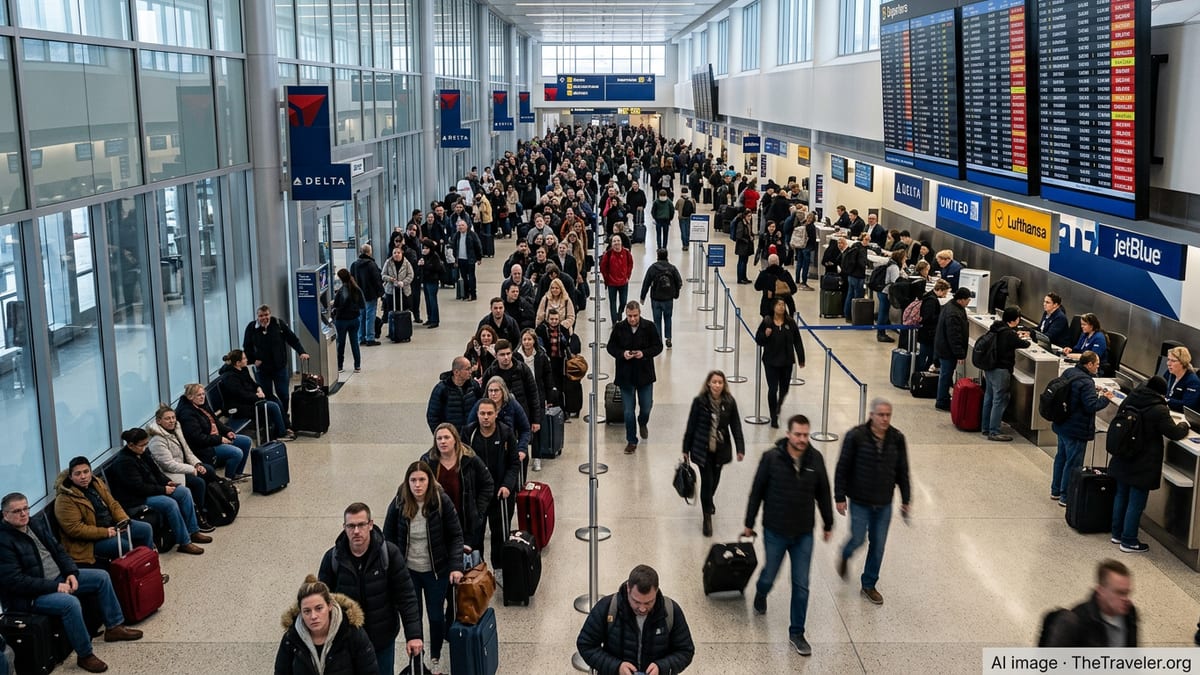
Fresh Disruptions at Germany’s Busiest Hub
Frankfurt Airport, one of Europe’s largest transfer hubs, is again grappling with schedule instability as airlines adjust summer operations and respond to capacity constraints. Publicly available disruption trackers and schedule updates show that several flights due to depart Frankfurt for major cities including Montreal, Zurich, Geneva, Venice, Lisbon and Copenhagen have been withdrawn from timetables or marked as cancelled over the past 24 to 48 hours, triggering missed connections and last-minute rebookings for hundreds of travelers.
Recent adjustments appear concentrated on short and medium haul services within Europe and select transatlantic departures. Industry commentary points to a mix of fleet optimization, higher fuel and staffing costs and the continued rebalancing of traffic following the opening of Frankfurt’s new Terminal 3 in April 2026 as airlines redistribute capacity across their networks.
The cancellations come at the start of the peak summer travel period in Europe, a time when Frankfurt traditionally runs near full capacity. Travel forums and flight-tracking platforms show a rise in reports from passengers who discovered that previously confirmed itineraries via Frankfurt had disappeared from airline apps or had been rebooked on alternative routings.
Although the number of cancelled flights remains small compared with Frankfurt’s overall daily movements, the hub’s role as a primary connection point amplifies the impact. A single cancelled departure to a key city can trigger missed long haul links and force airlines to re-accommodate travelers across multiple partner carriers.
Lufthansa and Star Alliance Partners Trim Schedules
Lufthansa, the dominant carrier at Frankfurt, has been at the center of the latest wave of changes. Recent schedule revisions and publicly circulated special timetables show the airline temporarily cutting or consolidating flights from Frankfurt to several European cities, including Zurich, Geneva, Lisbon and Copenhagen, and adjusting selected long haul services that serve as onward connections for North American traffic.
Documents outlining special flight schedules, published for internal and customer reference, list multiple Frankfurt departures that have been removed or combined on specific days. These adjustments include services on routes to Montreal and other key markets that are often jointly marketed with Star Alliance partners. In some cases, passengers holding Lufthansa flight numbers are being rebooked onto codeshare services operated by partner airlines, while in others they are offered alternative routings via Munich, Zurich or Vienna.
Air Canada, which relies heavily on Frankfurt for transatlantic connectivity to and from Germany, has also been affected where its jointly marketed flights align with Lufthansa-operated segments. Travelers on itineraries combining Air Canada long haul sectors with Lufthansa or other European feeder flights are among those reporting short-notice schedule changes and cancellations in and out of Frankfurt.
Swiss International Air Lines and other members of the Lufthansa Group have responded by redirecting some traffic through their own hubs, including Zurich. Network analysts note that shifting connecting flows to multiple hubs can ease pressure on Frankfurt during peak periods but increases the risk of disruption for passengers already ticketed via Germany’s primary gateway.
British Airways and Oneworld Links Also Caught Up
While Lufthansa Group adjustments account for the majority of cancellations, itineraries involving British Airways and associated Oneworld connections have also been caught up in the disruption. Passenger accounts on travel and aviation forums describe cases where travelers originally booked on Lufthansa-operated segments from regional German airports to Frankfurt for onward British Airways or transatlantic flights saw their feeder legs cancelled and were offered rebooking options via London instead.
In several instances, travelers report that Lufthansa’s automated systems rebooked them days later than originally planned, prompting some to request rerouting on British Airways or other partners to maintain their planned arrival dates. These cases highlight how cancellations on relatively short intra-European flights can cascade through alliance networks, affecting journeys far beyond Germany.
According to recent online discussions among frequent flyers, some passengers have opted to abandon complex multi-carrier routings via Frankfurt in favor of more direct itineraries, even at additional cost. Others are turning to rail for regional segments inside Germany and neighboring countries to avoid additional short haul flights that may be vulnerable to last-minute schedule changes.
Travel agents and independent analysts note that alliance partnerships, while expanding destination options, can complicate customer service when flights are cancelled. Reissuing tickets and authorizing rebookings across multiple carriers can extend resolution times, particularly when cancellations occur close to departure.
European Destinations Most Affected
The destinations most visibly affected by the current round of cancellations from Frankfurt span both high-traffic and secondary markets. Flight information services and special timetables show particular pressure on routes linking Frankfurt with Zurich, Geneva, Venice, Lisbon and Copenhagen, which are key connection points for both business and leisure travelers.
On some days, entire rotations between Frankfurt and these cities have been removed or merged, leaving gaps in the schedule that reduce options for same-day connections. For Venice and Lisbon in particular, where many travelers connect onward to seasonal leisure destinations, the loss of a single morning or evening departure can mean an additional night in transit or a forced change to travel plans.
Montreal also features among the disrupted destinations, reflecting the importance of the Frankfurt hub for Canada-Europe traffic. When a Frankfurt segment is cancelled on an itinerary spanning North America and Europe, passengers may need to be re-routed through other hubs such as London, Zurich, Toronto or Munich, increasing travel time and connection complexity.
Travel analysts caution that such targeted cancellations are consistent with broader capacity management strategies, in which airlines prioritize routes with the highest yield or strongest year-round demand while trimming frequencies on markets where alternative connections are more readily available.
What Travelers Passing Through Frankfurt Should Expect
For travelers currently booked on Lufthansa, Air Canada, British Airways or other major airlines connecting through Frankfurt in the coming days, industry observers recommend closer-than-usual monitoring of itineraries. Experience from recent disruptions suggests that some passengers first discovered cancellations only when they noticed missing flights in airline mobile apps or when they attempted to check in online.
Given Frankfurt’s role as a dense transfer hub, even a modest number of cancellations can lead to congestion at customer service desks and longer waits for rebooking assistance. Passengers report that same-day alternatives are sometimes available on partner carriers but may involve additional stops or longer layovers, particularly for trips linking smaller European cities with long haul destinations.
Consumer advocates reiterate that travelers on flights departing the European Union may have specific rights to care, reimbursement or compensation under EU261 and related regulations when flights are cancelled or significantly delayed, depending on the circumstances. However, the process of asserting those rights often requires submitting claims after travel is completed, rather than resolving all issues at the airport on the day of disruption.
With the summer rush building, analysts expect airlines at Frankfurt to continue fine-tuning schedules as they respond to demand patterns, operational constraints and fleet availability. While most flights are still operating as planned, the recent cluster of cancellations to cities such as Montreal, Zurich, Geneva, Venice, Lisbon and Copenhagen is a reminder for passengers to build extra time into connections and to verify flight status repeatedly in the days and hours before departure.