


More news on this day
After several turbulent years, the Middle East is reemerging as one of the fastest-growing travel regions in the world, with new visitor records, mega-projects and evolving safety dynamics reshaping where and how travelers go.
Get the latest news straight to your inbox!
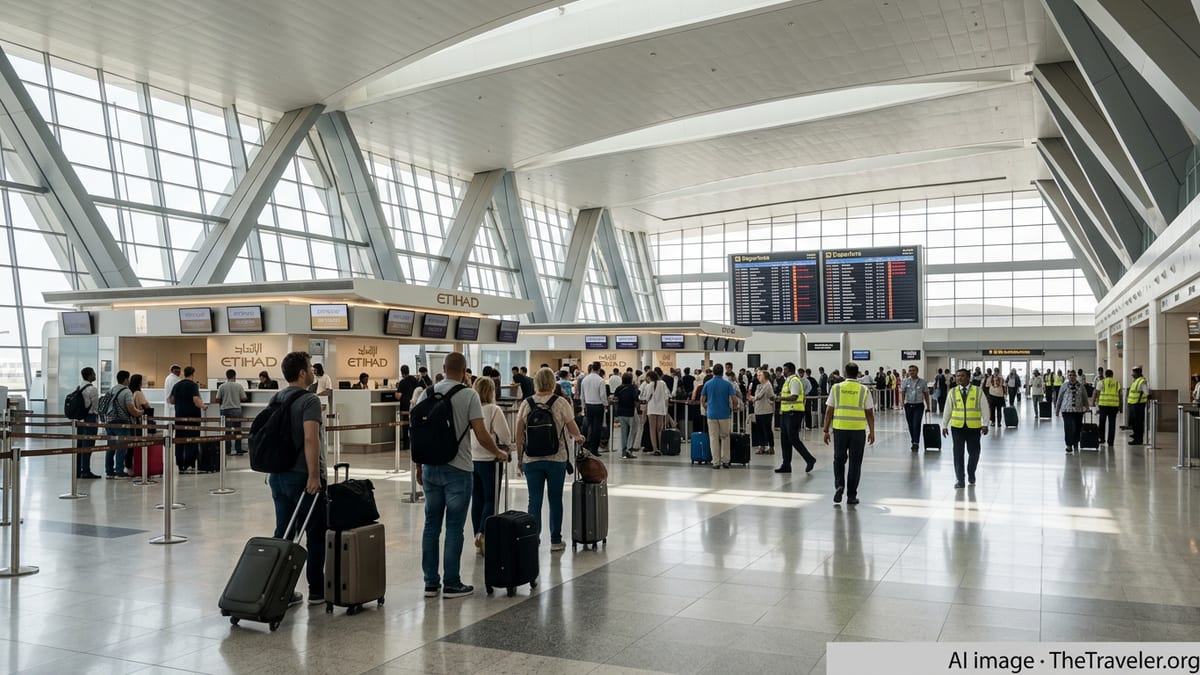
From Recovery to Record-Breaking Growth
Tourism data indicates that the wider Middle East has moved well beyond the post-pandemic recovery phase and into a new period of expansion. UN Tourism reporting for 2024 and early 2025 highlights the region, alongside Europe and parts of Africa, as one of the strongest contributors to the rebound in international travel volumes, with visitor numbers returning to or exceeding 2019 levels in many destinations.
Saudi Arabia has emerged as a leading force in this shift. Government statistics compiled for the kingdom show that the country hosted about 116 million domestic and international tourist trips in 2024, with close to 30 million of those classed as inbound visitors, an increase of roughly 8 percent on the previous year. Travel industry coverage notes that tourism spending in the kingdom reached around 284 billion Saudi riyals in 2024, underscoring the sector’s growing weight in the national economy.
Neighboring Gulf states are also posting strong numbers. The United Arab Emirates, Qatar and Oman have all reported hotel performance and arrival figures that either match or improve on pre-pandemic benchmarks, supported by a mix of leisure travel, major events and stopover tourism tied to regional aviation hubs.
New Tourism Hubs and Mega-Projects
Saudi Arabia’s aggressive tourism strategy is reshaping maps and itineraries across the region. Flagship developments on the Red Sea coast, in AlUla and around the capital Riyadh are designed to turn what was once primarily a religious and business market into a broad-based leisure destination. Industry briefings and consultancy reports describe multi-billion-dollar investments in resorts, nature-focused islands, archaeological sites and entertainment districts, many of which are now partially open or in advanced stages of construction.
Elsewhere, the Gulf’s more established hubs are repositioning. Dubai and Abu Dhabi continue to expand theme parks, cultural institutions and beach districts, while Doha is leveraging infrastructure built for the 2022 World Cup to support a longer-term visitor economy. Oman’s strategy emphasizes coastal resorts and adventure tourism in its mountains and deserts, with official statistics referenced in regional business coverage pointing to steady growth in higher-category hotel stays in 2024.
These projects are collectively altering perceptions of the Middle East as a short-stop transit region. For many travelers, the area is increasingly a primary destination built around multi-day city stays, desert experiences and coastal breaks, rather than a brief layover on a long-haul route.
Visas, Connectivity and Practical Entry Changes
Policy changes are also making it easier for visitors to move around the region. Saudi Arabia has gradually broadened its e-visa and visa-on-arrival schemes to cover dozens of nationalities, according to public announcements summarized in regional media. The program includes options for tourism, business and religious visits, and in some cases extends eligibility to residents of other Gulf Cooperation Council states.
The UAE and Qatar maintain relatively liberal visa regimes for many travelers, with multiple nationalities able to obtain visas on arrival or enter visa-free for short stays. Oman has simplified online visa procedures and, in some instances, relaxed requirements for travelers who already hold visas for certain Western, Gulf or Schengen-area countries. These changes, while varying by passport, have significantly reduced paperwork for many visitors planning multi-country itineraries.
Aviation connectivity underpins this shift. Carriers based in the UAE, Qatar and Saudi Arabia continue to add routes across Europe, Asia, Africa and the Americas, turning hubs such as Dubai, Doha, Abu Dhabi and Riyadh into key transfer points. For leisure travelers, that network growth translates into more nonstop or one-stop options to secondary cities and emerging resort areas across the Middle East.
Security, Advisories and Uneven Recovery
Despite the strong overall recovery, conditions on the ground differ sharply from country to country. Recent travel advisory updates published by the United States and other governments categorize some parts of the region as higher risk due to conflict, terrorism or civil unrest. As of mid-2026, advisory systems commonly place Lebanon, Syria, Yemen and parts of Iraq in the highest warning tiers, with guidance generally discouraging or prohibiting nonessential travel.
Israel, the West Bank and Gaza remain subject to elevated warning levels following the escalation of conflict from late 2023 onward, with advisories emphasizing security concerns and the potential for sudden changes in local conditions. Some neighboring states are placed in intermediate categories, advising visitors to exercise increased caution in certain areas or to avoid specific border zones.
By contrast, Gulf destinations such as the UAE, Qatar and Oman are typically rated at lower advisory levels, although travelers are still urged to keep track of regional developments. Saudi Arabia is often assessed at an intermediate risk category that distinguishes between key urban centers and more sensitive border regions. These differing assessments mean that even as the region as a whole attracts more visitors, the pace of recovery remains highly uneven.
What Travelers Need to Watch Now
The return of the Middle East to the global tourism spotlight brings both opportunities and new complexities for travelers. Airfare and hotel pricing in major hubs have generally moved higher in response to strong demand, especially during peak seasons tied to religious holidays, school breaks and large-scale festivals. Prospective visitors are being encouraged by industry observers to book early for popular periods in cities such as Dubai, Riyadh and Doha.
At the same time, the expansion of secondary cities and new resort areas is creating alternatives for travelers seeking lower prices or less crowded experiences. Coastal developments along the Red Sea, emerging cultural circuits in Saudi Arabia and Oman, and inland desert lodges in Jordan and the UAE are increasingly featured in tour programs and independent itineraries.
For now, the key message for travelers is twofold: the Middle East is once again a central player in global tourism, but it is not a uniform market. Country-specific safety advice, entry rules and infrastructure development vary widely. Careful route planning, close attention to official travel advisories and flexible itineraries remain essential tools for anyone looking to experience the region’s newly revitalized tourism landscape.