


More news on this day
As fully automated metros spread from Paris to Singapore and beyond, the challenge is no longer how to move trains without drivers, but how to keep those complex systems running almost flawlessly while passenger numbers surge.
Get the latest news straight to your inbox!
A New Generation of Driverless Metro Backbones
Automated urban rail is moving from showcase projects to the core of major city networks, and that shift is reshaping how systems are designed, built and maintained. In Paris, the extension of Metro Line 14 to Saint-Denis Pleyel in the north and Orly Airport in the south, inaugurated in June 2024, has turned the fully driverless route into a high-capacity spine for the Grand Paris Express expansion. Operator information indicates that by 2025 the line is expected to carry around one million passengers per day with trains running at intervals as short as 85 seconds.
Line 14 was already one of the earliest large-scale driverless metros in a capital city. Its latest upgrade has combined new MP14 rolling stock with a modern communications-based train control system, replacing an earlier generation of automation while the line remained in service. Public project documents describe how this migration demanded years of staged testing, night-time installation and detailed verification on both the signalling and train sides to avoid long daytime closures.
The extension has also required new maintenance and storage facilities south of Paris, designed specifically for automated operation. Instead of relying on depots that primarily serve manually driven trains, the new sites integrate automation-ready track layouts, platform protection and equipment rooms sized for expanded data, telecoms and power systems. These facilities are where much of the work of keeping a driverless metro healthy actually takes place.
The Grand Paris Express project, which adds four new mostly automatic lines and extends existing routes, is amplifying these requirements. Construction contracts and operator reports highlight how each new section is being built around automation from the start, with separate maintenance bases, redundant equipment rooms and digital control centres that anticipate decades of heavy usage without a driver on board to act as an extra safety check.
From Corrective Repairs to Condition-Based Care
Behind the glass doors and unattended platforms, automated metros depend on dense layers of sensors and communications equipment. Where older systems often relied on fixed-interval maintenance schedules and crews responding after a failure, newer driverless networks are turning to condition-based and predictive regimes. These approaches use real-time data to focus attention where it is most needed, reducing both surprise breakdowns and unnecessary component changes.
On modern automated lines, trains, tracks and wayside systems continuously stream information on temperatures, vibrations, electrical loads and signalling status to central platforms. In the case of Line 14, suppliers describe on-board diagnostics that monitor traction systems, doors, braking and wheel condition, while the signalling system tracks train positions and radio links at fine intervals. When certain thresholds are exceeded, alerts are forwarded to maintenance teams long before passengers notice a problem.
Condition-based maintenance is particularly important in an automated environment because there is no driver to observe unusual sounds or smells and report them immediately. Instead, the health of the system is inferred through measurements. Metro operators in Europe and Asia have increasingly documented the use of trackside monitoring equipment that listens for flat spots on wheels or uses cameras and laser systems to assess the state of the railhead, overhead lines or third rails, feeding data into asset-management software.
Reports from the rail industry indicate that this shift has measurable impacts on service reliability, often expressed as the distance trains can travel on average between delays above a certain duration. Systems that have adopted structured condition-based regimes typically report steady improvements in these indicators, even as passenger volumes and train-kilometres rise.
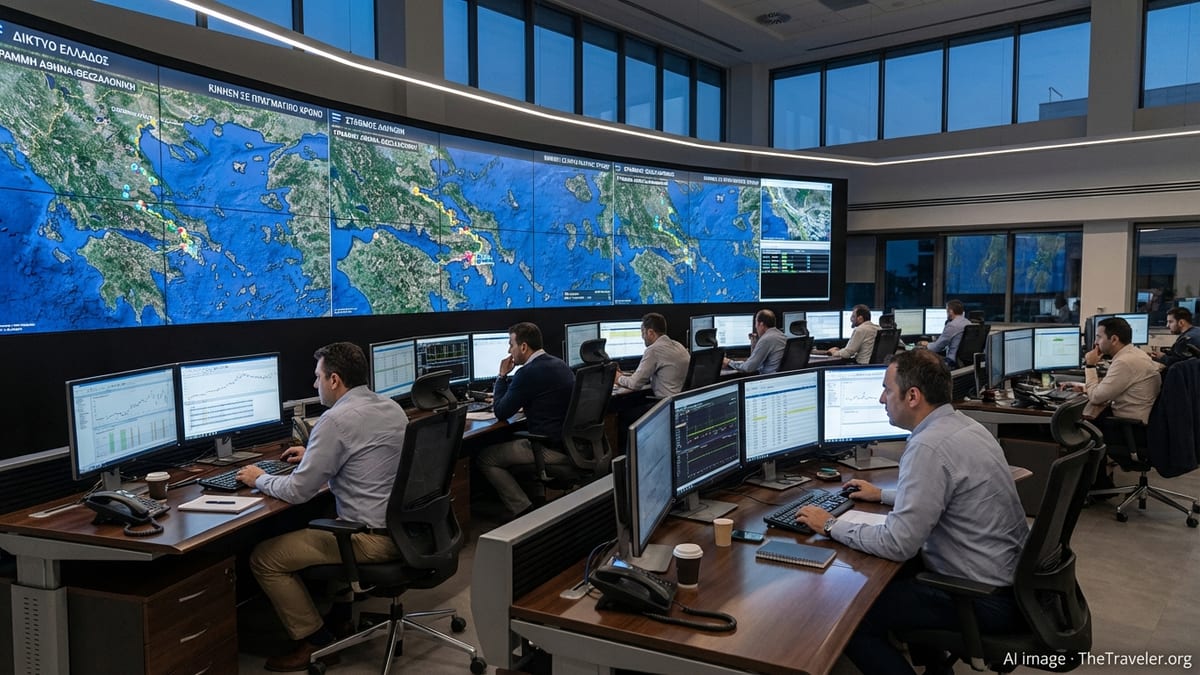
AI and Data Platforms Enter the Control Room
As data volumes increase, operators are turning to artificial intelligence to sift through signals and spot patterns that human engineers might miss. In Singapore, rail operator initiatives have highlighted cloud-based platforms that aggregate information from vehicle sensors, wayside equipment and maintenance records to support predictive maintenance and incident response across busy automated lines.
One example is the use of AI tools to detect anomalies in train door operations or traction power consumption, enabling teams to intervene before repeated minor faults escalate into network-wide disruptions. Publicly available information describes algorithms that compare real-time performance against digital baselines for each trainset, flagging outliers for inspection during off-peak hours or overnight depot visits.
In some Asian and European metros, data platforms are also becoming collaboration spaces between infrastructure managers, rolling-stock manufacturers and signalling suppliers. Shared dashboards allow all parties to see the same health indicators, fault trends and maintenance backlogs, reducing the risk that critical information is siloed. For long-term service contracts, this transparency is tied directly to performance incentives, with suppliers rewarded when trains and signalling equipment meet agreed reliability thresholds.
The same tools are starting to shape passenger-facing operations. By linking condition data with service-planning software, control centres can decide in real time whether to remove a train from service for a precautionary check, insert a spare unit, or adjust headways to preserve capacity. Automation at the train-control level gives operators more flexibility to make those changes quickly, but it also raises expectations that any disruption will be managed with minimal visible impact.
Designing Infrastructure for Maintainability
Keeping automated metros healthy is not just about analytics. The physical design of tunnels, stations and depots can either simplify or complicate years of maintenance activity. Project descriptions for recent extensions in Paris emphasize additional crossovers, service sidings and access shafts that provide more options for isolating parts of the line for work while keeping the rest open to passengers.
In many new automated systems, maintenance zones are being planned with wider walkways, improved lighting and dedicated technical rooms to accommodate modern power, telecoms and signalling equipment. This is partly a safety measure for workers, who may be carrying out complex electronic interventions in confined spaces, and partly a recognition that digital systems often grow over time. Allowing room for new cabinets, cables and cooling can delay the day when a control room or equipment gallery becomes saturated and difficult to manage.
Rolling stock itself is also being rethought with maintainability in mind. The latest automated metro train families, such as those deployed on extended European and Asian lines, incorporate modular components that can be swapped quickly, from pre-assembled door modules to plug-in electronics racks. Supplier information indicates that these designs shorten workshop turnaround times and limit the duration that a train is unavailable after an incident.
Some projects are even adjusting construction sequences around maintenance needs. For instance, contracts for new lines sometimes prioritise outlying sections where depots and maintenance bases will be located, allowing those facilities to come online early. Once built, they provide a platform for testing trains and systems in isolation before they are connected to the main network, reducing the disruption that can occur during final integration.
Balancing Olympic Deadlines, Daily Riders and Long-Term Health
The expansion of automated metros is often tied to major events and political milestones, creating intense pressure to open lines by fixed dates. Paris’s Line 14 extension was closely associated with preparations for the 2024 Olympic and Paralympic Games, while metro projects in the Gulf and parts of Asia have been linked to expos, new financial districts or smart-city initiatives. Yet operators still need to preserve long-term reliability.
Documents from large rail projects suggest that one way this balance is being managed is through staged opening strategies and prolonged trial phases. Lines may run limited pre-revenue services to accumulate kilometres, expose systems to real-world conditions and refine maintenance strategies before full schedules begin. During these periods, engineers adjust inspection frequencies, fine-tune alarm thresholds and update digital twins of the infrastructure so that predictive models are based on actual behaviour rather than design assumptions.
As automated metros age, a new challenge is emerging: how to renew signalling and rolling stock without undermining the trust of riders who have become accustomed to frequent, driverless service. The recent migration of an already automated line in Paris to a new communications-based train control platform is being closely watched in the industry as a test case for end-of-life replacement on driverless systems that must stay open throughout the works.
For travellers, the technology behind these transitions may be invisible, reduced to countdown clocks, platform doors and the hum of unattended trains arriving on time. For operators, however, maintaining automated metros is becoming a continuous exercise in data-driven risk management, where every decision about sensors, software updates and spare-parts logistics ultimately shapes the reliability of the daily commute.