


More news on this day
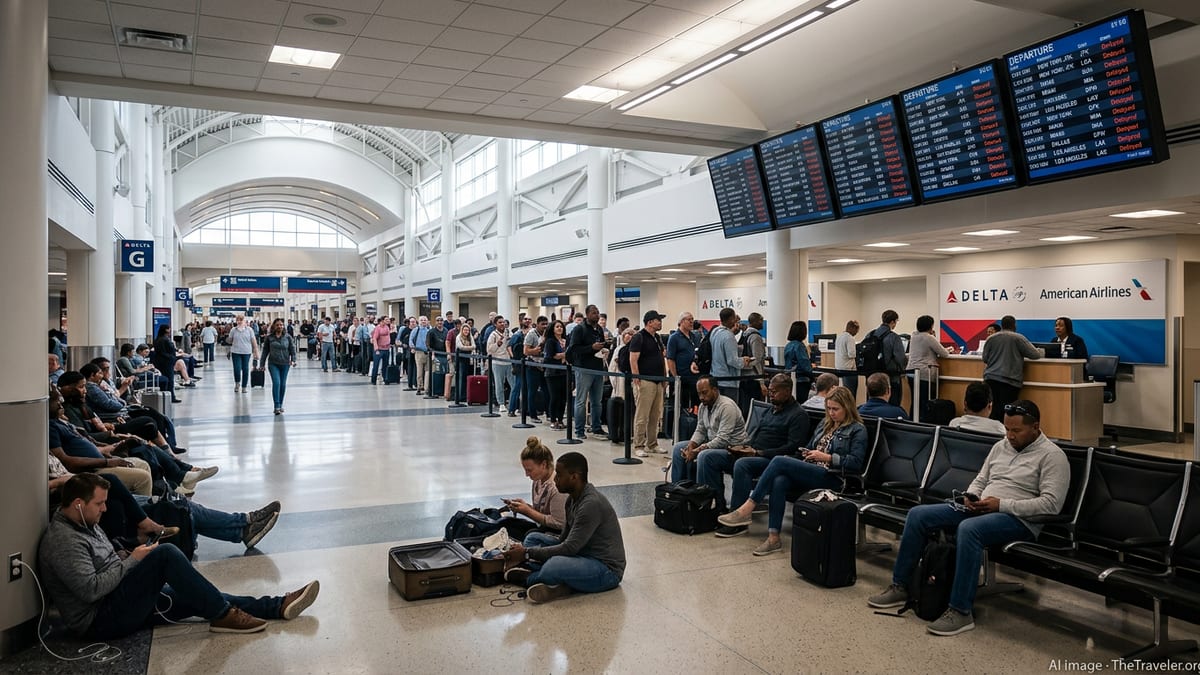
Air travel across the United States is facing fresh disruption as a new wave of operational snarls at Hartsfield Jackson Atlanta International Airport triggers 149 delays and 5 cancellations, sending knock-on effects through major carriers including Delta Air Lines, Southwest, Endeavor, Air France and their partners across the country and overseas.
Get the latest news straight to your inbox!
Atlanta’s Role as a Mega Hub Amplifies Every Disruption
Hartsfield Jackson Atlanta International is one of the world’s busiest passenger hubs, handling well over 90 million travelers a year in recent pre pandemic tallies and serving as the primary connecting gateway for Delta Air Lines and a major station for Southwest and several international partners. When operations slow in Atlanta, the impact is quickly felt on flights that may never touch Georgia, as aircraft and crews are pulled out of position across the network.
Publicly available airport traffic data for 2026 shows Delta accounting for the majority of scheduled seats in Atlanta, with Southwest, Endeavor and foreign partners such as Air France, KLM, Korean Air, LATAM and Virgin Atlantic also maintaining a significant presence. This concentration of carriers and codeshares means that a relatively modest number of delays and cancellations at a single hub can ripple outward, affecting itineraries from New York and Chicago to Paris, London and beyond.
On the current day of disruption, the tally of 149 delays and 5 cancellations out of Atlanta represents a small fraction of the hundreds of daily departures, yet it is enough to create connection risks for travelers with tight layovers and to trigger equipment swaps and crew reassignments that can echo into the evening schedule.
Network Effects Reach Domestic and Transatlantic Routes
The latest operational snags are touching a broad mix of domestic and international services. Delta’s dense schedule from Atlanta to mid size and large US markets means even short holdups on early morning and midday departures can cascade, affecting flights that aircraft are scheduled to operate later in the day to the West Coast or to Latin America.
Codeshare relationships are extending the reach of the disruption. Many Delta operated flights out of Atlanta carry multiple designations for partners such as Air France, Aeromexico, Korean Air, KLM, LATAM, Virgin Atlantic and WestJet. A delay to a single Atlanta departure therefore appears across several airline timetables at once, complicating rebooking for passengers who purchased tickets through partner carriers rather than directly with the operating airline.
Internationally, transatlantic routes between Atlanta and key European hubs including Paris and Amsterdam are particularly sensitive to upstream delays. Late departures from Atlanta can jeopardize early morning arrival slots and onward connections in Europe, while any missed inbound aircraft from overseas can in turn cause gaps in the afternoon and evening departure banks back to the United States.
Multiple Factors Behind the Latest Wave of Delays
While the current disruption is relatively limited in scale compared with past meltdowns, it comes against a backdrop of a challenging year for flight operations at major US hubs. Published coverage in recent months has highlighted a mix of causes for problems centered on Atlanta, including technical system glitches, staffing constraints and severe weather patterns that have snarled air traffic across the Eastern United States.
Earlier in 2026, a technical issue affecting Delta’s check in and boarding systems led to widespread departure delays across its network, with regional partner Endeavor also affected. That episode reflected how quickly an IT fault in one airline’s systems can reverberate through its hub and partner operations, especially at a complex airport like Atlanta.
Weather has been another persistent challenge. Thunderstorms, hail and low visibility can force ground stops, reduce arrival and departure rates and require safety inspections of aircraft, all of which consume valuable time and resources. Even when the skies clear locally, crews and aircraft positioned elsewhere may still be out of sync with the planned schedule, producing delays that appear hours after the original trigger.
Today’s pattern of 149 delays and 5 cancellations lines up with this wider context in which multiple operational pressures converge on a single node in the air travel system. Carriers are attempting to recover quickly, but the tight scheduling that underpins modern hub and spoke networks leaves little slack when even a minor disruption takes hold.
Impact on Travelers Across Carriers and Regions
For passengers, the operational statistics translate into missed connections, extended layovers and last minute itinerary changes across several airlines. Travelers booked on Delta and its regional subsidiary Endeavor are facing the most direct impact because of the size of their Atlanta operations, but Southwest customers are also experiencing knock on delays, especially on routes that rely on precise aircraft rotations through the hub.
Passengers whose tickets involve partner airlines such as Air France may find that a delay on a domestic feeder flight into Atlanta compromises an onward long haul departure. In some cases, travelers are being rebooked through alternative hubs on other carriers or rerouted onto later departures, potentially arriving at their final destinations many hours behind schedule.
The ripple effects are not confined to the United States. As aircraft and crews slip behind schedule, services touching Canada, Mexico, the Caribbean and Europe can also be affected. Even when an individual flight operates near its planned time, downstream changes to aircraft assignments may result in altered seat maps, equipment swaps and cabin configuration differences that change the travel experience for some customers.
What Passengers Can Expect in the Coming Hours
Based on recent patterns at Atlanta and other major hubs, the operational focus in the near term is likely to be on stabilizing the evening and overnight schedule. Airlines generally prioritize long haul international services and heavily booked domestic trunk routes when deciding how to recover from a mid day or afternoon disruption, while marginal late night flights or lightly traveled regional segments are more at risk of further delays or cancellations.
Travelers connecting through Atlanta over the remainder of the day should expect continued schedule adjustments and should monitor flight status information frequently, particularly if connecting times are under one hour. Flexibility in accepting rerouting through other hubs or on alternate airlines can improve the chances of reaching a destination on the same day when disruption is widespread.
As the summer travel season continues, the Atlanta episode underscores how quickly even a modest spike in delays and cancellations at a single mega hub can ripple through airline networks. For carriers including Delta, Southwest, Endeavor and Air France, maintaining resilience in Atlanta remains central to keeping the broader system moving for millions of passengers each month.