


More news on this day
Australian travellers heading to Europe this northern summer are being urged to brace for hours-long waits at passport control, with reports of chaotic queues, missed connections and malfunctioning technology at airports across the Schengen zone.
Get the latest news straight to your inbox!
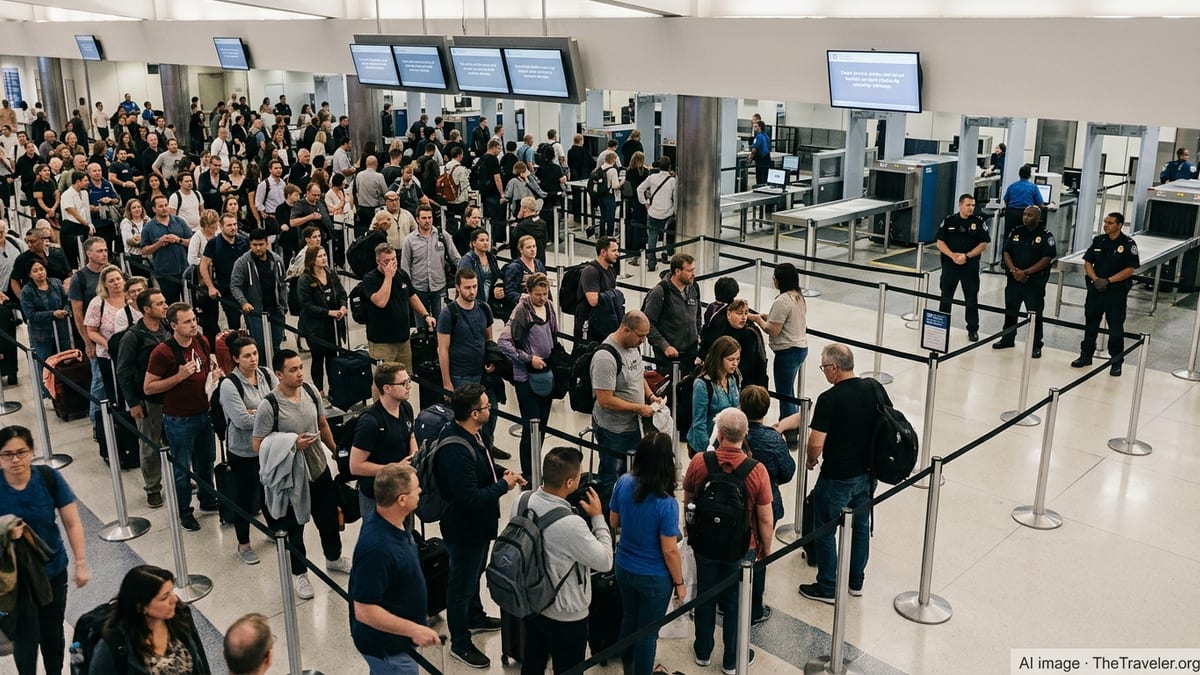
New border system turns peak season into a stress test
The disruption follows the full roll-out in April of the European Union’s digital Entry/Exit System, which replaces passport stamping for most non-EU visitors with biometric checks at external Schengen borders. Australians, along with travellers from Britain, the United States and other visa-free nations, must now have fingerprints and facial images captured and stored on first entry.
The rollout was designed to streamline border management and improve security, but published coverage indicates that the first major summer travel season under the system is exposing serious strains. Reports from aviation groups and travel industry analysts describe lengthy lines at passport control, with processing times stretching from seconds to several minutes per traveller.
Industry briefings indicate that airports in Italy, Belgium, Portugal, Spain and Germany have all reported severe bottlenecks at various points since April. Queues have frequently spilled out of the designated border control areas during busy periods, particularly at major hubs handling long-haul arrivals from Asia and the Pacific.
For Australian tourists, who often arrive after long overnight flights and transit to other European cities, these delays are proving particularly disruptive. Travel advisories now commonly suggest allowing several hours between connecting flights within Europe to avoid missed departures.
‘It was nuts’: Aussies caught in hours-long queues
Australian media coverage in recent days has highlighted a growing number of accounts from holidaymakers describing “nuts” scenes at European arrival halls. Passengers arriving from Australia into Rome, Frankfurt, Lisbon and other gateways have reported standing in immigration lines for two to four hours, even when they believed they had already been successfully registered in the new system on previous trips.
Some travellers say they were surprised to find that prior registration offered little advantage. Reports describe cases where passengers who had enrolled their biometrics weeks earlier were nonetheless asked to repeat the process because the system could not retrieve their data or struggled to match fingerprints and facial scans to stored records.
These inconsistencies are contributing to a sense of confusion and frustration among visitors. Published accounts describe families splitting up in queues, missed hotel transfers, and frantic dashes through terminals after finally clearing border control to discover that boarding gates had already closed.
Travel commentators in Australia note that the situation is particularly challenging for older travellers and those with tight tour itineraries, who may be less comfortable navigating sudden changes and rebookings in unfamiliar airports.
Airports and airlines escalate warnings about EES pressures
Across Europe, aviation bodies have escalated their warnings about the impact of the Entry/Exit System on airport operations during the height of the northern summer. Associations representing airports and airlines have jointly described the situation as reaching a “critical point”, noting reports of border queues stretching to three, four and even five hours during peak traffic waves.
Publicly available statements from these groups argue that there is a gap between official assessments of the system’s performance and what passengers are experiencing on the ground. They point to repeated accounts of long waits, missed connections and aircraft departing with empty seats while travellers remain stuck at passport control.
Carriers serving leisure-heavy routes have begun advising passengers to arrive significantly earlier at European airports, both for departures back to Australia via hubs and for intra-European flights. For Australians completing multi-leg journeys home, this can mean allocating almost a full day for transit formalities alone.
Consumer-rights organisations and flight-compensation platforms have also documented a spike in complaints linked to border-control delays since April. While not all missed flights are eligible for financial redress, the pattern underscores how closely the new border system is entwined with broader travel disruption this season.
Tech glitches, patchy preparation and a long bedding-in period
Behind the scenes, technical issues and uneven preparation appear to be driving much of the turmoil. Reports from European media and travel-industry observers suggest that some airports lacked sufficient biometric kiosks or trained staff when the system went live at full scale, turning each new arrival wave into a pressure test.
Coverage from several countries also points to problems with data capture and retrieval. Travellers have reported having multiple profiles created under a single passport or being asked to resubmit fingerprints and facial scans on successive trips, raising concerns about how reliably the system is storing and matching information.
European border and security agencies have publicly indicated that it could take one to two years for the Entry/Exit System to stabilise, as the initial surge of first-time registrations gradually gives way to repeat travellers whose data is already on file. Until then, industry groups warn that bottlenecks will persist whenever passenger volumes spike, such as during school holidays and major events.
For Australians planning Europe trips in late 2026 and into 2027, that timeline suggests that the coming months may remain bumpy, even if incremental improvements are introduced. Some analysts note that the system is being fine-tuned in real time, with software updates and staffing changes rolled out progressively across different airports.
What Australian travellers can do before flying to Europe
With the technology still bedding in, travel experts advise Australians to build extra flexibility into their plans. Many major airlines and comparison sites now recommend arriving at European departure airports at least three hours before flights that require clearing Schengen border controls, and longer during peak holiday weekends.
Travel advisories also suggest leaving generous buffers between connecting flights, especially when the first European stop is the point of entry into the Schengen zone. For example, travellers flying from Sydney or Melbourne into Rome, Frankfurt or Amsterdam before continuing on to smaller regional airports are being encouraged to avoid tight, back-to-back connections.
Australian travellers are also being urged to monitor updates from airlines and airports in the days before departure, as some hubs may adjust check-in opening times or staffing patterns in response to emerging bottlenecks. Being prepared for longer waits at passport control, with water, snacks and essential medications in cabin luggage, can help soften the impact if queues stretch into hours.
For now, the EU’s Entry/Exit System remains in a turbulent early phase, and Australians heading for European summer escapes are among those feeling its effects most acutely. While the long-term goal is a faster, more secure border experience, the reality at many airports this season is a test of patience that begins the moment long-haul flights touch down.